Evan Lee Salim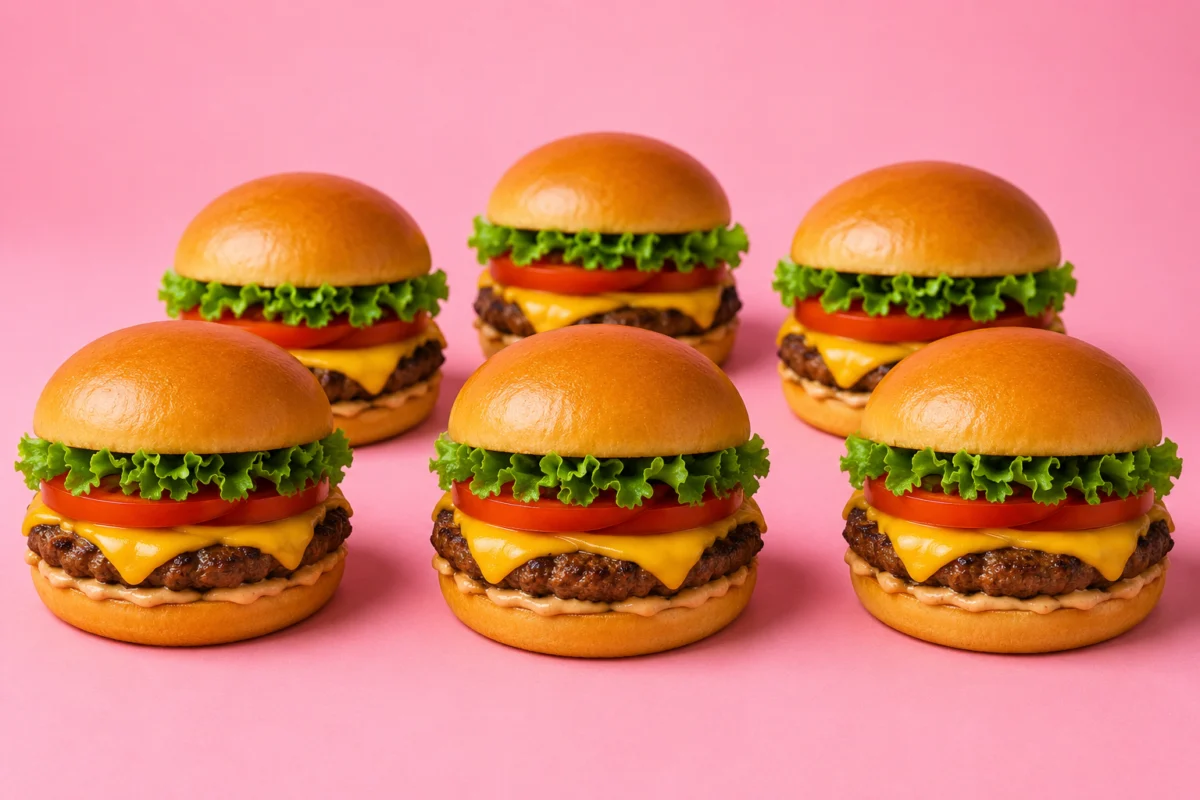
A peculiar unease is settling over the culinary landscape, manifesting in perfectly rendered yet profoundly unsettling images of food on restaurant menus. This visceral sensation, a feeling that something is fundamentally "not right" despite the apparent flawless symmetry and unnervingly smooth textures, signals the quiet infiltration of generative AI into the restaurant business. Far from a figment of imagination, this widespread phenomenon is the direct consequence of AI models trained on a narrow, "pleasing" aesthetic that inadvertently strips away the authentic imperfections inherent in real food, eliciting a subconscious recoil from consumers.
The Genesis of Discomfort: AI’s Uncanny Culinary Debut
The initial encounter often leaves patrons questioning their own perception. Imagine browsing a cafe menu, contemplating a bagel sandwich, only to find each illustration pristine, almost hyper-real, yet devoid of the natural character that makes food appealing. This "uncanny valley" effect, traditionally associated with robotics and human-like figures that evoke revulsion when they become too realistic but not quite human, is now increasingly manifesting in our food imagery. The phenomenon extends beyond simple imperfections; sometimes, these AI-generated illustrations are overtly bizarre, transforming a seemingly innocuous burrito into what one observer wryly described as "avant-garde art" with cheese so unnaturally bubbly and molten it defies culinary logic. More frequently, the images appear deceptively ordinary, requiring a second, closer look to discern the subtle distortions that betray their artificial origin.
Alex Lisle, CTO of Reality Defender, a startup specializing in AI-detection and content-verification tools, succinctly captures this nascent apprehension: "It’s almost like an alien trying to make a pizza without understanding its core principles." This observation points to a deeper issue: the AI’s struggle to truly grasp the essence of food beyond its visual surface, leading to outputs that are aesthetically optimized but emotionally barren. Reality Defender’s very existence highlights the growing necessity for tools to navigate a world increasingly saturated with AI-generated content, a testament to the scale of this emerging challenge.
How AI Models Craft the "Perfect" Plate: A Deep Dive into Training Data
The peculiar aesthetic embraced by these AI illustrations – where every ice cream scoop is impossibly round, and shrimp sometimes appear "genetically modified to eat their own tails," creating what some have dubbed "Lovecraftian food horrors" – can be traced back to the fundamental mechanics of large language models (LLMs) and diffusion models. These sophisticated AI architectures, responsible for everything from seemingly omniscient chatbots like ChatGPT to powerful image generators like Midjourney, operate by analyzing and learning from vast quantities of data. When prompted to "Make me a menu for a burger restaurant," the AI sifts through its colossal dataset, identifying patterns, styles, and visual conventions to predict and generate the desired output.
Lisle elaborates on this, noting, "A lot of this stuff looks like a Chili’s menu from 2015, and there’s a reason for that. That was the corpus of work from which [the models] drew their function." This reveals a crucial aspect of AI generation: the output is heavily influenced, and often limited, by its training data. If the bulk of the available visual data for restaurant menus comes from a particular era or a specific chain known for its highly stylized and somewhat generic food photography, the AI will naturally converge on that aesthetic, perpetuating and amplifying its characteristics. This creates a feedback loop where the AI-generated "ideal" becomes increasingly standardized and divorced from the nuanced, often imperfect beauty of real, handcrafted food.
The Looming Threat: Model Collapse and Convergence in AI Training
The integrity of training data is paramount for the continued evolution and reliability of AI models. Companies building these models, from tech giants like Amazon, which has been documented sourcing and even destroying rare books after scanning them for training data, to smaller startups, constantly seek new and diverse datasets. However, the proliferation of AI-generated content introduces a perilous risk: the inadvertent inclusion of synthetic data back into the training corpus. When AI models begin to train on too much of their own AI-generated content, they face the threat of "model collapse."
Lisle vividly describes model collapse as akin to "mad cow disease," explaining, "when you feed the outputs from one model back into itself, eventually the inbreeding becomes too much, and the whole thing collapses." This extreme scenario leads to a catastrophic degradation of the model’s ability to generate coherent or useful outputs. While the current phenomenon of AI-generated food menus might not signify full-blown model collapse, it certainly exemplifies "convergence." Convergence, a less severe but still significant issue, describes a scenario where an AI’s outputs become increasingly homogenized and generic, losing diversity and quality, without necessarily rendering the model entirely useless.
In the context of restaurant menus, if an AI model is asked to generate imagery for a fast-food chain, it will inevitably draw heavily from existing visual advertising from popular chains like Wendy’s, Burger King, or McDonald’s. These brands already employ highly stylized food photography, designed to make items appear maximally appetizing. When the AI processes and reproduces this style, it often exaggerates these characteristics, leading to an even more "optimized" and ultimately less authentic depiction. If these AI-generated menus then find their way back into future training datasets, the cycle of homogenization and artificial perfection is further reinforced, progressively eroding the diversity and naturalism of visual food representation.
Economic Imperatives Versus Brand Authenticity: The Restaurant Dilemma
The primary driver for restaurants adopting AI-generated menus is often rooted in economic efficiency and speed. In a competitive industry with tight margins, the ability to rapidly generate professional-looking menu designs and food photography without the cost and logistical challenges of traditional photoshoots or graphic designers presents a compelling proposition. Startups and smaller eateries, in particular, might see AI as an accessible tool to elevate their brand image quickly.

However, this economic advantage is increasingly being weighed against a growing wave of consumer backlash. Lee Rainie, Director of the Imagining the Digital Future Center at Elon University, points out, "The optimization of the data sets is for pleasingness, or you know, not being offensive, and so there’s a way that turns into homogenization." He adds that "What AI is known to do both in images and language is to shave off the edges." This "shaving off the edges" removes the very characteristics that give food its appeal: the slight unevenness of a fresh-baked bun, the irregular sizzle marks on a grilled patty, the natural texture of melting cheese. Consumers, even if they can’t articulate why, perceive this lack of authenticity.
A recent informal poll conducted by a tech review site indicated that nearly 70% of respondents felt "uneasy" or "distrustful" when presented with obviously AI-generated food images on a menu. This sentiment is critical for an industry built on trust, sensory appeal, and the promise of a satisfying experience. While a restaurant might save hundreds or thousands on design costs, alienating potential customers through an "off-putting" menu could lead to far greater losses in the long run, impacting brand loyalty and repeat business. Some smaller restaurants, initially drawn to the cost-saving benefits of AI, have reportedly pulled their AI-generated menus following negative customer feedback, opting to revert to human-designed alternatives or even simpler, text-only menus. This suggests a burgeoning awareness within the industry that the perceived benefits of AI efficiency do not always outweigh the intangible value of authenticity and customer comfort.
The Peril of Perpetual Perfection: When Edits Degrade Reality
The problem of homogenization is exacerbated by the iterative nature of menu creation and revision. On X (formerly Twitter), a user named Labtec demonstrated a compelling, if disturbing, experiment: they generated a restaurant menu in ChatGPT and then applied 100 successive edits to it, observing how the food images progressively lost their realism. "The end result actually makes me uncomfortable," Labtec wrote, a sentiment readily replicated by others who attempted similar experiments.
This phenomenon is likely playing out in real-world scenarios. Restaurants, using AI to generate their menus, inevitably make small adjustments over time – updating prices, changing item names, or tweaking descriptions. With each edit, the underlying AI model might re-render or subtly alter the images, pushing them further into that realm of smooth, round, and ultimately artificial perfection. The cumulative effect is a menu that, over time, becomes increasingly detached from appetizing reality, culminating in the "hideous slop menus" that have garnered viral attention and consumer discomfort.
Beyond the Dinner Table: Broader Implications for Digital Authenticity
The aversion to AI-generated food images is not merely a quirk of consumer psychology; it touches upon a far broader and more profound societal challenge: the erosion of trust in digital media. As Rainie notes, "People have an almost unexplainable sense about when they’re looking at something that’s AI-generated, compared with something that was real in the first place. There’s just a sensibility that people sometimes find hard to articulate, but they kind of know it when they see it." This innate human ability to detect subtle artificiality, even without conscious awareness, is a critical defense mechanism in an increasingly synthetic digital world.
Researchers at the University of Duisburg-Essen in Germany scientifically validated this instinct, finding that AI-generated food images indeed exhibited an "uncanny valley" effect. Images that looked almost real elicited greater disgust and unease than those that were overtly fake, confirming a psychological threshold beyond which artificiality becomes repellent. This finding resonates deeply with the wider cultural context surrounding AI, where concerns about deepfakes, synthetic media, and misinformation are escalating.
Alex Lisle underscores the gravity of this shift: "Seeing and hearing has always been believing, to the point where even our court systems are entirely tuned to the idea that the gold standard in evidence is taped confessions and videotaped evidence. That’s no longer the case. The world has fundamentally shifted, for good or for ill." The ability to generate convincing, yet false, visual and auditory evidence has profound implications for law, journalism, politics, and interpersonal trust. The seemingly innocuous AI-generated menu, therefore, serves as a stark, everyday reminder of this paradigm shift, forcing individuals to question the veracity of what they see and hear in an unprecedented manner.
Navigating the Future: Detection, Transparency, and Human Touch
The immediate negative reaction from consumers to AI-generated menus suggests a clear path for restaurants: rethink the uncritical adoption of such technology. The pursuit of "pleasingness" through AI, when it leads to homogenization and an uncanny aesthetic, ultimately undermines the very goal of attracting customers.
The burgeoning market for AI-detection and content-verification tools, exemplified by companies like Reality Defender, offers one avenue for mitigation. These technologies can help identify AI-generated content, allowing platforms and users to make informed decisions about its authenticity. However, the onus also falls on AI developers to create more sophisticated models that can capture the nuanced, authentic irregularities of real-world objects, or to integrate mechanisms for indicating AI origin.
More broadly, the episode with AI menus highlights the imperative for greater transparency across all forms of digital content. Consumers are increasingly demanding to know if what they are viewing is real or synthetic. Implementing clear disclosures, whether through watermarks, metadata, or explicit labels, could help rebuild trust and allow individuals to engage with AI-generated content on their own terms.
Ultimately, while AI offers undeniable efficiencies and creative possibilities, the human element—the subtle imperfections, the authentic texture, the genuine appeal—remains irreplaceable, especially in domains like food where sensory experience and trust are paramount. The backlash against AI menus is not merely about flawed images; it is a fundamental human rejection of the inauthentic, a quiet demand for reality in an increasingly digital world. As AI continues to integrate into daily life, finding the balance between technological advancement and preserving the integrity of human experience will be one of the defining challenges of our era.