Garick Elordi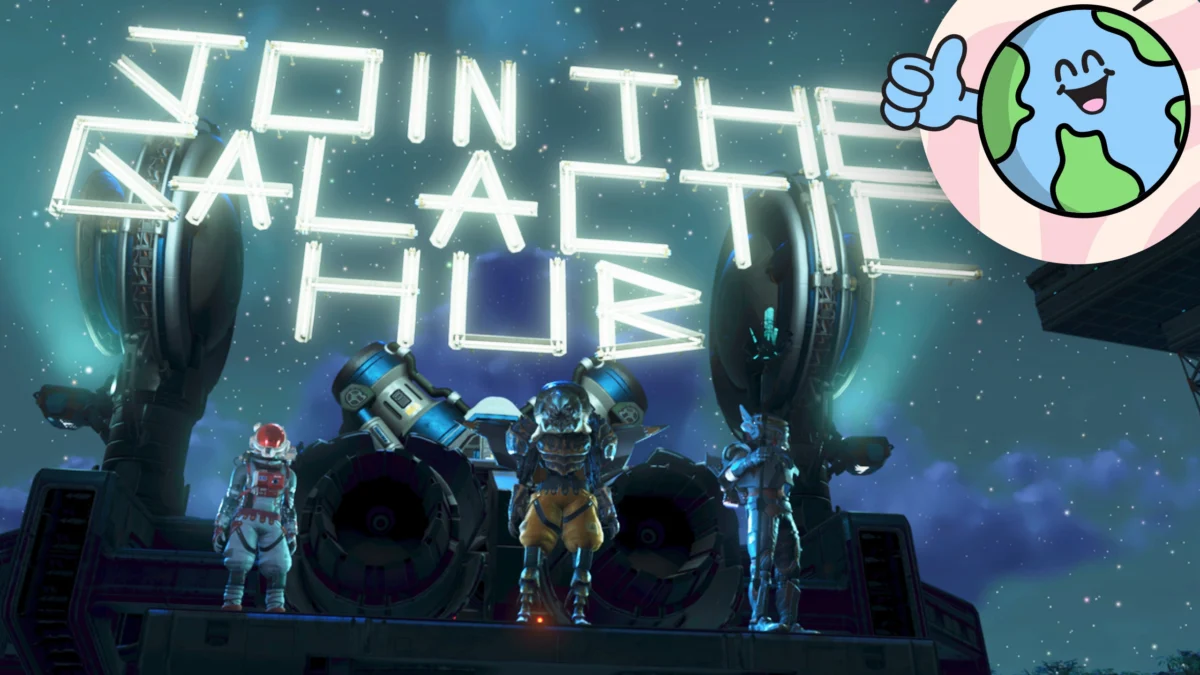
In the vast, procedurally generated expanse of No Man’s Sky, a game once defined by its isolation and the controversial circumstances of its 2016 release, a singular community-driven project has achieved a milestone rarely seen in the landscape of live-service gaming. The Galactic Hub Project, a sprawling player-led meta-civilization, has officially entered its tenth year of operation. What began as a localized effort to document a handful of star systems has evolved into a sophisticated socio-political entity spanning three galaxies and nearly 100 regions of space. This initiative represents one of the most significant examples of emergent gameplay in digital history, turning a solo survival experience into a collaborative scientific and social endeavor.
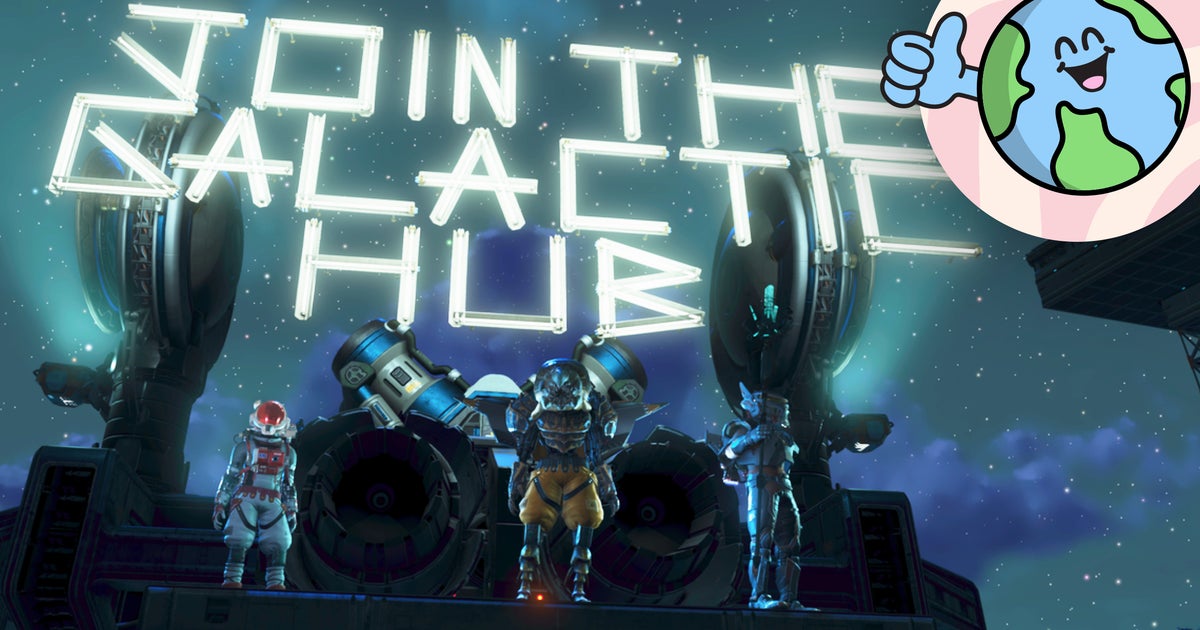
The Galactic Hub was founded on October 30, 2016, by a Los Angeles resident known online as Conor (user 7101334). At the time, the No Man’s Sky community was deeply fractured. The game’s launch in August 2016 had been met with significant backlash due to perceived discrepancies between promotional promises and the final product. However, while much of the internet focused on the game’s shortcomings, a small contingent of players became enamored with the sheer scale of Hello Games’ universe—a simulation so vast that its creators could not possibly map it themselves. Conor was among this minority, finding a sanctuary in the "No Man’s High" subreddit, a community that prioritized positivity and exploration over the prevailing narrative of disappointment.
The Genesis of Digital Cartography
The formation of the Galactic Hub was catalyzed by a series of community-led feats that demonstrated the game’s untapped potential for shared experience. In September 2016, a player named Steambot gained notoriety for spending two weeks physically circumnavigating an entire planet on foot. This trek proved that the game’s planets were truly massive, persistent spheres rather than skyboxes. Simultaneously, players began developing a grassroots system of coordinate-sharing, using third-party tools to navigate the stars.

Conor’s vision was to centralize these efforts. Instead of players drifting aimlessly across 18 quintillion planets, he proposed a "pilgrimage" to a specific region of the Euclid galaxy: the Rentocniijik Expanse. The goal was simple yet ambitious: to collectively document every star system, planet, creature, and plant within that region. Approximately 35 members joined the initial voyage. This early period of the Hub’s history was defined by "gameplay in a costume," where players performed functional game tasks within a self-imposed narrative framework of a burgeoning interstellar society.
A Chronology of Expansion and Conflict
The timeline of the Galactic Hub is a mirror to the technical evolution of No Man’s Sky itself. As Hello Games released successive updates, the Hub adapted its infrastructure to accommodate new mechanics.

2016–2017: The Foundation and the Federation
Following the introduction of base building in December 2016, the Hub gained a physical presence. This era introduced the first logistical challenges, including "territorial quantum feuds." Due to technical limitations at the time, if two players uploaded bases on the same planet, they would often overwrite or hide one another, requiring the community to develop its first set of zoning laws and conflict resolution protocols. In April 2017, the United Federation of Travelers (UFT) was established. Modeled after the United Nations, the UFT aimed to standardize records and provide a platform for smaller civilizations, such as the Qitanian Empire and the Galactic Empire of HOVA, to coexist and collaborate.
2018: The Multiplayer Revolution and the Ark Project
The release of the "Next" update in July 2018 was a watershed moment. It introduced true multiplayer, allowing players to see and interact with one another in real-time. In anticipation of this, the Hub formed the Galactic Hub Defense Force (GHDF) to protect members from potential "griefing" or hostile players. However, the update also reset the game’s procedural generation algorithms, effectively "destroying" the Hub’s years of documentation by changing the biomes and names of established systems.

This crisis led to the "Ark Project," a massive relocation effort. The community uprooted its entire civilization and moved to the Arm of Vezitinen (HUB1). During this transition, an advance party of "Interlopers" renamed over 500 systems to ensure the Hub’s nomenclature remained consistent with the new reality of the universe.
Structural Data and Demographic Reach
Today, the Galactic Hub is a complex organization with a reach that extends far beyond its original borders. Its primary operations remain in the Euclid galaxy, but it has established sister hubs in the Calypso galaxy—described by Conor as a "Wild Frontier" known for its harsh environments and unique sub-cultures—and the Eissentam galaxy, which serves as a lush, "vacation" destination for the community.

Statistical analysis of the Hub’s population highlights its scale:
- Discord Membership: Over 16,000 registered members.
- Active Annual Participation: In-game data bots, such as those developed by senior member ApexFatality, estimate that approximately 2,000 unique players actively visit or reside within Hub systems annually.
- Territorial Scope: The Hub officially encompasses 99 regions of space across three galaxies, including thousands of documented star systems.
- Specialized Chapters: The organization is divided into functional "Corps," such as the Exobiology Corps (fauna documentation), the Builders Guild (architecture), and the Star League (competitive athletics).
Architectural Achievements: The Rise of Aeon City
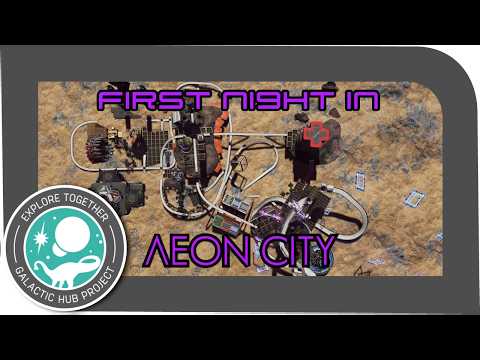
The crowning achievement of the Hub’s current era is Aeon City, located in the Sea of Xionahui region. Representing 11 months of collaborative labor and utilizing approximately 15,000 individual base parts, Aeon City is the largest and most complex urban center ever constructed in the project’s history.

Unlike previous attempts at "planetary cities" like Project Coruscant, which suffered from severe technical lag and rendering issues, Aeon City was designed with performance and functionality in mind. The city features:
- The Mall of Aeon: A commercial district featuring a pop-up market and custom ByteBeat music (a chiptune system within the game).
- The Star League District: Functional arenas for "Blaster Ball," "Anomaly Darts," and exocraft racing.
- Cultural Institutions: An art museum for player-created works and a History Museum documenting the Hub’s decade-long journey.
- The Underbridge District: A themed social area including a "NipNip" dispensary and a goth club featuring custom-coded music.
To provide depth to the environment, Conor authored over 400 lines of dialogue for NPCs, accessible via third-party websites, which flesh out the city’s lore and backstory.

Official Recognition and Industry Implications
The Galactic Hub’s impact has not gone unnoticed by the game’s developers. In a rare instance of a developer canonizing player-created content, Hello Games added the Galactic Hub’s emblem as an official in-game item. This recognition transformed the Hub from a mere fan project into a formal part of the No Man’s Sky lore.
Industry analysts point to the Galactic Hub as a prime example of "post-scarcity" social dynamics in gaming. Because No Man’s Sky provides players with infinite resources once they reach a certain level of progression, the community’s motivations shift from survival to altruism and creative expression. "In a post-scarcity environment, people naturally want to help each other," Conor noted in his reflection on the project’s longevity.

The Hub also serves a vital social function. For many players who face barriers to social interaction in the physical world due to disability or geographic isolation, the Galactic Hub offers a structured, supportive community. The project’s emphasis on "kindness and collaboration" has become its defining characteristic, starkly contrasting the negativity that surrounded the game’s initial launch.
Future Outlook
As the Galactic Hub Project enters its second decade, it faces the ongoing challenge of managing its own success. The technical limitations of the game’s engine—specifically regarding how many bases can be rendered simultaneously—have forced the Hub to implement more restrictive access to its capital cities to preserve stability.
Nevertheless, the project continues to expand. New colonies like Tharakis (focused on dystopian aesthetics) and Logisto (focused on industrial efficiency) demonstrate that the community’s appetite for specialized roleplay and construction remains strong. The Galactic Hub stands as a testament to the power of community resilience, proving that even in a "doomed universe" destined for digital obsolescence, human collaboration can create something enduring and meaningful. For the Interlopers of the Galactic Hub, the mission remains unchanged: to explore the unknown, to document the found, and to build a home among the stars.