Vera Intan Clara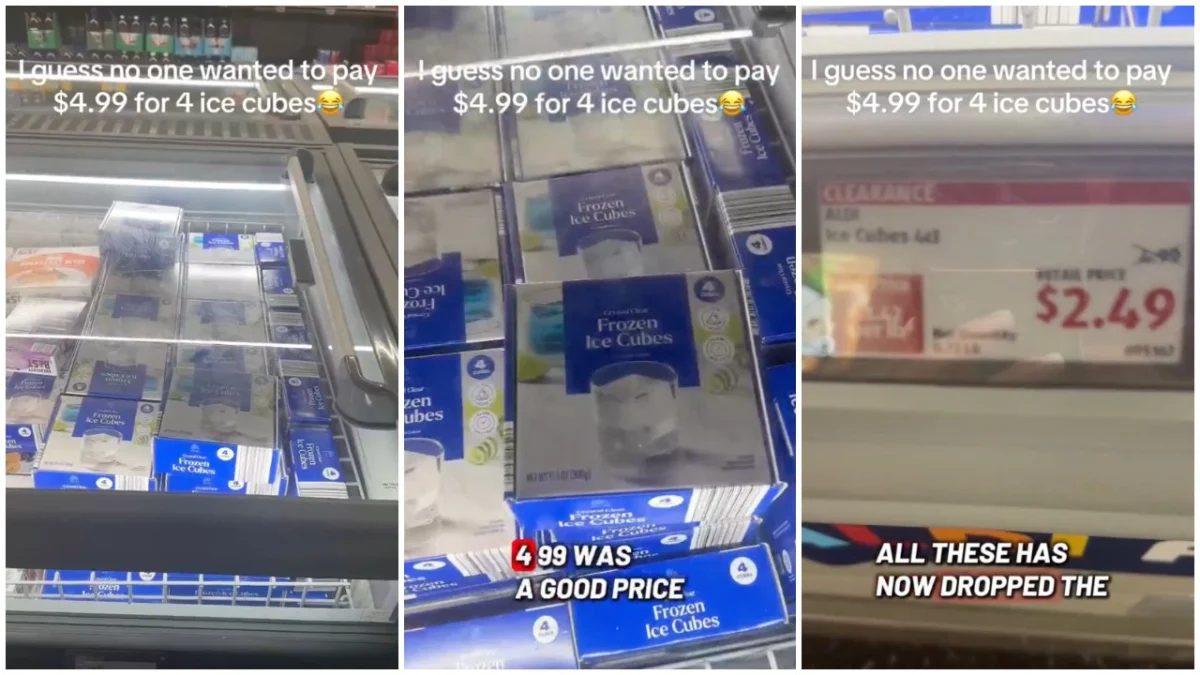
Aldi, a retailer synonymous with its commitment to delivering unparalleled value and aggressively low prices on a wide array of food and household essentials, recently found itself at the center of a social media storm over an unexpected product: a package of large, crystal-clear ice cubes. The incident, which unfolded rapidly across various online platforms, highlighted the delicate balance between niche product offerings and established brand identity, culminating in a swift and significant price adjustment in at least one reported location. The initial pricing strategy for these specialty ice cubes, perceived by many as exorbitant, triggered widespread consumer disbelief and debate, forcing a reevaluation of what constitutes ‘value’ in the modern grocery landscape.
The controversy began to brew around late July 2026, when a customer’s video documenting a peculiar product offering at an Aldi store quickly gained traction across social media platforms, particularly X (formerly Twitter) and TikTok. The video showcased a freezer bin filled with neatly packaged boxes, each containing just four large, purportedly "gourmet" ice cubes, priced at an astonishing $4.99. This pricing stood in stark contrast to Aldi’s well-established reputation for affordability, prompting an immediate and vociferous online backlash.
The Genesis of the Outcry: A Mismatch in Value Perception
The practice of grocery stores selling bags of ice is not new; it caters to immediate needs for events, a lack of home ice-making facilities, or simply convenience. However, Aldi’s offering was qualitatively different. These were not the typical bags of crushed or standard-sized cubes found in most freezer aisles. Instead, they were presented as premium, large-format ice, often associated with high-end cocktails or specific beverage experiences where slow melt and minimal dilution are prized. Despite this distinction, the price point for a mere quartet of these frozen water blocks ignited a firestorm of criticism.
One viral clip, reshared by the X user @ClownWorld on July 29, 2026, depicted a customer panning across a seemingly well-stocked freezer display of these ice cubes. The caption, imbued with a sarcastic tone, quipped, "I guess no one wanted to pay $4.99 for 4 ice cubes," before the camera zoomed in on a price label. This label revealed a striking adjustment: the original $4.99 price had been crossed out, replaced by a clearance price of $2.49. The presence of a "clearance" designation further suggested that the initial pricing strategy had failed to resonate with the target market, leading to a surplus of inventory and subsequent markdown.
The location of the specific Aldi store remains unverified, and the exact date the video was recorded preceding the July 29 posting is also unclear. However, the visual evidence of a fully stocked freezer bin, combined with the subsequent price reduction, strongly implied that consumer uptake at the original price was minimal, if not non-existent. This particular instance quickly became a case study in how rapidly consumer sentiment, amplified by social media, can challenge and even reshape retail strategies.
Chronology of a Viral Sensation and Corporate Response
- Early July 2026 (Inferred): Aldi introduces the premium ice cubes to select stores, likely as a pilot or experimental product line. The initial price is set at $4.99 for four large cubes.
- Mid-July 2026 (Inferred): The product fails to gain significant traction with consumers, leading to overstocked freezer bins in participating locations. Customers begin to notice the incongruity of the price with Aldi’s brand image.
- Late July 2026: A customer records a video inside an Aldi store, highlighting the $4.99 price tag for the four ice cubes and the apparent lack of sales. The video also captures a subsequent price reduction to $2.49, indicated by a clearance label.
- July 29, 2026: The video is widely shared and goes viral across X, TikTok, and other social media platforms. The user @ClownWorld’s repost gains significant attention, sparking thousands of comments, shares, and memes.
- Immediate Aftermath: The online discourse intensifies, with consumers expressing a mix of disbelief, humor, and outright criticism. Many question Aldi’s judgment, while a smaller contingent attempts to contextualize the product within the "gourmet ice" trend.
- Subsequent Days: Other Aldi locations, possibly responding to the online backlash or internal sales data, are observed to adjust their pricing or discontinue the product. While no official, widespread statement from Aldi directly addressing the controversy is publicly reported, the observed price changes indicate a responsive, albeit decentralized, corporate reaction.
Aldi’s Brand Identity vs. Premium Product Experimentation
Aldi’s business model is fundamentally built on efficiency, private labels, and a streamlined shopping experience designed to offer the lowest possible prices. This approach has cultivated a loyal customer base that expects exceptional value. The introduction of a product like four ice cubes for nearly five dollars, even if positioned as a premium item, directly contradicts this core brand promise.
Market analysts, while not directly commenting on this specific incident, frequently observe that discount retailers tread a fine line when attempting to introduce premium or niche products. "The challenge for value-driven retailers like Aldi is maintaining brand consistency," explains Dr. Evelyn Reed, a retail strategy consultant. "Their customers come for affordability. Introducing a high-priced item, even one that might cater to a different demographic or specific use case, can confuse consumers and, as seen here, even erode trust if the value proposition isn’t immediately apparent and compelling."
The online reactions underscored this disconnect. Comments ranged from incredulous humor ("bruh how did they think ‘this will make money’???") to practical suggestions ("you could spend the same $2.49 on an ice cube maker and make endless ice cubes at home"). The overwhelming sentiment was that the price was indefensible, regardless of the ice cubes’ size or clarity.
The Niche Market for Premium Ice and Consumer Willingness to Pay
Despite the widespread condemnation, a minority of commenters offered a different perspective, highlighting the existence of a niche market for "gourmet" ice. One person explained, "Those are ice cubes for alcoholic drinks, one single cube. It helps by not watering down your drink." Another suggested they might be "the type used to make an Old Fashioned."
Indeed, the market for specialty ice has seen growth in recent years, particularly within the craft cocktail culture. Bartenders and enthusiasts often seek out large, dense, clear ice cubes or spheres, which melt slower than standard ice, thereby preserving the integrity and flavor profile of spirits. Companies specializing in such products often charge a premium due to the specialized equipment and processes required for slow freezing and purification, which prevent cloudiness and air bubbles. Prices for such artisanal ice can range from a few dollars for a single large cube at a bar to $8-$15 for a small bag of specialty cubes from a liquor store or gourmet grocer.
However, Aldi’s typical customer base is not necessarily the demographic accustomed to or actively seeking out such premium beverage accouterments. The juxtaposition of a luxury item within a discount supermarket environment, at a price point that even for a niche product seemed high given the quantity, created a stark contrast that proved jarring for many. It underscored a fundamental misjudgment of market fit and consumer expectation.
Implications for Retail Strategy and Social Media Engagement
The Aldi ice cube saga offers several critical insights for modern retail and brand management:
-
The Power of Social Media as a Feedback Mechanism: The speed and scale at which the video went viral demonstrate social media’s unparalleled ability to amplify consumer sentiment. Retailers can no longer afford to operate in a vacuum; online chatter quickly becomes a powerful barometer of public opinion, capable of influencing sales and brand perception almost instantaneously. The observed price reduction, whether directly or indirectly influenced by the online uproar, serves as a testament to this dynamic.
-
Brand Consistency is Paramount: For established brands, particularly those built on a strong value proposition like Aldi, any deviation from core identity risks alienating the loyal customer base. While experimentation with new product categories is vital for growth, it must be carefully managed to ensure alignment with existing brand values and customer expectations. The "premium ice" offering, despite its potential merits in another context, was widely perceived as a misstep for Aldi.
-
Pricing Strategy and Perceived Value: The incident highlights the complex interplay between price, perceived value, and consumer psychology. While the cost of production for large, clear ice cubes might indeed be higher than standard ice, the sticker shock for four pieces of frozen water at nearly five dollars was too great for Aldi’s value-conscious demographic. The immediate and drastic price reduction indicates a rapid corporate realization of this miscalculation.
-
Agility in Response: While Aldi has not issued a formal press release on the matter, the observable price changes in stores suggest an internal mechanism for identifying and responding to market feedback, even if informally communicated. In an era of rapid information dissemination, a retailer’s ability to swiftly adapt to consumer sentiment can mitigate potential long-term brand damage.
Looking Ahead: The Evolving Retail Landscape
The "Aldi ice cube crisis" serves as a quirky yet significant reminder of the challenges and opportunities within the evolving retail landscape. As consumer preferences shift and social media continues to democratize feedback, retailers are under increasing pressure to be transparent, consistent, and responsive. For Aldi, a brand that has meticulously cultivated an image of everyday affordability, this incident offers a valuable lesson in the delicate art of product diversification without diluting the core brand promise.
While the specific impact on Aldi’s overall sales or brand loyalty is likely negligible in the long run, the viral nature of the event undoubtedly sparked internal discussions about product strategy, market testing, and how to effectively communicate the value proposition of niche items within a broader discount framework. The episode ultimately reinforced the notion that in the competitive world of grocery retail, perceived value, rather than just price, remains the ultimate arbiter of consumer choice and loyalty. The market for premium ice may continue to grow, but its place within the aisles of a value-driven giant like Aldi will likely remain a topic of cautious consideration and strategic placement.