Vera Intan Clara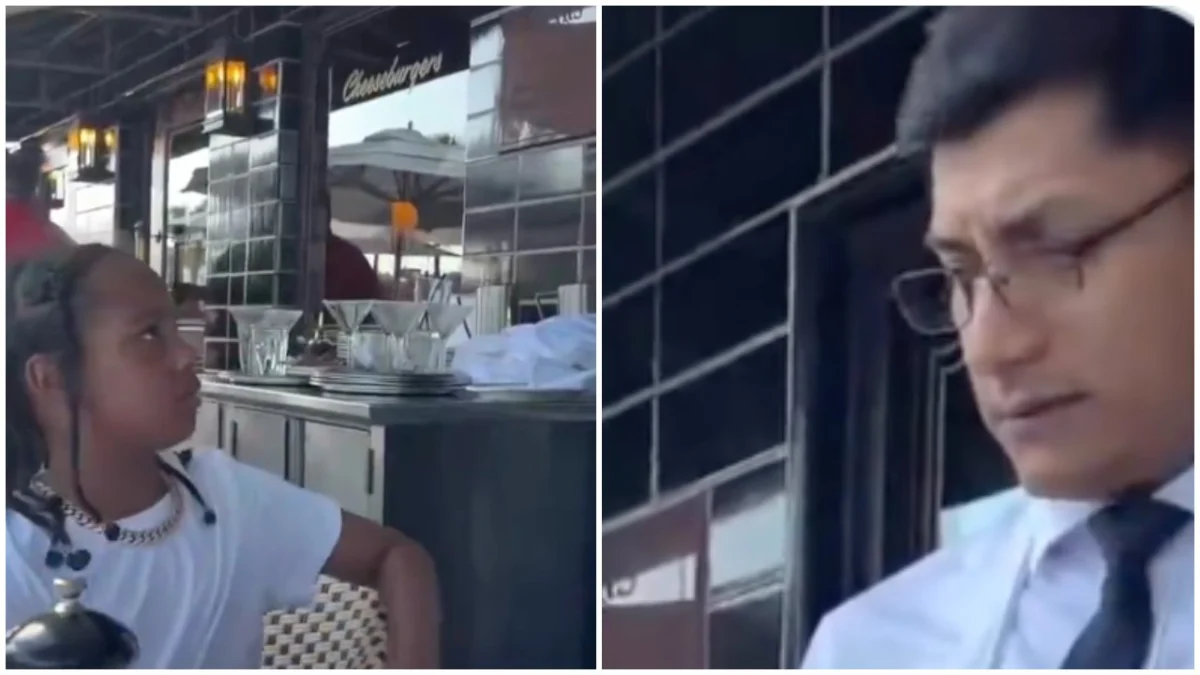
A video depicting a young boy verbally abusing a waiter in what appears to be a fine dining establishment has rapidly gone viral across social media platforms, sparking widespread outrage and igniting a fervent debate on parenting standards, public civility, and the treatment of service industry professionals. The controversial clip, which shows a child directing an expletive-laden command at a server, was notably reshared by X user @AmiriKing on July 29, 2026, drawing millions of views and an avalanche of commentary condemning the child’s behavior and the apparent inaction of the accompanying adults. This incident has transcended a mere online spectacle, evolving into a critical lens through which societal norms around respect, discipline, and the often-overlooked challenges faced by frontline workers are being re-evaluated.
The Incident Unfolds: A Detailed Account
The brief but impactful clip opens in a restaurant setting, where a young boy is seated at a table, engrossed in his mobile phone. To his left, a waiter stands patiently, notepad and pen in hand, poised to take orders from the table’s guests. The scene suggests the initial stages of a dining experience, with only menus visible on the table, indicating that orders were yet to be placed.
According to audio analysis of the clip, the boy first appears to ask, "What’s that they have?" – a seemingly innocuous query directed towards the menu or possibly another table’s offering. However, before the waiter could articulate a response, the child abruptly lifts his gaze from his phone, fixing the server with a hard stare, and utters, "Stop f** irritating me." The unexpected verbal assault leaves an immediate palpable tension in the air.
The waiter’s reaction, captured within the short video, is one of momentary pause and subtle disbelief. He glances first at the child, then shifts his gaze towards an individual out of frame, seemingly seeking acknowledgment or intervention from another adult present at the table. In response to the boy’s outburst, a man at the table, whose voice is heard, addresses the child, identified as "Montana," with a casual tone, advising him to "relax." "Montana, calm down bro," he states, implying a degree of familiarity and perhaps a habitual nature to such behavior. Another male voice is then heard echoing a similar sentiment. Subsequently, the first man attempts to dismiss the incident, telling the waiter, "Don’t mind him," a remark that has itself drawn significant criticism for seemingly downplaying the severity of the child’s disrespect. The clip ends without any visible or audible direct reprimand of the child by the adults accompanying him, leaving the waiter to navigate the uncomfortable interaction.
The Plight of Service Professionals: A Wider Lens
The viral video has cast a spotlight on the often-unacknowledged verbal and emotional abuse endured by individuals in the service industry. Waiters, bartenders, retail associates, and other frontline staff frequently face challenging customer interactions, but incidents involving minors directing such vitriol are particularly jarring. Data from various industry reports consistently highlight a concerning trend of increased disrespect towards service workers. A 2023 survey by the National Restaurant Association, for instance, indicated that over 70% of restaurant employees reported experiencing some form of customer hostility, ranging from verbal abuse to outright aggression. While specific statistics for abuse from children are harder to isolate, the overall climate of customer entitlement can empower minors to behave in ways they might not otherwise.
Such incidents contribute significantly to job dissatisfaction, increased stress levels, and high turnover rates within the hospitality sector. Service professionals are trained to maintain composure and professionalism under pressure, but repeated exposure to disrespectful behavior takes a heavy toll on their mental and emotional well-being. The implicit expectation that "the customer is always right," even when demonstrably wrong or abusive, places an undue burden on staff who are simply trying to perform their duties. This particular incident, where an adult seemingly condoned a child’s profanity towards a working professional, further exacerbates the vulnerability of service staff, leaving them without adequate support or recourse.
Parenting in the Public Eye: A Societal Reflection
The immediate and overwhelming public reaction to the video largely centered on the perceived failure of the adults present to adequately discipline the child. This incident has become a focal point for broader discussions on contemporary parenting styles and the cultivation of respect and empathy in young individuals. Child development experts consistently emphasize the critical role of parental modeling and direct instruction in shaping a child’s social behavior and emotional regulation. Children learn how to interact with the world by observing and internalizing the behaviors of their primary caregivers.
When a child exhibits such overt disrespect, particularly with the apparent lack of immediate, firm correction from accompanying adults, it raises questions about the boundaries and expectations set within the family unit. Psychologists often point to the concept of "permissive parenting," where children may lack clear boundaries or consequences for inappropriate behavior, potentially leading to a sense of entitlement. Conversely, "authoritative parenting," which combines warmth with firm discipline and clear expectations, is generally associated with better social and emotional outcomes in children.
Furthermore, the boy’s preoccupation with his phone in the clip has prompted discussions about the impact of screen time on children’s social development. Excessive screen use, particularly during social interactions, can sometimes hinder the development of crucial interpersonal skills, including empathy, patience, and the ability to read social cues. While not directly causal to the child’s outburst, it adds another layer to the complex tapestry of modern childhood and parental guidance. The incident serves as a stark reminder that teaching children basic civility, such as patience, politeness, and respect for others, especially those in service roles, is a fundamental aspect of responsible parenting.
The Digital Echo Chamber: Social Media’s Role
The rapid dissemination of the video across platforms like X (formerly Twitter) underscores the powerful, albeit often chaotic, role of social media in shaping public discourse and holding individuals accountable, or at least subjecting them to public scrutiny. Within hours of its resharing by @AmiriKing, the clip had amassed millions of views, generating a torrent of comments, analyses, and impassioned responses.
Social media’s capacity for instant virality means that incidents once confined to private settings can quickly become global spectacles. This phenomenon can serve as a catalyst for important societal conversations, drawing attention to issues that might otherwise remain unaddressed. However, it also presents ethical challenges, particularly concerning the privacy of individuals, especially minors, who become unwilling subjects of public judgment. While the public overwhelmingly condemned the child’s actions and the adults’ response, the debate also touched upon the ethics of "call-out culture" and the potential for online shaming, even if the intentions are to promote better behavior. The unverified nature of the clip’s origin—its specific location, exact date of recording, and the full context surrounding the interaction—adds another layer of complexity to its interpretation, a point that reputable news outlets like The Daily Dot have highlighted in their inability to independently verify these crucial details. Despite these caveats, the clip’s emotional resonance ensures its continued circulation and impact on online dialogue.
Expert Voices Weigh In (Inferred Commentary)
While direct statements from the parties involved in the video are unavailable, the incident aligns with concerns frequently articulated by various experts:
- Child Development Psychologists would likely emphasize that such behavior, if left unchecked, can lead to long-term difficulties in social relationships and an impaired ability to navigate diverse social settings. They often advocate for proactive teaching of emotional regulation, conflict resolution, and the importance of respecting all individuals, regardless of their profession. The absence of immediate, firm correction from the adults sends a dangerous message to the child that such behavior is acceptable or will be tolerated.
- Restaurant Industry Advocates and Union Representatives would undoubtedly highlight this incident as emblematic of the systemic disrespect service workers face daily. They frequently call for greater public awareness regarding the demanding nature of hospitality jobs and advocate for stronger protections and support systems for employees. Many would argue that restaurants should empower their staff to refuse service to abusive customers, including parents who fail to manage their children’s disruptive behavior.
- Sociologists and Cultural Commentators might interpret the incident as a symptom of broader societal trends, such as a decline in civility, an increase in public displays of aggression, or the impact of heightened stress levels in a post-pandemic world. They might also discuss how the individualistic nature of modern society can sometimes overshadow the importance of communal respect and shared public spaces.
Public Outcry and Calls for Civility
The comments section of the reshared video on X became a microcosm of public opinion, overwhelmingly expressing dismay and condemnation. One X user succinctly captured the prevailing sentiment, stating, "Regardless of race that’s rude af, dude’s trying to do his job. I’d refuse service to them. Gtfoh." This comment reflects a strong desire among the public for accountability and a rejection of uncivil behavior towards working professionals.
Another commenter evoked a more traditional approach to discipline, sharing, "My dad would have slapped me so hard and then dragged my ass clear across that restaurant and beat my ass all the way to the car," adding a reflection on their own upbringing: "I would have never even thought about being such a disrespectful animal to begin with, tho. Trash culture." This perspective, while advocating for physical discipline, primarily underscores a deeply felt belief in the importance of teaching respect from a young age and highlights a generational contrast in parenting philosophies.
Many others directly criticized the adults present, with one user writing, "How was your kid talking like this to a grown man and you’re stupid ass sitting right there watching?" This comment, while harsh, encapsulates the widespread indignation regarding the adults’ perceived passivity and failure to intervene effectively. The collective sentiment conveyed through these comments points to a societal demand for higher standards of behavior from both children and their guardians in public spaces. The public’s quickness to judge, while sometimes perceived as overly critical, also serves as a collective reinforcement of societal expectations for politeness and respect.
Beyond the Screen: Broader Implications and Unverified Context
The viral video, despite its unverified origins and lack of complete contextual information, has undeniably served as a powerful catalyst for public discourse. It raises significant questions about the boundaries of acceptable behavior in public, the responsibilities of parents, and the dignity of labor in the service industry. While the specific details of where or when the video was recorded, or the full circumstances leading up to the interaction, remain unconfirmed by independent verification, the emotional impact and the themes it evokes are universal.
Ethically, the widespread sharing of such a video, particularly involving a minor, prompts considerations about digital privacy and the potential for long-term consequences for the child and family involved. However, the public’s focus has largely remained on the behavioral aspect, using the incident as a cautionary tale and a call to action for improved social etiquette.
The incident underscores a broader societal challenge: how to foster a culture of respect and empathy in an increasingly digital and often impersonal world. It highlights the ongoing tension between individual freedoms and collective responsibility in public spaces. As similar incidents continue to emerge in the age of ubiquitous smartphone cameras, the discussions ignited by this viral clip will likely persist, shaping ongoing conversations about parenting, civility, and the fundamental right of every individual, including service professionals, to be treated with dignity and respect. The lack of independent verification serves as an important journalistic caveat, reminding audiences that while the video’s content is disturbing, the complete narrative and all contributing factors may not be fully known. Nonetheless, its virality confirms its resonance with prevailing societal concerns about declining civility and the imperative for respectful interaction.