Vera Intan Clara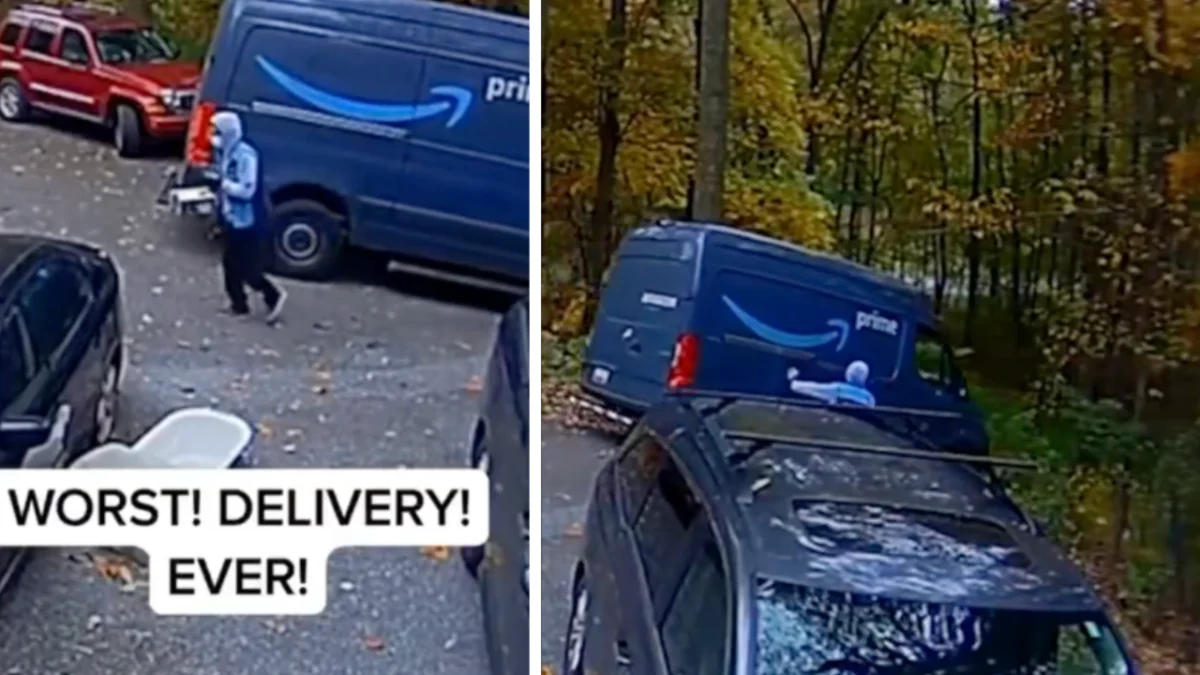
A routine package delivery by an Amazon driver took an unexpected and dramatic turn recently, culminating in the driver’s vehicle rolling unattended down a steep incline, an incident captured by a family’s security camera and witnessed firsthand by the homeowners. The event, which rapidly gained traction across social media platforms, has ignited discussions about delivery safety protocols, the pressures faced by logistics personnel, and the ever-present risks associated with human error and mechanical reliability in the fast-paced world of e-commerce. While the exact cause remains unverified, the video footage provides a stark illustration of how quickly a seemingly mundane task can escalate into a significant logistical and potentially costly mishap.
The incident unfolded on a residential street characterized by a notable downward slope, a common topographic feature in many suburban and rural areas. The Amazon delivery driver had successfully completed the primary objective of his stop: depositing a package at the recipient’s doorstep. However, moments after the delivery was made, and while the driver was still in the immediate vicinity of the residence, the family who had received the package became acutely aware of an alarming development. Their security camera footage, corroborated by their direct observation, showed the driver’s large Amazon delivery van slowly but steadily beginning to move on its own, descending the hill. The family promptly alerted the driver to the unfolding crisis, their urgent shouts cutting through the otherwise quiet afternoon.
Chronology of an Unfolding Incident
The sequence of events, as depicted in the widely circulated video, paints a clear, albeit unsettling, picture.
- Arrival and Delivery (Initial Moments): The Amazon branded van pulls up to the residence. The driver exits the vehicle, retrieves the package, and proceeds to the doorstep, completing the delivery without apparent issue. The interaction with the family appears brief and standard.
- The Van Begins to Roll (Immediate Aftermath): Almost immediately after the driver turns away from the doorstep, the van, which had been stationary, begins a slow, almost imperceptible roll backward down the incline. This initial movement quickly gains momentum.
- Family’s Alert (Critical Intervention): The homeowners, who were either outside or quickly came out, observe the moving vehicle and vociferously alert the driver. Their alarmed tones are clearly audible, signifying the gravity of the situation.
- Driver’s Pursuit (Attempted Recovery): Upon being alerted, the driver turns to witness his vehicle in motion. He instinctively begins to run after the accelerating van, an immediate and understandable reaction to prevent a runaway vehicle.
- Failed Intervention (Moment of Decision): As the van picks up speed, the driver makes an attempt to reach the vehicle, appearing to try and physically impede its progress or perhaps gain access to the driver’s side door. However, given the increasing velocity of the heavy vehicle, this attempt proved futile and potentially dangerous. The driver quickly withdraws from a direct physical intervention, wisely prioritizing his personal safety over a high-risk attempt to stop the runaway van.
- Descent and Impact (Out of View): The van continues its uncontrolled descent down the hill, eventually moving out of the security camera’s field of view. A distinct, loud "big bang" sound is heard shortly after, strongly indicating a significant collision. The nature of the impact – whether hitting another vehicle, a structure, or going over a further drop – remains unconfirmed by the original footage.
The driver’s immediate reaction, running after the vehicle, underscores the urgency and potential danger of the situation. However, the sheer mass and accelerating speed of a commercial delivery van make physical intervention highly perilous. Safety experts consistently advise against attempting to stop a moving vehicle by hand or body, as the risks of severe injury or fatality are exceptionally high. The decision by the driver to step back, while perhaps appearing to some as a lack of effort, was likely a critical safety choice, preventing personal harm in a rapidly deteriorating situation.
Public Reaction and Online Speculation
The video, once shared on X (formerly Twitter), rapidly became a viral sensation, drawing a flood of comments, analyses, and diverse opinions from users worldwide. The incident resonated with many, tapping into shared experiences of online shopping, delivery services, and the occasional absurdities of daily life.
- Critiques of Driver Conduct: A significant portion of the online discourse centered on the driver’s actions, particularly the initial cause of the van rolling. Many users speculated that the driver "forgot to put it in park" or failed to engage the parking brake, attributing the incident to a lapse in protocol. Comments such as "Explain that one to the boss how you forgot to put your delivery van in park" highlighted the potential disciplinary repercussions the driver might face. Others expressed bewilderment at the perceived lack of effort to stop the vehicle, with one commenter noting, "He had time to run to the other side but he decides to try to hold the vehicle still," and another stating, "hes standing there like he doesn’t gaf."
- Emphasis on Driver Safety: Counterbalancing the criticism, a strong sentiment emerged advocating for the driver’s safety. Many users praised the driver for not risking severe injury by attempting to physically halt the heavy, moving vehicle. "I’m so glad he let it go. You can get hurt so easily in those situations," one person wrote, echoing the consensus among safety professionals. The primary concern for many was that "hopefully no one got hurt," underscoring the potential for more severe consequences.
- Broader Implications: Beyond the immediate incident, the discussion veered into the demanding nature of delivery work, the pressure to meet tight schedules, and the potential for fatigue or oversight under such conditions. Some users posited that the rush of a busy delivery route might lead to momentary lapses, while others simply saw it as an unfortunate, isolated error.
Analyzing Potential Causes: Human Error vs. Mechanical Malfunction
The original poster on X claimed the driver forgot to put the van in park, a common assumption given the visual evidence of a vehicle on an incline. However, this claim could not be independently verified. The actual cause of the van’s uncontrolled movement remains officially undetermined, leaving room for several possibilities:
- Driver Error (Parking Brake/Gear Selection): This is the most frequently cited reason in public discourse. If the driver failed to fully engage the parking brake, or if the transmission was left in an inappropriate gear (e.g., neutral or a loose park), gravity would inevitably take over on an incline. This is a well-known risk in vehicle operation, especially with commercial vehicles that often operate on varied terrain. Amazon, like other logistics companies, has stringent training protocols that emphasize the importance of securing vehicles at every stop, including the use of parking brakes and, in some cases, wheel chocks on steep grades.
- Mechanical Malfunction: While less common, a mechanical failure cannot be entirely ruled out without a thorough inspection. Issues with the parking brake mechanism itself, a transmission fault, or even a sudden loss of hydraulic pressure in certain braking systems could theoretically lead to a vehicle rolling. Such malfunctions are rare in well-maintained fleets but are not unprecedented. Modern commercial vehicles are equipped with sophisticated systems, but like all machinery, they are subject to wear and tear.
- Combination of Factors: It is also plausible that a minor mechanical issue combined with a momentary oversight by the driver could have contributed. For instance, a partially faulty parking brake might not hold if the driver didn’t apply it with sufficient force, or if the vehicle was inadvertently left in a precarious balance point.
Without a detailed investigation by Amazon and potentially law enforcement or vehicle safety experts, the definitive cause will remain speculative. The video primarily captures the consequence, not necessarily the root trigger.
The Broader Context: E-commerce Logistics and Driver Challenges
This incident serves as a microcosm of the immense operational complexities inherent in modern e-commerce logistics. Amazon, a global behemoth, delivers billions of packages annually, relying on a vast network of drivers, vehicles, and sophisticated routing algorithms. The sheer volume of deliveries places significant demands on drivers, who often face:
- Tight Schedules: Drivers are typically expected to complete a high number of deliveries within a specific timeframe, leading to pressure to move quickly between stops.
- Varied Terrain and Conditions: Routes can encompass everything from flat urban streets to winding, hilly suburban roads, each presenting unique challenges for vehicle handling and parking.
- Vehicle Maintenance: While Amazon and its delivery partners strive for well-maintained fleets, the constant use and high mileage of delivery vans mean that mechanical issues, though rare, can arise.
- Driver Fatigue: The demanding nature of the job, including long hours and repetitive tasks, can contribute to fatigue, increasing the risk of human error.
Amazon invests heavily in driver training and safety technologies. Their vehicles often feature telematics systems that monitor driving behavior, GPS tracking, and sometimes advanced driver-assistance systems (ADAS) like collision avoidance and lane-keeping assistance. Despite these measures, the human element remains critical, and isolated incidents of error or malfunction are an unavoidable reality in large-scale operations.
Corporate Response and Investigative Protocols (Inferred)
While Amazon has not issued a specific statement regarding this particular incident, it is standard protocol for a company of its size and operational scope to initiate a comprehensive internal investigation following such an event. This would typically involve:
- Driver Interview: Gathering the driver’s account of what transpired.
- Vehicle Inspection: A thorough mechanical assessment of the van to determine if any malfunction contributed to the incident.
- Telematics Data Review: Analyzing data from the vehicle’s onboard systems, which can provide insights into speed, braking, gear selection, and parking brake engagement prior to the event.
- Review of Safety Procedures: Reaffirming or adjusting training and operational protocols if systemic issues are identified.
- Damage Assessment and Insurance Claims: Determining the extent of property damage (to the van and anything it might have hit) and initiating appropriate insurance procedures.
Amazon’s public stance consistently emphasizes driver safety and adherence to strict operational guidelines. Any incident resulting in significant vehicle damage or potential safety risks would be treated with seriousness, both for the welfare of its drivers and the maintenance of its brand reputation.
Implications and Future Considerations
The ramifications of such an incident extend beyond the immediate damage to the vehicle.
- Driver’s Employment: The driver involved could face disciplinary action, ranging from retraining to potential termination, depending on the findings of Amazon’s investigation and whether negligence is confirmed.
- Financial Costs: The cost of repairing or replacing a commercial delivery van, coupled with potential property damage claims, can be substantial. These costs are typically covered by insurance but can impact premiums and operational budgets.
- Reputational Impact: While a single incident may not significantly dent Amazon’s overall reputation, a pattern of such events could erode public trust and invite greater scrutiny from regulators and consumers.
- Safety Reminders: For the broader logistics industry, incidents like this serve as powerful reminders of the constant need for vigilance in safety training, vehicle maintenance, and adherence to established protocols. They underscore the importance of securing vehicles properly, especially on inclines, and prioritizing safety over speed in all delivery operations.
In conclusion, the Amazon delivery van rolling downhill after a package drop-off provides a compelling snapshot of the daily challenges and inherent risks within the high-volume world of e-commerce logistics. While the incident resulted in no reported injuries, the "big bang" heard off-camera suggests significant property damage. The public debate between human error and mechanical failure highlights the complex interplay of factors that can lead to such events. Ultimately, the incident serves as a poignant reminder for both operators and consumers about the critical importance of safety, diligence, and robust protocols in ensuring smooth and secure package deliveries. As e-commerce continues its rapid expansion, the focus on driver training, vehicle technology, and operational safety will only intensify to mitigate such unforeseen and dramatic occurrences.