George Chandra Eka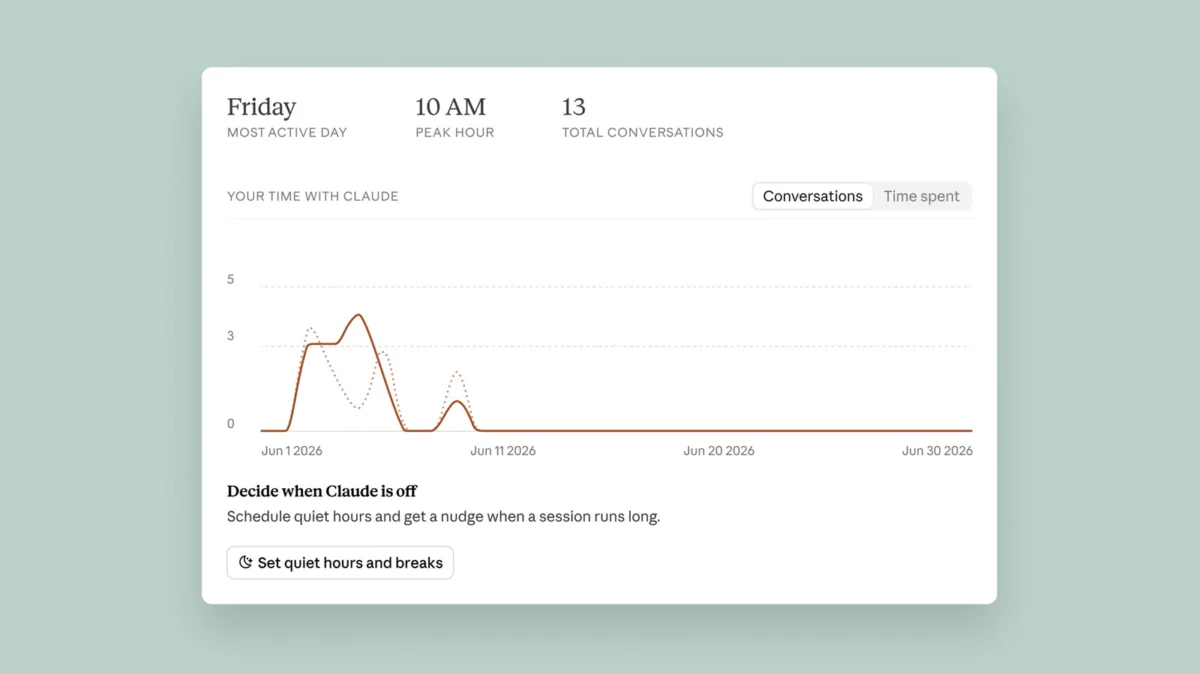
In a significant move addressing the burgeoning concerns around digital over-engagement, Anthropic, a leading artificial intelligence research company, has officially launched "Reflect," an innovative dashboard integrated within its Claude AI chatbot. This new feature is designed to provide users with comprehensive insights into their interaction patterns with Claude, offering tools to promote more thoughtful and balanced technological use. The introduction of Reflect signals a proactive stance by Anthropic, aligning with its foundational commitment to responsible AI development and user well-being, aiming to mitigate potential downsides of excessive digital immersion, often dubbed "AI overuse."
Reflect emerges as a sophisticated fusion of popular digital well-being applications, drawing parallels to Spotify Wrapped for its retrospective usage summaries and Apple’s Screen Time for its proactive management functionalities. Its core purpose is to equip users with the data and mechanisms necessary to understand, and subsequently moderate, their engagement with Claude. This initiative comes at a critical juncture as AI chatbots increasingly weave themselves into the fabric of daily productivity, creativity, and information consumption, making the boundary between beneficial utility and potential over-reliance increasingly blurred.
Understanding Reflect: Features and Functionality
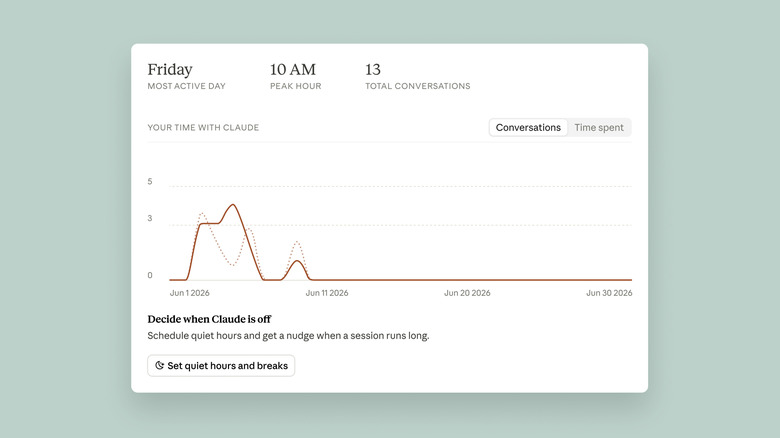
Accessing the Reflect dashboard is an intuitive process, embedded directly within Claude’s settings menu. Upon activation, users are prompted to generate their initial "reflect report," a personalized summary of their engagement. By default, this report covers the most recent month of activity, but users have the flexibility to expand this timeframe to encompass the last three, six, or even twelve months, offering a longitudinal perspective on their AI interaction habits. While the dashboard currently provides a high-level overview of conversation summaries, a keenly anticipated feature — the exact measurement of "time spent" using Claude — is marked as "coming soon." Ryn Linthicum, Anthropic’s head of wellbeing policy, acknowledged this limitation, attributing it to the absence of an internal system for precise time tracking during Reflect’s developmental phase. Despite this temporary omission, the existing reporting capabilities offer valuable insights into interaction frequency and topic diversity.
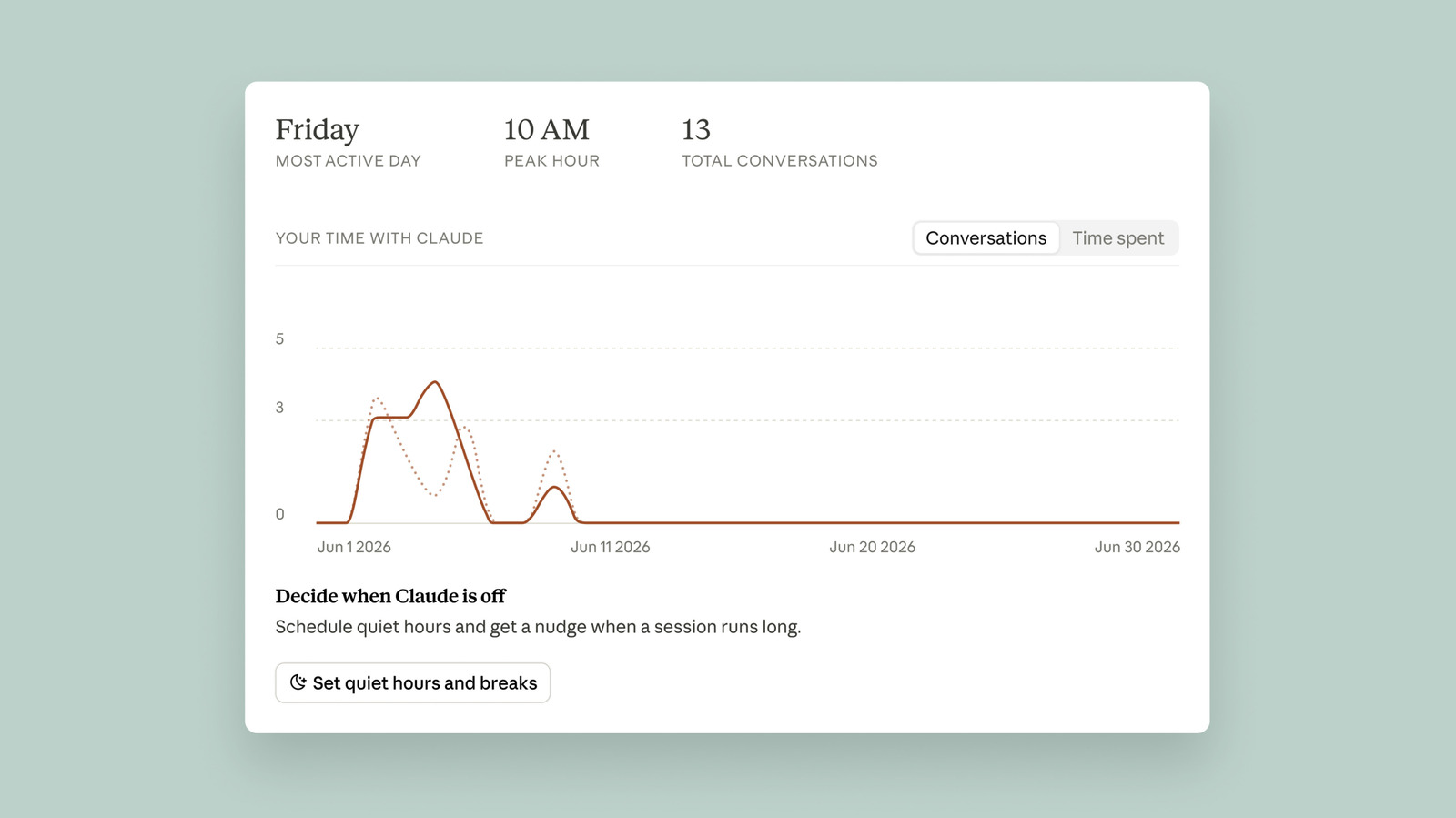
Beyond retrospective analysis, Reflect provides two primary mechanisms for proactive usage management:
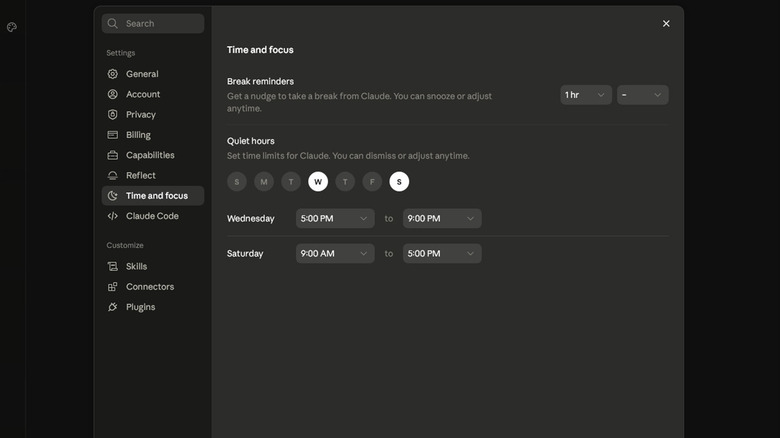
- Break Reminders: These are customizable nudges delivered by Claude after a user has engaged with the chatbot for a predetermined duration. Users can configure these reminders to appear every 15, 30, or 45 minutes, or at longer intervals of a few hours. The intent behind these reminders is to encourage users to step away from their screens, engage in other activities, and prevent prolonged, uninterrupted AI interaction, which can contribute to digital fatigue and diminished focus.
- Quiet Hours: This feature allows users to designate specific periods during the day when they wish to restrict their access to Claude. The flexibility of Quiet Hours is a notable aspect, enabling users to set distinct blocks for each day of the week. For instance, a user might establish a "roadblock" from 5 PM to 8 PM on a Monday to facilitate family time or evening activities, while opting for a different window, such as 12 PM to 4 PM, on a Saturday to encourage weekend leisure. These quiet periods are designed to foster a healthier work-life balance and ensure that AI tools do not encroach upon personal time or critical periods of rest.
It is crucial to note that, akin to most digital screen time management tools, Reflect’s nudges and quiet hour restrictions are designed to be soft limits. Users retain the ultimate autonomy to dismiss reminders or bypass quiet hour restrictions. This design choice underscores a philosophy of empowerment rather than enforced control, placing the onus of self-regulation squarely on the user while providing the necessary tools and awareness. Adjustments to break reminders and quiet hours can be made easily within the "Time and focus" section of Claude’s settings menu.
A particularly innovative aspect of the Reflect dashboard is its AI Fluency section. Located at the bottom of the interface, this feature transcends mere usage monitoring by offering personalized recommendations aimed at enhancing the efficiency and effectiveness of a user’s interaction with Claude. For example, if the system detects that a user frequently re-establishes similar contexts or repeats identical requests, it might suggest leveraging Claude’s "Projects feature." This functionality allows users to group related prompts and conversations, thereby streamlining their workflow and eliminating the need for redundant context-setting. Such recommendations are a testament to Anthropic’s goal of fostering "smarter" AI usage, where the technology not only assists but also educates users on optimizing their engagement. Early testing of this tool indicates its potential in helping users harness Claude’s capabilities more strategically, transforming interaction from reactive querying to proactive project management.
The Broader Context: AI Adoption and Digital Well-being
The launch of Reflect is not an isolated event but rather a response to a rapidly evolving digital landscape. The past few years have witnessed an unprecedented surge in the adoption of generative AI, with tools like Claude becoming indispensable for a growing segment of the global workforce and general public. From drafting complex reports and brainstorming creative ideas to summarizing vast amounts of information and providing personalized tutoring, AI chatbots have demonstrated their capacity to augment human capabilities significantly. However, this increased reliance on AI also brings forth legitimate concerns regarding its impact on human cognition, attention spans, and overall well-being.
Research consistently highlights the pervasive nature of digital engagement. Global averages for daily screen time often exceed several hours, with some demographics spending upwards of seven hours per day interacting with digital devices. While AI promises increased productivity, there is a parallel discourse emerging about the potential for "AI addiction" or compulsive use. Concerns range from diminished face-to-face social interaction, impaired sleep patterns due to late-night engagement, to a potential erosion of critical thinking skills if users excessively delegate cognitive tasks to AI. In this environment, tools like Reflect become essential safeguards, offering users a mirror to their digital habits.
Anthropic’s constitutional AI approach, which emphasizes building AI systems that are helpful, harmless, and honest, provides the philosophical bedrock for Reflect. The company has consistently advocated for a human-centric approach to AI development, prioritizing safety and ethical considerations alongside technological advancement. Reflect is a tangible manifestation of this philosophy, extending the principles of responsible AI beyond the algorithms themselves to the user experience. By empowering users to manage their interactions, Anthropic is not just building a powerful AI; it is also fostering a culture of mindful technology consumption.
Industry Trends and the Future of AI-Human Interaction
The introduction of Reflect positions Anthropic at the forefront of a growing movement within the tech industry towards promoting digital well-being. Major tech giants like Apple and Google have long integrated screen time and digital well-being dashboards into their operating systems, acknowledging the societal impact of their products. Similarly, platforms like Spotify have popularized year-end summaries of user habits, fostering a sense of self-awareness regarding consumption patterns. Reflect extends this trend into the realm of advanced AI, suggesting a maturation of the industry’s understanding of its broader responsibilities.
This initiative also sets a precedent for other AI developers. As the competitive landscape for AI chatbots intensifies, features that prioritize user health and ethical engagement could become significant differentiators. Companies that demonstrate a genuine commitment to preventing AI overuse and fostering balanced interaction may garner greater trust and loyalty from users, particularly as regulatory bodies globally begin to scrutinize the ethical implications and societal impact of AI more closely. Inferred statements from industry analysts suggest that such user-centric features could evolve from niche offerings to industry standards, pushing developers to integrate well-being considerations from the ground up.
While Reflect’s current iteration relies on user self-discipline to honor the set limits, its future development could explore more robust, yet still user-controlled, enforcement mechanisms. The eventual inclusion of an accurate "time spent" metric will further enhance the dashboard’s utility, providing more granular data for self-reflection. The balance between offering powerful AI capabilities and ensuring they serve humanity without detriment is delicate. Reflect represents Anthropic’s attempt to strike this balance, viewing AI not as a replacement for human intellect or interaction, but as an enhancement, used judiciously and mindfully.
The broader implications of tools like Reflect extend to the very nature of human-AI collaboration. By encouraging users to reflect on their engagement, Anthropic is subtly guiding them towards a more intentional and strategic use of AI. This could lead to a future where AI is perceived less as an all-encompassing digital assistant and more as a specialized tool, deployed thoughtfully for specific tasks, thereby preserving human agency and cognitive capacity for higher-order thinking, creativity, and social engagement.
In conclusion, Anthropic’s Reflect dashboard is a timely and significant contribution to the evolving discourse on digital well-being in the age of advanced AI. By offering a blend of usage analytics and customizable management tools, it empowers users to cultivate a healthier, more intentional relationship with their AI companion. This move not only reinforces Anthropic’s commitment to responsible AI development but also sets a benchmark for the industry, emphasizing that the true value of artificial intelligence lies not just in its capabilities, but also in its capacity to serve humanity without compromising its well-being. As AI continues its rapid ascent, initiatives like Reflect will be crucial in shaping a future where technology truly enhances, rather than detracts from, the human experience.