Evan Lee Salim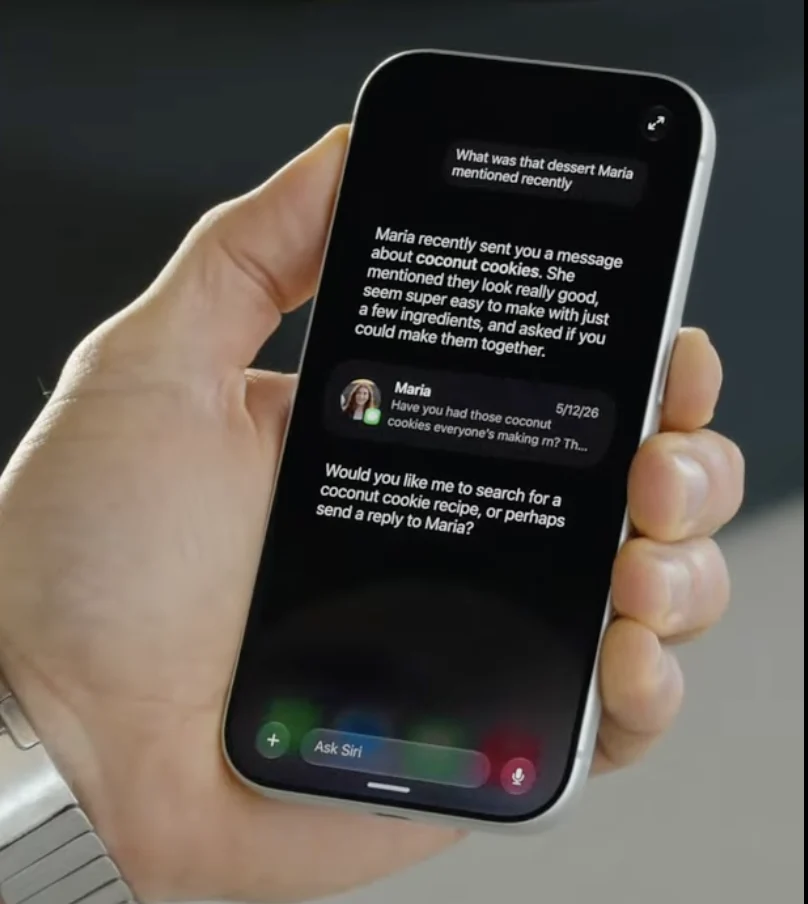
After a protracted development cycle marred by multiple delays and a notable legal settlement, Apple has finally rolled out its enhanced Siri AI to the public beta build of iOS 27, launched in July. This significant update ushers in the capabilities Apple has long promised: a digital assistant capable of understanding personal context, leveraging extensive world knowledge, and seamlessly surfacing relevant information stored directly on an iPhone. While the arrival of a truly functional and impressively capable AI assistant marks a substantial technical achievement for the Cupertino giant, the prevailing sentiment across the tech community is one of muted satisfaction rather than groundbreaking excitement, largely due to the rapid advancements made by competitors in the intervening years.
A New Era for Siri: Core Capabilities and User Experience Redefined
The reimagined Siri AI represents a fundamental overhaul of Apple’s iconic voice assistant, moving beyond its previous limitations to deliver a highly intuitive and powerful user experience. Central to this transformation is Siri’s newfound ability to engage in natural, back-and-forth conversations, a stark contrast to the often stilted and command-driven interactions of its predecessors. Users can now fine-tune Siri’s expressivity and pacing of voice responses, allowing for a more personalized and comfortable dialogue. Furthermore, the option to interact with Siri via typing, or through a dedicated application that retains conversational history, provides enhanced flexibility and accessibility for various use cases and preferences.
One of the most impactful advancements is Siri’s deep integration with personal context and on-device data. The assistant can now intelligently navigate and retrieve information from a user’s photos, emails, contacts, texts, and calendar appointments, even when the user lacks precise recall of details or storage locations. For example, a user could simply request "Pull up the last receipt I saved on my iPhone," and Siri would accurately locate it, regardless of where it was stored or what the receipt was for. This capability extends to complex queries involving visual data; Siri can extract a Driver’s License number from a photo of a license or retrieve information from a screenshotted QR code, making previously cumbersome tasks effortlessly simple.
Beyond retrieval, Siri AI facilitates robust interaction with the iPhone’s operating system and applications. Users can launch websites, get directions, play music, edit photos, draft emails, and manage audiobooks with unprecedented accuracy and reliability. A long-standing frustration among users was Siri’s inconsistency in playing requested media on preferred apps; the new Siri AI reportedly addresses this fundamental issue, consistently delivering the correct song, podcast, or audiobook.
The assistant also ventures into more generative and proactive roles, serving as a brainstorming partner. It can help refine ideas, provide summaries on new topics, or even suggest recipes based on available ingredients in a user’s fridge. For event-goers, Siri can accurately provide information on band performance dates or other local happenings, tailored to the user’s location. The integration of Siri within the Camera’s viewfinder allows for real-world object recognition and information retrieval, while practical features like splitting a restaurant bill among friends further underscore its utility in everyday scenarios. In essence, the new Siri AI embodies the vision Apple initially presented over a decade ago: a truly intelligent assistant that simplifies iPhone interaction through natural language and provides comprehensive answers without necessitating a web search.
The Journey to Arrival: A Chronology of Delays and Development
The path to the current iteration of Siri AI has been anything but straightforward, marked by a series of internal challenges, strategic re-evaluations, and notable delays that have spanned several years. Siri, initially launched in 2011 alongside the iPhone 4S, was hailed as a revolutionary step in human-computer interaction. However, its early promise quickly gave way to widespread user frustration as its capabilities failed to evolve at the pace of user expectations or the burgeoning digital landscape. For years, Siri remained largely a functional but often unreliable voice interface, struggling with complex commands, contextual understanding, and integration with third-party applications.
Reports from inside Apple over the past half-decade painted a picture of internal strife, fragmented teams, and a lack of clear strategic direction for its AI efforts. While competitors began investing heavily in large language models (LLMs) and advanced machine learning, Apple’s progress on Siri appeared to stagnate. The company’s historically stringent privacy policies, while a core tenet of its brand, also presented unique challenges in developing AI models that typically thrive on vast amounts of user data.
The current generation of Siri AI has been particularly prone to public delays. Initial reports in 2025 indicated that a more personalized and AI-powered Siri was pushed back. Further setbacks were reported in February 2026, suggesting another delay in its revamp. These postponements culminated in a significant class-action lawsuit filed against Apple, alleging misleading marketing regarding Siri’s promised AI features and the prolonged inability to deliver them. In May 2026, Apple agreed to pay $250 million to settle this lawsuit, a clear acknowledgment of the challenges and the financial repercussions of its unfulfilled promises. This settlement underscored the pressure on Apple to finally deliver a competent AI assistant. Following these rounds of delays and the legal resolution, Apple finally opened its new Siri AI to everyone with the iOS 27 public beta in July 2026, signaling the culmination of years of intensive development and re-prioritization.
The Broader AI Landscape: Why Siri’s Arrival Feels "Anticlimactic"
While the technical achievements of the new Siri AI are undeniable, its launch has been met with a sense of "anticlimax" largely due to the dramatic evolution of the artificial intelligence landscape in the years Apple spent refining its assistant. The period between 2022 and 2024 witnessed an unprecedented explosion in generative AI technologies, spearheaded by OpenAI’s ChatGPT and rapidly followed by Google’s Bard (now Gemini), Microsoft’s Copilot, and numerous other sophisticated models.
These competitors rapidly advanced beyond basic chatbot functionality, pushing the boundaries of what AI could achieve. Today’s leading AI tools are adept at complex tasks such as coding and building software from natural language prompts. AI agents are capable of executing multi-step tasks across various applications, reasoning through problems, remembering past interactions, creating diverse media (text, images, audio, video), and working alongside users as intelligent collaborators. The ability to function as a "functional chatbot" or a mere "AI helper," while a significant leap for Siri, is no longer the novel and exciting breakthrough it would have been just a few years prior. User expectations have been recalibrated by the pervasive influence of these advanced AI systems, setting a much higher bar for what constitutes innovative AI.
This shift in the market context means that Apple, once a pioneer in bringing voice assistants to the mainstream, is now largely playing catch-up in a field it once led. The impressive capabilities of the new Siri, while undeniably valuable and useful for Apple’s vast ecosystem, arrive in a world where sophisticated AI is already performing tasks that go far beyond understanding personal context or retrieving on-device information.
Under the Hood: The Apple-Google Partnership and Technical Foundations
A crucial element enabling Siri AI’s advanced capabilities is Apple’s strategic partnership with Google, specifically for the utilization of Google’s Gemini AI models. This collaboration represents a pragmatic decision by Apple, acknowledging the significant lead Google and other AI powerhouses have established in foundational large language models. However, Apple’s approach has been far from a mere rebranding exercise. The company has leveraged Google’s underlying technology to train and refine its own proprietary "Apple Foundation Models."
This hybrid strategy allows Apple to benefit from Google’s extensive AI research and infrastructure while maintaining control over its unique ecosystem and user experience. The resulting AI models are optimized to run efficiently on Apple’s custom Silicon, ensuring high performance and energy efficiency on devices like the iPhone. Crucially, Apple has also integrated these models with its "Private Cloud Compute" infrastructure. This innovative architecture is designed to handle more complex AI tasks that require greater computational power than can be delivered on-device, while simultaneously upholding Apple’s stringent privacy standards. Sensitive user data processed in the cloud is encrypted and compartmentalized, ensuring that it is not accessible to Apple or its partners, a key differentiator in a market increasingly concerned with data privacy. This combination of on-device processing for immediate, context-aware tasks and secure private cloud compute for more intensive operations provides a robust and privacy-centric foundation for the new Siri AI.
Industry Reactions and Analyst Perspectives
The debut of Siri AI has elicited a range of reactions from industry analysts and tech commentators. Many acknowledge Apple’s impressive execution in finally delivering on its long-held promises for the assistant. Analysts from firms like IDC and Gartner have pointed out that the new Siri addresses many of the critical shortcomings that had plagued the platform for years, significantly enhancing the utility of Apple devices. "Apple has effectively fixed a longstanding bug rather than created something entirely revolutionary," noted one prominent tech analyst, capturing the prevailing sentiment. "It’s how Siri was always meant to work, and the marvel is less about innovation and more about finally achieving functional competency after years of failing to perform basic tasks correctly."
While the capabilities are lauded, the timing remains a contentious point. The general consensus is that Apple’s delays have cost it valuable ground in the fiercely competitive AI race. "Had this version of Siri launched three years ago, it would have been a game-changer," commented another industry observer. "Today, it’s a necessary step to remain competitive, but it doesn’t set a new standard in the way Apple products historically have."
Early feedback from beta testers has largely been positive, with users reporting a noticeable improvement in accuracy, contextual understanding, and naturalness of interaction. Many express relief that Siri can now reliably perform tasks that were previously hit-or-miss, such as playing specific songs or locating obscure files. However, some users, particularly those who have extensively used advanced generative AI tools, still find Siri’s capabilities, while impressive for an integrated phone assistant, not quite on par with the open-ended creativity and multi-modal prowess of standalone AI models. The general public, who do not typically run beta builds on their devices, will gain access to the new Siri when Apple officially releases iOS 27, expected in September. This broader release will be the true test of public perception and adoption.
Implications for Apple and the AI Market
The launch of the enhanced Siri AI carries significant implications for Apple’s ecosystem, its standing in the broader technology market, and the future trajectory of AI development. For Apple, this update is critical for restoring credibility in the artificial intelligence domain. For years, Siri’s underperformance was a notable weakness for a company renowned for seamless user experiences. By finally delivering a highly capable AI assistant, Apple solidifies its position as a holistic technology provider, capable of integrating advanced software with its premium hardware. This enhanced Siri will undoubtedly increase user stickiness within the Apple ecosystem, making iPhones and other Apple devices even more indispensable for productivity and daily life. It also lays the groundwork for potential future revenue streams, whether through advanced AI services or deeper integration with Apple’s growing suite of subscription offerings.
In the broader AI market, Siri’s arrival intensifies competition, particularly in the realm of on-device AI and personalized assistants. Apple’s emphasis on privacy through its Private Cloud Compute architecture sets a high bar for other companies, challenging them to develop equally secure and performant AI solutions. The hybrid approach, leveraging both Google’s foundational models and Apple’s proprietary refinements, highlights a trend where even tech giants are increasingly open to strategic partnerships to accelerate AI development, rather than relying solely on in-house innovation. This could spur further collaborations across the industry, fostering a more interconnected AI ecosystem.
For the end-user, the implications are overwhelmingly positive. The new Siri promises a significant upgrade in productivity, accessibility, and overall personalization. The ability to interact with a device more naturally, to retrieve information effortlessly, and to have a truly intelligent assistant embedded within one’s daily digital life represents a substantial improvement in the human-computer interface. As AI capabilities continue to permeate every aspect of technology, Apple’s revitalized Siri ensures that its vast user base will not be left behind in the ongoing AI revolution, offering a powerful, privacy-conscious gateway to the future of digital assistance.
Looking Ahead: The Road to General Release
With the public beta now underway, Apple’s focus will shift towards refining Siri AI ahead of its official release alongside iOS 27, anticipated in September. This period will be crucial for gathering extensive user feedback, identifying any remaining bugs, and optimizing performance across the diverse range of Apple devices. The challenge for Apple will be to not only ensure a smooth general release but also to demonstrate a clear roadmap for Siri’s continued evolution. In a field as dynamic as artificial intelligence, maintaining relevance requires constant innovation. Future iterations of Siri will likely delve deeper into multi-modal understanding, more proactive assistance, and seamless integration across Apple’s entire hardware ecosystem, including Macs, iPads, and even visionOS. The initial launch of Siri AI is a monumental step, but it marks the beginning of Apple’s renewed journey in the rapidly accelerating world of artificial intelligence, rather than its culmination.