Sisilia Frederika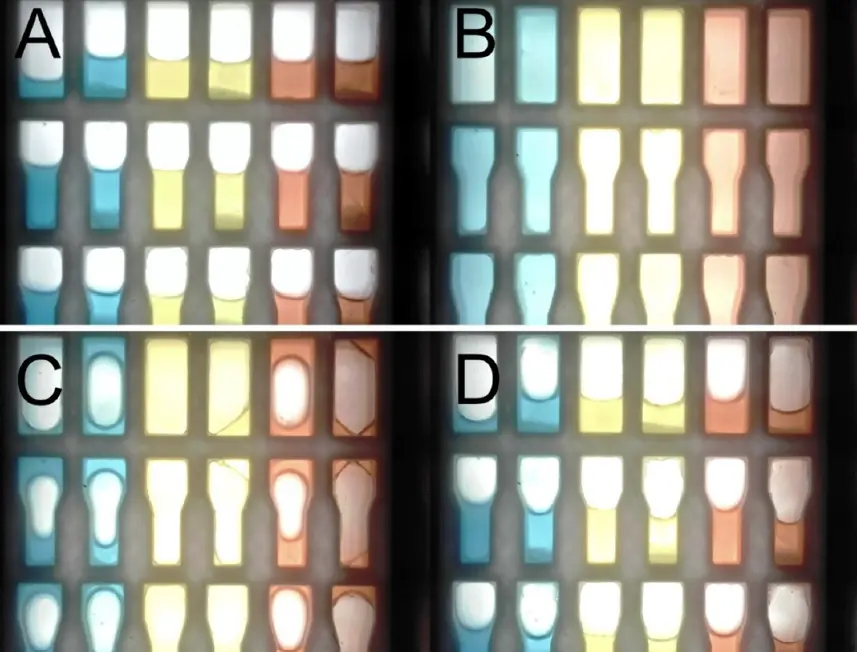
The transition from short-term lunar exploration to the establishment of a permanent human presence on the Moon hinges on a fundamental shift in logistics: the ability to produce food locally. While the International Space Station (ISS) has long served as a laboratory for orbital botany, the environmental conditions of the Moon present a unique physical middle ground between the microgravity of low Earth orbit and the full gravity of Earth. A team of prominent researchers, including Karl Hasenstein of the University of Louisiana at Lafayette, John Kiss of the Florida Institute of Technology, and Christopher McKay of NASA’s Ames Research Center, has taken a significant step toward solving this puzzle. Their recent study, published in the journal Microgravity Science and Technology, provides the first detailed physical framework for how water—the most critical element for plant life—behaves under the specific constraints of lunar gravity.
The Physical Challenge of Partial Gravity
On Earth, the behavior of water is dominated by gravity. Whether in a watering can or deep within soil pores, gravity dictates the downward movement of fluids, ensuring a predictable distribution that allows plant roots to access both hydration and oxygen. In the microgravity environment of the ISS, this predictability vanishes. Without a significant gravitational pull, surface tension and capillary forces become the dominant drivers of fluid movement. This often results in "waterlogging" at the root zone, where water clings to surfaces and prevents the necessary exchange of gases, effectively suffocating the plant.
The Moon, however, exists in a "partial gravity" regime, possessing approximately one-sixth of Earth’s gravitational acceleration (1.62 m/s²). Until now, the scientific community lacked long-duration data on how this specific level of gravity influences fluid dynamics. Understanding this "middle ground" is essential because the physics of the Moon are neither those of Earth nor those of the ISS. For mission planners, the goal is to determine if lunar soil, or regolith, can be used as a viable growing medium without the complex and mass-intensive hardware required for hydroponic systems.
The New Shepard 29 Mission: A Breakthrough in Simulation
One of the primary hurdles in lunar research is the difficulty of replicating 1/6th gravity for a duration long enough to observe fluid stabilization. Traditional terrestrial methods, such as drop towers, offer only a few seconds of weightlessness. Parabolic flights, often referred to as "vomit comets," can simulate lunar gravity for roughly 20 to 30 seconds at a time. Neither provides sufficient time for the complex interactions of surface tension and meniscus formation to reach an equilibrium state.
To overcome this, the research team utilized a unique capability of Blue Origin’s New Shepard 29 (NS-29) mission, which launched in February 2025. Following the separation of the booster, the uncrewed capsule utilized its reaction control thrusters to initiate a controlled spin at approximately 11 revolutions per minute (RPM). This rotation generated a centrifugal acceleration of 1.76 m/s², successfully simulating the lunar gravitational environment.
Crucially, this experiment lasted for approximately two minutes—a duration orders of magnitude longer than previous simulation methods. This window allowed the team’s autonomous experimental payload to record the steady-state behavior of different fluids in real-time, providing a high-fidelity data set that was previously unobtainable.
Experimental Design and Fluid Analysis
The experimental hardware consisted of a sophisticated 3D-printed housing containing 18 distinct fluid-filled test cavities. To capture the data, the researchers integrated an Arducam camera system paired with LED backlighting to record the movement and shape of the fluids. The team tested three specific liquids to represent different physical properties:
- Deionized water: Dyed yellow for visibility, representing standard hydration.
- 30% Glycerol solution: Dyed blue, used to study higher viscosity and its effects on "wetting" capabilities.
- 0.8% Saline solution: Dyed red, simulating the nutrient-rich solutions often used in agricultural irrigation.
The cavities were designed with varying wall geometries, including vertical surfaces and angles of 15 and 20 degrees. By observing how these liquids tracked along the curved and angled surfaces—a property known as the meniscus—the researchers could apply hydrodynamic equations to calculate surface tension, capillary length, and the specific wettability of the materials under lunar conditions.
Key Findings: Meniscus Curvature and Liquid Films
The results of the NS-29 experiment revealed several critical differences in fluid behavior under lunar gravity. The most prominent observation was the alteration of the meniscus curvature. In Earth’s gravity, the weight of the liquid tends to flatten the profile of the water’s surface. Under lunar gravity, however, the meniscus became significantly more rounded and pronounced.
Furthermore, the lower gravitational pull allowed for the formation of thicker liquid films along the walls of the containers. These films were able to "climb" higher and cling more effectively to surfaces than they would on Earth. This suggests that in a lunar greenhouse, water might move through soil or growth substrates via capillary action more aggressively than anticipated, potentially staying suspended in the upper layers of soil rather than draining away.
However, the researchers noted a discrepancy: the measured surface tension and capillary length were slightly lower than the theoretical values established in physics textbooks. The team attributed this to the "microscopic texture" of the 3D-printed chambers. The ridges created during the printing process acted as tiny conduits, enhancing the "wettability" of the surface through a phenomenon known as Wenzel’s state, where surface roughness amplifies the natural tendencies of a liquid.
Implications for Lunar Regolith and Agriculture
While the experiment focused on pure fluid physics, the implications for actual lunar farming are profound. Raw lunar regolith is a challenging medium for agriculture. The top layer of lunar dust is notoriously hydrophobic (water-repellent) and extremely dry. Conversely, deeper layers of regolith often consist of larger, jagged grains that create significant voids.
On Earth, gravity would pull water through these voids. On the Moon, the research suggests that water might either be resisted by the hydrophobic surface or, once it enters the soil, form stagnant, oxygen-depleted reservoirs in the larger gaps. This creates a "dual threat" for lunar plants: they could struggle to absorb water at the surface but face root rot and suffocation once the water pools deeper down.
One innovative solution highlighted by the study is the use of glycerol. The experiment demonstrated that the glycerol solution had superior wetting capabilities compared to saline or pure water. Because glycerol is already recognized as a safe osmotic regulator for plants, the researchers suggest that future lunar agricultural systems might use glycerol-based additives to help "prime" the lunar soil, ensuring that water is distributed evenly and absorbed effectively by the regolith.
The Scale of the Challenge: 650 Square Meters
The drive to understand lunar soil dynamics is fueled by the sheer scale of the resources required to sustain human life. Current estimates suggest that to provide a nutritionally complete diet for a crew of six astronauts, a functional crop-growing area of approximately 650 square meters (nearly 7,000 square feet) is required.
If mission planners were to rely solely on hydroponic systems—which require heavy tanks, pumps, and specialized piping—the mass required to launch such an operation from Earth would be prohibitively expensive. However, if the Moon’s own soil can be repurposed as a growth medium (a process known as In-Situ Resource Utilization, or ISRU), the cost and complexity of deep-space missions could be drastically reduced.
The work of Hasenstein, Kiss, and McKay provides the foundational physics necessary to design these future "lunar farms." By understanding how water clings, climbs, and pools in 1/6th gravity, engineers can now begin to design irrigation systems that account for increased capillary action and reduced drainage.
Chronology of Lunar Botanical Research
The NS-29 experiment is the latest in a series of milestones regarding space-based plant growth:
- Apollo Era: Initial studies on lunar samples showed that while regolith contains no organic matter, it does contain minerals that plants can utilize, though the sharp, glass-like nature of the dust can damage delicate root tissues.
- 2014: NASA’s Veggie plant growth system was activated on the ISS, successfully growing red romaine lettuce.
- 2022: Researchers at the University of Florida successfully germinated Arabidopsis thaliana (thale cress) in small samples of genuine lunar soil returned by the Apollo 11, 12, and 17 missions.
- 2025: The NS-29 mission provides the first long-duration data on fluid physics at 1/6th gravity, bridging the gap between microgravity theory and lunar reality.
Conclusion and Future Outlook
The findings from the NS-29 mission represent a pivot point in the study of space biology. We have moved beyond asking if plants can grow in space to asking how we can optimize the physics of their environment to ensure high-yield, sustainable harvests.
As NASA and its international partners move forward with the Artemis program, the goal of establishing a long-term lunar base becomes increasingly tangible. The ability to manage water in partial gravity is not merely a matter of scientific curiosity; it is a prerequisite for survival. With the data provided by this study, the vision of a "green" Moon—where astronauts dine on fresh produce grown in the lunar soil beneath their feet—has moved one significant step closer to reality. Future research will likely focus on the integration of these fluid dynamics into automated "smart" irrigation systems that can adapt to the unique hydrophobic and capillary challenges of the lunar surface.