Sisilia Frederika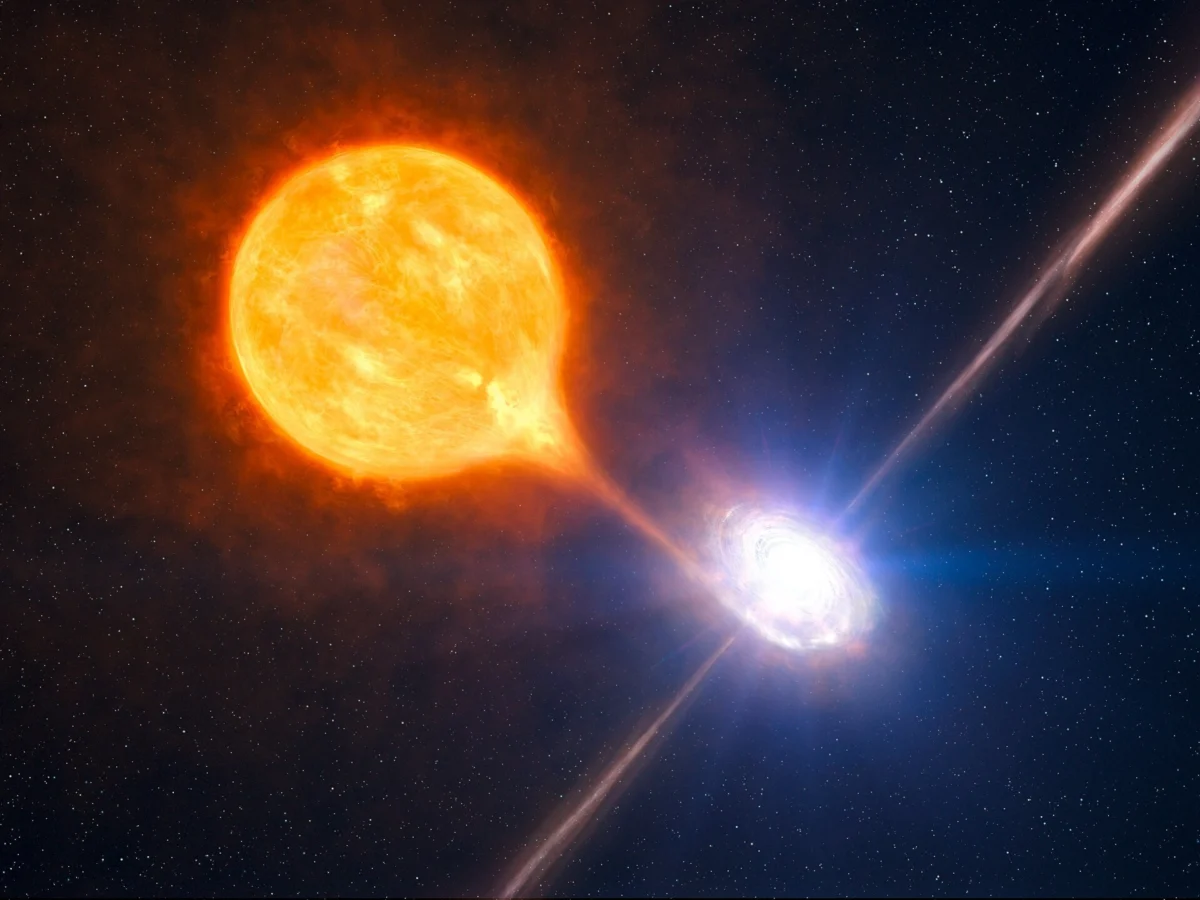
Black holes represent the most extreme gravitational environments in the known universe, serving as natural laboratories where the laws of physics are pushed to their breaking points. For decades, these celestial enigmas have been studied primarily through indirect observation—analyzing the behavior of light and matter at their peripheries or detecting the ripples in spacetime known as gravitational waves. However, the scientific community is now looking toward a more direct approach. Cosimo Bambi, a prominent theoretical physicist from Fudan University in Shanghai, has recently proposed a roadmap for a direct mission to a black hole. His latest research, detailed in a pre-print paper on the arXiv repository, explores the theoretical and engineering requirements for sending a gram-sized probe to a nearby black hole, potentially revolutionizing our understanding of Einstein’s Theory of General Relativity.
The primary motivation for such a mission lies in the limitations of remote sensing. While the Event Horizon Telescope (EHT) has provided historic imagery of the supermassive black holes M87 and Sagittarius A, the resolution and depth of data obtainable from Earth-based or Earth-orbiting instruments are finite. To probe the finer details of the event horizon, the photon sphere, and the extreme curvature of spacetime, scientists argue that a physical presence is required. However, the logistical hurdles are immense, beginning with the most basic question of cosmic geography: where is the nearest black hole?
The Hunt for a Nearby Target
As of current astronomical records, the closest confirmed black hole is Gaia BH1, located approximately 1,560 light years away in the constellation Ophiuchus. While "close" in galactic terms, 1,500 light years remains an insurmountable distance for current propulsion technology. However, Gaia BH1 was only detected because of its gravitational influence on a visible companion star. According to Bambi’s research, the vast majority of black holes in the Milky Way are "dark"—isolated entities that do not interact with a stellar partner and thus emit no light.
Statistical models presented in the paper suggest the Milky Way contains roughly 100 million stellar-mass black holes. Approximately 92% of these are estimated to be isolated. Based on the volume of the galaxy—estimated at 150 cubic kiloparsecs—the density of these objects suggests that one stellar-mass black hole should exist for every 1,500 cubic parsecs. Mathematically, this raises a tantalizing possibility: an undetected black hole could reside within 20 to 25 light years of the Solar System.
At a distance of 20 light years, such an object would pose no gravitational threat to Earth, but it would fall within the theoretical range of a high-velocity interstellar mission. The challenge remains detection. Bambi suggests that these invisible neighbors could be identified by monitoring the Local Interstellar Clouds. As a black hole traverses these clouds, it would inevitably "swallow" small amounts of gas, producing a characteristic radiation signature. Current and future multi-wavelength astronomical surveys, utilizing high-sensitivity X-ray and radio telescopes, are theoretically capable of picking up these faint signals of accretion.
Overcoming the Tyranny of the Rocket Equation
The central obstacle to any interstellar mission is propulsion. Traditional chemical rockets, which have powered humanity’s exploration of the solar system, are fundamentally limited by the "tyranny of the rocket equation." This principle dictates that to increase a rocket’s velocity, more fuel is required, which in turn increases the mass of the craft, requiring even more fuel. To reach a destination 20 light years away within a human lifetime, a chemical rocket would require more fuel than exists in the observable universe.
Bambi’s proposal pivots away from internal combustion and toward directed-energy propulsion: the laser-pushed solar sail. This concept involves a ground-based or space-based laser array of immense power focusing a beam on a highly reflective sail attached to a miniature probe. Because the "fuel" (the laser) remains stationary and does not need to be carried by the craft, the probe can be accelerated to relativistic speeds—fractions of the speed of light.
The proposed mission architecture consists of two primary components. The first is a "StarChip," a gram-scale microchip integrated with navigation, communication, and scientific sensors. The second is a 10-square-meter light sail constructed from a dielectric metamaterial. This material is designed to maximize reflectivity while minimizing absorption to prevent the sail from melting under the intense heat of the laser. The paper calculates that a sufficiently powerful laser could accelerate this assembly to one-third the speed of light (0.33c) in approximately 17 minutes.
Mission Timeline and Operational Logistics
A mission traveling at 0.33c would reach a target 20 to 25 light years away in approximately 60 to 75 years. However, the high-velocity nature of the journey introduces a significant complication: deceleration. Carrying enough fuel or hardware to slow down at the destination would add too much mass to the initial launch. Consequently, the mission would be a "flyby" rather than an orbital insertion.
The probe would approach the black hole at relativistic speeds, providing a narrow window of time—perhaps only hours or days—to collect high-resolution data. The sensors would need to capture images of the accretion disk, measure gravitational lensing effects, and perhaps even detect the elusive Hawking radiation. Once the flyby is complete, the probe would transmit its data back to Earth using an onboard laser communication system. Given the 20-light-year distance, this data would take another two decades to reach Earth.
The total mission duration, from launch to data reception, would span between 80 and 100 years. Such a project would represent a multi-generational scientific endeavor, likely outlasting the careers and lives of the original engineers and principal investigators. This requires a shift in the sociological framework of scientific funding and management, moving toward "legacy science" models.
Current Technological Gaps and the Legacy of Breakthrough Starshot
While the physics of Bambi’s proposal are sound, the engineering requirements currently exceed human capability. The development of a gram-sized chip that can survive the rigors of interstellar space—including radiation, micro-impacts, and the extreme acceleration phase—is still in its infancy. Furthermore, the laser array required to push the sail would need to operate at a power level of approximately 100 gigawatts, roughly the total power consumption of a large nation.
The proposal draws heavy inspiration from Breakthrough Starshot, a $100 million research and engineering project founded in 2016 by Yuri Milner, Stephen Hawking, and Mark Zuckerberg. Starshot aimed to send similar probes to Proxima Centauri. However, the project faced significant headwinds and was officially discontinued in September 2025. The cessation of Starshot was viewed as a setback for interstellar advocacy, yet many of the research papers and technological proofs-of-concept generated by the initiative remain available to the scientific community.
Bambi’s paper serves as a spiritual successor to Starshot, refining the mission profile specifically for black hole exploration. He argues that while the technology does not exist today, there are no "showstoppers" in the laws of physics that prevent its development.
The Scientific and Philosophical Implications
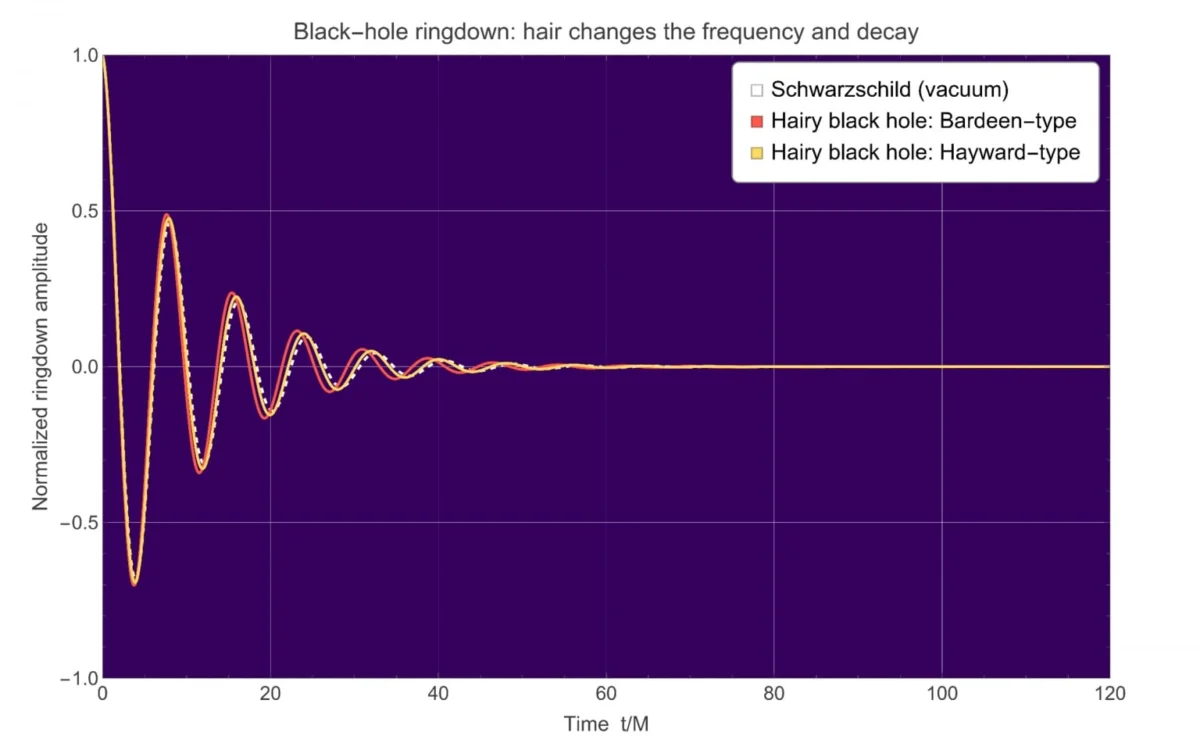
The successful observation of a black hole from a distance of a few astronomical units would provide the most stringent test of General Relativity ever conducted. Scientists could observe how the black hole’s spin affects the surrounding spacetime (frame-dragging) and verify the "no-hair theorem," which postulates that black holes can be characterized by only three observable properties: mass, charge, and angular momentum.
Beyond the physics, the mission carries profound philosophical weight. It would represent humanity’s first physical foray beyond the Heliosphere with the intent of visiting another stellar object. The search for a "hidden" black hole within 25 light years also highlights how little we truly know about our immediate galactic neighborhood.
Looking forward, the international scientific community is beginning to organize around these long-term goals. A planned international conference on interstellar probes and black hole exploration is scheduled for the summer of 2027. This summit aims to bring together experts in materials science, laser physics, and astrophysics to establish a formal roadmap for the next century of exploration.
The path to a black hole is fraught with technical and temporal challenges. It requires a level of international cooperation and long-term planning rarely seen in human history. However, as Cosimo Bambi’s research suggests, the discovery of a nearby black hole could be the catalyst that transforms this science fiction concept into a scientific priority. If a target is found within the "Local Bubble" of our galaxy, the pressure to reach out and touch the void may become irresistible, marking the beginning of humanity’s era as an interstellar species.