Sisilia Frederika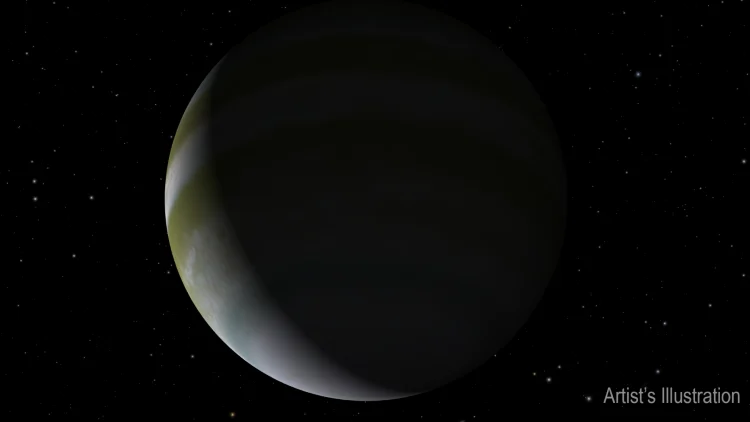
The quest to understand the most common type of planet in the Milky Way has taken a significant leap forward as a new study led by researchers at the University of Chicago (UChicago) suggests that sub-Neptune exoplanets may be harboring much larger quantities of water than previously estimated. These worlds, which bridge the size gap between Earth and Neptune, have long remained enigmatic due to their absence from our own solar system and the thick, opaque atmospheres that shield their interiors from even the most sophisticated space-based observatories. By utilizing advanced computer modeling to analyze the sub-Neptune TOI-270 d, scientists have uncovered evidence that these planets may possess layered interiors where water sinks beneath a hydrogen-rich shroud, a finding that challenges established theories of planetary formation and composition.
The Sub-Neptune Mystery: A Statistical Majority with Unknown Identities
In the census of the cosmos, sub-Neptunes are the undisputed demographic leaders. Data from missions such as the Kepler Space Telescope and the Transiting Exoplanet Survey Satellite (TESS) indicate that these planets are the most prevalent in our galaxy. Out of more than 6,300 confirmed exoplanets discovered to date, approximately 3,300 fall into the sub-Neptune category. Despite their ubiquity, they represent a significant "missing link" in planetary science.
The primary obstacle to understanding sub-Neptunes is the lack of a local analog. Our solar system is divided cleanly between small, rocky terrestrial planets like Earth and Mars, and large gas or ice giants like Jupiter and Neptune. There is nothing in our immediate vicinity that matches the 2-to-4 Earth-radius scale of a sub-Neptune. Furthermore, these planets are typically enveloped in thick atmospheres rich in hydrogen and helium, often laden with high-altitude hazes or clouds. These layers act as a veil, scattering light and making it exceptionally difficult for telescopes to probe the deeper layers of the atmosphere or the surface conditions below.
The Case of TOI-270 d: A Laboratory 73 Light-Years Away
To peel back these layers, the research team, featuring collaborators from the United States and Canada, focused their efforts on TOI-270 d. Discovered in 2019 by the TESS mission, TOI-270 d is part of a multi-planetary system orbiting a red dwarf star (an M-dwarf) located roughly 73 light-years from Earth in the constellation Pictor.
TOI-270 d is a particularly compelling subject for study due to its physical characteristics and its position within its host system. It possesses a radius approximately 2.1 times that of Earth and a mass roughly 4.2 times greater. It completes an orbit around its cool, dim host star every 11.4 days. Perhaps most significantly, TOI-270 d, along with its siblings TOI-270 b and TOI-270 c, resides near the inner edge of the star’s habitable zone—the region where temperatures could potentially allow for the existence of liquid water.
The chronology of TOI-270 d’s exploration reached a milestone with the deployment of NASA’s James Webb Space Telescope (JWST). Initial spectroscopic observations by JWST identified the chemical signatures of carbon dioxide, methane, and hydrogen. In the lexicon of astrochemistry, the presence of these specific gases is a strong indicator of a water-rich environment. However, the JWST data alone could not determine the phase of that water—whether it existed as a deep global ocean, a supercritical fluid, or high-pressure ice—nor could it explain how the water interacted with the planet’s hydrogen envelope.
Advanced Modeling and the "Sinking Water" Phenomenon
To bridge the gap between atmospheric observations and interior composition, the UChicago-led team employed a series of sophisticated computer simulations. These models were designed to replicate the thermodynamic conditions of TOI-270 d, accounting for its mass, radius, and the intense radiation it receives from its star.
The researchers discovered that the interplay between temperature and the ratio of water to hydrogen is the primary driver of the planet’s internal structure. On TOI-270 d, where temperatures are estimated to reach a blistering 537 degrees Celsius (1,000 degrees Fahrenheit), the physics of the atmosphere changes dramatically. The study found that at these high temperatures and specific concentrations, water and hydrogen do not remain well-mixed. Instead, the water tends to separate and sink, creating a distinct layer beneath a hydrogen-dominated upper atmosphere.
This "separated interior" model contradicts the long-standing "well-mixed" hypothesis, which suggested that the interiors of sub-Neptunes were homogeneous blends of gas and volatiles. The implications of this finding are profound: if water is sequestered in deeper layers, it is effectively shielded from the "view" of spectroscopic instruments. This suggests that the current estimates of water content on sub-Neptunes, based on what is visible in their upper atmospheres, may be significantly undercounting the actual volume of water present on these worlds.
Expert Insights and Scientific Reactions
The lead author of the study, Dr. Caroline Piaulet-Ghorayeb, a postdoctoral researcher at the University of Chicago, emphasized the need for a more sophisticated interpretation of exoplanetary data. "It’s very possible these planets are hiding much more water than their atmospheres let on," Dr. Piaulet-Ghorayeb stated. She noted that the presence of water is not just a matter of chemical interest but is central to our understanding of planetary habitability and the diversity of planetary evolution. "It’s an interesting question, both because water is so important for life as we know it, and because it signals we have to interpret the data coming in from new, powerful telescopes in a more nuanced way to really know what’s going on."
The broader astronomical community has viewed these findings as a cautionary tale regarding the limits of current observational technology. While JWST is the most powerful space telescope ever built, it still faces fundamental physical limits when observing distant, hazy worlds. The UChicago study suggests that without complex modeling to supplement raw data, scientists might mischaracterize the fundamental nature of the most common planets in the galaxy.
Implications for Planetary Science and the "Radius Valley"
The research also provides new data points for the "Radius Valley" theory, a prominent topic in exoplanet research. The Radius Valley refers to a curious gap in the sizes of discovered exoplanets: there are many "Super-Earths" (up to 1.5 Earth radii) and many "sub-Neptunes" (2 to 3 Earth radii), but very few planets in between.
One theory suggests that planets in this gap lose their atmospheres due to stellar radiation, shrinking down to rocky cores. The findings on TOI-270 d suggest that the retention of a large water reservoir, even if hidden beneath a hydrogen layer, could be a defining factor in why some planets remain on the larger side of this valley. If sub-Neptunes are indeed "water worlds" in disguise, it changes the math on how these planets form and how they survive the intense radiation of their parent stars over billions of years.
A Roadmap for Future Exploration
The study arrives at a pivotal moment for exoplanetary science, as a new generation of "Great Observatories" is being prepared for launch or construction. These future instruments are expected to provide the resolution and contrast necessary to test the "separated interior" hypothesis.
-
Nancy Grace Roman Space Telescope (2026): Scheduled for launch in late 2026, the Roman Space Telescope will feature a state-of-the-art coronagraph instrument. This technology is designed to block the overwhelming light of a host star, allowing for the direct imaging of exoplanets. This could provide the first visual evidence of atmospheric stratification on sub-Neptunes.
-
ESO’s Extremely Large Telescope (2030): Currently under construction in the Chilean Atacama Desert, the ELT will be the largest optical/near-infrared telescope in the world. Its massive 39-meter primary mirror will allow for high-resolution spectroscopy that could detect the subtle signals of deeper atmospheric layers that are currently invisible to JWST.
-
ESA’s ARIEL Mission (2029): The Atmospheric Remote-sensing Infrared Exoplanet Large-survey (ARIEL) mission by the European Space Agency is specifically designed to study the atmospheres of around 1,000 known exoplanets. ARIEL will focus on the chemical composition and thermal structures of these worlds, providing the statistical breadth needed to determine if the findings at TOI-270 d are the exception or the rule for sub-Neptunes.
Conclusion: Redefining the Galactic Standard
The research led by UChicago has fundamentally shifted the perspective on sub-Neptune exoplanets. By demonstrating that high temperatures and specific chemical ratios can lead to layered interiors, the study reveals that the "most common" planet in the galaxy is likely far more complex—and water-rich—than previously believed.
As the scientific community moves forward, the focus will shift from merely discovering these planets to conducting "deep-dive" forensic analysis of their structures. The revelation that vast oceans or water layers could be "hiding" beneath hydrogen hazes suggests that the Milky Way may be even more saturated with life-sustaining chemicals than the most optimistic previous models suggested. The coming decade of space exploration, powered by the synergy of advanced computer modeling and next-generation telescopic hardware, promises to turn these hazy silhouettes into detailed portraits of distant worlds. For now, TOI-270 d serves as a reminder that in the vastness of space, there is often much more than meets the eye.