Chandra Wibowo
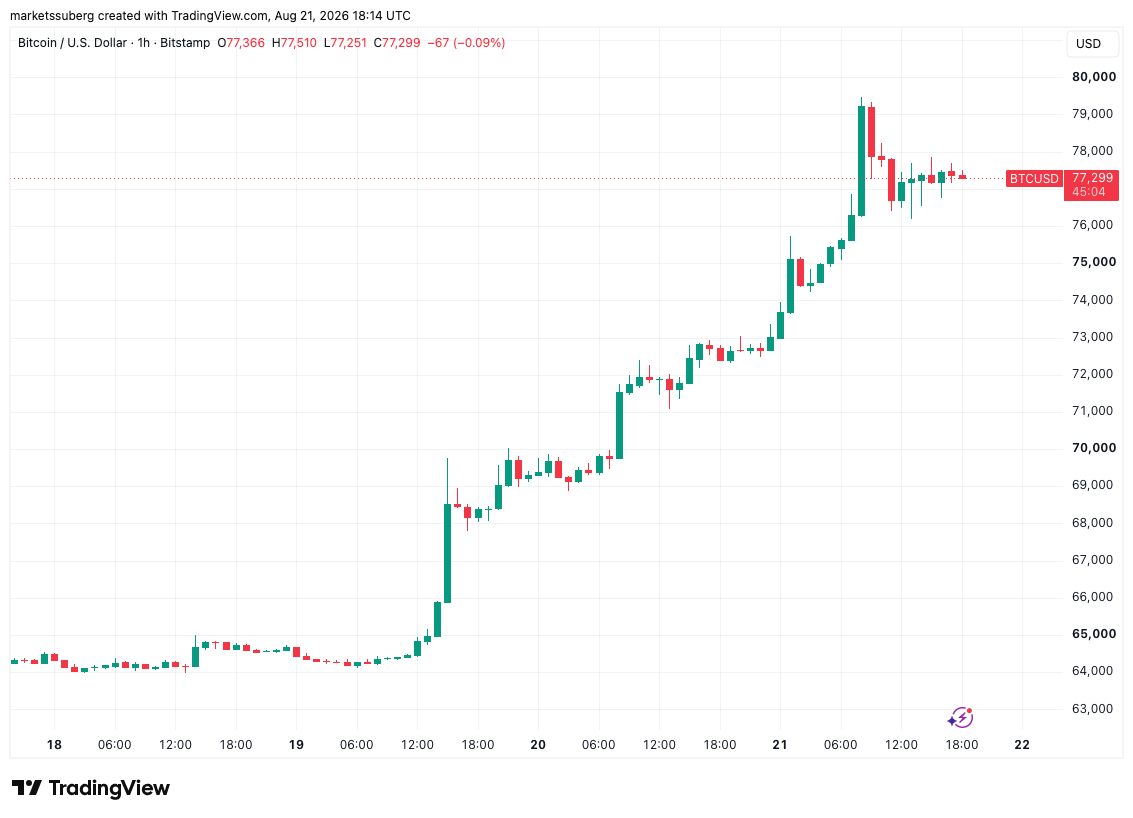
Bitcoin (BTC) has maintained a strong position above the $77,000 mark following the opening of Wall Street trading on Friday, a significant surge that has coincided with gold’s ascent to 14-week highs. This simultaneous rally in both digital assets and traditional safe-haven assets underscores growing investor concerns about inflation and macroeconomic stability, prompting a search for value stores beyond conventional financial instruments.
The cryptocurrency market, led by Bitcoin, has demonstrated remarkable resilience and upward momentum. Data from TradingView indicates that BTC/USD has experienced a cooling period after reaching its zenith since May 15, yet it still boasts an impressive nearly 6% gain on the day. This upward trajectory is not an isolated event but part of a broader trend that has seen Bitcoin appreciate by approximately 13% over the past month.
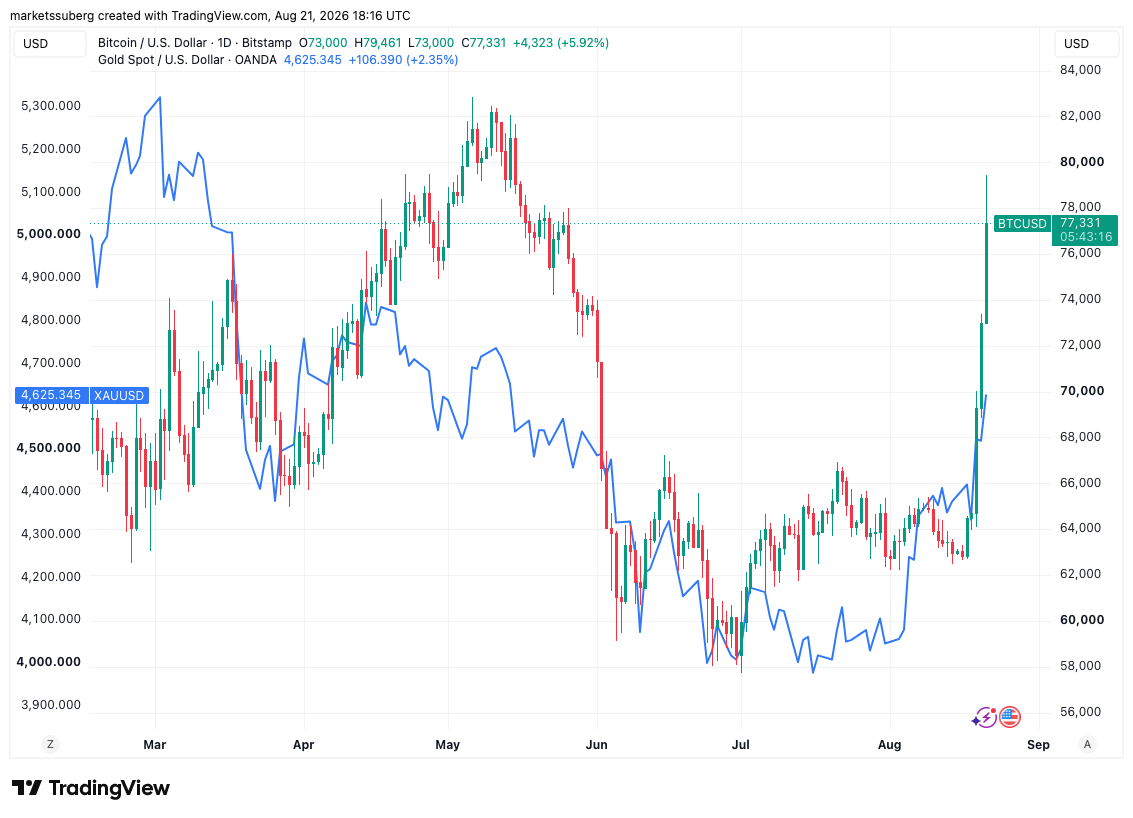
The correlation between Bitcoin and gold’s performance has become increasingly apparent. Gold, a long-standing hedge against inflation and economic uncertainty, has mirrored Bitcoin’s gains, reaching multi-month highs of $4,632 per ounce. At the time of writing, gold was up 2.2% on the day, and its monthly performance stood at an even more substantial 16% increase. This synchronized movement suggests a shared underlying driver, with investors viewing both assets as attractive alternatives in an environment characterized by persistent inflation and evolving fiscal policies.

Analysis: The Unsurprising Ascent of Bitcoin and Gold
Market observers and analysts have noted that the current surge in both Bitcoin and gold is not an unexpected development, given the prevailing economic climate. The Kobeissi Letter, a prominent market commentary source, stated in a public post on X (formerly Twitter) that "What’s happening now in gold and crypto should not come as a surprise." This sentiment is rooted in an understanding of the interplay between fiscal policy, inflation, and asset performance.
According to Kobeissi, the rapid appreciation in precious metals and cryptocurrencies can be attributed to a confluence of factors, including sustained inflationary pressures, significant government deficit spending, and the monetary policies enacted by the U.S. Treasury. The U.S. Treasury’s commitment to at least doubling the size of certain debt buyback operations to $4 billion has been identified as a key catalyst. This expansion of debt buyback programs aims to manage the national debt and potentially influence interest rates, but it also injects liquidity into the financial system, which can, in turn, bolster asset prices, particularly those perceived as inflation hedges.
The U.S. Treasury’s actions, while intended to manage debt, have significant implications for the broader financial landscape. By increasing debt buybacks, the Treasury is essentially providing a form of quantitative easing, which can devalue the currency and increase the attractiveness of hard assets like gold and digital assets like Bitcoin. This policy decision, coupled with ongoing inflation, creates a fertile ground for these assets to appreciate.
Global Financial Stress Signals and Cross-Asset Dynamics
Beyond the direct impact of U.S. fiscal policy, the global financial environment is also contributing to the rally. QCP Capital, a trading firm, highlighted in its recent "Market Color" analysis that financial stress signals are not confined to the United States. The firm pointed to the surge in Japanese government bond yields as a notable indicator. This increase followed a rare joint currency intervention by multiple nations in the yen earlier in the month, an event aimed at stabilizing the Japanese currency but which also signaled underlying financial fragilities and potential liquidity shifts.
QCP Capital’s analysis further elaborated on the complex dynamics observed in the markets following the U.S. Treasury’s announcement regarding debt buybacks. "The most notable cross-asset signal this week has been the divergence after Treasury’s announcement. Treasuries initially rallied before giving back much of the move. BTC and gold did not retrace to the same extent," the firm noted. This divergence suggests that while traditional safe-haven assets like Treasuries experienced a temporary boost, Bitcoin and gold exhibited more sustained upward momentum, indicating a stronger investor conviction in these alternative assets.
The firm cautioned that while these movements do not necessarily signify a complete overhaul of the monetary regime, they do underscore the heightened sensitivity of alternative assets to shifts in long-term interest rates and the U.S. dollar. This sensitivity implies that any further policy adjustments or economic shocks could lead to significant price fluctuations in Bitcoin and gold.
Polymarket Predicts Strong Upside for Bitcoin
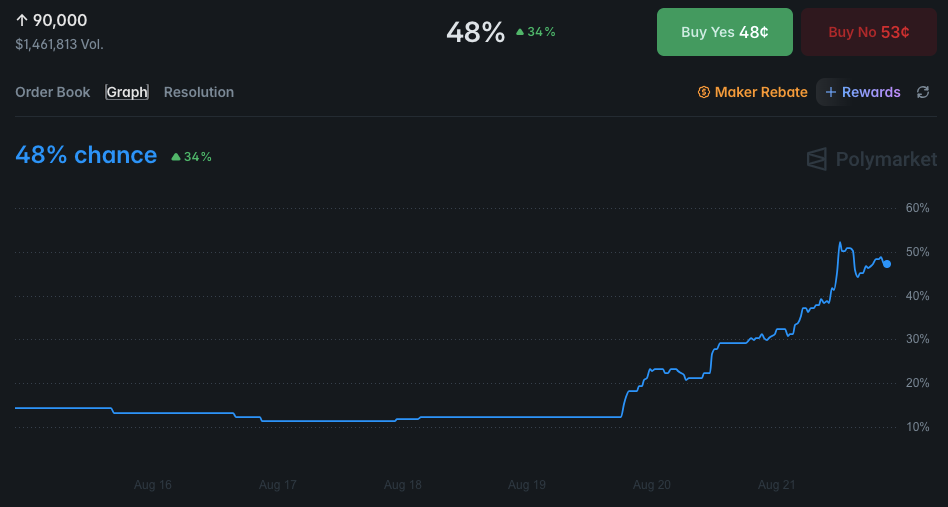
The robust price action of Bitcoin has also invigorated sentiment regarding its future prospects. Data from the prediction market Polymarket indicates a growing consensus among participants that Bitcoin is on track for further significant gains. Currently, the odds of BTC/USD reaching $90,000 before the year 2027 stand at approximately 48%, a notable increase from the beginning of the week. This growing optimism reflects a belief that the current macroeconomic environment is conducive to sustained Bitcoin appreciation.
The surge in Bitcoin’s price, exceeding 20% over a two-day period, has undoubtedly contributed to this improved outlook. Investors and traders are reassessing their year-end price targets, with many now anticipating a new all-time high for the digital asset. The 48% probability on Polymarket suggests that a significant portion of the market believes this target is achievable, reflecting a renewed confidence in Bitcoin’s long-term growth potential.
Technical Analysis and Future Outlook
Despite the overwhelmingly positive sentiment, some market participants remain cautious, emphasizing the importance of key technical indicators. Rekt Capital, a seasoned trader and analyst, has stressed that Bitcoin needs to decisively reclaim its 50-week exponential moving average (EMA), currently positioned at $77,232. This level represents a significant technical barrier, having been rejected by price action in January.
Rekt Capital articulated his view on X, stating, "Break the Downtrend and Bitcoin will confirm entry into a new technical Macro Uptrend. Reject from here however and price will maintain its series of Lower Highs." This analysis highlights the critical juncture Bitcoin is currently facing. A successful retest and hold above the 50-week EMA would signal a continuation of the bullish trend and open the door for further upside. Conversely, a failure to break this resistance could lead to a retest of lower support levels and a continuation of a bearish pattern characterized by lower highs.
Historically, Rekt Capital noted, there have been periods where price action has continued its downtrend even after initial attempts to rally, suggesting that patience and adherence to technical signals are crucial for navigating the current market. The coming days and weeks will be pivotal in determining whether Bitcoin can solidify its gains and embark on a new macro uptrend, or if it will face renewed selling pressure.
The interplay between macroeconomic factors, fiscal policy, and technical chart patterns continues to shape the narrative for both Bitcoin and gold. As inflation persists and global economic uncertainties loom, investors are increasingly turning to these alternative assets as potential havens. The current surge underscores a shift in investor behavior, where digital assets are gaining traction alongside traditional safe havens, signaling a potentially evolving landscape for asset allocation in the years to come. The sustained performance of Bitcoin above $77,000, coupled with gold’s ascent, will be closely watched by market participants as they gauge the broader economic implications and the potential for further price appreciation in these key assets.
This article was produced in accordance with Cointelegraph’s Editorial Policy and is intended for informational purposes only. It does not constitute investment advice or recommendations. All investments and trades carry risk; readers are encouraged to conduct independent research.