Chandra Wibowo

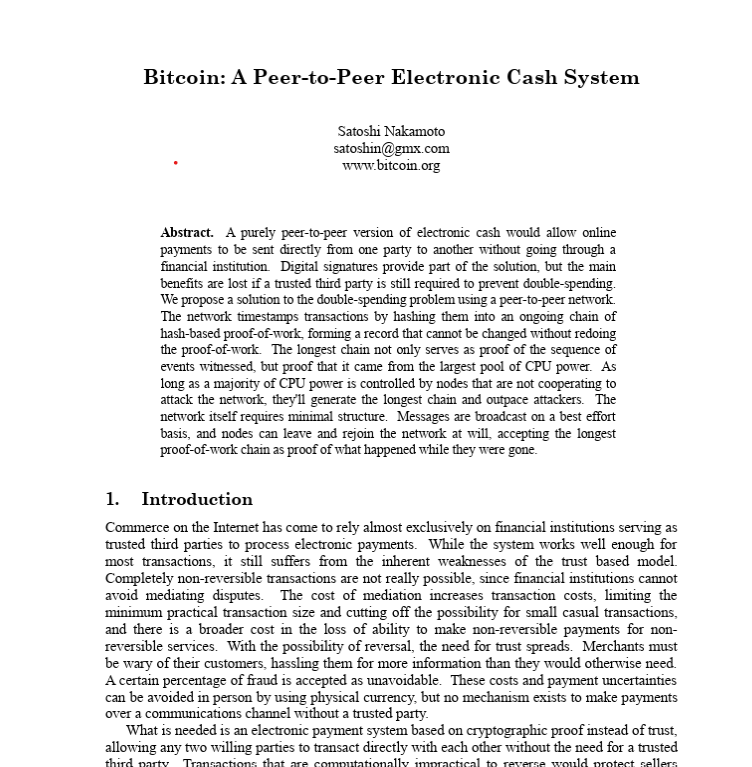
Eighteen years ago today, a pseudonymous entity known as Satoshi Nakamoto published a groundbreaking whitepaper titled "Bitcoin: A Peer-to-Peer Electronic Cash System" to a cryptography mailing list. This seminal document laid the foundation for a revolutionary digital currency designed to operate independently of traditional financial institutions, aiming to remove the need for trusted intermediaries in transactions. Since its genesis block was mined on January 3, 2009, Bitcoin (BTC) has embarked on a complex and often volatile path, challenging the established financial system at every turn.
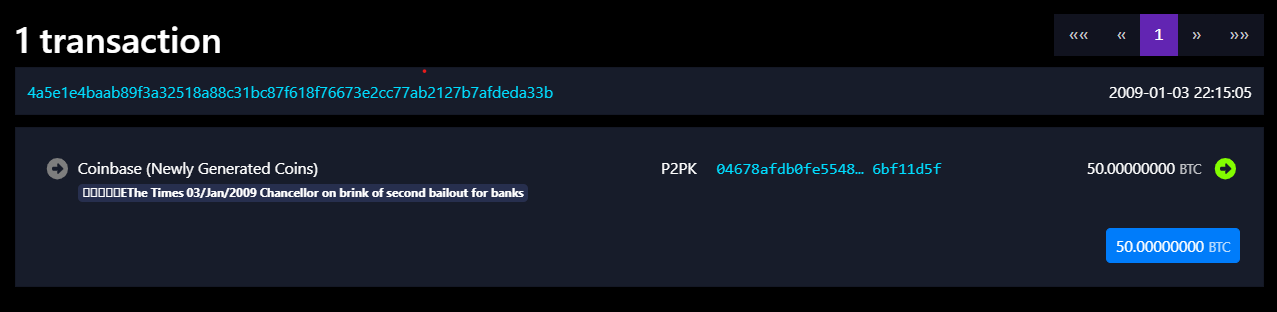
The very first block of the Bitcoin blockchain, often referred to as the genesis block, contained a hidden message that perfectly encapsulated the economic climate of its birth. Quoting a headline from The Times newspaper, "Chancellor on brink of second bailout for banks," Satoshi Nakamoto embedded a stark reminder of the 2008 global financial crisis, the backdrop against which this nascent digital cash system emerged. This act signaled Bitcoin’s fundamental purpose: to offer an alternative to a system perceived as fragile and prone to mismanagement.
From its humble beginnings to its current status as a recognized, albeit controversial, asset class, Bitcoin’s history has been marked by periods of intense speculation, significant technological advancements, regulatory scrutiny, and dramatic market fluctuations. As it celebrates its 18th birthday, Bitcoin stands at a crossroads, its future trajectory influenced by emerging threats and evolving institutional adoption. The recent $6.3 billion hack of Binance, the looming specter of quantum computing capable of breaking current cryptographic standards, and the escalating sophistication of AI-driven cyber threats all cast shadows over its long-term security and resilience. These challenges prompt a critical question: is Bitcoin, now the age of legal majority in many jurisdictions, truly ready for the responsibilities and complexities of adulthood in the global financial landscape?
The Genesis and Early Experiments: From Pizzas to Pennies
Bitcoin’s early years were characterized by experimentation and a sense of pioneering spirit within a niche cypherpunk community. One of the most enduring and widely recounted early transactions occurred on May 22, 2010, an event now celebrated as "Bitcoin Pizza Day." On this day, programmer Laszlo Hanyecz famously paid 10,000 BTC for two pizzas. At the time, this transaction was valued at approximately $41. Today, those same 10,000 Bitcoins would be worth upwards of $780 million, illustrating the staggering opportunity cost and the astronomical appreciation of Bitcoin’s value over time. This transaction remains a potent symbol of Bitcoin’s humble origins and its incredible price discovery.
In its infancy, Bitcoin traded for fractions of a cent. Satoshi Nakamoto, with remarkable foresight, alluded to the potential for Bitcoin’s future value in a 2009 forum post, suggesting it "might make sense just to get some in case it catches on." This prescient advice foreshadowed the eventual surge in interest and value. By late 2013, Bitcoin had breached the $1,000 mark for the first time, a milestone that coincided with increased public awareness, partly due to its association with the Silk Road darknet marketplace.

However, the nascent cryptocurrency market quickly demonstrated its inherent volatility. In February 2014, the collapse of Mt. Gox, once the world’s largest Bitcoin exchange, sent shockwaves through the industry. The exchange abruptly ceased operations, reportedly losing approximately 850,000 BTC, including substantial customer funds. This catastrophic event served as a harsh lesson for early adopters, embedding the cautionary principle of "not your keys, not your coins" into the crypto lexicon and highlighting the risks associated with centralized custodians.
The ICO Boom, Regulatory Challenges, and Identity Debates
The period leading up to late 2017 witnessed a dramatic surge in Bitcoin’s price, climbing from below $1,000 at the start of the year to nearly $20,000 by December. This bull run was fueled by a frenzy of Initial Coin Offerings (ICOs), where numerous projects promised to leverage blockchain technology for a myriad of applications, from revolutionizing banking to optimizing supply chains. The enthusiasm was palpable, with a widespread desire to adopt blockchain technology, often without a deep understanding of Bitcoin’s underlying principles or origins.
Amidst this fervent adoption, prominent figures in traditional finance voiced skepticism. In September 2017, JPMorgan Chase CEO Jamie Dimon famously dismissed Bitcoin as "a fraud" and declared he would fire any employee trading it. This stark contrast between the burgeoning crypto enthusiasm and traditional finance’s wary stance characterized the era.
The year 2017 also saw significant internal debate within the Bitcoin community regarding network scalability. The contentious "block size war" reached its peak in August 2017, culminating in a hard fork that led to the creation of Bitcoin Cash (BCH). This event underscored the complexities of making significant changes to a decentralized system, where consensus can be difficult to achieve.
Simultaneously, regulatory pressures began to mount. In September 2017, China implemented a sweeping ban on ICOs and took action against cryptocurrency exchanges, contributing to market uncertainty. This period also saw renewed speculation surrounding the identity of Satoshi Nakamoto, with Australian computer scientist Craig Wright repeatedly claiming to be the elusive creator. However, in a landmark ruling in 2024, the UK High Court rejected Wright’s claims.
The Pandemic Surge, China’s Second Ban, and the FTX Cataclysm
Bitcoin’s next significant bull run coincided with the COVID-19 pandemic. As governments and central banks globally unleashed unprecedented monetary stimulus to cushion economies from the impact of lockdowns, interest rates plummeted, and liquidity flooded financial markets. Bitcoin, which had experienced a sharp decline during the March 2020 market panic, embarked on a remarkable recovery, reaching a new all-time high of nearly $69,000 by November 2021.
However, this upward trajectory was once again met with regulatory intervention. In September 2021, Beijing enacted a comprehensive ban on cryptocurrency transactions and mining, dealing another blow to the market. This move by the world’s second-largest economy significantly impacted global sentiment and prices.
Further compounding the market’s instability, November 2022 witnessed the dramatic collapse of FTX, one of the world’s largest cryptocurrency exchanges. The implosion of FTX resulted in devastating losses for millions of customers and eroded trust within the crypto space. This event triggered a severe "crypto winter" and intensified regulatory scrutiny, leading to what many in the industry termed "Operation Chokepoint 2.0," a perceived effort by traditional financial institutions and regulators to restrict access to crypto services. The subsequent price decline for Bitcoin was both sharp and painful.
The Dawn of Institutional Adoption: The Bitcoin ETF Era
Just as industry sentiment appeared to be at its nadir, a significant development emerged in January 2024. The U.S. Securities and Exchange Commission (SEC), which had previously rejected numerous spot Bitcoin exchange-traded fund (ETF) applications, approved the first U.S. spot Bitcoin ETFs. This decision, a pivotal moment for Bitcoin’s integration into mainstream finance, provided investors with a regulated pathway to gain exposure to Bitcoin without the complexities of direct wallet management.
The approval of these ETFs marked a paradigm shift. Major financial institutions, including BlackRock, which had previously been critical of Bitcoin, began offering spot Bitcoin ETFs. This development signaled a growing acceptance of Bitcoin as a legitimate asset class within traditional finance. Larry Fink, CEO of BlackRock, even articulated a vision for tokenizing traditional assets like stocks and bonds on the blockchain.
The impact of the ETF approval was profound. By the end of 2024, Bitcoin’s price surpassed the $100,000 milestone for the first time. The sentiment within the industry began to rebound, with significant inflows into Bitcoin ETFs demonstrating renewed investor confidence. Even figures like Jamie Dimon, who had once been a staunch critic, acknowledged the demand for Bitcoin, with JPMorgan Chase allowing clients to trade the asset. This period saw Bitcoin reach a new all-time high of over $126,000 in October 2025, solidifying its position as a significant player in the global financial markets.
Navigating Adulthood: Future Challenges and Enduring Questions
As Bitcoin celebrates its 18th birthday, it finds itself firmly embraced by traditional finance, bolstered by evolving regulatory frameworks in key jurisdictions. The Guiding and Establishing National Innovation in U.S. Stablecoins (GENIUS) Act has begun to establish a federal framework for stablecoins, while the SEC has provided greater clarity on the application of securities laws to crypto assets. In Europe, the Markets in Crypto-Assets Regulation (MiCA) has introduced a more harmonized regulatory environment.
However, this institutionalization has raised concerns among some within the cypherpunk community. Questions are being raised about whether the significant holdings by large institutions are leading to a concentration of ownership and a de facto centralization of supply, potentially undermining Bitcoin’s original ethos of decentralization. There are debates about whether the cypherpunk movement, in its quest for a more open financial system, has inadvertently been co-opted by the very institutions it sought to disrupt.
Beyond the philosophical and structural concerns, significant security challenges loom. The existential threat of quantum computing, which possesses the theoretical capability to break the cryptographic algorithms that secure Bitcoin, remains a primary concern. While a proposed upgrade, BIP-360, aims to introduce new output types to mitigate certain quantum vulnerabilities, the historical challenges in achieving consensus on network upgrades, as evidenced by the block size war, suggest that widespread adoption before the quantum threat materializes will be a formidable task.
Compounding these concerns are ongoing security vulnerabilities within the broader cryptocurrency ecosystem. The recent $6.3 billion hack of Binance, the largest crypto exchange hack on record, has reignited fears about the security of centralized exchanges, the resilience of crypto infrastructure, and the potential for further market turmoil.
Another critical question facing Bitcoin’s long-term viability is the future of network security as the block subsidy, the primary incentive for miners, trends towards zero. Currently, transaction fees constitute a small fraction of miner revenue, accounting for just 0.67% of total miner revenue in the 90 days leading up to October 4th, and historically remaining below 5% of miner revenue. As the block rewards diminish with each halving event, a substantial increase in transaction fees will be necessary to compensate miners sufficiently and ensure the continued security of the network. The sustainability of this model remains a key area of analysis for the future.
A Maturing, Yet Still Evolving, Digital Asset
Bitcoin has endured a tumultuous adolescence, navigating exchange collapses, regulatory crackdowns, internal disputes, and repeated market crashes. In its 18 years, it has evolved from a niche cypherpunk experiment into an asset class embraced by Wall Street and integrated into mainstream financial products. This transformation, while validating its potential, also prompts a re-evaluation of its original mission.
As Bitcoin stands on the cusp of full adulthood, it faces a complex interplay of institutional acceptance, regulatory evolution, and technological threats. Its journey has been a testament to innovation and resilience, but the path ahead is far from certain. The question of whether Bitcoin can maintain its decentralized ethos while operating within the established financial order, and whether it can effectively defend against future technological and security challenges, will define its legacy in the years to come. The world watches to see if this revolutionary digital asset can mature gracefully and sustainably in the complex landscape of global finance.