Vera Intan Clara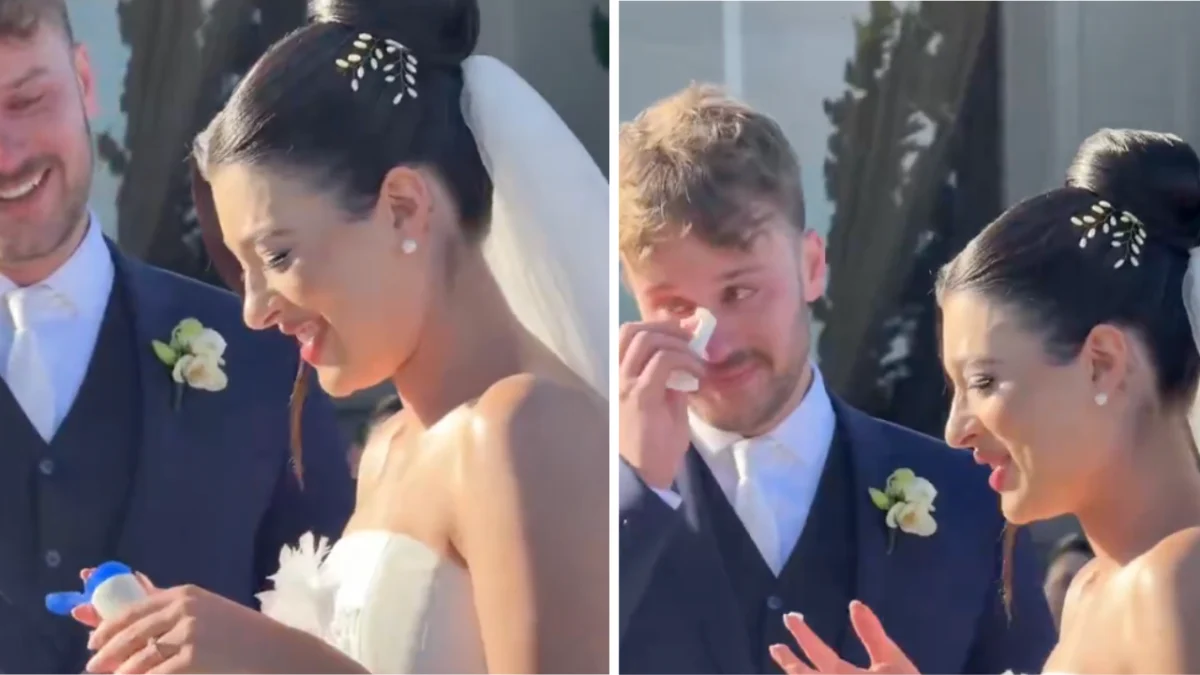
The unexpected gift triggered a wave of emotion, not just for the bride but for her immediate family and countless viewers across social media platforms. The video illustrates the universal human experience of grief and the unique way sensory triggers, particularly scent, can transport individuals back to cherished moments and connections with loved ones who are no longer present. This incident serves as a compelling case study on the intersection of personal grief, public vulnerability, and the intricate science of human memory.
The Unveiling: A Moment of Profound Emotion at the Altar
The ceremony, a day traditionally marked by joy and new beginnings, took an unexpectedly tender turn with the presentation of the hand cream. As depicted in the widely circulated footage, the bride stands at the altar, her attention momentarily diverted as the officiant hands her the unassuming tube. The initial surprise quickly transforms into visible emotion as the significance of the object dawns on her. Her eyes well up, and her hands gently hold the cream, a tangible link to a past that had been largely defined by absence.
Beside her, a man, presumably the groom, also appears profoundly moved. He is seen repeatedly wiping his eyes with a handkerchief, his emotional response mirroring and amplifying the bride’s own. This shared moment of grief and remembrance underscores the depth of the loss and the powerful impact of the gesture on those closest to the bride. The officiant, having orchestrated this heartfelt surprise, stands by, witnessing the unfolding emotional landscape. The quiet reverence of the moment, punctuated only by the bride’s silent tears and the groom’s supportive presence, speaks volumes about the enduring love for a mother lost too soon.
The choice of hand cream as the commemorative item is particularly significant. Beyond its practical use, a hand cream carries an intimate association with touch, care, and the daily rituals of a parent. For a daughter who lost her mother at a tender age, the scent of the cream would have been one of the few consistent sensory memories, a subtle yet powerful reminder of her mother’s presence, her touch, and her unique essence.
The Science of Scent and Memory: Olfactory Pathways to the Past
The intense emotional reaction elicited by the hand cream is deeply rooted in the unique way the human brain processes smell. Olfactory memory, often referred to as the "Proustian phenomenon" after Marcel Proust’s vivid description of memories evoked by the scent of a madeleine, is remarkably powerful and distinct from other forms of memory. Unlike other sensory inputs, scent signals bypass the thalamus – the brain’s main relay station – and travel directly to the olfactory bulb. From there, these signals have direct connections to the amygdala, responsible for processing emotions, and the hippocampus, crucial for memory formation and retrieval.
This direct neural pathway explains why smells can trigger such immediate, vivid, and emotionally charged memories, often bypassing conscious thought and evoking a sense of "being there" again. For the bride, who reportedly lost her mother at age 11, a time when sensory experiences are particularly impactful in forming long-term memories, the scent of her mother’s hand cream would have been etched into her subconscious. While she might not recall her mother’s voice with perfect clarity, the specific fragrance served as a potent anchor to her mother’s presence, touch, and care, making the surprise gift an unparalleled emotional experience. This scientific understanding provides crucial context for the intensity of her reaction, elevating the story beyond a mere sentimental gesture to a profound demonstration of neurological and psychological connection.
Weddings as Milestones: A Tapestry of Joy and Remembrance
Weddings are universally recognized as pivotal life events, marking the union of two individuals and the convergence of their families. While primarily celebrations of love and new beginnings, they are also profound occasions for reflection and remembrance, especially for those who have lost close family members. It is common practice for couples to incorporate symbolic gestures – a moment of silence, a reserved seat, a photo display – to honor deceased parents, siblings, or friends. Such gestures acknowledge the enduring presence of those loved ones in the lives of the marrying couple and their families.
The presentation of the hand cream during the ceremony exemplifies a deeply personalized and impactful form of remembrance. It transforms a conventional ritual into an extraordinarily intimate moment, recognizing that while the future is being embraced, the past, and those who shaped it, remain integral. For a bride who has grown up without her mother, her wedding day can be particularly bittersweet, a moment when her mother’s absence might be felt most acutely. The gift of the hand cream, therefore, served not just as a reminder but as a comforting, almost tangible, presence of her mother on a day when her support and love would have been deeply desired. This delicate balance of celebrating the present and honoring the past contributes to the profound emotional resonance of the event.
Orchestrating a Sentimental Surprise: The Role of Family and Officiant
The surprise presentation of the hand cream suggests a thoughtful and collaborative effort, likely involving close family members and the wedding officiant. It is reasonable to infer that the groom, and perhaps other immediate family members, would have been privy to the plan, ensuring its secrecy and maximizing its emotional impact. The officiant, in this scenario, played a crucial role not only in delivering the gift but also in understanding its profound significance and integrating it seamlessly into the ceremony without disrupting its flow.
Such a gesture requires sensitivity and a deep understanding of the bride’s emotional landscape. It speaks to a family dynamic where the memory of the late mother is cherished and actively preserved. The "man standing beside her," presumably the groom, wiping his eyes, indicates his empathetic connection to his bride’s grief and his understanding of the magnitude of the moment. This collective act of remembrance transforms the gift from a simple object into a powerful symbol of enduring family bonds and shared emotional history. The coordination involved in obtaining the exact brand of hand cream, potentially years after the mother’s passing, further underscores the dedication to creating a truly meaningful and authentic surprise.
From Altar to Global Stage: The Viral Phenomenon
The deeply personal moment at the altar quickly transcended the confines of the wedding venue, finding a global audience through social media. The video, originally shared on platforms like Twitter (now X), rapidly accumulated millions of views, likes, and shares. Its virality can be attributed to several factors: the universal relatability of grief and loss, the profound emotional impact of the gesture, and the raw authenticity of the reactions captured.
In an era dominated by curated online personas, moments of genuine, unvarnished human emotion often resonate most powerfully. The video offered a glimpse into a private, vulnerable experience, striking a chord with viewers worldwide who could empathize with the pain of losing a loved one and the comfort found in memory. The public nature of the platform allowed this intimate family moment to spark a broader conversation about grief, memory, and the importance of symbolic acts of remembrance, turning a single wedding event into a catalyst for collective reflection.
A Chorus of Shared Grief: Viewer Reactions and Commonalities
The video prompted an outpouring of comments from viewers, many of whom shared their own poignant stories of how scents remind them of deceased loved ones. These responses underscore the universal nature of the experience and the powerful role of sensory memory in processing grief.
One commenter recounted a similar experience with their father’s cologne: "The smell of my father’s cologne, I still remember it so vividly too, that once in the store I went and found his scent and started sobbing, the sales assistant was at a loss for words, and there I was, crying." Another user shared a particularly moving anecdote about a customer at a cosmetics store: "When I worked at Boticário, there was this lady who bought two to three bottles of Arbo because it was the cologne her son used, and she would scent the place with it. He had died super young in a car accident, and it had been at least 10 years by then." These narratives highlight the enduring human need to maintain a connection with those who have passed, often through the very sensory experiences that defined their presence.
Beyond personal anecdotes, many viewers expressed profound empathy, speculating on their own emotional responses if placed in a similar situation. Comments such as, "I’d have to postpone the wedding because I was going to get so sick from crying," and "I wouldn’t even be able to get married because I’d be crying so much, omg," illustrate the deep emotional resonance of the video. These reactions are not mere exaggerations but genuine expressions of how deeply the story touched their own experiences with loss and the anticipation of such a powerful emotional trigger.
The Resilience of Remembrance: Composure Amidst Profound Emotion
A significant observation made by many viewers was the bride’s remarkable composure despite the overwhelming emotion of the moment. While visibly moved to tears, she did not appear to "break down," even as she held and used the cream. This aspect particularly struck one commenter who wrote, "What impacted me the most in this video is that the beautiful bride didn’t break down in tears. If it were me, feeling the scent of Floratta In Silver from my late little mommy, I would have completely broken down crying—I lost her at 18."
This observation invites reflection on the multifaceted nature of grief. While an immediate breakdown might be an expected response to such an emotional trigger, the bride’s composure could signify several things: perhaps a deep internal strength, a long-developed mechanism for processing her mother’s absence, or even a sense of profound comfort and presence rather than pure anguish. It suggests that while the loss remains, the memory, when presented in such a loving and respectful way, can also bring solace and a sense of connection, allowing for a different form of emotional processing. Her ability to remain present and continue with the ceremony, even through tears, speaks to the resilience of the human spirit in navigating profound loss on a day meant for celebration.
Broader Implications: Grief, Memory, and Social Connection
This viral story transcends a single wedding moment, offering valuable insights into the universal human experience of grief, the power of memory, and the role of social media in fostering communal understanding. The raw emotion displayed and shared online created a space for collective empathy, allowing individuals to connect over shared experiences of loss and remembrance. It underscores how seemingly small, tangible objects, imbued with personal history, can carry immense emotional weight and serve as potent conduits to the past.
The phenomenon also highlights the ongoing evolution of how societies grieve and remember in the digital age. While traditional rituals remain important, platforms like Twitter (X) provide new avenues for individuals to share their stories, find solace in collective empathy, and acknowledge the enduring impact of loved ones. This communal sharing, while sometimes prone to superficiality, can also be a powerful force for validation and support for those navigating the complexities of grief.
Journalistic Verification and the Nature of Viral Content
It is important to note that, as stated by The Daily Dot, independent verification of the specific details surrounding the wedding gift featured in the video was not possible. In the realm of viral internet content, personal narratives often spread rapidly based on their emotional impact, sometimes outpacing the ability for traditional journalistic fact-checking. While the emotional authenticity of the video is undeniable, and the viewer reactions clearly demonstrate its resonance, the specific background details—such as the exact brand of cream, the mother’s age at passing, or the precise planning behind the surprise—remain part of the anecdotal account shared alongside the video. This aspect highlights the ongoing challenge for news organizations in reporting on highly personal, unverified viral content while still acknowledging its significant cultural and emotional impact.
In conclusion, the story of the bride and her mother’s hand cream is more than just a viral video; it is a profound testament to the enduring power of love, memory, and the unique way our senses connect us to those we have lost. It offers a poignant reminder that even in moments of new beginnings, the echoes of the past can emerge, not to overshadow joy, but to enrich it with the depth of a love that transcends time and presence.