Evan Lee Salim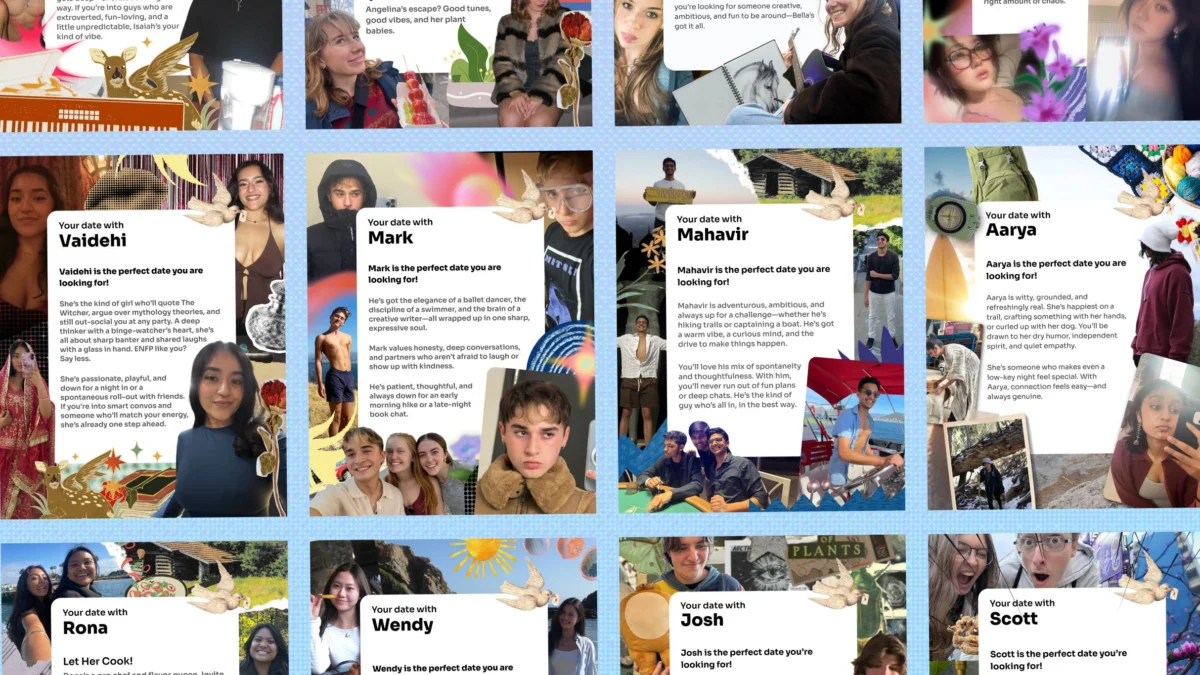
A palpable shift in the digital dating landscape is underway, driven by a generation increasingly disillusioned with the superficiality and exhaustive nature of traditional swipe-based applications. This pervasive sentiment among twentysomethings has paved the way for innovative solutions, with AI-driven matchmaking services like Ditto stepping into the void, promising more genuine, real-life interactions. Co-founded by UC Berkeley dropouts Allen Wang and Eric Liu, Ditto aims to circumvent the "swipe fatigue" epidemic that has left many Gen Z users feeling drained and unfulfilled by platforms such as Tinder and Hinge, instead offering a streamlined path to authentic connections.
The Genesis of Dating App Burnout: Why Gen Z is Seeking Alternatives
For over a decade, dating applications have fundamentally altered how individuals meet and form relationships. From the early days of online dating websites like Match.com, which prioritized detailed profiles and compatibility algorithms, the industry evolved rapidly with the advent of smartphones. Tinder, launched in 2012, revolutionized the scene with its simple "swipe left or right" mechanic, quickly becoming a cultural phenomenon. This model, adopted by numerous subsequent apps like Bumble and Hinge, offered unprecedented access to a vast pool of potential partners, seemingly democratizing dating. However, what initially appeared as boundless opportunity has, for many, devolved into a source of frustration and anxiety, particularly for Generation Z.
Born roughly between the mid-1990s and early 2010s, Gen Z are digital natives who have grown up with dating apps as a ubiquitous part of their social fabric. Yet, ironically, they are also the most vocal critics of these platforms. The term "swipe fatigue" encapsulates their weariness: the endless scrolling through profiles, the superficial judgments based solely on appearance, the repetitive small talk that rarely leads anywhere meaningful, and the prevalent phenomena of ghosting and breadcrumbing. Data from various market research firms consistently indicate that a significant percentage of young adults report feeling overwhelmed, stressed, or even depressed by their experiences on dating apps. A 2024 study, for instance, found that over 60% of Gen Z users expressed dissatisfaction with the quality of connections made on mainstream apps, with nearly 40% admitting to taking "dating app breaks" due to mental exhaustion. This generation, while fluent in digital communication, often expresses a profound longing for authenticity and face-to-face interaction, perceiving current apps as barriers rather than facilitators of true connection. Allen Wang, speaking to TechCrunch, articulated this sentiment directly: "As Gen Z ourselves, we were firsthand witnessing the behavioral shift in terms of how people are connecting with each other… We see that people are getting super tired of all the endless swiping and endless small talk, and they’re really looking for something more genuine in real life." This collective yearning for deeper engagement forms the bedrock of Ditto’s disruptive premise.
Ditto’s Revolutionary Approach: AI-Driven Real-World Dates
Rejecting the conventional app interface, Ditto introduces an entirely novel user experience. College students, its initial target demographic, engage with the service by simply texting a specific iMessage number and a unique code. This immediately removes the friction of downloading yet another app, integrating seamlessly into their existing communication habits. Upon initial contact, an AI chatbot introduces itself as "Ditto," defining itself as "a dating initiative built by college students who get it… no swiping, no awkward DMs, just real dates every Wednesday at 7 pm." This mission statement, delivered directly and without pretense, resonates powerfully with a generation yearning for simplicity and directness.
The onboarding process itself is designed to gather rich, nuanced data. Users begin with standard biographical details—name, gender, birth date—but quickly progress to more introspective questions crafted to uncover personality traits, core values, interests, and nuanced dating preferences. Unlike many apps that rely on users inputting hobbies directly and matching based on superficial commonalities, Ditto delves deeper. Some users even provide photos of their celebrity crushes, offering the AI a visual and aspirational data point to infer their aesthetic and personality "type." This seemingly informal input provides the algorithm with subtle cues about preferred characteristics and emotional resonance.

The core innovation lies in Ditto’s proprietary matching algorithm. Instead of pairing individuals based on overtly similar hobbies, it analyzes what those interests reveal about an individual’s underlying personality and disposition. Wang elaborated on this sophisticated approach: "If there’s this guy, and he’s really into rock climbing, skydiving, and outdoor sports, and this girl, if she’s into hip hop, streetwear, and skateboarding, then even though those hobbies don’t look similar on the surface, I can tell you deeper down, both are very adventurous; maybe they’re very individualistic. So that’s actually the core reason why people will find chemistry with each other, and so basically our claim is that chemistry is actually predictable with the right signals." This philosophy posits that true chemistry stems from deeper psychological compatibility—shared adventurousness, independence, or intellectual curiosity—rather than merely enjoying the same band or movie genre. By extracting these "right signals," Ditto aims to foster connections built on more robust foundations.
The culmination of this process is a highly curated date experience. Every Wednesday at 7 p.m., users receive a message containing their match for the week, along with a specified time and location. The instruction is clear and concise: "the users simply just need to show up and date each other and come back." This eliminates the agonizing back-and-forth of scheduling, suggesting venues, and initiating conversation—all common hurdles that lead to date abandonment on traditional platforms. Ditto effectively performs the "heavy lifting," allowing users to focus solely on the in-person interaction. After the date, the system collects feedback, which is then fed back into the AI to refine its understanding of the user and improve future matches, creating a continuous learning loop. This iterative process is crucial for the AI’s efficacy and for building user trust over time.
Early Traction and Strategic Funding
Ditto’s innovative model has rapidly garnered significant attention and user adoption. The platform boasts an impressive 150,000 sign-ups, primarily among college students, indicating a strong market demand for its unique offering. While 150,000 sign-ups might seem modest compared to the hundreds of millions on global platforms, it represents substantial organic growth within its niche. More strikingly, Wang reports that approximately 20% of all matches connected via Ditto ultimately result in an actual in-person date. This conversion rate is notably higher than industry averages for traditional dating apps, where the journey from initial swipe to a physical meeting is fraught with numerous drop-off points. On many mainstream apps, the percentage of matches that convert to a first message is often below 50%, and the conversion from messages to actual dates can be in the low single digits. Ditto’s 20% success rate underscores the efficacy of its "no friction, just show up" approach and the quality of its AI-driven matchmaking.
The platform’s appeal extends beyond its core functionality to its aesthetic and brand identity. Ditto introduces users to their matches through a "collage-like graphic," a visually engaging format that is highly popular among Gen Z. This artistic presentation, which briefly explains the deeper reasons why two individuals might be a good match, aligns with a broader trend among connection apps with young founders, such as Sonder, that prioritize authenticity and visual storytelling over generic profiles.
This early success has translated into substantial investor confidence. Ditto recently secured $9.2 million in seed funding from prominent investors including Gradient (Google’s AI-focused venture fund), Peak XV (a major venture capital firm in Asia), and Scribble Ventures. This significant investment underscores the market’s belief in Ditto’s potential to disrupt the dating industry and the growing importance of AI in facilitating personal connections. Wang also noted the organic nature of their funding rounds, stating, "99% of the investors just reached out to us through inbound, because we were pretty big on LinkedIn and Twitter for a bit. Even Duolingo’s co-founder Severin [Hacker] reached out to me saying, ‘Hey, love your mission, I really like what you do, let’s hop on a call.’" Such unsolicited investor interest from influential figures like Severin Hacker, known for building a highly engaging and successful educational app, further validates Ditto’s vision and traction.
Navigating Challenges: Safety, Scaling, and Future Horizons
Despite its promising start, Ditto faces inherent challenges common to all dating platforms, particularly concerning user safety and the complexities of scaling. Currently, Ditto operates primarily within a few dozen college campuses. This collegiate environment provides a built-in, albeit temporary, vetting process: users are typically verified as students at their respective universities through their .edu email addresses. This verification offers a baseline level of trust and reduces the risk of misrepresentation, as individuals are part of a known community.

However, as Ditto plans to grow to more schools and eventually expand beyond the college demographic, ensuring user safety will become a much more intricate endeavor. Established and well-funded dating apps grapple constantly with issues like identity verification, background checks, and robust reporting mechanisms for inappropriate behavior. Ditto will need to invest heavily in scalable safety protocols, potentially leveraging advanced AI for anomaly detection, identity verification services, and a dedicated trust and safety team. The ability to expand while maintaining a secure and trustworthy environment will be critical for its long-term success.
The marketing strategy employed by Ditto is as unconventional and forward-thinking as its product. Based in San Francisco with 12 full-time employees, the company has cultivated a notable presence through "irreverent marketing," exemplified by viral "robot stunts" and quirky social media campaigns. One particularly attention-grabbing move was the legitimate job listing for a "chief yacht officer" to organize promotional parties. This approach, while unconventional for a tech startup, is highly effective in reaching its target demographic. Wang explains the rationale: "Our users are college students, and they can smell corporate marketing from a mile away… But the stunts are the top of the funnel, not the product… Viral moments get college kids to look; a good first date is what makes them stay." This philosophy highlights a deep understanding of Gen Z’s media consumption habits and their skepticism towards traditional advertising, focusing instead on authentic, shareable experiences that drive initial curiosity, followed by a product that delivers genuine value.
Broader Implications: The Future of Connection in an AI Era
Ditto’s emergence signals more than just another dating app; it represents a potential paradigm shift in how people approach social connection in the digital age. Its success could herald a "post-swipe" era, where the emphasis moves away from endless digital browsing and towards carefully curated, facilitated real-world encounters. This shift aligns with a growing desire for authenticity and efficiency in personal interactions, particularly among younger generations who are wary of the performative aspects of social media.
The integration of advanced AI, particularly in understanding nuanced human personality and compatibility, has profound implications beyond dating. As AI models become more sophisticated, their ability to infer deeper traits from seemingly disparate data points could revolutionize how we form various social connections—from friendships and professional networking to community building. This raises exciting possibilities for more meaningful connections, but also critical questions about algorithmic bias, data privacy, and the ethical considerations of entrusting personal connection to machines.
Moreover, Ditto’s model challenges established dating platforms to re-evaluate their strategies. As traditional apps like Tinder and Hinge also explore incorporating AI to combat "swipe fatigue," Ditto’s early success provides a proof-of-concept for a more hands-off, curated approach. The competition will likely drive further innovation, pushing the entire industry towards more thoughtful, experience-driven services that prioritize quality over quantity in matches.
In essence, Ditto is not just offering a new way to date; it is offering a new way to connect. By leveraging AI to reduce friction and increase the probability of genuine chemistry, Allen Wang and Eric Liu are tapping into a fundamental human desire for meaningful relationships, offering a refreshing alternative to the digital noise and superficiality that has come to define much of modern online dating. As Ditto scales and refines its approach, its journey will undoubtedly shape the ongoing conversation about technology’s role in fostering authentic human connection in the 21st century.