George Chandra Eka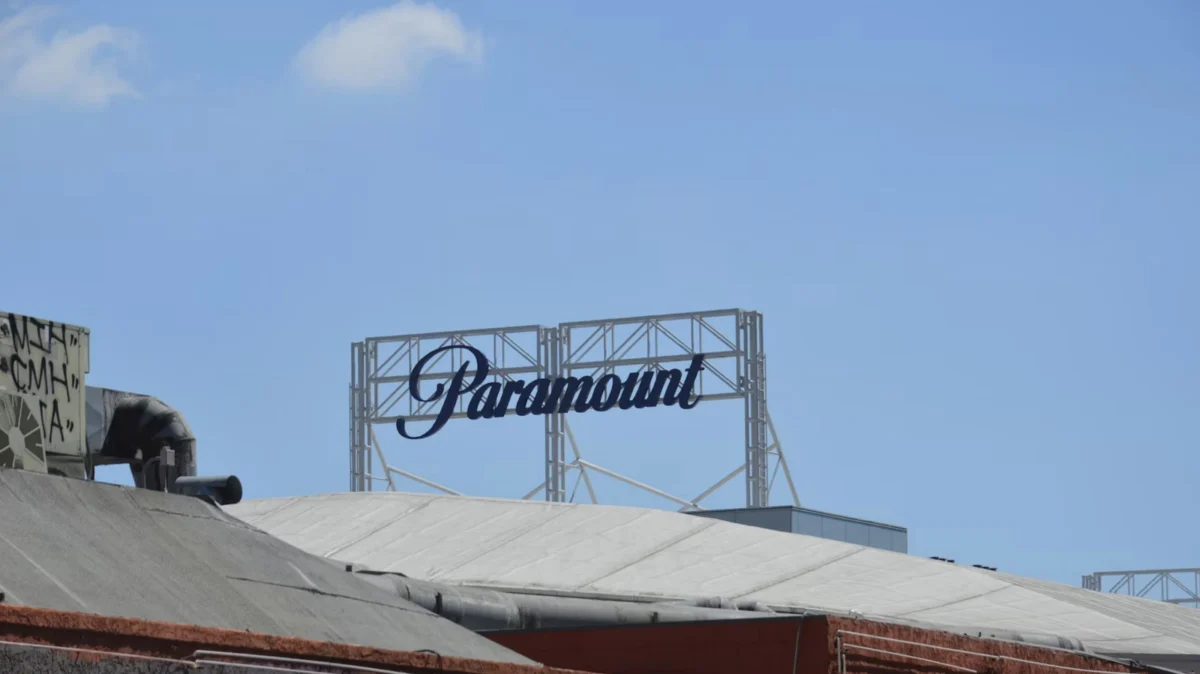
The Federal Communications Commission (FCC) has provisionally approved a significant waiver of its long-standing foreign equity ownership rules, allowing a consortium of sovereign wealth funds from Saudi Arabia, Qatar, and Abu Dhabi to collectively acquire a 49.5 percent stake in the combined entity of Paramount Global and Warner Bros. Discovery, should their proposed merger materialize. This decision, announced on September 17, 2026, has ignited a fierce debate among lawmakers, media watchdogs, and industry analysts, primarily due to existing regulations that typically cap foreign ownership in U.S. media companies at 25 percent, particularly those broadcasting on public airwaves. Paramount Global, through its extensive portfolio, owns 28 such television stations, making the FCC’s waiver a pivotal moment in media regulatory policy.
The proposed merger, heavily championed by tech billionaire Larry Ellison and his son David Ellison’s Skydance Media, has been a subject of contention since its inception, facing skepticism from investors and an ongoing antitrust challenge from multiple U.S. states. The FCC’s decision introduces a new layer of complexity and controversy, as critics argue that granting significant ownership to foreign governments, even without direct voting rights, could compromise the editorial independence and geopolitical neutrality of a major American media conglomerate.
Background of the Regulatory Framework and the Waiver
The Communications Act of 1934, the foundational law governing telecommunications in the United States, includes provisions designed to safeguard national security and public interest by limiting foreign control over broadcast licensees. Specifically, Section 310(b) of the Act restricts foreign individuals or entities from owning more than 25 percent of the capital stock of a U.S. broadcast licensee or its parent company. This threshold is intended to prevent foreign governments or interests from exerting undue influence over domestic news and information dissemination, which is deemed critical for a functioning democracy.
Paramount Global and Warner Bros. Discovery, navigating a rapidly evolving and consolidating media landscape, filed a petition with the FCC seeking a waiver of this 25 percent rule. The petition, which initially sought permission for foreign entities to own up to 100 percent of the combined company, argued that the proposed investments were purely financial and would not confer any control or influence over the licensees’ operations or programming decisions. The FCC’s ruling on September 17, 2026, partially granted this request, specifically approving the 49.5 percent stake for the Gulf state wealth funds, contingent on these shares being non-voting. The commission stipulated that any future acquisition of voting shares by these foreign entities, or an increase beyond the approved non-voting stake, would require a separate regulatory review and approval process.
The FCC’s rationale for the waiver centers on the assertion that the lack of voting rights for these specific equity stakes effectively prevents the foreign investors from "wielding any influence, let alone control, over decisions involving the Licensees." This distinction between equity ownership and direct operational control is central to the FCC’s defense of its decision, despite the considerable financial leverage that nearly half-ownership typically implies.
The Contested Paramount-Warner Bros. Merger
The proposed merger between Paramount Global and Warner Bros. Discovery is driven by the imperative for media consolidation in an era of intense competition from streaming giants and a challenging advertising market. Both companies have faced significant financial pressures, including substantial debt loads and declining traditional revenue streams. Warner Bros. Discovery, formed through the merger of WarnerMedia and Discovery Inc. in 2022, has been grappling with integration challenges and a highly competitive streaming landscape. Paramount Global, similarly, has been exploring strategic options amidst falling linear TV revenues and the high costs associated with its streaming service, Paramount+.
David Ellison’s Skydance Media, backed by his father Larry Ellison, has emerged as a key suitor, proposing a complex deal structure that would see Skydance acquire National Amusements, the Redstone family’s holding company that controls Paramount Global. This would then pave the way for a merger with Warner Bros. Discovery, creating a media behemoth with extensive film studios, television networks, and streaming platforms. However, the deal has been met with resistance from some Paramount shareholders who argue it undervalues the company and disproportionately benefits the Redstone family and Skydance.
Adding to the complexity, an antitrust lawsuit filed by California and 11 other states seeks to block the merger, citing concerns about market concentration and reduced competition in the entertainment industry. A trial for this lawsuit is currently slated to begin in March of the following year, casting a shadow of uncertainty over the entire consolidation effort. The FCC’s foreign ownership waiver, while addressing one regulatory hurdle, does not alleviate these other significant obstacles.
The Role of Sovereign Wealth Funds and Geopolitical Concerns
The sovereign wealth funds identified in the FCC’s ruling — from Saudi Arabia, Qatar, and Abu Dhabi (United Arab Emirates) — are among the largest and most influential investment vehicles globally.
- Saudi Arabia’s Public Investment Fund (PIF): With assets under management estimated at over $900 billion, the PIF is a key instrument in Crown Prince Mohammed bin Salman’s Vision 2030, aimed at diversifying the Saudi economy away from oil. The PIF has aggressively invested in various sectors globally, including technology (e.g., Uber, Lucid Motors), gaming (e.g., Activision Blizzard, Nintendo), and entertainment, often seeking strategic influence and financial returns.
- Qatar Investment Authority (QIA): Managing assets exceeding $475 billion, the QIA has a diversified portfolio spanning real estate, infrastructure, and media. Qatar has long sought to enhance its global soft power, notably through its Al Jazeera media network, and its investments often align with broader national strategic objectives.
- Abu Dhabi Investment Authority (ADIA) / Mubadala Investment Company: Abu Dhabi, the capital of the UAE, operates several large sovereign wealth funds, including ADIA (estimated over $850 billion) and Mubadala (over $300 billion). These funds are known for their long-term, strategic investments across various industries, including technology, aerospace, and media, aiming to secure future economic growth and influence.
The involvement of these state-backed entities in a major U.S. media company has raised alarms among critics. While the FCC emphasizes the non-voting nature of the shares, the sheer scale of a nearly 50 percent equity stake, representing billions of dollars in investment, is seen by many as inherently granting a significant level of influence. Critics argue that even without boardroom representation, such substantial financial backing can exert pressure on editorial lines, content production, and strategic partnerships, potentially aligning them with the geopolitical interests or social values of the investing nations. This concern is amplified given the broad reach of a combined Paramount-Warner Bros. Discovery, which would control a vast array of film studios, television networks, news outlets, and streaming services that shape public discourse and cultural narratives.
Reactions and Criticisms from Lawmakers and Advocacy Groups
The FCC’s decision has been met with strong condemnation from various quarters, including Democratic lawmakers and media advocacy organizations.
- Free Press: The advocacy group Free Press, a vocal critic of media consolidation and foreign influence, issued a sharp rebuke. As reported by Variety, Free Press stated, "Control over for-profit, commercial domestic news media by any government is an extraordinary situation that would surely strike most Americans as unseemly, precisely because of the utility of the news media as a propaganda tool for those governments." The group underscored the inherent risks of allowing foreign states, some with controversial human rights records and differing geopolitical agendas, to hold such a significant financial interest in a pillar of American media.
- Democratic Lawmakers: A bipartisan group of senators, primarily Democrats, had previously expressed concerns to the FCC regarding the potential for foreign influence, even before the waiver was granted. Following the decision, Democratic FCC Commissioner Anna Gomez, the sole dissenting voice on the commission, articulated her deep reservations. In a statement posted on social media, Gomez asserted that the organization "just let some of the most repressive governments in the world indirectly control nearly all of a combined Paramount-Warner Bros. An investment this large in one of America’s biggest media companies doesn’t just buy equity, it secures influence over what gets said and made." Her statement directly challenged the FCC majority’s premise that non-voting shares equate to an absence of control, highlighting the practical realities of large-scale financial investments.
- Media Analysts: Industry analysts have echoed these concerns, pointing out that while the shares may be non-voting, the financial leverage provided by nearly half-ownership can manifest in various forms of "soft power." This could include influencing executive appointments, steering strategic investments, or even subtly shaping content decisions to avoid antagonizing major stakeholders. The potential for self-censorship or a chilling effect on reporting critical of the investing nations is a particularly salient concern for journalists and media ethics experts.
The FCC’s Internal Dynamics and Broader Critiques
The FCC itself has been a target of increasing scrutiny in recent years, particularly regarding its enforcement priorities and perceived political leanings. Under the chairmanship of Brendan Carr, appointed during the Trump administration, the commission has faced criticism for actions that some interpret as politically motivated. Instances cited by critics include alleged threats against channels for airing content deemed unfavorable, attempts to block platforms from featuring certain individuals, and perceived bullying of journalists. These past actions contribute to the skepticism of those who question the FCC’s current assertion that it can effectively prevent foreign influence despite approving such a substantial foreign equity stake. Critics argue that the commission appears to reserve its "real teeth" for domestic broadcasters and content creators, while seemingly adopting a more permissive stance toward global wealth funds with their own geopolitical agendas. This perceived inconsistency further fuels the debate about the true independence and mandate fulfillment of the regulatory body.
Broader Implications and Future Outlook
The FCC’s decision to waive the 25 percent foreign ownership rule for the Paramount-Warner Bros. Discovery merger sets a significant precedent. It suggests a potential shift in the regulatory landscape, indicating a willingness by the commission to prioritize financial investment and market consolidation over stricter interpretations of foreign influence limitations, provided certain conditions like non-voting shares are met. This could pave the way for similar foreign investments in other major U.S. media companies, reshaping the ownership structure of the American media industry.
The long-term implications are multi-faceted:
- Media Independence and Editorial Control: The primary concern remains the potential for even indirect influence over editorial decisions and content creation. Critics fear that the need to maintain a positive relationship with major financial backers could lead to a subtle but pervasive bias, particularly concerning news and geopolitical coverage related to the investing nations.
- National Security and Information Integrity: In an increasingly interconnected world, the integrity of national information ecosystems is paramount. Allowing foreign governments significant stakes in major media outlets raises questions about national security, especially in times of geopolitical tension or conflict, where narratives and public opinion can be crucial.
- Market Dynamics and Competition: While the waiver addresses one regulatory aspect of the merger, the broader antitrust concerns remain. Should the merger proceed, it would create a formidable media giant, potentially further concentrating market power and reducing competition in an already consolidated industry.
- Future Regulatory Challenges: The FCC’s decision is likely to face legal challenges from advocacy groups and potentially even from dissenting lawmakers. The interpretation of "control" versus "influence" in the context of large non-voting equity stakes may be tested in courts.
As the Paramount-Warner Bros. Discovery merger continues its arduous journey through regulatory and legal hurdles, the FCC’s foreign ownership waiver stands as a controversial milestone. Its impact on the future of media ownership, regulatory policy, and the integrity of American media will undoubtedly be a subject of intense observation and debate for years to come. The upcoming antitrust trial in March will be the next critical juncture in determining the ultimate fate of this ambitious, and now even more complex, media consolidation effort.