Vera Intan Clara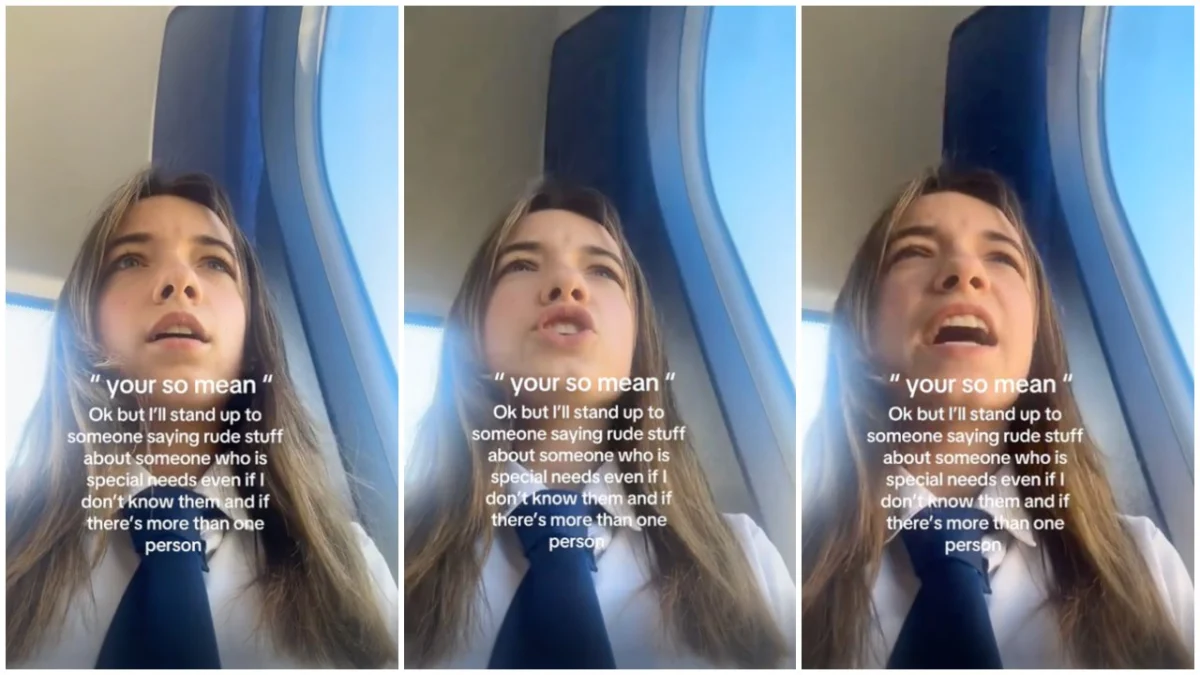
A high school-aged girl has garnered widespread online acclaim following the viral circulation of a video documenting her courageous intervention on a school bus. The footage captures her standing up for a classmate who was allegedly subjected to mockery by other boys, believed to be targeting him for his alleged autism. The incident, filmed by the girl herself, though keeping the camera focused on her as the background chatter unfolds, has resonated deeply across social media platforms, drawing attention to the pervasive issue of school bullying and the vital role of bystander intervention. The original clip, shared by Reddit user u/mindyour on the r/TikTokCringe thread, quickly gained traction under the caption, "She heard them making fun of a boy with autism," becoming a powerful testament to peer advocacy and digital activism.
The Incident Unfolds: A Chronological Account
The video begins with the girl sitting on what appears to be a school bus, subtly recording herself. In the background, the distinct voices of other male students can be heard, their comments soon revealing a target of their derision. It quickly becomes apparent that their remarks are directed at another boy, identified by the online community and implied in the conversation as being on the autism spectrum. The girl, overhearing these exchanges, chooses not to remain silent, swiftly pivoting from a passive observer to an active intervener.
The confrontation begins with the girl directly challenging one of the boys. Her voice, firm and clear, cuts through the background noise as she asserts, "You can hardly call him weird when you’re weird yourself, I’ve seen the state of you." This initial retort immediately sets a defiant tone, signaling her refusal to let the bullying continue unchecked. The boy attempts to justify his behavior, offering a dismissive and condescending remark: "He’s special, on a whole other level." This phrase, often used euphemistically to mock individuals with developmental differences, further underscores the nature of the bullying. Another boy’s voice then enters the audio, explicitly mentioning "autism," solidifying the context of their taunts.
Undeterred by their attempts at justification, the girl intensifies her rebuke. She directly labels the boy’s behavior as "nasty," emphasizing the moral repugnance of his actions. "Don’t be nasty. How would you feel if someone was taking the piss at you every day?" she challenges him. This British idiom, "taking the piss," meaning to mock or tease someone relentlessly, provides crucial cultural context to her condemnation, highlighting the sustained and potentially hurtful nature of the boys’ behavior. Her question, framed as an appeal to empathy, attempts to force the aggressor to consider the emotional impact of his words.
The conversation then takes an ambiguous turn, briefly veering into an argument between the girl and the boys about an alleged "kiss." The exact nature of this interaction remains unclear from the clip, specifically whether it involves the autistic classmate or another unrelated incident. The boys controversially refer to the alleged act as "rape," a term the girl vehemently refutes, insisting it was not. This segment, though less directly related to the initial bullying, escalates the tension and highlights the volatile nature of the exchange. She emphatically tells them to "keep your f***ing mouth shut," signaling her frustration and her determination to end their disparaging comments.
The boy, attempting to assert his right to speak, states, "I actually have a right to speak." The girl quickly retorts, "Yeah, well, we don’t want to hear your voice, so shut up." This sharp exchange encapsulates the power dynamics at play, with the girl firmly reclaiming the conversational control. She concludes her intervention by unequivocally calling the boy’s behavior "disgusting" and labelling him "literally vile," leaving no doubt about her moral judgment of his actions. While the full context of the "kiss" discussion remains somewhat obscured, the overarching theme of the confrontation, driven by the girl’s strong defense, appears to revolve around the well-being and respectful treatment of the autistic classmate.
The Digital Echo Chamber: Online Reaction and Support
The immediate aftermath of the video’s upload saw an explosion of positive reactions across Reddit and other social media platforms. Users lauded the girl’s courage, quick wit, and unwavering commitment to defending her peer. The comments section of the Reddit thread quickly filled with messages of support and admiration, highlighting a collective desire for more individuals to act as "upstanders" rather than passive bystanders.
One commenter eloquently expressed their gratitude, stating, "I love her for this. My kids are autistic. We need more kids like her to stand up for autistic kids." This sentiment was echoed by many parents of neurodivergent children, who often face the challenge of ensuring their children’s safety and acceptance in school environments. Another user agreed, writing, "We need more of people like her in the world," emphasizing the universal appeal of her empathetic act. Beyond the substance of her intervention, her accent, described by one admirer as particularly effective in emphasizing the word "naHs-stee," even drew specific praise, adding a unique cultural flavor to the appreciation.
This digital commendation serves as a powerful illustration of social media’s capacity to amplify positive behaviors and foster a sense of community around shared values. The rapid spread of such videos not only celebrates individual acts of bravery but also ignites broader discussions about social responsibility and the collective role in combating bullying.
The Broader Context: Bullying on School Transport and Neurodiversity
The incident on the school bus is not an isolated event but rather a microcosm of larger societal challenges related to bullying and the inclusion of neurodivergent individuals. School buses, often seen as an extension of the school environment, present unique challenges for supervision. While teachers and staff are present in classrooms, the more confined and less directly supervised setting of a school bus can sometimes become a breeding ground for social hierarchies, exclusion, and bullying. Studies indicate that bullying on school transport is a significant issue, with many students reporting experiences of verbal, physical, or social aggression during their commutes. The dynamics on a bus, where students are often mixed across age groups and without the constant direct oversight of an adult, can empower aggressors and isolate victims.
Furthermore, the alleged targeting of a classmate with autism highlights a specific vulnerability. Autism Spectrum Disorder (ASD) is a complex neurodevelopmental condition characterized by challenges in social interaction, communication, and often by restricted and repetitive patterns of behavior, interests, or activities. Individuals with ASD may interpret social cues differently, struggle with reciprocal conversations, or exhibit behaviors that neurotypical peers might find unusual or "weird." These differences, unfortunately, can make them targets for bullying. Research consistently shows that children with disabilities, including autism, are significantly more likely to experience bullying than their neurotypical peers. This disparity underscores the critical need for increased awareness, empathy, and specific anti-bullying strategies tailored to protect these vulnerable students.
The girl’s intervention exemplifies the power of a bystander becoming an "upstander." The bystander effect, a social psychological phenomenon, suggests that individuals are less likely to offer help to a victim when other people are present. However, an upstander actively intervenes to support or defend someone being bullied. Her actions demonstrate that even a single individual can disrupt a bullying dynamic, provide crucial support to a victim, and challenge the prevailing negative atmosphere. Such interventions are not only beneficial for the immediate victim but also send a clear message to aggressors that their behavior is unacceptable and to other potential bystanders that they too can act.
Expert Perspectives and Institutional Responses (Inferred)
While The Daily Dot was unable to independently verify the specific circumstances, the identities of those involved, or secure official statements from any implicated school or family, it is possible to infer the typical responses and perspectives from educational institutions and advocacy groups in such situations.
Educational institutions universally condemn bullying. A school administration, upon learning of such an incident, would typically emphasize its commitment to fostering a safe and inclusive learning environment for all students. Their standard response would involve a thorough investigation into the allegations, adherence to established anti-bullying policies, and the implementation of appropriate disciplinary actions for those found responsible. Schools often have codes of conduct that extend to school bus behavior, treating it as an integral part of the school day. Beyond punitive measures, schools would also focus on educational initiatives, such as anti-bullying campaigns, social-emotional learning programs, and disability awareness workshops, to prevent future occurrences and promote empathy among the student body. Support services for both the victim and the intervening student, potentially including counseling or restorative justice practices, would also be a standard offering.
Advocacy groups for individuals with autism and anti-bullying organizations would likely commend the intervening student’s actions, highlighting them as a prime example of positive peer influence. These groups consistently advocate for stronger anti-bullying policies, better training for school staff, and comprehensive programs that promote neurodiversity acceptance. They would emphasize the importance of creating school cultures where all students feel valued and safe, and where acts of kindness and courage are celebrated. Furthermore, such groups often stress the long-term psychological impacts of bullying on victims, particularly those with developmental differences, making early and effective intervention all the more critical.
Implications and Moving Forward
The viral video of the high school student’s intervention is more than just a fleeting moment of online fame; it carries significant implications for social discourse, educational practices, and individual responsibility.
Firstly, it serves as a powerful catalyst for conversation. The incident compels parents, educators, and community leaders to discuss the prevalence of bullying, particularly against vulnerable groups, and to reinforce the importance of empathy and respect. It highlights the need for ongoing education about neurodiversity, moving beyond mere tolerance to genuine understanding and acceptance. By showcasing a positive example, the video encourages a dialogue on how to cultivate more inclusive environments where differences are celebrated rather than ridiculed.
Secondly, the event underscores the complex relationship between digital ethics and social responsibility. While the video brought a bullying incident to light and garnered widespread support for the victim and the intervener, it also raises questions about privacy and the long-term impact of online shaming, even for those engaging in negative behavior. This incident offers an opportunity to discuss digital citizenship with young people, emphasizing the power of their online actions and the responsibility that comes with recording and sharing personal interactions. It prompts a deeper look at how social media can be harnessed for positive change, while also acknowledging its potential pitfalls.
Finally, the girl’s actions offer a compelling model for fostering empathy and inclusion within school communities. Her spontaneous act of standing up for a classmate demonstrates that individual courage can make a tangible difference. It reinforces the message that every student has a role to play in creating a positive school climate, and that silence in the face of injustice implicitly condones it. Educational programs can leverage such real-world examples to teach students about the bystander effect, empower them to intervene safely, and cultivate a culture where upstanders are the norm, not the exception.
In conclusion, the viral video of a high school student courageously defending her allegedly autistic classmate on a school bus transcends a simple news report. It is a powerful narrative about empathy, the challenges faced by neurodivergent individuals, and the transformative potential of peer intervention. As the online community continues to laud her actions, the incident serves as a poignant reminder that while bullying remains a persistent problem, the capacity for kindness, courage, and advocacy among young people offers a beacon of hope for more inclusive and compassionate societies.