admin
admin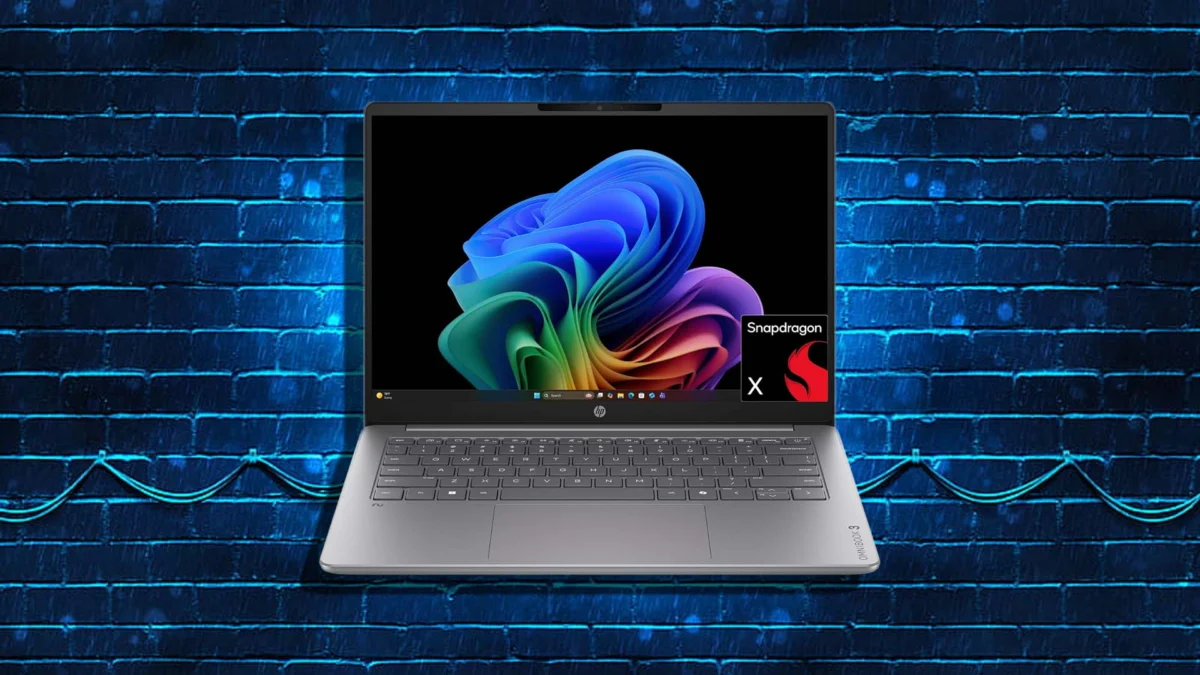
The landscape of the ultra-portable computing market is currently witnessing a significant pricing correction as HP’s latest AI-integrated notebook, the OmniBook 3, has reached a new low price of $545 on Amazon, representing a 22 percent reduction from its standard retail value. This price movement is particularly noteworthy because the machine features the Snapdragon X processor, a component that represents a fundamental shift in Windows computing from traditional x86 architecture to the highly efficient ARM-based platform. Equipped with 16GB of LPDDR5X RAM and a 256GB PCIe NVMe solid-state drive, the OmniBook 3 is positioned as a direct challenger to both the established MacBook Air lineup and the burgeoning field of Copilot+ PCs.
Technical Architecture and the Move to ARM
The centerpiece of the HP OmniBook 3 is the 8-core Snapdragon X processor. This system-on-a-chip (SoC) is designed to emulate the efficiency gains seen in mobile smartphone technology while delivering the sustained performance required for a desktop operating system like Windows 11. Unlike traditional Intel or AMD processors, which have historically struggled with heat dissipation and power draw in thin-and-light chassis, the Snapdragon X architecture allows for a fanless or whisper-quiet thermal design.
The efficiency of this architecture is not merely theoretical. Benchmarks for the Snapdragon X series indicate that it can maintain high performance-per-watt ratios, which translates to a battery life that can comfortably exceed 18 to 20 hours of continuous productivity. This endurance is intended to match, and in some cases exceed, the performance benchmarks set by Apple’s M-series silicon in the MacBook Air. By transitioning to ARM, HP is targeting a demographic of professional and student users who prioritize mobility and longevity over the raw, power-hungry processing used in gaming or heavy video editing workstations.
The Role of the Neural Processing Unit in Modern Computing
A defining characteristic of the OmniBook 3 is its integration of the Hexagon Neural Processing Unit (NPU). In the current technological climate, where "AI PC" has become a central marketing and functional term, the NPU serves as the engine for local machine learning tasks. The NPU in the Snapdragon X chip is capable of 45 Trillion Operations Per Second (TOPS). This metric is critical because it meets and exceeds the 40 TOPS threshold established by Microsoft for its "Copilot+" PC designation.
The practical application of this 45 TOPS capability allows the laptop to handle artificial intelligence workloads on-device rather than relying on cloud-based processing. This has significant implications for both privacy and performance. Users can utilize features such as real-time background blurring in video conferencing, live translation of audio, and smart system optimizations without taxing the main CPU or GPU. This offloading of tasks to the NPU is a primary factor in the device’s ability to maintain a cool operating temperature and extended battery life, as the NPU is far more efficient at these specific mathematical calculations than a general-purpose processor.
Memory and Storage Configuration
While many entry-level ultra-portables still ship with 8GB of RAM—a configuration increasingly criticized by industry experts as insufficient for modern multitasking—the HP OmniBook 3 included in this discount offers 16GB of LPDDR5X RAM. The "X" designation in LPDDR5X refers to the higher clock speeds and lower power consumption compared to standard DDR5 memory. This ensures that the Windows 11 environment remains responsive even when multiple browser tabs, office applications, and AI-assisted tools are running simultaneously.
However, potential buyers must note a specific hardware constraint: the memory is soldered directly to the motherboard. This design choice, common in ultra-portable laptops to save space and reduce weight, means that the 16GB capacity cannot be upgraded by the user at a later date. Consequently, the inclusion of 16GB at the $545 price point is a vital feature, as it mitigates the "planned obsolescence" often associated with 8GB machines. The storage is handled by a 256GB PCIe NVMe SSD, providing high-speed data access, though this is the one component where users might eventually seek more space through external drives or cloud storage.
Visual and Multimedia Specifications
HP has equipped the OmniBook 3 with a 1080p OLED display, a feature usually reserved for premium-tier laptops costing well over $800. OLED (Organic Light Emitting Diode) technology offers several advantages over traditional IPS or TN panels, including true black levels, an infinite contrast ratio, and more vibrant color reproduction. The "micro-edge" bezels maximize the screen-to-body ratio, providing an immersive viewing experience while maintaining a compact footprint.
For the modern remote-work environment, the device includes a 5MP webcam. This is a substantial upgrade over the 720p or 1080p sensors found in most competing laptops. The higher resolution, combined with the AI-driven image processing of the Snapdragon X chip, ensures superior clarity during video calls. Security is further bolstered by a physical privacy shutter for the camera and Windows Hello compatibility, allowing for biometric facial recognition logins.

Market Context and the "OmniBook" Revival
The naming of the OmniBook 3 marks a strategic shift for HP. Historically, HP utilized various sub-brands like Pavilion, Envy, and Spectre to categorize its consumer laptops. The revival of the "OmniBook" moniker—a brand HP originally used in the 1990s—is part of a broader effort to simplify its product lineup and signal a new era of AI-centric computing.
This $545 price point on Amazon appears to be part of an early promotional cycle linked to seasonal sales events. Industry analysts suggest that the aggressive pricing of Snapdragon-powered laptops is a coordinated effort by hardware manufacturers and Qualcomm to gain market share in a space long dominated by Intel. By pricing a highly capable ARM-based laptop under the $600 mark, HP is effectively lowering the barrier to entry for the next generation of Windows computing.
Performance Analysis: Windows on ARM
One of the historical hurdles for laptops like the OmniBook 3 was software compatibility. Previous iterations of "Windows on ARM" struggled to run applications designed for x86 processors. However, the release of Windows 11 and the introduction of the "Prism" emulation layer have largely resolved these issues. Prism allows legacy applications to run on ARM chips with significantly improved performance and stability compared to previous emulation methods.
While most native ARM applications (such as Microsoft Office, Google Chrome, and Zoom) run with peak efficiency, the Prism layer ensures that specialized or older software remains functional. This software maturation, combined with the hardware power of the Snapdragon X, makes the OmniBook 3 a viable primary computer for a vast majority of users, ranging from corporate professionals to creative freelancers.
Broader Industry Implications
The availability of the HP OmniBook 3 at a 22 percent discount serves as a bellwether for the PC industry. It suggests that the premium "early adopter" tax on AI PCs is beginning to fade. As production scales and the software ecosystem stabilizes, the competition between ARM-based Windows laptops and Apple’s MacBook line is expected to intensify.
Furthermore, this deal highlights the shifting priorities of the consumer. As cloud-based workflows and AI tools become more integrated into daily tasks, the demand for "always-on" connectivity and extreme battery life is outpacing the need for high-octane gaming performance in the ultra-portable segment. The OmniBook 3, with its focus on the NPU and energy efficiency, is a direct response to these changing consumer habits.
Chronology of the Product Launch and Discount
The HP OmniBook 3 was released as part of the initial wave of Copilot+ PCs in mid-2024. Its launch was met with significant interest due to its inclusion of the Snapdragon X chipset during a period of high anticipation for ARM-based Windows devices. While the initial MSRP placed it in the competitive mid-range bracket, the current Amazon discount to $545 represents one of the first major price drops for this specific hardware configuration.
This pricing strategy aligns with Amazon’s "Early Prime Day" and other seasonal promotional windows, where manufacturers often test the price elasticity of new product categories. For HP, the goal is likely to clear inventory and build a user base for the OmniBook brand before the next cycle of hardware refreshes.
Conclusion
The HP OmniBook 3 represents a significant milestone in the democratization of high-performance AI computing. By offering a Snapdragon X-powered machine with 16GB of RAM and an OLED display for $545, HP is not only providing a high-value option for consumers but also challenging the pricing structures of its competitors. As the industry continues to move toward AI-integrated hardware and ARM architecture, the success of devices like the OmniBook 3 will likely dictate the design and pricing trends of the ultra-portable market for years to come. For the consumer, this discount offers a rare opportunity to acquire future-proof technology at a price point previously occupied by entry-level, lower-specification machines.