George Chandra Eka
Modern Apple MacBook users are presented with a unique choice when it comes to powering their devices: the familiar and intuitively designed MagSafe connector, or the ubiquitous, industry-standard USB-C. This dual-option approach reflects a complex interplay of Apple’s proprietary innovation, evolving technological standards, and diverse consumer needs. While MagSafe offers distinct advantages in safety and dedicated charging efficiency, USB-C counters with unparalleled versatility and a rapidly expanding power delivery ecosystem. Understanding the nuanced differences between these two charging methodologies is crucial for MacBook owners to optimize their daily workflow, protect their investment, and streamline their digital lives.
The Genesis of MagSafe: A Legacy of Safety and Innovation
MagSafe first graced Apple’s MacBook Pro lineup in January 2006, coinciding with the brand’s transition from PowerPC to Intel processors. Its introduction was a direct response to a common and frustrating problem: accidental disconnections of power cables that often resulted in laptops being pulled off desks, leading to costly damage. Apple’s solution was elegant and groundbreaking: a magnetic connector designed to detach harmlessly from the laptop if subjected to sudden tension. This innovation was widely lauded by users and critics alike, quickly becoming a signature feature of Apple laptops and a benchmark for user-centric design.
The original MagSafe connector featured a rectangular design with five pins, allowing for bidirectional connection. Its success led to a subsequent iteration, MagSafe 2, introduced in 2012 alongside thinner MacBook Air and Retina MacBook Pro models. MagSafe 2 maintained the core magnetic principle but adopted a wider, flatter design to accommodate the slimmer chassis of these new machines. Despite its popularity, Apple gradually phased out MagSafe, starting with the 12-inch MacBook in 2015 and culminating with the 2016 MacBook Pro models, which exclusively featured USB-C/Thunderbolt 3 ports. This shift marked a period where Apple committed to a universal port standard, aligning with broader industry trends.
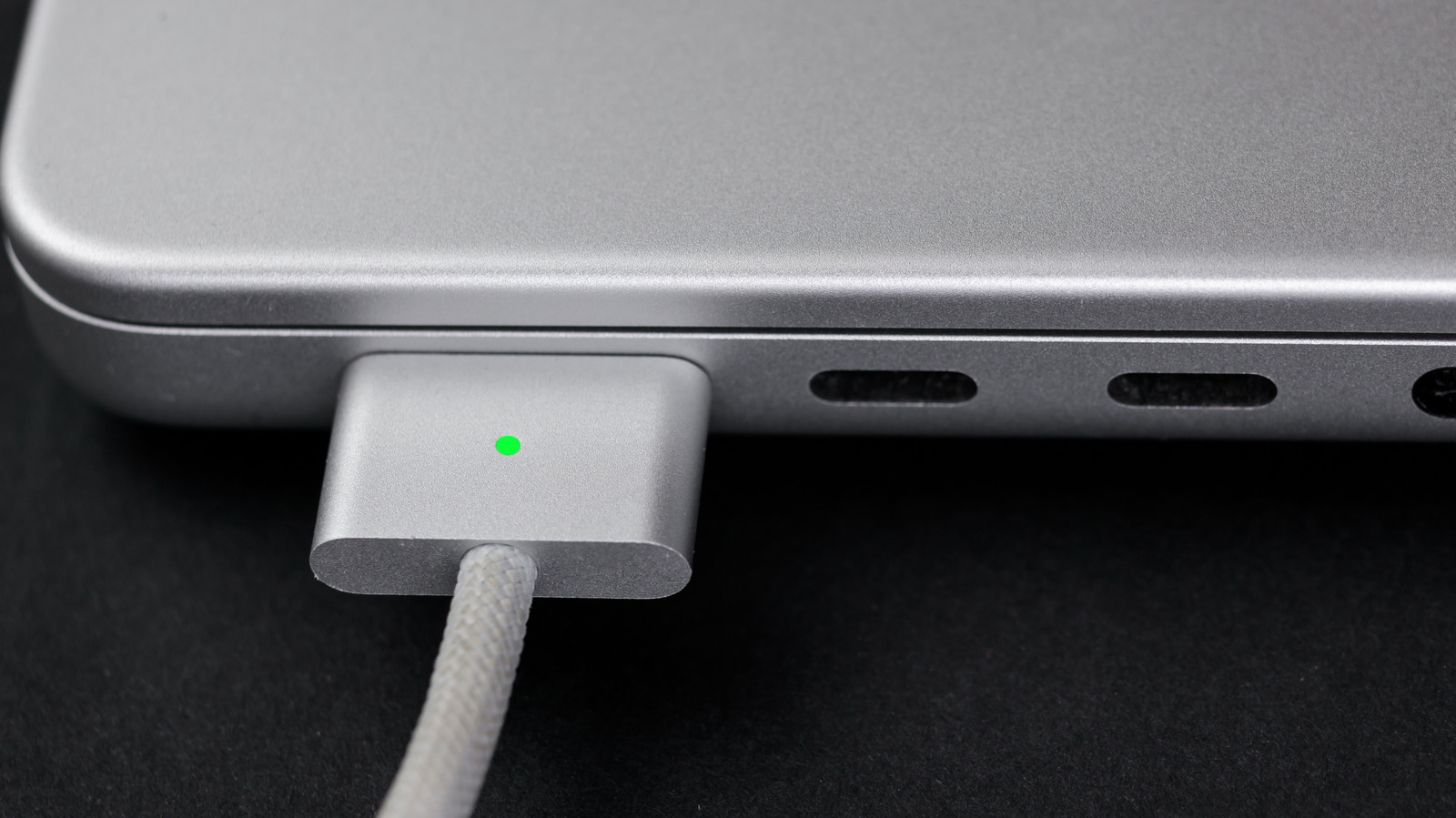
However, the absence of MagSafe was met with considerable user feedback, with many lamenting the loss of the safety feature. Recognizing this sentiment, Apple dramatically reintroduced MagSafe, now dubbed MagSafe 3, with the redesigned 14-inch and 16-inch MacBook Pro models in October 2021, followed by the M2 MacBook Air in 2022. MagSafe 3 features a slightly different physical design and enhanced power delivery capabilities, addressing the demands of modern, higher-performance MacBooks. It remains a proprietary technology, distinct from the Qi-based MagSafe charging system found in iPhones, which primarily facilitates wireless charging for smaller devices. The return of MagSafe underscored Apple’s willingness to reintroduce beloved features when consumer demand and technological feasibility align, even while continuing to support industry standards.
USB-C: The Universal Standard’s Ascendancy
While MagSafe represents Apple’s proprietary ingenuity, USB-C embodies a global movement towards standardization and versatility in connectivity. Introduced by the USB Implementers Forum (USB-IF) in 2014, USB-C was designed to be a reversible, multi-functional connector capable of transmitting power, data, and video signals through a single cable. Its symmetrical design eliminated the frustration of incorrect insertion, a common annoyance with older USB-A ports. Beyond its physical attributes, the underlying Power Delivery (USB-PD) specification transformed USB-C into a powerful charging solution, capable of delivering significantly higher wattages than previous USB standards.
The adoption of USB-C has been rapid and widespread across the consumer electronics landscape. From smartphones and tablets (including Android devices and, more recently, iPhones) to laptops, external monitors, and a vast array of peripherals, USB-C has become the de facto port for modern devices. This standardization offers immense benefits to consumers, reducing the need for multiple proprietary cables and adapters, simplifying travel, and fostering a more interoperable technological ecosystem. Regulatory bodies, such as the European Union, have also championed USB-C, mandating its inclusion in many electronic devices to reduce electronic waste and enhance consumer convenience.
Apple was an early adopter of USB-C, integrating it into the 12-inch MacBook in 2015 and then making it the sole port type on the MacBook Pro models from 2016 to 2020. This move, while initially controversial due to the need for adapters, signaled Apple’s commitment to pushing industry standards forward. The evolution of USB-PD has been critical to USB-C’s success as a charging solution. Initially supporting up to 100W, the USB-PD 3.1 specification, released in 2021, introduced Extended Power Range (EPR), allowing for power delivery up to 240W. This significant increase in wattage means that USB-C can now adequately power even the most demanding laptops, including high-performance workstations.
Direct Comparison: MagSafe vs. USB-C – A Deep Dive into Key Attributes
When evaluating MagSafe and USB-C for MacBook charging, several critical attributes come into play, each presenting distinct advantages and disadvantages.
1. Safety and Durability:
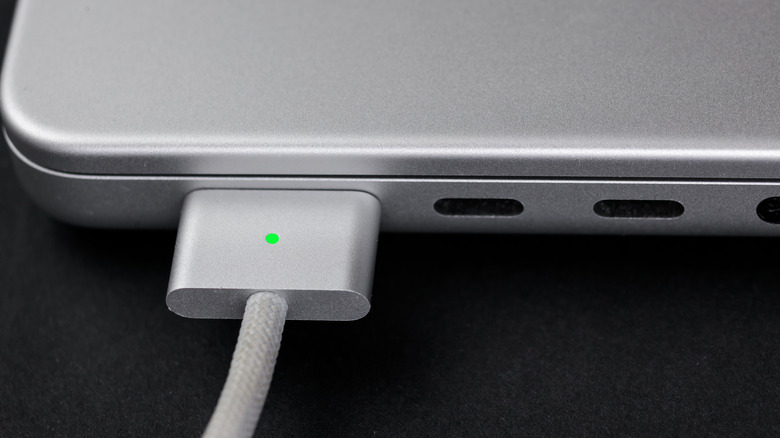
The most frequently cited advantage of MagSafe is its inherent safety mechanism. The magnetic connection ensures that if the cable is accidentally tugged—whether by tripping over it, a pet running past, or an inadvertent pull—it simply detaches from the laptop without dragging the device to the floor. This significantly reduces the risk of costly physical damage to the MacBook itself, such as cracked screens, dented chassis, or damaged internal components. Furthermore, it protects the charging port from strain and wear over time, potentially extending the lifespan of the port and the cable. For users in busy environments or with active households, this preventative measure can offer considerable peace of mind, potentially saving hundreds or even thousands of dollars in repair costs.
In contrast, USB-C cables rely on a friction-fit connection. While this creates a more secure attachment, it also means that a strong pull on the cable will likely drag the MacBook along with it. This poses a substantial risk of the laptop falling and sustaining damage. Over time, repeated insertion and removal, especially if not perfectly aligned, can also lead to wear and tear on the USB-C port itself, potentially causing loose connections or outright failure, necessitating professional repair. While some USB-C cables are designed with strain relief, the fundamental principle of a non-magnetic connection means the device is always at higher risk of being pulled down.
2. Charging Speed and Power Delivery:
Modern MacBooks, particularly the Pro models, demand significant power, and both MagSafe 3 and high-end USB-C configurations can deliver fast charging. MagSafe 3, specifically when paired with the appropriate power adapter (e.g., Apple’s 140W USB-C Power Adapter for the 16-inch MacBook Pro), is designed to offer rapid charging capabilities. For compatible models like the 2021 MacBook Pro and 2022 MacBook Air (and later), MagSafe 3 can achieve a 50 percent charge in approximately 30 minutes. This level of performance is critical for users who need to quickly top up their battery before a meeting or while on the go. The MagSafe cable itself is specifically engineered to handle these high wattages reliably.
USB-C charging, while versatile, presents a more complex landscape regarding power delivery. The standard USB-C Power Delivery profile typically ranges from 60W to 100W. While 100W is sufficient for many laptops, it may not enable the fastest charging speeds for high-performance MacBooks. To achieve comparable or even superior charging speeds via USB-C, users must ensure they have both a compatible high-wattage USB-C power adapter and a USB-C cable that supports the Extended Power Range (EPR) of USB-PD 3.1. For instance, Apple sells a 240W USB-C charge cable, and newer MacBook Pro models released after November 2023 are capable of receiving up to 240W via USB-C, provided the power brick also supports this output. This means that merely having a USB-C port doesn’t guarantee fast charging; the entire charging chain—adapter, cable, and laptop—must be compatible with high power delivery specifications. Users often find themselves needing to scrutinize cable and adapter specifications to ensure optimal charging performance, a layer of complexity not present with the straightforward MagSafe solution.
3. Versatility and Ecosystem Integration:
This is where USB-C shines brightest. Its status as a universal standard means a single USB-C cable and a sufficiently powerful adapter can often charge a MacBook, an iPhone, an iPad, and a myriad of other devices like headphones, portable battery packs, and even some external monitors. This significantly simplifies cable management, reduces clutter, and is a boon for travelers who can carry fewer adapters and cables. The broad adoption of USB-C also fosters a competitive accessory market, often leading to a wider range of third-party cables and chargers at various price points, although quality and power delivery capabilities can vary significantly. From an environmental perspective, the reduction in proprietary chargers and the move towards a common standard are widely seen as positive steps towards reducing electronic waste.
MagSafe, by contrast, is a proprietary Apple technology specific to MacBooks. While it performs its dedicated function exceptionally well, it does not offer the same cross-device compatibility. A MagSafe cable is exclusively for MacBooks, meaning users will still need separate cables for their other USB-C-powered devices. This can contribute to a larger collection of cables and adapters, potentially diminishing the overall convenience for users deeply embedded in multiple ecosystems. However, its dedicated nature ensures optimized performance and reliability specifically for MacBook charging, without the variability sometimes found in the broader USB-C accessory market.
4. Port Availability:
The return of MagSafe 3 also addresses another practical concern for MacBook users: port availability. By dedicating a specific port solely for charging, MagSafe frees up the valuable USB-C/Thunderbolt ports for other peripherals. Modern MacBooks, especially the Pro models, are often used with external displays, high-speed external SSDs, audio interfaces, and various docks. Each of these accessories typically requires a USB-C/Thunderbolt port. When charging via MagSafe, all USB-C ports remain open for data transfer, video output, or connecting other essential devices, enhancing the overall utility and expandability of the laptop.
Conversely, when a MacBook is charged via USB-C, one of its universal ports is occupied solely by the power cable. For users with limited ports or those who connect numerous peripherals, this can become a constraint, potentially necessitating the use of a USB-C hub or requiring them to disconnect one accessory to charge their laptop. While hubs offer a solution, they add another layer of complexity and an additional accessory to carry, which can negate some of the "single cable" convenience of USB-C.
User Experience and Practical Implications
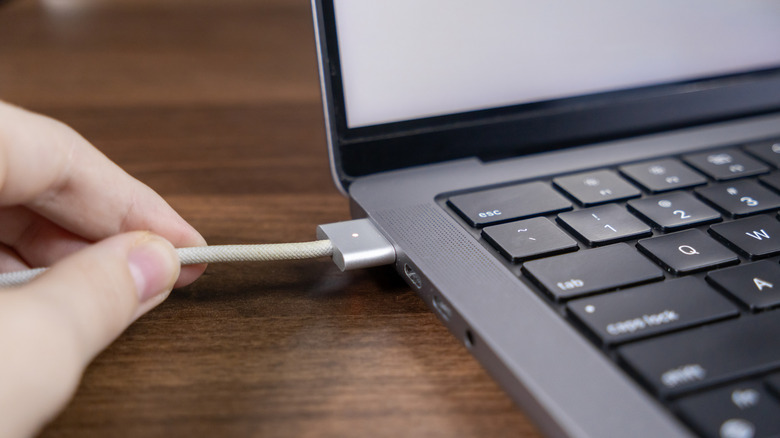
The choice between MagSafe and USB-C for MacBook charging often boils down to individual priorities and usage patterns. For professional users and power users, the combination of MagSafe’s safety feature and its dedicated, high-speed charging can be invaluable. The peace of mind that comes from knowing a tripped cable won’t send an expensive laptop crashing, coupled with the ability to reserve USB-C ports for critical peripherals like external GPUs, high-resolution monitors, or fast storage, often makes MagSafe the preferred primary charging method. The consistent and predictable fast charging performance of MagSafe 3, especially for larger MacBook Pro models, also ensures minimal downtime.
For travelers and casual users, the unparalleled versatility of USB-C frequently tips the scales. The ability to carry a single high-wattage USB-C adapter and cable to charge a MacBook, smartphone, tablet, and other accessories significantly simplifies packing and reduces clutter. While the safety aspect of MagSafe is appealing, some users may prioritize the convenience of universal compatibility over the breakaway magnetic connection, especially if they are mindful of cable placement. The growing availability of powerful USB-C power banks also offers greater flexibility for charging on the go, often leveraging the same cable used for wall charging.
The dual-charging strategy also impacts the accessory market. The proliferation of USB-C has spurred innovation and competition among third-party manufacturers, leading to a vast ecosystem of chargers, cables, and docks. While MagSafe remains proprietary, its return has also led to a resurgence of MagSafe-specific accessories, including longer cables or alternative power bricks. From a cost perspective, Apple’s proprietary MagSafe cables and high-wattage USB-C adapters (like the 140W or 240W options) are often priced at a premium. However, the open standard of USB-C allows for more budget-friendly alternatives, though users must be vigilant about quality and specifications to ensure safe and effective charging.
Future Outlook and Industry Trends
Apple’s decision to offer both MagSafe and USB-C charging options on its latest MacBooks represents a strategic hybrid approach. It acknowledges the enduring value of a beloved, user-centric safety feature (MagSafe) while simultaneously embracing the undeniable benefits and regulatory pressures driving the adoption of a universal standard (USB-C). This dual strategy provides users with unprecedented flexibility, allowing them to select the most appropriate charging method for their specific circumstances.
The evolution of USB-C Power Delivery, with its increasing wattage capabilities, suggests that the performance gap between proprietary solutions like MagSafe and universal standards will continue to narrow. As USB-PD 3.1 with EPR becomes more widespread, achieving ultra-fast charging for even the most power-hungry laptops via USB-C will become increasingly common and accessible. This trend might influence future design decisions, although the fundamental safety advantage of MagSafe’s magnetic breakaway design remains a unique differentiator that USB-C, by its very nature, cannot replicate.
Ultimately, the availability of both MagSafe and USB-C for MacBook charging is a net positive for consumers. It empowers users to make an informed choice based on their individual needs, whether prioritizing robust safety features, maximizing port availability, or streamlining their entire charging ecosystem with a single, versatile cable. Neither option is definitively superior in all contexts; rather, they serve complementary roles in providing a comprehensive and adaptable power solution for Apple’s flagship laptops.