Vera Intan Clara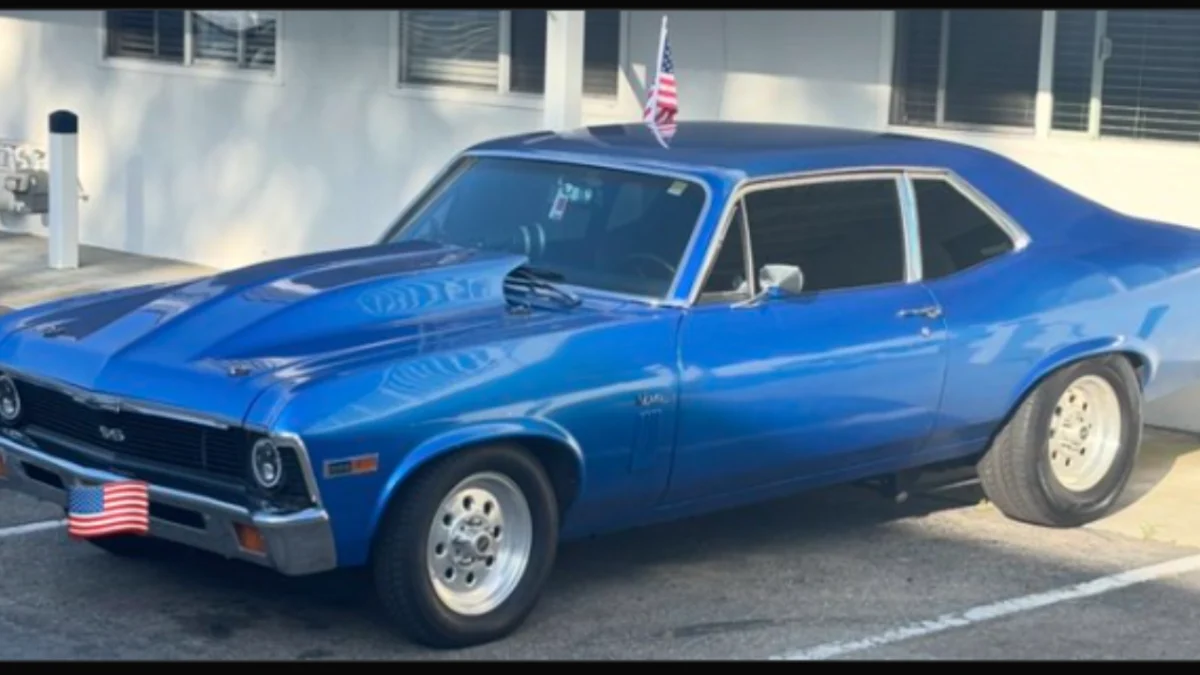
A recent incident at an annual car meet in Goleta, California, has ignited a fierce debate online regarding free speech, private property rights, and the complexities of corporate neutrality in an increasingly polarized political landscape. A video widely circulated on X, garnering over two million views, documented the moment a man was asked by the General Manager of M Special Brewing Company to remove both a U.S. flag and a flag supporting former U.S. President Donald Trump from his vehicle, citing a company policy to maintain an "apolitical" environment at their events. The confrontation quickly escalated, drawing in local law enforcement and prompting widespread calls for a boycott of the brewery.
The incident unfolded during the R&R Motorworks Car Meet, an annual gathering hosted at M Special Brewing Company’s Goleta location. Jorge Cortez, the individual at the center of the dispute, arrived at the event with his 1969 Chevy Nova, proudly displaying an American flag on one side and a "Trump: I Will Never Surrender" flag on the other. His arrival quickly drew the attention of Kennedy, the General Manager, who approached Cortez to address the flags.
Chronology of a Confrontation: From Policy to Police Involvement
The interaction, recorded by Cortez and later re-shared by the influential X account @libsoftiktok, began with a seemingly cordial greeting. Cortez immediately informed Kennedy that he was recording their conversation, to which she reportedly expressed no objection. Kennedy wasted no time in articulating M Special Brewing Company’s stance: their events, including the R&R Motorworks Car Meet, are intended to be "apolitical" or politically neutral. This policy, she explained, was designed to create an inclusive and comfortable atmosphere for all attendees, regardless of their diverse political views. She emphasized that participation in the event required adherence to this principle of political neutrality.
Cortez, however, viewed the request as an infringement on his rights and a mischaracterization of the symbols he displayed. He firmly stated his belief in the President of the United States, referring to the American flag as a symbol of national unity and the Trump flag as an expression of support for a former commander-in-chief. Kennedy reiterated that the policy was not a personal attack or targeted specifically at his support for Donald Trump. She assured him that any individual displaying partisan political symbols, regardless of their affiliation, would receive the same request. Her stated aim was to avoid alienating anyone and ensure universal comfort.
Cortez countered by asserting his comfort in America, emphasizing that the American flag represented neutrality and national identity, not a partisan political statement. He further highlighted that his vehicle, a 1969 Chevy Nova, was an iconic American car, reinforcing his patriotic theme. Despite Kennedy’s repeated explanations of the company’s desire for a neutral space, Cortez remained steadfast, arguing that the American flag itself was inherently neutral and non-offensive on American soil. "It’s pretty neutral when I have the American flag. It doesn’t become any more neutral to have the American flag in America," he asserted.
As the discussion continued without resolution, Kennedy informed Cortez that she would consult with another manager regarding the situation. Cortez agreed, expressing his readiness to proceed. However, the tone of the interaction shifted, with Kennedy perceiving Cortez’s continued refusal to remove the flags as confrontational, leading her to ask him to leave the premises. It was at this juncture that Cortez himself suggested involving authorities, acknowledging the private property status of the brewery. Kennedy initially hesitated but ultimately departed to contact law enforcement to address the ongoing dispute.
According to subsequent updates from X users, local sheriff’s deputies arrived at the scene. Cortez, identified by some as a U.S. Marine Corps veteran, reportedly engaged with the deputies professionally. He later confirmed that the officers were polite and professional, affirming that the brewery was private property. To avoid any potential trespassing issues or citations, Cortez voluntarily departed the premises. He also pushed back against claims from M Special staff that he was "causing a disturbance" or being argumentative, stating he was simply discussing cars with other attendees prior to the confrontation.
The "Apolitical" Stance: Corporate Policy Meets Constitutional Interpretation
The core of the dispute revolves around M Special Brewing Company’s stated "apolitical" policy for its events and its application to the display of the U.S. flag. While the brewery’s intention, as articulated by GM Kennedy, was to foster an inclusive environment by preventing overt political displays, the decision to classify the American flag as "political" sparked immediate and intense backlash online.
X users in the comment section of the viral video quickly pointed to established legal precedents, arguing that displaying the American flag is a form of protected speech and a civil right. This perspective often references landmark Supreme Court cases such as Texas v. Johnson (1989) and Spence v. Washington (1972), which affirmed that flag display and even desecration are forms of expressive conduct protected under the First Amendment. However, these rulings primarily pertain to government restrictions on speech in public forums. The situation at M Special Brewing Company presents a nuanced legal question concerning private property rights.
Businesses, as private entities, generally have the right to establish and enforce their own rules of conduct on their premises, provided these rules do not violate anti-discrimination laws or other specific statutes. This often includes policies regarding attire, behavior, and the display of symbols. The challenge for M Special Brewing Company is that while they may legally be within their rights to enforce an "apolitical" policy on private property, the public perception of requesting the removal of the American flag can be profoundly negative, particularly in a politically charged environment. For many, the American flag transcends partisan politics and represents national unity, patriotism, and the sacrifices of veterans. To label it "political" in the same vein as a campaign flag is seen by some as a deeply unpatriotic and misinformed stance.
Social Media Fallout and Calls for Boycott
The immediate aftermath of the incident saw a rapid proliferation of the video across X and other social media platforms. Accounts like @libsoftiktok, known for sharing content that often highlights perceived liberal overreach or "wokeness," amplified the story, contributing significantly to its viral spread. This amplification quickly translated into organized online action.
Calls for a boycott of M Special Brewing Company emerged almost instantly. Social media users began sharing the brewery’s contact information ([email protected]) and identifying local establishments that carry their beer, urging others to avoid purchasing their products. The intensity of the online reaction was further fueled by specific allegations from X users who claimed that M Special Brewing Company itself has displayed other "political" flags, specifically Pride and transgender flags, at its Santa Barbara location. This perceived inconsistency – prohibiting the American flag while allegedly permitting other identity-based flags – became a central point of contention for those calling for a boycott, fueling accusations of hypocrisy and a perceived anti-American bias.
The contrast between the brewery’s "apolitical" policy regarding the American flag and the alleged display of other flags at different locations underscores the difficulty for businesses in navigating contemporary cultural and political sensitivities. What one group considers a neutral symbol of identity or inclusion, another might view as a partisan political statement. In an era where corporate brands are increasingly expected to take stances on social issues, maintaining true neutrality can be an almost impossible tightrope walk, often leading to accusations of selective enforcement or ideological bias from various sides.
Broader Implications: Free Speech, Private Property, and Corporate Identity
This incident at M Special Brewing Company highlights several broader implications for businesses, individuals, and the fabric of public discourse in the United States.
Firstly, it underscores the ongoing tension between individual expressive rights and the property rights of private businesses. While individuals generally enjoy robust First Amendment protections against government censorship, these protections do not typically extend to private property where owners can impose reasonable restrictions on speech and conduct. However, when these private restrictions touch upon symbols as potent as the American flag, they invariably provoke a strong public reaction, blurring the lines between legal rights and perceived moral or patriotic duties.
Secondly, the incident serves as a stark reminder of the challenges businesses face in attempting to remain "apolitical" in a deeply polarized society. What constitutes "political" is subjective and often contested. A company’s attempt to create a neutral space can inadvertently become a political act itself, especially when specific symbols are targeted. The rapid response and organized boycott calls demonstrate the immense power of social media to mobilize public opinion and exert economic pressure on businesses perceived to be out of step with certain values.
Thirdly, the controversy touches upon the evolving nature of corporate identity and social responsibility. In recent years, many companies have embraced visible stances on social justice issues, diversity, and inclusion, often through the display of symbols like the Pride flag. While these actions are lauded by some as progressive and responsible, they can also alienate other segments of the population who may view such displays as overtly political or ideological. The M Special Brewing Company incident, with its contrasting flag allegations, illustrates the double-edged sword of corporate social engagement and the challenge of managing diverse stakeholder expectations.
Finally, the incident reflects the broader societal divisions that increasingly manifest in everyday interactions. A car meet, ostensibly a casual gathering for enthusiasts, became a flashpoint for deeply held beliefs about patriotism, political expression, and the boundaries of tolerance. The ease with which such disputes escalate to involve law enforcement and become national news stories via social media speaks volumes about the current state of public discourse and the intensity of ideological divides.
As of the time of publication, M Special Brewing Company has not issued any public statement, apology, or clarification regarding the incident or its "apolitical" policy. The Daily Dot, which initially reported on the story, noted its inability to independently verify all claims made by those involved beyond the videos and posts shared on X. The absence of an official corporate response leaves many questions unanswered and allows the narrative to be shaped largely by social media commentary and the initial viral footage. The incident remains a potent example of how local disagreements, amplified by digital platforms, can quickly ignite national conversations about fundamental rights, corporate responsibility, and the ever-present tensions in a diverse democracy.