Sisilia Frederika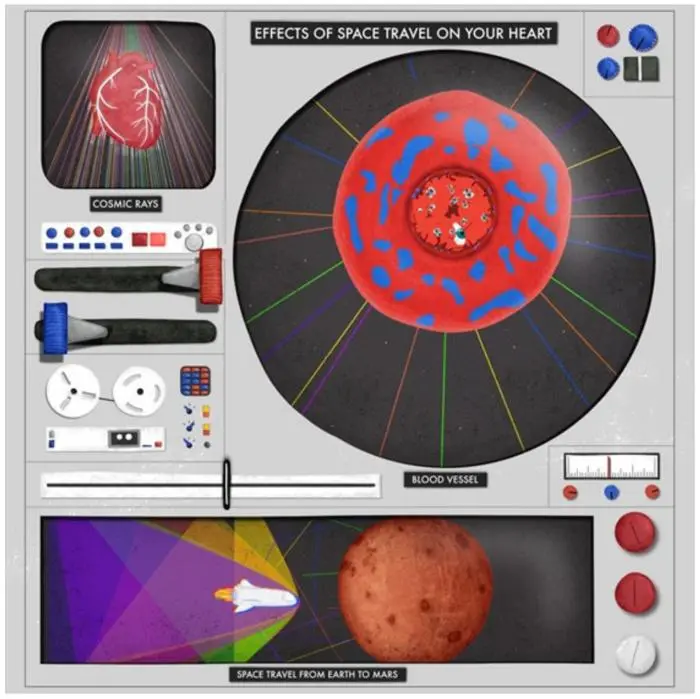
The prospect of human exploration beyond Low Earth Orbit (LEO) represents the next great frontier for the National Aeronautics and Space Administration (NASA) and international space agencies, yet the biological toll of such journeys remains one of the most significant hurdles to mission success. A comprehensive new study led by researchers at the Medical College of Wisconsin and published in the journal PLoS One has cast a sobering light on the physiological risks inherent in deep space travel. By simulating the unique environment of interplanetary space, the research team discovered that the combination of high-energy cosmic radiation and microgravity induces profound, long-lasting damage to the cardiovascular and immune systems, as well as the genetic integrity of blood cells. These findings suggest that the health impacts of a mission to Mars could persist for decades after an astronaut returns to Earth, potentially manifesting as life-threatening conditions long after the mission’s conclusion.
The Dual Threat of the Deep Space Environment
Life on Earth is shielded from the harshest elements of the cosmos by two primary defenses: the atmosphere and the magnetosphere. The atmosphere absorbs a significant portion of incoming solar and cosmic radiation, while the magnetosphere—the magnetic field generated by Earth’s core—deflects high-energy charged particles. Astronauts aboard the International Space Station (ISS) benefit from some of this protection, as the station orbits within the protective shell of the magnetosphere. However, once a spacecraft ventures toward the Moon or Mars, it enters the "deep space" environment, where it is bombarded by Galactic Cosmic Rays (GCRs) and solar energetic particles.
Compounding the radiation risk is the state of microgravity, or weightlessness. While the human body has evolved to function under the constant pull of 1G, the absence of this force leads to fluid shifts, muscle atrophy, and bone density loss. To date, the long-term synergistic effects of radiation and weightlessness have been difficult to quantify because humanity lacks a deep-space research facility. Consequently, scientists must rely on sophisticated terrestrial models to predict how the human body will respond to years of exposure during a round-trip mission to Mars.
Methodology: Recreating the Void on Earth
To investigate these phenomena, the research team at the Medical College of Wisconsin utilized two highly specialized protocols designed to mimic spaceflight conditions in animal models. Because conducting multi-year radiation and weightlessness studies on humans is ethically and practically impossible, the researchers utilized middle-aged male rats, whose biological age was selected to approximate that of typical career astronauts.
To simulate the effects of microgravity, the team employed the hindlimb unloading (HLU) protocol. Developed by NASA, HLU involves suspending the rear legs of the rats at a 30-degree angle using a specialized tail harness. This orientation causes a cephalad fluid shift—moving blood and interstitial fluids toward the head—and removes the weight-bearing load from the lower extremities, closely mirroring the physiological changes seen in astronauts during prolonged weightlessness.
To simulate the radiation of deep space, the researchers utilized the NASA Space Radiation Laboratory (NSRL) at Brookhaven National Laboratory. The facility uses a "simGCRsim" (Simulated Galactic Cosmic Ray) simulator, a five-ion, six-beam system that blasts targets with high-speed protons and heavy ions, including silicon and iron. These particles are particularly dangerous because their high mass and energy allow them to penetrate standard spacecraft shielding, causing "dense ionization" tracks as they pass through human tissue, which results in more complex DNA damage than standard X-rays or gamma rays.
The Chronology of Exposure and Observation
The experimental timeline was designed to reflect the stresses of a long-duration mission followed by a significant recovery period. The rats were first subjected to hindlimb unloading for five days to allow their systems to adjust to the fluid shifts of simulated microgravity. Following this initial period, they were exposed to a concentrated dose of radiation delivered in a single session. This dose was intended to represent the cumulative exposure an astronaut would receive over months or years in deep space.
After the radiation exposure, the rats remained in the hindlimb unloading state for an additional 25 days, completing a 30-day "mission" phase. Once the mission phase concluded, the rats were returned to normal housing and allowed to live out the remainder of their natural lives. The researchers monitored the subjects for approximately one year, a period that roughly equates to 25 years of human life, allowing for the observation of late-onset health effects.
Cardiovascular Deterioration and Perivascular Fibrosis
The most immediate and concerning finding of the study related to the heart. The researchers observed that rats exposed to a radiation dose of 1.5 Gray (Gy) began to develop perivascular fibrosis—a condition where excess fibrous connective tissue, or scar tissue, forms around the coronary vessels that supply blood to the heart muscle. This scarring reduces the elasticity of the vessels and can eventually restrict blood flow.
Crucially, the study found that this damage was progressive. At 270 days post-exposure, the amount of scar tissue had doubled compared to earlier observations. The thickening of this tissue "squeezes" the blood vessels, significantly increasing the risk of myocardial infarction (heart attack). Interestingly, the data indicated that while microgravity causes many physiological issues, the perivascular fibrosis was almost entirely attributable to radiation exposure.
When the researchers tested a lower dose of radiation—one more closely aligned with what an astronaut might receive on a three-year Mars mission—the scarring was not immediately apparent. However, by the one-year mark, 83% of the rats had developed the condition. This suggests that the cardiovascular damage from deep space travel is a "silent" threat that may not manifest until decades after the radiation event occurred.
Immune System Suppression and NK Cell Depletion
The study also identified a secondary, equally alarming impact on the immune system, specifically regarding the spleen and Natural Killer (NK) cells. NK cells are a critical component of the innate immune system, responsible for identifying and destroying virus-infected cells and early-stage cancerous cells.
The researchers found that months after the simulated spaceflight, the rats’ spleens had lost approximately two-thirds of their NK cell population. Unlike the cardiovascular damage, which was radiation-driven, the immune system depletion appeared to be a result of the synergy between radiation and microgravity. Rats exposed only to microgravity eventually saw their NK cell levels return to baseline. However, in rats exposed to both stressors, the recovery was severely stunted. The data suggests that cosmic radiation may damage the bone marrow’s regenerative capacity, preventing the body from replenishing its immune defenses even after the environmental stressor is removed.
Genetic Mutations and the Acceleration of Aging
In the final phase of the study, the researchers sequenced the genomes of the rats’ white blood cells 235 days after exposure. They discovered a series of permanent mutations in genes associated with Clonal Hematopoiesis of Indeterminate Potential (CHIP).
On Earth, CHIP is typically considered a condition of aging. It occurs when a single mutated hematopoietic stem cell begins to produce a disproportionate number of blood cells, outcompeting healthy cells. While CHIP is not a cancer in itself, it is a known precursor to leukemia and is associated with a fourfold increase in the risk of stroke and heart attack. The presence of these mutated cells triggers chronic inflammation in the arterial walls, accelerating the progression of cardiovascular disease. The research indicates that deep space radiation acts as a "temporal accelerator," fast-forwarding the genetic changes usually seen in the elderly and imposing them on middle-aged subjects.
Broader Implications and Scientific Analysis
The implications of this study for NASA’s Artemis program and future Mars missions are profound. Current spacecraft shielding is effective against solar protons but offers limited protection against the high-Z, high-energy (HZE) ions found in galactic cosmic rays. The findings suggest that mission planners must look beyond physical shielding and consider biological countermeasures.
From a journalistic and scientific perspective, the study highlights a critical gap in our current "Go/No-Go" criteria for long-term missions. While NASA has established "Permissible Exposure Limits" (PELs) for radiation, these limits are often based on cancer risk rather than late-onset cardiovascular or immune dysfunction. The fact that 83% of subjects developed heart scarring after a "mission-equivalent" dose suggests that the current risk models may be underestimating the non-cancer hazards of spaceflight.
Furthermore, the study’s limitations—specifically the use of only male rats and the delivery of radiation in a single bolus dose—point toward the need for more nuanced research. It remains unknown if female biology, which responds differently to radiation and fluid shifts, would exhibit the same rate of fibrosis. Additionally, the "dose-rate effect"—the difference between receiving radiation all at once versus a slow trickle over years—is a subject of ongoing debate in radiobiology. Some theories suggest that a slow dose allows for cellular repair, while others argue that chronic exposure keeps repair mechanisms perpetually overwhelmed.
Looking Ahead: The Path to Mitigation
As the global space community prepares for the "Moon to Mars" transition, the Medical College of Wisconsin study serves as a vital data point in the field of space medicine. To mitigate these risks, future research will likely focus on pharmacological interventions, such as radioprotective drugs that can stabilize DNA or anti-fibrotic agents that can prevent heart scarring.
Additionally, the development of active shielding—using magnetic fields to deflect cosmic rays around a spacecraft—may move from the realm of science fiction to a mission necessity. Until these technological and medical solutions are realized, the journey to Mars remains not just a challenge of engineering and fuel, but a daunting race against the fundamental limits of human biology. The "quantification of the problem," as provided by this study, is the first essential step in ensuring that the first humans to walk on Mars can also enjoy a healthy life upon their return to Earth.