Clarissa Hana
Windows system administrators are grappling with a critical and widespread issue following the installation of Microsoft’s September 2026 cumulative updates, which are reportedly causing severe disruptions to Remote Desktop Services (RDS) across Windows Server 2019, 2022, and 2025 platforms. The cascading failures are preventing users from establishing new remote connections and, in numerous documented cases, rendering existing sessions unresponsive, often necessitating forceful server reboots to restore even temporary functionality. This widespread instability has plunged many IT departments into crisis management mode, impacting business continuity and productivity.
The problematic updates, part of Microsoft’s monthly Patch Tuesday release on September 10, 2026, which aimed to address a substantial 966 security vulnerabilities including two zero-day exploits, have instead introduced a significant operational hurdle. Reports of these RDS failures began surfacing across IT professional forums, most notably on Reddit, within hours of the updates’ widespread deployment. Administrators shared harrowing accounts of servers that initially appeared to operate normally for a few hours post-patch, only to descend into a state where Remote Desktop connections would systematically fail.
Timeline of Disruption: From Patch Deployment to Systemic Failure
The initial signs of trouble emerged on September 10, 2026, as system administrators began applying the September cumulative updates across their Windows Server infrastructures. By late Tuesday and into Wednesday, September 11, a growing chorus of complaints indicated a pattern:
- September 10, 2026 (Patch Tuesday): Microsoft releases its monthly security updates, including cumulative updates for Windows Server 2019, 2022, and 2025. These updates are designed to patch critical security flaws and improve system stability.
- September 10-11, 2026: Early reports begin appearing on platforms like Reddit, initially focusing on isolated incidents of Remote Desktop Services (RDS) experiencing hangs or connection failures.
- September 11-12, 2026: The volume of reports escalates dramatically. Administrators confirm that the issue is not isolated to individual servers but is affecting multiple machines within their environments, spanning different Windows Server versions. The common thread identified is the recent installation of the September 2026 cumulative updates.
- September 12-13, 2026: The severity of the problem becomes undeniable. Reports detail existing RDS sessions becoming unkillable, new connections failing to establish, and the only recourse being a hard server reset. Some administrators note that even after a reboot, the problem re-emerges, often triggered by user logouts.
The Nature of the Failures: Beyond Simple Connection Drops
The reported RDS failures are not merely minor glitches; they represent a significant degradation of essential remote access capabilities. Once a server succumbs to the issue, the user experience is severely impacted:
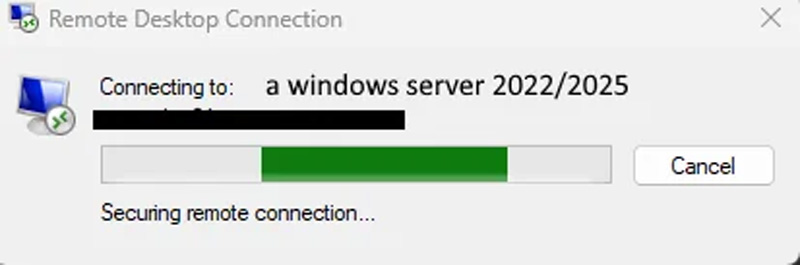
- Hanging Connections: New attempts to connect via Remote Desktop Protocol (RDP) often stall indefinitely, displaying connection screens that never resolve.
- Unresponsive Existing Sessions: Users already connected may find their sessions frozen. Attempts to disconnect or log off these sessions frequently fail, leaving the session in a zombie-like state. This not only ties up valuable server resources but also prevents the user from re-establishing a working connection.
- Inability to Log In: For many, the primary consequence is the complete inability for any new users to log into the affected servers. This effectively severs remote access for a significant portion of the workforce, halting operations that rely on these server resources.
The visual representation of these failures often manifests as a static RDP client window, frozen at the connection stage, or a black screen after authentication, indicating a breakdown in the session establishment process.
Administrator Accounts: A Glimpse into the Operational Impact
The widespread nature of the problem is underscored by numerous accounts from IT professionals on forums and directly to tech news outlets. One administrator shared their dire experience: "All terminal servers in our environment are failing (sessions dropping, no new connections possible, only solution is a hard reset) within a day." This statement highlights the rapid onset and persistent nature of the issue, forcing a cycle of reboots without addressing the root cause.
Another administrator described a scenario where the problem manifested after initial successful connections: "We’ve had issues with Remote Desktop Services post September update. It works initially, but after the first log out, services crash and no further users can sign in." This observation suggests that the vulnerability might be triggered or exacerbated by specific session termination events, rather than a constant, pervasive load. For this user, standard server restarts proved ineffective, and the only remedy was to roll back the problematic September update, albeit at the cost of forfeiting crucial security patches.
Technical Deep Dive: Potential Root Cause
While Microsoft has not officially confirmed the exact cause, one administrator’s detailed investigation on Reddit provided a compelling hypothesis. This individual, troubleshooting issues on Windows Server 2022, observed that the RDP service becomes unresponsive specifically when users begin to log out. Debugging efforts pointed towards a potential deadlock situation. The administrator elaborated, stating, "The service hangs at RDPSERVERBASE!WDLIB_Close, there seems to be no timeout set here. This results in a deadlock between RDP and LSM [Local Session Manager]."
A deadlock occurs when two or more processes are unable to proceed because each is waiting for the other to release a resource. In this context, if the RDP service is stuck waiting for a resource from the Local Session Manager, and the Local Session Manager is simultaneously waiting for the RDP service to complete an action (like properly closing a session), neither can advance, leading to a system freeze. The absence of a timeout mechanism in the RDPSERVERBASE!WDLIB_Close function, as suggested, would mean the RDP service could indefinitely wait for a response that never comes, effectively paralyzing the session management.
Affected Systems and Vulnerable Updates
The impact is not confined to a single server version. System administrators have reported identical problems across the spectrum of supported Windows Server releases:
- Windows Server 2019: Affected by cumulative update KB5122876.
- Windows Server 2022: Affected by cumulative update KB5122882.
- Windows Server 2025: Affected by cumulative update KB5122871.
The consistent appearance of the issue across these distinct operating system versions, all updated with their respective September 2026 cumulative packages, strongly suggests a common underlying flaw introduced by the update itself.
The Dilemma: Security vs. Stability
The current situation presents IT departments with a difficult choice: either maintain operational stability by rolling back the September updates, thereby sacrificing essential security patches that address numerous vulnerabilities, or endure the ongoing RDS failures, impacting productivity and potentially exposing systems to newly patched threats.
Rolling back the updates, while restoring Remote Desktop functionality, means leaving systems vulnerable to the security flaws that the September Patch Tuesday release was intended to fix. This includes the two zero-day exploits that were part of this month’s update cycle, which are particularly concerning as they are already known to attackers and are actively being exploited. The decision to revert is therefore not taken lightly and carries significant security implications.
Microsoft’s Response and Path Forward
In response to the escalating reports and the evident impact on enterprise operations, Microsoft has acknowledged the issue. A spokesperson for the company stated that they are aware of the reports concerning Remote Desktop Services failures following the September 2026 cumulative updates. Microsoft has confirmed that its teams are actively investigating the matter and will provide guidance and a resolution as soon as it becomes available.
This acknowledgment, while a necessary first step, leaves many administrators in a precarious position, awaiting a definitive fix. The typical remediation process for such critical bugs involves the release of an out-of-band (OOB) update, which is issued outside the regular Patch Tuesday schedule to address urgent issues. Until such a patch is released, IT professionals are left to manage the fallout, either by accepting the instability or by compromising their security posture.
Broader Implications for Remote Work and Business Continuity
The widespread failure of Remote Desktop Services strikes at the heart of modern IT infrastructure, particularly for organizations that have embraced remote or hybrid work models. RDS is a cornerstone technology for providing secure and efficient access to centralized resources and applications for remote employees. When this service falters, it directly impedes:
- Employee Productivity: Users unable to access their work environments cannot perform their duties, leading to lost work hours and potential project delays.
- Business Operations: Mission-critical applications and data hosted on these servers become inaccessible, potentially halting entire business processes.
- IT Resource Strain: System administrators are forced to divert significant resources from proactive management and strategic initiatives to reactive troubleshooting and crisis mitigation. The constant need for reboots and manual interventions consumes valuable IT staff time and can lead to burnout.
- Security Risk Management: The forced rollback of security updates creates a significant gap in an organization’s defense. This is particularly alarming given the inclusion of zero-day fixes in the problematic update, suggesting that these vulnerabilities could be actively exploited in the wild.
The incident also highlights the inherent risks associated with relying on a single vendor for critical infrastructure components, even when those components are patched for security. The interconnectedness of software updates and their potential for unintended consequences underscores the need for robust testing protocols and comprehensive disaster recovery plans within all organizations.
As the IT community awaits Microsoft’s official resolution, the September 2026 Patch Tuesday incident serves as a stark reminder of the delicate balance between security, stability, and operational continuity in the digital age. The ability to remotely access and manage systems is no longer a convenience but a fundamental requirement for many businesses, and its disruption can have far-reaching and costly consequences. The coming days will be critical as Microsoft works to identify and rectify the root cause, aiming to restore the trust and reliability that users expect from its server operating systems.