admin
admin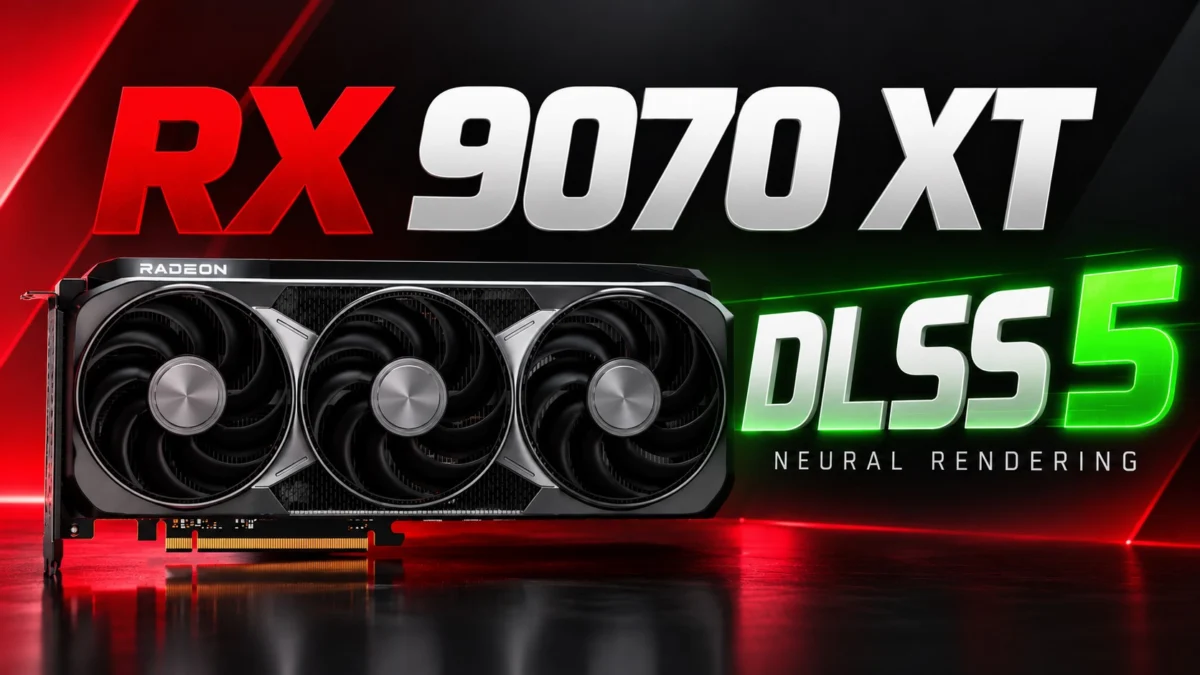
The landscape of PC gaming technology has reached a significant milestone as independent modders have successfully demonstrated NVIDIA’s proprietary DLSS 5 Neural Rendering (NR) technology running on AMD’s latest RDNA 4 architecture. This breakthrough, achieved through a custom executable file and specific library swaps, marks the first time that NVIDIA’s most advanced AI-driven rendering feature has been functional on competing hardware. While the initial performance results indicate substantial overhead and a lack of optimization, the proof of concept challenges the industry’s long-standing reliance on hardware-locked software ecosystems.
The Technical Foundation: DLSS 5 and Neural Rendering
Deep Learning Super Sampling (DLSS) has traditionally been a cornerstone of NVIDIA’s GeForce RTX value proposition. With the introduction of DLSS 5, NVIDIA transitioned from simple spatial and temporal upscaling to a more comprehensive "Neural Rendering" model. Unlike previous iterations that focused on upscaling frames or generating intermediate frames (Frame Generation), DLSS 5 Neural Rendering aims to replace the traditional graphics pipeline’s denoising and lighting stages with a single AI-driven pass.
The primary requirement for DLSS 5 NR is the ability to process FP8 (8-bit floating point) operations with high efficiency. NVIDIA’s Blackwell architecture, found in the RTX 50-series GPUs, features dedicated hardware optimizations for FP8. However, AMD’s RDNA 4 architecture, debuting with the Radeon RX 9000 series, also includes native hardware support for FP8 instructions. This architectural commonality provided the theoretical opening that modders needed to bridge the gap between NVIDIA’s software and AMD’s silicon.

Chronology of the DLSS 5 Modding Movement
The journey to porting DLSS 5 began almost immediately after the technology’s debut alongside the RTX 50-series and its inclusion in titles like NBA 2K27.
- Phase One: RTX 40-Series Compatibility: Shortly after the RTX 50-series launch, enthusiasts discovered that the core neural rendering libraries could be forced to run on Ada Lovelace (RTX 40-series) hardware. This was achieved by swapping CUDA binaries, despite NVIDIA’s initial stance that the technology was optimized primarily for the newer architecture.
- Phase Two: Legacy RTX Support: Within weeks, further modifications allowed DLSS 5 to function on Ampere (RTX 30-series) and Turing (RTX 20-series) GPUs. While performance varied, the experiment proved that the neural rendering algorithms were more flexible than previously suggested.
- Phase Three: The AMD Breakthrough: The latest development involves a modder known as "danielblnc," who developed a specialized executable designed to translate the DLSS 5 calls into a format compatible with AMD’s RDNA 4 instruction set.
This third phase is the most radical, as it bypasses the vendor-specific check that usually restricts NVIDIA’s "NGX" (Next-Generation Image Experience) features to GeForce hardware.
Implementation Details: How DLSS 5 Runs on Radeon
The process of enabling DLSS 5 on an AMD Radeon RX 9070 XT involves several precise steps, as documented by technical analysts and hardware reviewers such as Ancient Gameplays. The workaround relies on a two-part software package: an initialization executable and the specific DLSS NR dynamic link library (DLL).
To initiate the process, users must place the "dlssnr_on_amd_setup.exe" file into the game’s primary binary folder (typically binx64). Simultaneously, the "nvngx_dlssnr.dll" (version 3.10.8.0 or higher) must be present in the same directory. Once the setup file is executed, it modifies the game’s runtime environment to intercept DLSS calls.

Interestingly, the mod does not replace AMD’s FidelityFX Super Resolution (FSR) but rather works in tandem with it. In titles like Cyberpunk 2077, users must first enable FSR 3 or FSR 4 to provide the initial upscaling pass. The mod then activates an overlay (accessed via the "End" key) where the user can trigger the DLSS 5 Neural Rendering pass. This "hybrid" approach uses FSR for the spatial reconstruction while attempting to use the DLSS 5 libraries for the neural denoising and lighting improvements.
Performance Analysis and Initial Benchmarks
While the achievement is a technical marvel, the current performance data suggests that there is a significant "translation tax" when running NVIDIA-optimized code on AMD hardware.
In initial testing conducted on a system featuring an AMD Radeon RX 9070 XT and a Ryzen 7 9800X3D, the performance impact was severe. In Cyberpunk 2077, the game typically runs at over 80 frames per second (FPS) with standard settings on the RX 9070 XT. However, upon enabling the DLSS 5 Neural Rendering mod, the frame rate plummeted to a mere 11–12 FPS.
The primary reasons for this performance degradation include:

- Lack of Tensor Cores: DLSS is designed to run on NVIDIA’s proprietary Tensor Cores. AMD’s AI Accelerators in RDNA 4, while capable of FP8, operate on a different logic structure, requiring the mod to emulate or translate instructions in a way that is not yet optimized.
- Driver Incompatibility: AMD’s Adrenalin drivers are not built to handle the specific memory management requests of the "nvngx_dlssnr.dll" library.
- Overhead of Translation: The executable acting as a bridge adds latency to every frame rendered.
However, the modding community has been quick to iterate. A subsequent release, Alpha v0.2.7, reportedly introduced a 12% performance improvement. In optimized scenarios, the modder claims to have achieved roughly 30 FPS at 1080p resolution in Cyberpunk 2077 using the RX 9070 XT. Furthermore, the technology has been successfully tested in Grand Theft Auto V: Enhanced, proving that the workaround is not limited to a single engine.
The Role of FP8 in Modern Graphics
The core of this breakthrough lies in the industry-wide shift toward FP8 precision. For years, graphics rendering relied on FP32 (single precision) or FP16 (half precision). However, AI models—particularly those used for real-time neural rendering—benefit from the reduced bandwidth and higher throughput of FP8.
By incorporating native FP8 support into RDNA 4, AMD inadvertently made their cards "language compatible" with NVIDIA’s latest AI innovations. This suggests that the barrier between DLSS and FSR is increasingly becoming a software-defined "walled garden" rather than a fundamental hardware impossibility. As both NVIDIA and AMD converge on similar mathematical standards for AI acceleration, the technical justification for hardware-exclusive features may begin to erode in the eyes of the consumer.
Industry Implications and Future Outlook
The successful porting of DLSS 5 to AMD hardware carries profound implications for the future of PC gaming.

1. The End of Proprietary Dominance?
For years, NVIDIA has used DLSS as a "moat" to protect its market share. If third-party developers and modders can reliably bring these features to AMD and potentially Intel hardware, the value proposition of choosing one GPU over another based solely on software features diminishes. This could force a return to raw performance and price-to-performance ratios as the primary competitive metrics.
2. Pressure on AMD’s FSR 4 Development
AMD has recently confirmed that FSR 4 will move toward a fully AI-based upscaling and frame generation model, moving away from the non-AI filters used in FSR 1, 2, and 3. The fact that DLSS 5—a rival technology—can already be forced to run on RDNA 4 hardware puts immense pressure on AMD to deliver a native solution that matches or exceeds NVIDIA’s image quality.
3. Legal and Security Concerns
The use of "nvngx_dlssnr.dll" on non-NVIDIA hardware likely violates end-user license agreements (EULA). Furthermore, the modder has explicitly warned that games with aggressive anti-cheat systems (such as Call of Duty or Valorant) will likely flag the modified DLL files as unauthorized software, potentially leading to player bans. This limits the current utility of the mod to single-player titles.
4. NVIDIA’s Potential Response
NVIDIA has historically been protective of its intellectual property. It remains to be seen if the company will implement more stringent hardware-level handshakes (such as digital signatures) to prevent their DLLs from being loaded on non-GeForce systems. Conversely, NVIDIA could choose to ignore the mod, as the current performance penalty on AMD hardware is high enough that it does not pose a legitimate threat to their market position.

Conclusion
The enablement of DLSS 5 Neural Rendering on AMD RDNA 4 GPUs is a landmark event in the enthusiast community. It serves as a reminder that the underlying silicon of modern graphics cards is often more capable than the restrictive software suites suggest. While 12 FPS in Cyberpunk 2077 is far from a playable experience for most, the rapid improvement seen in subsequent alpha builds suggests that optimization is possible.
As the industry moves toward a future where AI handles the bulk of the rendering workload, the lines between hardware vendors are blurring. Whether through official open-standard collaborations or through the persistent efforts of independent modders, the "democratization" of high-end rendering features appears to be an inevitable, albeit slow, progression. For now, Radeon RX 9000 owners can experiment with the bleeding edge of NVIDIA technology, provided they are willing to navigate the complexities of third-party executables and the current performance limitations of unoptimized code.