admin
admin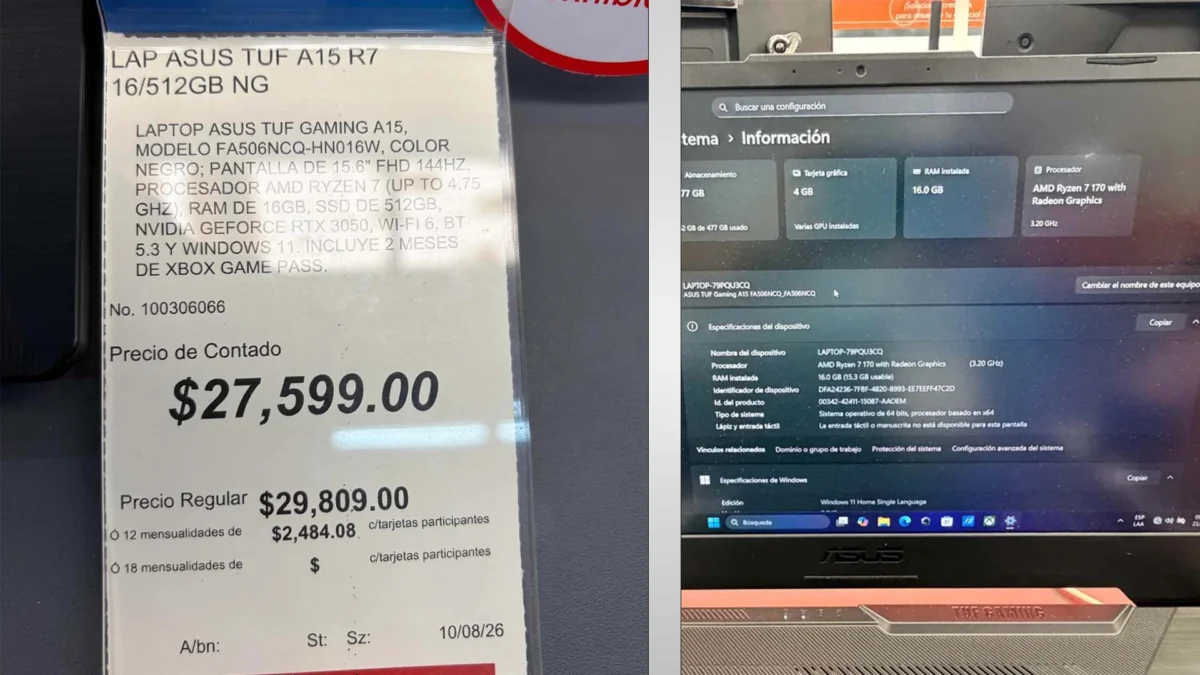
The global landscape for consumer electronics has long been characterized by significant price fluctuations across different geographic regions, but recent reports from the gaming community have highlighted a staggering disparity in the value proposition of high-end hardware. While the United States remains one of the most competitive markets for portable gaming technology, consumers in other regions—particularly in Latin America and parts of Europe—are facing "geography taxes" that can effectively double the price of entry-level components. A recent viral report originating from the enthusiast community illustrates a scenario where a budget-tier laptop, which would be considered an impulse buy or a secondary device in the U.S., commands a premium price equivalent to a high-end workstation in international markets.
The crux of the issue was brought to light by a consumer identified as "baldestpianoman" on the Reddit community r/GamingLaptops. The user shared photographic evidence from a retail environment showing an ASUS TUF Gaming A15 laptop equipped with an NVIDIA GeForce RTX 3050 graphics card. Despite the hardware being two generations behind the current market standard, the retail price was listed at approximately $27,599 in local currency. Based on the signage "Precio de Contado" and the specific pricing structure, analysts have deduced the location to be Mexico. When converted, the sale price sits at roughly $1,620 USD. For context, in the United States, $1,600 to $1,700 is currently sufficient to purchase a flagship-tier laptop featuring an NVIDIA RTX 4070 Ti or even certain RTX 4080 configurations during promotional periods.
The Technical Divide: Entry-Level vs. Enthusiast Performance
To understand the severity of this price disparity, one must look at the specifications of the hardware in question. The ASUS TUF Gaming A15 mentioned in the report features an AMD Ryzen 7 7735HS (or similar 7000-series refresh), 16GB of DDR5 RAM, and a 512GB SSD. However, the primary bottleneck is the NVIDIA GeForce RTX 3050. This GPU, released originally for laptops in early 2021, features only 4GB of VRAM and utilizes the aging Ampere architecture. In modern gaming, 4GB of video memory is increasingly insufficient for running "Triple-A" titles at high settings, as many contemporary games require 6GB to 8GB of VRAM just to maintain stable frame rates at 1080p resolution.

Conversely, the U.S. market offers significantly more powerful alternatives for the same financial outlay. For approximately $1,679, U.S. retailers like Amazon and Best Buy frequently stock the MSI Vector 16 HX AI. This machine is equipped with the RTX 4070 Ti (and in some specialized SKUs, references to the upcoming RTX 50-series are already beginning to surface in inventory leaks). The performance delta between an RTX 3050 and an RTX 4070 Ti is astronomical, often representing a 300% to 400% increase in raw graphical throughput, complemented by modern features like DLSS 3.5 Frame Generation and significantly more efficient ray-tracing cores.
The Anatomy of the "Geography Tax"
The massive price inflation seen in countries like Mexico, Brazil, and Argentina is rarely the result of corporate greed by a single manufacturer. Instead, it is the cumulative effect of a complex web of economic factors that penalize the end consumer.
- Value Added Tax (VAT): In many countries outside the U.S., the advertised price must include VAT. In Mexico, the Impuesto al Valor Agregado (IVA) is 16%. In many European nations, this figure climbs to 20% or 25%. In the United States, sales tax is added at the point of sale and rarely exceeds 10%, with many states offering tax-free holidays for "back-to-school" electronics.
- Import Duties and Tariffs: Governments often impose heavy duties on imported electronics to protect local industries or generate revenue. In Brazil, for example, combined taxes on imported gaming hardware can sometimes reach 60% to 100% of the original product value, making a $1,000 laptop cost $2,000 before it even reaches a store shelf.
- Logistics and Distribution Costs: Shipping fragile, high-value electronics to regions with less developed logistics infrastructure adds significant overhead. Distributors must also account for "shrinkage" (theft or damage) and the cost of localized warranty support, which is more expensive to maintain in smaller markets.
- Currency Volatility: Manufacturers and retailers often build in a "buffer" to protect against sudden devaluations of local currency against the U.S. dollar. If a retailer expects a 10% currency swing over a six-month period, they will price the item higher from day one to ensure they can afford to restock inventory later.
A Chronology of Market Distortion
The current pricing crisis is a lingering side effect of the global semiconductor shortage that began in 2020. While supply chains have largely recovered in North America and East Asia, the "bullwhip effect" continues to impact secondary markets.
- 2020-2021: The COVID-19 pandemic leads to a surge in demand for home computing and a simultaneous shutdown of key manufacturing hubs. GPU prices skyrocket globally.
- 2022: The "Crypto Winter" and the transition of Ethereum to Proof-of-Stake lead to a flood of used GPUs in the U.S., driving new prices down. However, international retailers who purchased stock at peak pandemic prices are slow to lower their MSRP to avoid taking a loss.
- 2023: NVIDIA releases the 40-series "Ada Lovelace" GPUs. In the U.S., 30-series stock is aggressively cleared out with deep discounts. In international markets, the 30-series remains the "current" affordable tier because 40-series units are priced out of the reach of the average consumer.
- 2024-Present: We see the phenomenon identified on Reddit: legacy hardware (RTX 3050) being sold at "next-gen" prices due to the lack of local competition and the high cost of importing new inventory.
Global Market Comparisons: A Statistical Overview
The following data estimates the average cost of a mid-range gaming laptop (RTX 4060 equivalent) across various global regions as of late 2024:

- United States: $850 – $1,100 (Tax excluded)
- European Union (Germany/France): €1,100 – €1,350 ($1,200 – $1,470 USD, VAT included)
- United Kingdom: £1,000 – £1,200 ($1,270 – $1,520 USD, VAT included)
- Mexico: $22,000 – $28,000 MXN ($1,300 – $1,650 USD, VAT included)
- Brazil: R$ 8,000 – R$ 11,000 ($1,600 – $2,200 USD, including all duties)
This data confirms that the U.S. consumer enjoys a purchasing power for technology that is roughly 30% to 50% higher than their counterparts in other OECD nations, and nearly 100% higher than consumers in developing economies.
Industry and Consumer Reactions
The reaction from the gaming community has been a mix of resignation and strategic circumvention. Many users in the Reddit thread suggested that international buyers should utilize "freight forwarding" services. These services provide a U.S. shipping address, receive the package, and then forward it to the international destination. Even after paying for international shipping and local import taxes, consumers often find they save $300 to $500 compared to buying from a local retailer.
However, this method carries significant risks. "If you import a laptop from the U.S. to Mexico or Brazil, you effectively forfeit your warranty," noted one hardware analyst. "Most manufacturers like ASUS or MSI have region-locked warranties. If your $1,600 import develops a motherboard fault, you are looking at a very expensive paperweight."
Manufacturers have largely remained silent on the specific pricing of the TUF A15 in Mexico, citing that final retail pricing is determined by local distributors and retailers, not the primary brand. However, internal sources suggest that companies are aware of the "stagnant inventory" problem in Latin America, where older RTX 30-series chips are still being utilized in new chassis because they are the only chips that can be imported at a price point that the local middle class can afford.

Broader Implications for the Gaming Industry
This pricing disparity has long-term implications for the software side of the gaming industry. When a significant portion of the global population is priced out of modern hardware, developers are forced to optimize their games for the "lowest common denominator"—in this case, the 4GB VRAM of the RTX 3050.
This creates a technological ceiling that slows the adoption of advanced features like path tracing and high-resolution textures. If the "global average" gamer is stuck on hardware from 2021 because 2024 hardware is priced like a luxury vehicle, the industry’s transition to the next generation of graphical fidelity will remain sluggish.
Furthermore, it drives the growth of cloud gaming services. In regions where hardware is prohibitively expensive, services like NVIDIA GeForce NOW or Xbox Cloud Gaming become the only viable way to experience modern titles. However, these services require high-speed, low-latency internet—another infrastructure hurdle that often exists in the same regions where hardware is overpriced.
As the industry looks toward the eventual launch of NVIDIA’s 50-series "Blackwell" laptop GPUs, the gap is expected to widen. Unless there is a significant shift in trade policies or a dramatic stabilization of global currencies, the "haves" and "have-nots" of the gaming world will continue to be defined not by their passion for the hobby, but by the side of the border on which they reside. For now, the $1,620 RTX 3050 stands as a stark monument to the inefficiencies of the global electronics trade.