Evan Lee Salim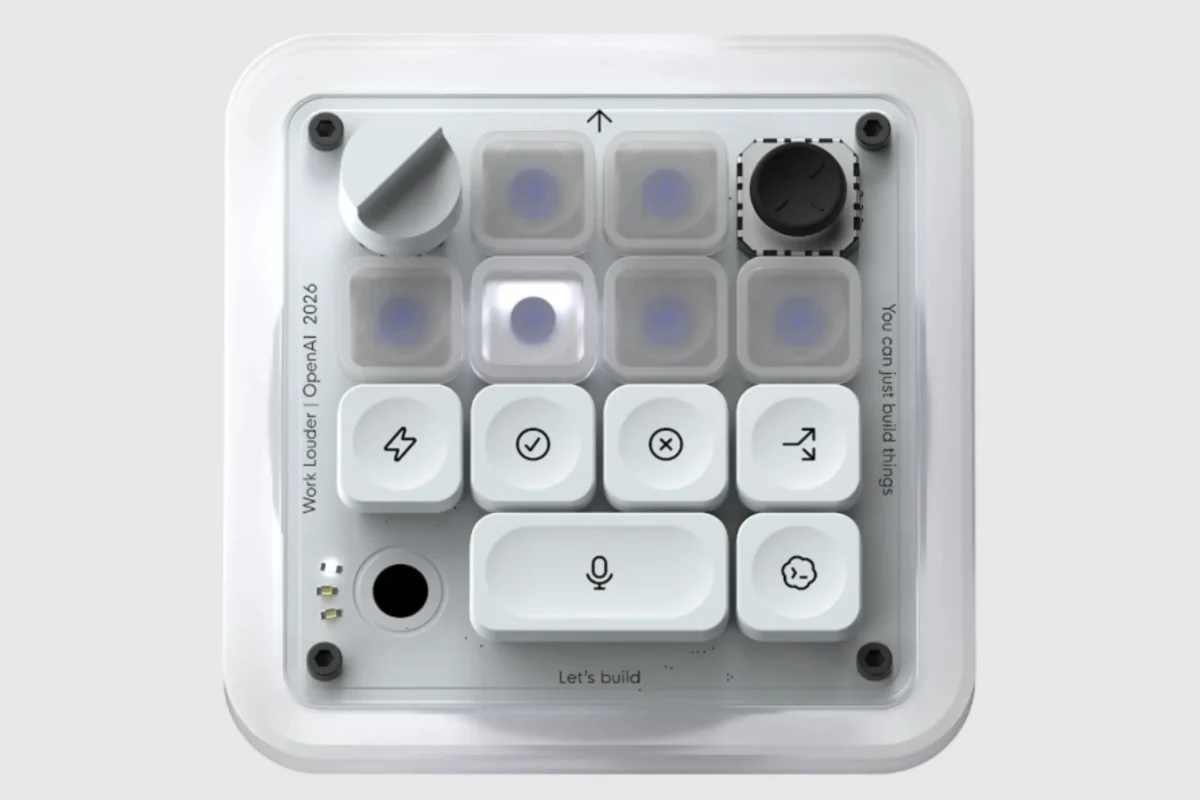
OpenAI, the artificial intelligence research and deployment company, last week marked a significant strategic shift by launching its inaugural piece of hardware: Micro, an artisanal keypad meticulously engineered to seamlessly integrate with its flagship conversational AI, ChatGPT. Developed in a collaborative effort with Work Louder, a recognized specialty keyboard designer, Micro enters the market as a distinctive workplace novelty, poised to captivate a segment of tech enthusiasts while potentially leaving a broader audience pondering its precise utility. This launch, however, is not occurring in a vacuum, as it coincides with escalating legal challenges, most notably a lawsuit filed by Apple, and persistent rumors of further hardware ventures, signaling a broader, more ambitious push by OpenAI into the tangible product space.
The introduction of Micro represents more than just a new product; it signifies OpenAI’s evolving trajectory from a purely software-centric entity to one exploring the complex interplay of artificial intelligence and physical devices. This pivot is unfolding against a backdrop of intense competition in the AI sector, where tech giants are increasingly vying for ecosystem dominance by integrating AI into every facet of user interaction, from cloud services to consumer electronics. OpenAI’s decision to dip its toes into hardware suggests a strategic move to create dedicated, physical touchpoints for its AI models, aiming to deepen user engagement and solidify its position in a rapidly expanding market. The collaboration with Work Louder, a company celebrated for its high-quality, customizable mechanical keyboards, underscores an intent to cater to a discerning audience that values design, tactile feedback, and specialized functionality. The Micro keypad, with its bespoke aesthetic and robust build, appears designed not merely as a utilitarian tool but as a statement piece, an extension of the personalized digital workspace for the AI-savvy professional.
The Hardware Unveiling: Micro’s Design and Functionality
Micro presents itself as a compact, yet notably sturdy, device, weighing in at a substantial feel that, as one early reviewer from TechCrunch observed, could readily double as an elegant paperweight if its primary AI accessory function doesn’t resonate with users. This immediate impression of durability hints at a premium construction quality, a hallmark often associated with Work Louder’s offerings. The keypad’s packaging further reinforces this perception, arriving in an immaculate white box characterized by a sleek, minimalist aesthetic—a design language widely recognized as "Apple-coded." This stylistic choice, whether intentional or coincidental, adds another layer of intrigue, especially given the concurrent legal disputes with the Cupertino tech giant.
Functionally, Micro is structured around a dual-tier key layout designed for intuitive control over ChatGPT and its agentic coding tool, Codex. The upper section features six frosted "agent" keys, which users can customize to execute specific, predefined tasks or workflows within the AI environment. Below these are six "command" keys, dedicated to controlling the programs or agents assigned above. Connectivity is flexible, allowing users to pair Micro with their computer via either Bluetooth for wireless convenience or a USB cable for a stable, wired connection. This versatility caters to different user preferences and workstation setups.
A standout feature of the Micro keypad is its integrated button for voice dictation. This allows users to simply hold down the button, articulate their request or command to the AI, and then tap a neighboring "send" button to submit their input. This hands-free interaction streamlines the process of communicating with ChatGPT, potentially offering a significant efficiency boost for users who frequently engage with the AI for writing, coding, or data processing. The entire customization process for Micro is managed within ChatGPT itself, through a dedicated "Micro" tab. Here, users can fine-tune various settings, from the brightness of the key backlighting to the precise commands and projects associated with each key, providing a high degree of personalization. This deep software-hardware integration is central to Micro’s value proposition, aiming to make AI interaction more fluid and less reliant on traditional keyboard and mouse input.
OpenAI’s Strategic Pivot to Hardware: Context and Ambition
OpenAI’s foray into hardware, while seemingly sudden, aligns with a broader industry trend where leading AI developers are seeking to extend their influence beyond pure software into tangible user experiences. This move is not without precedent; companies like Google and Amazon have long integrated their AI assistants (Google Assistant, Alexa) into a diverse range of hardware products, from smart speakers to thermostats. For OpenAI, entering the hardware market could serve several strategic objectives. Firstly, it allows the company to curate a more controlled and optimized user experience for its AI, ensuring seamless interaction between its models and dedicated peripherals. Secondly, it opens new revenue streams and diversifies its business model beyond API access and subscription services. Thirdly, and perhaps most importantly, it enables OpenAI to build an ecosystem around its AI, fostering deeper user loyalty and potentially setting industry standards for AI-integrated devices.
The context of this launch is enriched by a timeline of OpenAI’s rapid ascent. Founded in 2015 with a mission to ensure artificial general intelligence benefits all of humanity, OpenAI gained widespread public attention with the release of ChatGPT in November 2022. The chatbot quickly became a global phenomenon, demonstrating the power of large language models to a mainstream audience. Following this success, speculation began to mount about OpenAI’s future directions, including whispers of hardware development. Reports of a "screenless speaker" designed to pair with ChatGPT, reportedly developed by former Apple engineers, further fueled these rumors. This potential smart home device suggests an even broader vision for ambient AI, where OpenAI’s models could become central to managing various aspects of daily life, extending AI beyond the desktop into the living room. The involvement of ex-Apple engineers in this project is particularly noteworthy, hinting at a deliberate strategy to leverage top-tier talent with extensive experience in consumer hardware design and integration. This talent acquisition underscores the seriousness of OpenAI’s hardware ambitions and its willingness to invest significantly in this new frontier.
A Contentious Entry: Legal Battles and Market Speculation
The enthusiasm surrounding OpenAI’s hardware debut has been tempered by significant legal challenges, most notably a high-profile lawsuit filed by Apple several weeks prior to Micro’s launch. Apple’s lawsuit accuses OpenAI of "trade secret theft," kicking off what is widely anticipated to be a protracted and complex legal battle. While the specifics of the alleged theft remain under wraps, such disputes in the tech industry are often costly, time-consuming, and can have far-reaching implications for company reputation, partnerships, and product development. For OpenAI, a company that has rapidly grown from a research lab to a dominant player in commercial AI, this lawsuit adds a layer of uncertainty to its expansion plans, particularly as it ventures into hardware, a domain where intellectual property is fiercely guarded.
The timing of Apple’s lawsuit, coinciding with OpenAI’s initial hardware announcements, is particularly poignant. It draws attention to the intense competition and strategic maneuvers playing out in the AI landscape, where companies are not only racing to develop superior AI models but also to protect their innovations and market share. The "Apple-coded" aesthetic of Micro’s packaging, noted by reviewers, takes on a new dimension in light of this legal skirmish, prompting questions about design inspiration, competitive intelligence, and potential legal ramifications. This situation underscores the broader implications of AI’s rapid development, where the lines between innovation, imitation, and intellectual property can become blurred, leading to inevitable clashes between industry titans.

First Impressions and User Reception: A Mixed Bag
Initial reactions to Micro have been notably mixed, oscillating between curiosity and outright skepticism, particularly from its intended core audience: hard-core coders and tech professionals. The TechCrunch review highlighted the physical robustness and the intriguing "Apple-coded" packaging, acknowledging the device’s potential appeal as a premium accessory. However, the true test lies in its functional adoption by its target demographic.
On platforms like Reddit, where a significant community of developers and tech enthusiasts congregates, the reception has leaned heavily negative. One Redditor controversially dismissed Micro as "a prank and not a real product," reflecting a sentiment that a dedicated macro pad for ChatGPT might be superfluous or offer insufficient value. Other comments echoed this skepticism, with many serious coders expressing disinterest, suggesting that the device fails to address a critical pain point in their existing workflows. The independent outlet Aftermath delivered an even harsher critique, specifically targeting the $230 price tag. Their review, tellingly titled "OpenAI’s expensive macropad feels engineered to piss me off specifically," argued that the cost is exceedingly difficult to justify when compared to numerous cheaper DIY alternatives or readily available off-the-shelf macro pads. For instance, enthusiasts can build custom macro pads with open-source firmware like QMK/VIA for significantly less, or purchase commercial alternatives from brands like Elgato or Razer that offer similar or greater functionality at a more competitive price point. This highlights a critical challenge for OpenAI: convincing a discerning, technically proficient audience that Micro offers unique value that transcends existing, more affordable solutions.
Functionality and User Experience: A Deep Dive into the Learning Curve
Despite the initial skepticism, the underlying functionality of Micro holds promise for certain workflows. The reviewer from TechCrunch noted that once the initial learning curve was overcome and the keypad was programmed to personal preferences, the experience became "pretty fun." The ability to assign various ChatGPT sessions to specific keys, allowing for quick toggling between different projects, was identified as a significant convenience. When combined with the voice dictation feature, this multi-project management capability could indeed make the overall AI interaction "considerably more efficient and enjoyable."
However, this efficiency comes at the cost of a non-trivial learning curve. Micro’s design incorporates a color-coded feedback system for its buttons: white indicates an idle agent, blue signifies that the AI is processing a request (thinking), green confirms task completion, and red alerts the user to an error. Users must memorize this color scheme, along with the specific projects or commands they have assigned to each of the customizable keys. This mental overhead, combined with the initial setup and programming, necessitates a time investment. The fundamental question that arises, and one posed by the reviewer, is whether the functional benefits of Micro ultimately outweigh the effort required to master it, especially when compared to the established familiarity of a standard computer mouse and keyboard. For many, the perceived "week" needed to fully integrate Micro into their workflow might be a deterrent, particularly if the gains in efficiency are not overwhelmingly significant.
The Price Point and Alternatives: A Value Proposition Challenge
At a price point of $230, Micro enters a competitive landscape populated by a wide array of macro pads and specialized input devices. As Aftermath’s review pointed out, this figure stands in stark contrast to the cost of many DIY kits or even pre-built alternatives that offer similar, if not greater, levels of customization and functionality. For instance, hobbyists can assemble feature-rich macro pads using open-source hardware and software for less than $100, while established brands offer programmable keypads with more keys or additional features (like rotary encoders) within a comparable or lower price range. This places a significant burden on OpenAI to justify Micro’s premium cost through exceptional build quality, unparalleled integration with ChatGPT, or unique features that are not easily replicated.
The value proposition of Micro, therefore, appears highly contingent on the user’s specific engagement with ChatGPT. For the casual AI user, or someone who sparingly utilizes AI tools in their daily tasks, the $230 investment and the associated learning curve are likely to be prohibitive. As the TechCrunch reviewer concluded, "Ultimately, your experience with the Micro will depend heavily on how much you use ChatGPT." This suggests that Micro is not a mass-market device but rather a niche product tailored for a very specific segment: the "ChatGPT power user."
Broader Implications and Future Outlook
For the dedicated ChatGPT power user—individuals who rely on the AI extensively for coding, content generation, research, or complex problem-solving—Micro could indeed offer a tangible enhancement to their workflow. For this demographic, who might also appreciate "vintage-looking hardware with clicky buttons" (a nod to the mechanical keyboard enthusiast culture), the device could become a valued tool, making their daily interactions with AI more streamlined and even enjoyable. It taps into the desire for optimized tools that enhance productivity and personalize the digital experience.
OpenAI’s venture into hardware with Micro, despite its niche appeal and initial challenges, carries broader implications for the future of AI integration. It signals a strategic move by a leading AI developer to create physical interfaces for its advanced models, potentially paving the way for a new category of AI-specific peripherals. This could encourage other AI companies to explore similar hardware initiatives, leading to an expansion of the AI hardware market. However, the success of such devices will hinge on their ability to offer truly differentiated value, overcome steep learning curves, and justify their price points against a backdrop of versatile and often more affordable alternatives.
The long-term outlook for OpenAI’s hardware ambitions remains intertwined with the resolution of its legal battles, particularly the high-stakes dispute with Apple. The outcome of such litigation could significantly impact OpenAI’s ability to innovate freely, secure partnerships, and navigate the complex intellectual property landscape of the tech industry. Meanwhile, the development of other rumored devices, like the smart home speaker, indicates a more expansive vision for ubiquitous AI. As OpenAI continues to evolve, balancing its role as a pioneering AI research lab, a leading software provider, and now an aspiring hardware manufacturer, its journey will undoubtedly shape the future of human-AI interaction in profound ways. Micro, in its current form, stands as a fascinating, albeit contentious, first step into this brave new world, posing critical questions about the intersection of artificial intelligence, physical design, and user experience.