Sisilia Frederika
As the United States intensifies its efforts to return humans to the lunar surface for the first time in over half a century, NASA has announced a pivotal "dress rehearsal" mission scheduled to take place in Earth orbit. This mission serves as a critical precursor to the Artemis III and Artemis IV lunar landings, designed to test the complex rendezvous and docking procedures required to transport astronauts from the Orion spacecraft to the commercially developed Human Landing Systems (HLS). By conducting these tests in Low Earth Orbit (LEO) next year, NASA aims to mitigate risks and validate the hardware that will eventually carry the first woman and the next man to the Moon’s South Pole.
The upcoming demonstration mission marks a departure from the traditional Apollo-era architecture, utilizing a "dual-launch" strategy that leverages both government-owned and commercial heavy-lift rockets. While NASA’s Space Launch System (SLS) will propel the Orion spacecraft and its crew, commercial partners SpaceX and Blue Origin will launch their respective landing vehicles. This mission will provide the first real-world test of how these disparate systems interact in the vacuum of space, ensuring that the software, docking mechanisms, and life-support interfaces are fully synchronized before a crewed descent to the lunar surface is attempted.
The Evolution of the Artemis Campaign: From Apollo to the South Pole
To understand the significance of the upcoming LEO demonstration, one must look back at the legacy of the Apollo program. The last time humans walked on the Moon was in December 1972, during the Apollo 17 mission. While Apollo was a feat of engineering, it relied on an integrated architecture where the lunar module and command module were launched together on a single Saturn V rocket. In contrast, the Artemis program is built on a distributed model designed for sustainability and long-term presence.
The Artemis IV mission, currently slated for 2028, represents the stabilization of this new era. However, the immediate focus remains on Artemis III, which will be the first mission to return astronauts to the lunar surface. To ensure the success of Artemis III, NASA has mandated a series of rigorous tests. The Earth-orbit demonstration mission is the centerpiece of this risk-reduction strategy. By practicing docking and crew transfer in LEO, NASA can monitor operations in real-time with minimal communication lag, allowing for immediate adjustments to flight software or procedural protocols.
SpaceX and Blue Origin: A Tale of Two Landing Systems
NASA has fostered a competitive environment by awarding contracts to two primary commercial partners: Elon Musk’s SpaceX and Jeff Bezos’ Blue Origin. Each company has developed a distinct architectural approach to the Human Landing System, and both will be featured in the upcoming orbital tests.
SpaceX Starship HLS (V3)
SpaceX is developing a modified version of its Starship spacecraft, known as the Starship HLS. For the demonstration mission, SpaceX will utilize the latest "V3" iteration of the vehicle. Unlike the Apollo lunar module, Starship is a massive, fully integrated spacecraft designed for high-capacity transport. During the Earth-orbit test, the Starship HLS will launch atop a Super Heavy booster. A crewed Orion capsule, launched by an SLS rocket, will then rendezvous with the Starship.
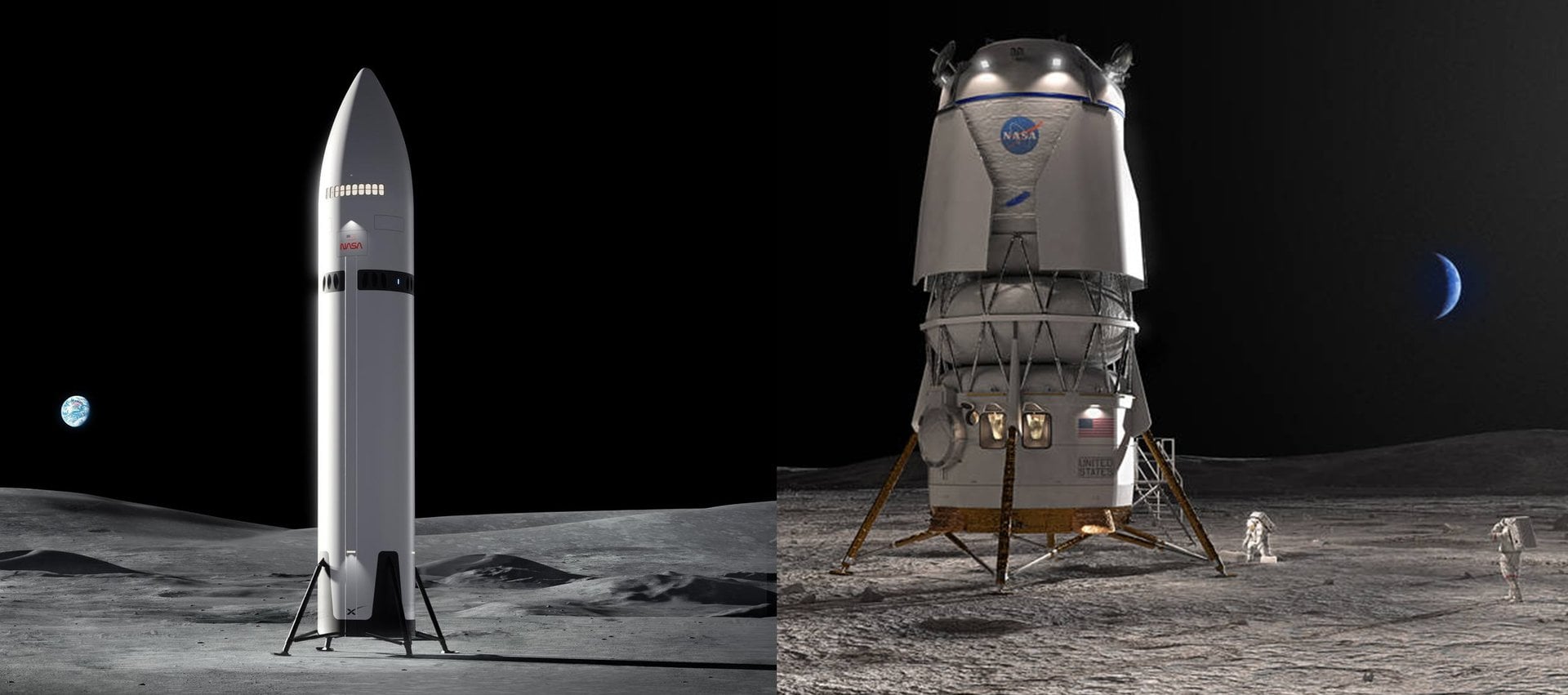
A key technical objective for SpaceX during this mission is the evaluation of a specialized docking system integrated into the nose of the Starship. NASA engineers are particularly interested in the structural dynamics of a "nose-to-nose" docking configuration. While the Artemis crew will perform the rendezvous and docking, current mission parameters specify that no crew members will enter the Starship test vehicle during this specific LEO demonstration. Instead, the focus will remain on the telemetry and mechanical integrity of the connection.
Blue Origin Blue Moon Mark 2
Blue Origin’s entry, the Blue Moon Mark 2 lander, offers a different profile. For the demonstration, the Mark 2 will be launched via Blue Origin’s New Glenn rocket. In a display of orbital endurance, the Blue Moon lander is expected to remain in a "parking orbit" for up to 30 days before the Orion spacecraft arrives. This "loitering" capability is essential for lunar missions, where timing windows for multiple launches can be narrow.
Unlike the SpaceX test, the Blue Origin demonstration will involve a crewed transfer. Once the Orion docks with the Blue Moon lander, two crew members will don their Orion Crew Survival System (OCCS) suits, depressurize the interface, and physically enter the landing craft’s cabin. This will allow NASA to test the internal Environmental Control and Life Support Systems (ECLSS) and ensure the cabin environment is safe for human occupancy.
Technical Specifications and the Role of the "Moonikin"
A major component of the safety validation process involves the use of a lunar surface spacesuit mass simulator, colloquially known as a "Moonikin." Similar to the sensor-laden mannequin carried aboard the uncrewed Artemis I flight, this simulator will be placed inside the Blue Origin lander. It is equipped with a suite of instruments designed to measure vibration, radiation levels, and thermal fluctuations.
The data gathered by the Moonikin will provide NASA with a high-fidelity map of the internal cabin environment. This is crucial for the development of the final flight-ready spacesuits and for ensuring that the ECLSS can maintain a stable atmosphere during the high-stress phases of a lunar landing. Furthermore, the flight software and control systems used in these prototypes are intended to be "production-representative," meaning the code used in the Earth-orbit test will be nearly identical to the code used during the actual Moon landing.
The Dual-Launch Campaign: A Masterclass in Logistics
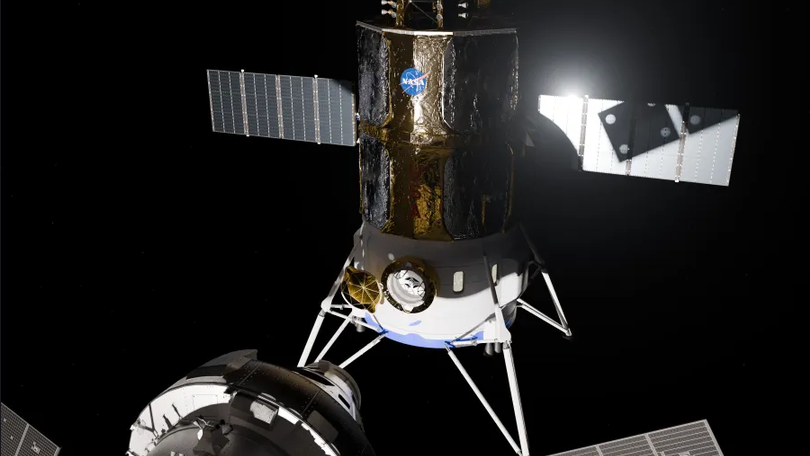
The logistical complexity of the Artemis program cannot be overstated. Jeremy Parsons, the Artemis program’s manager, described the mission as a "highly choreographed dance." The "dual-launch campaign" requires two of the world’s most powerful rockets—the SLS and either the Starship/Super Heavy or New Glenn—to be processed and launched within a very tight window.
This cadence tests more than just the rockets; it tests the ground infrastructure at Kennedy Space Center and Cape Canaveral. Ground processing teams, launch control centers, and global tracking networks must work in perfect unison across multiple sites. The demonstration mission provides a low-risk environment to exercise these "ground-to-space" communication links and data exchange protocols. If a delay occurs on one launch pad, teams must have the flexibility to adjust the orbital mechanics of the second vehicle to ensure a successful rendezvous.
Official Responses and Program Leadership
NASA leadership has emphasized that while the goals are aggressive, they are necessary for the safety of the astronauts. Steve Creech, the program manager of the Human Landing System Program at NASA’s Marshall Space Flight Center, noted that the different approaches taken by SpaceX and Blue Origin are a strength of the program. According to Creech, the "aggressive objectives" put forward by the commercial partners are intended to complement uncrewed lunar demonstration missions, building a comprehensive data set that leads to "understanding and confidence."
The sentiment is echoed by NASA’s broader engineering community, which views the LEO test as a vital bridge between simulation and reality. By identifying potential "edge cases"—unforeseen technical glitches that only appear during live operations—NASA can refine its systems engineering before the stakes involve a 240,000-mile journey back to Earth.
Analysis of Broader Implications
The success of these Earth-orbit tests has implications that extend far beyond the Artemis III mission. First and foremost, it validates NASA’s transition to a "commercial services" model. By acting as a customer rather than the sole manufacturer, NASA is attempting to lower the long-term costs of space exploration while stimulating a domestic space economy.
Strategically, the Artemis program is also a response to the growing international interest in the lunar South Pole. With other nations, including China, announcing their own lunar ambitions, the ability of the United States to reliably execute complex orbital maneuvers is a matter of geopolitical significance. The demonstration mission serves as a signal of American technical readiness and the robustness of its public-private partnerships.
Furthermore, the technologies tested during the HLS "dress rehearsal" will eventually be integrated into the Lunar Gateway—a planned space station in lunar orbit that will serve as a hub for future Mars missions. The docking protocols, fuel transfer experiments, and long-duration life support tests conducted in the coming year are the foundational building blocks for a permanent human presence in deep space.
Conclusion: Setting the Stage for the Next Giant Leap
As NASA, SpaceX, and Blue Origin move toward the 2025-2026 test window, the aerospace community is watching closely. The Earth-orbit demonstration mission is not merely a practice run; it is a rigorous validation of the most complex transportation system ever devised. From the thundering ascent of the SLS to the delicate, automated docking of a commercial lander in the silence of orbit, every second of the mission will be scrutinized.
The lessons learned from this "highly choreographed dance" will determine the timeline for humanity’s return to the Moon. If successful, the mission will clear the path for Artemis III, turning the dream of a lunar return into a tangible, imminent reality. As Jeremy Parsons aptly stated, this demonstration mission is the necessary stage-setting before the world witnesses "our next giant leap."