admin
admin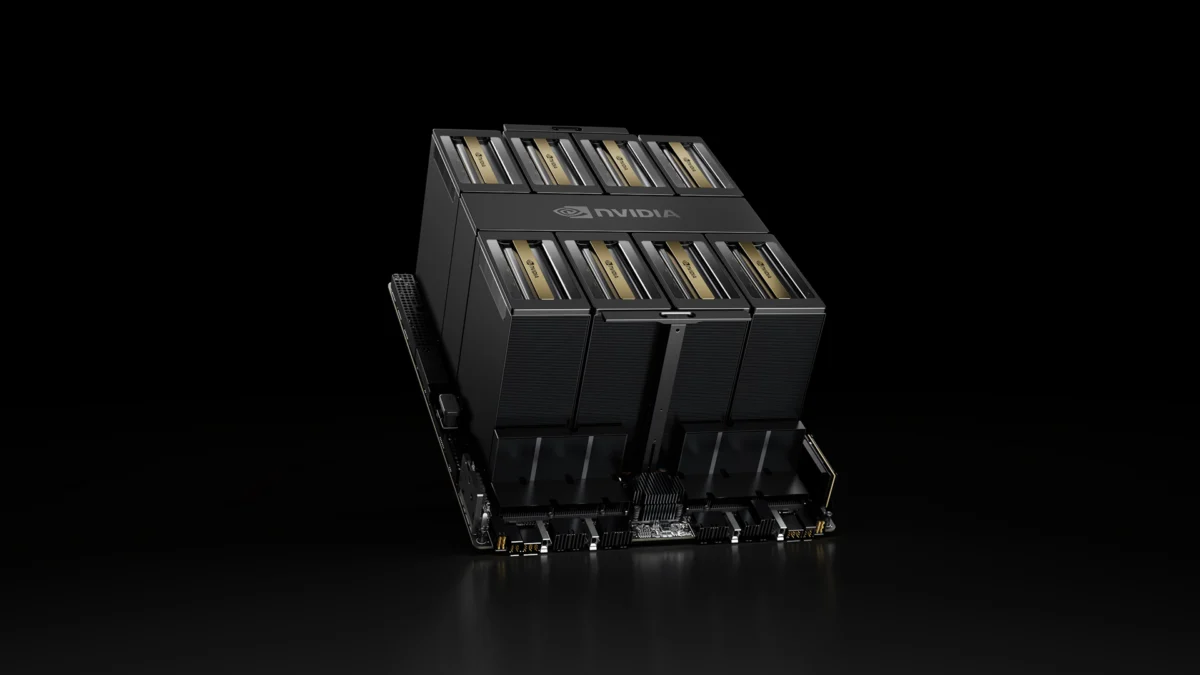
The global technology sector has entered an era where silicon is increasingly treated with the same financial reverence as precious metals or prime real estate. Since the dawn of the Large Language Model (LLM) revolution, the secondary market prices of NVIDIA’s high-performance Graphics Processing Units (GPUs) have emerged as a definitive barometer for the health and trajectory of the ongoing artificial intelligence super-cycle. Recent data released by Silicon Data suggests that the current upcycle is not merely persisting but accelerating, reaching levels of market heat that defy traditional hardware depreciation models. Despite public calls from industry leaders such as Anthropic’s Dario Amodei and OpenAI’s Sam Altman to potentially moderate the development cadence of AI models—a move some critics label as a strategic attempt at regulatory capture—the demand for compute power continues to outstrip supply by a staggering margin.
The most striking revelation from the latest market analysis is the valuation of NVIDIA’s Blackwell-architecture B200 GPUs. Approximately one year after reaching mass availability, these units are commanding a residual value equivalent to 158 percent of their original launch price. In practical terms, this means the hardware is trading at a 58 percent premium on the secondary market compared to its initial MSRP. This phenomenon represents a complete inversion of standard enterprise hardware life cycles, where equipment typically loses a significant portion of its value the moment it is deployed.
The Breakdown of Traditional Depreciation Models
To understand the magnitude of this market shift, it is necessary to examine the standard accounting practices used by data centers and enterprise IT departments. Traditionally, high-end server hardware follows a "straight-line" depreciation schedule. In this model, the original cost of the equipment is divided by its estimated useful life—typically three to five years. For instance, a piece of equipment purchased for $10,000 with a five-year lifespan would see its book value decrease by $2,000 annually. Under this conventional framework, a one-year-old GPU should theoretically be worth 80 percent of its original cost.
However, Silicon Data’s findings indicate that NVIDIA’s older-generation A100 (Ampere) and H100 (Hopper) GPUs are currently maintaining residual values that far exceed what these three- or five-year schedules would imply. The B200 has taken this trend to an extreme. Instead of the expected 20 percent loss in value after the first year, the B200 has seen a 58 percent appreciation. This valuation is driven by a combination of persistent supply chain constraints, the massive scale-up of sovereign AI initiatives, and the insatiable appetite of hyperscalers and AI startups for the most efficient compute available.
Inference Efficiency: The Engine of Value Retention
The primary catalyst behind the B200’s extraordinary value retention is its superior performance in inference workloads. As the AI industry shifts from a focus on training massive models to the large-scale deployment of those models for end-users, the "cost-per-token" has become the critical metric for profitability. According to estimates from SemiAnalysis, the B200 is remarkably efficient when running state-of-the-art models like DeepSeek R1.
Current data suggests that inference on the B200 entails costs as low as $0.20 per one million tokens, maintaining a throughput of 76 tokens per second per user. When compared to the power consumption and slower throughput of previous generations, the B200 offers a total cost of ownership (TCO) that justifies its inflated secondary market price. For a cloud service provider, paying a 58 percent premium for a B200 can still be more economically viable than using "cheaper" older hardware that consumes more electricity and delivers fewer tokens per second.
Shifting Dynamics in GPU Financing and Procurement
The scarcity and rising value of these chips have fundamentally altered the relationship between compute providers and AI startups. Silicon Data reports that GPU financing has become one of the most significant "pain points" in the modern AI infrastructure landscape. In previous years, an AI startup might reserve compute capacity on a one-year rolling basis. Today, the power balance has shifted heavily toward the providers.
Startups are increasingly being forced to sign three-year reservation contracts to secure the necessary hardware. Furthermore, the financial terms have become significantly more onerous; it is now common for providers to demand 30 percent to 40 percent of the total contract value as an upfront payment. These terms are not being imposed arbitrarily. Because the GPUs themselves are appreciating assets, compute providers are treating "time on the chip" as a high-value commodity. The upfront capital is often used to fund the acquisition of further clusters, creating a cycle where capital-rich entities can consolidate control over the available compute supply.
The Rental Market and Price Escalation
The appreciation of physical hardware is mirrored in the GPU rental market. In August 2024, an analysis of hourly rental rates provided a precursor to the current residual value surge. In January of that year, B200 rental rates were hovering just below the $5 per hour threshold. By August, those rates had climbed to between $5.50 and $5.80 per hour.

This represents an appreciation in rental yield of between 10 percent and 16 percent in just seven months—a timeframe during which tech hardware is usually becoming more affordable. When viewed annually, the appreciation in rental income further incentivizes secondary market buyers to pay premiums for the hardware, as the "rent-seeking" potential of the B200 remains at an all-time high.
Chronology of the AI Hardware Super-Cycle
The path to the current 158 percent residual value has been defined by several key milestones:
- Late 2022: The launch of ChatGPT triggers an immediate rush for A100 GPUs, exhausting existing inventory and creating the first major secondary market spike.
- Early 2023: NVIDIA launches the H100 (Hopper), which offers a significant leap in Transformer Engine performance. Lead times for H100s extend to nearly a year.
- Early 2024: The Blackwell architecture (B200) is introduced, promising up to 30x the performance for LLM inference workloads compared to the H100.
- Mid 2024: Despite the announcement of future architectures (like Rubin), the B200 enters mass availability but is immediately swallowed by pre-orders from Meta, Microsoft, and Google.
- Late 2024 to Present: Secondary markets and smaller cloud providers begin trading B200s at massive premiums as the "haves" and "have-nots" of AI compute become more clearly defined.
Industry Reactions and the Pacing Debate
The robust health of the GPU market stands in stark contrast to the public rhetoric of some AI pioneers. Dario Amodei of Anthropic and Sam Altman of OpenAI have both, at various times, suggested that the industry might need to "pace" the development of AI models. While these statements are often framed as concerns over safety and alignment, market analysts suggest a more "cynical" interpretation: regulatory capture.
By calling for a slower cadence or stricter licensing for model development, established players could potentially raise the barrier to entry for new competitors. However, the market data suggests that the industry is not listening to these calls for caution. The 158 percent residual value of the B200 indicates that every available ounce of compute is being utilized, and the race to build larger, more efficient clusters is accelerating rather than slowing.
Broader Economic and Strategic Implications
The fact that NVIDIA’s GPUs are behaving more like financial assets than depreciating electronics has broad implications for the global economy.
First, it impacts the "sovereign AI" movement. Nations looking to build their own localized AI infrastructure are finding that the cost of entry is rising monthly. This creates a geopolitical divide where only the wealthiest nations can afford to secure the hardware necessary for domestic AI independence.
Second, the valuation of NVIDIA itself is intrinsically tied to these residual values. As long as the secondary market remains this robust, NVIDIA’s pricing power for future generations (such as the upcoming Rubin architecture) remains absolute. If a one-year-old B200 is worth 158 percent of its cost, NVIDIA can theoretically price its successor significantly higher without dampening demand.
Finally, the trend highlights a potential risk for the "AI bubble" narrative. Critics argue that if demand for AI services fails to materialize at a scale that justifies these hardware costs, the secondary market could eventually collapse, leading to a glut of cheap, used GPUs. However, as of late 2025/early 2026, there is no evidence of this cooling. The efficiency gains provided by each new generation of NVIDIA silicon currently outpace the increase in price, making the hardware a "must-have" for any enterprise hoping to remain competitive in the digital age.
As the AI super-cycle continues, the residual price of a B200 will likely remain the most honest indicator of whether the industry is heading toward a plateau or toward even greater heights of computational demand. For now, the numbers suggest that the ceiling is nowhere in sight.