admin
admin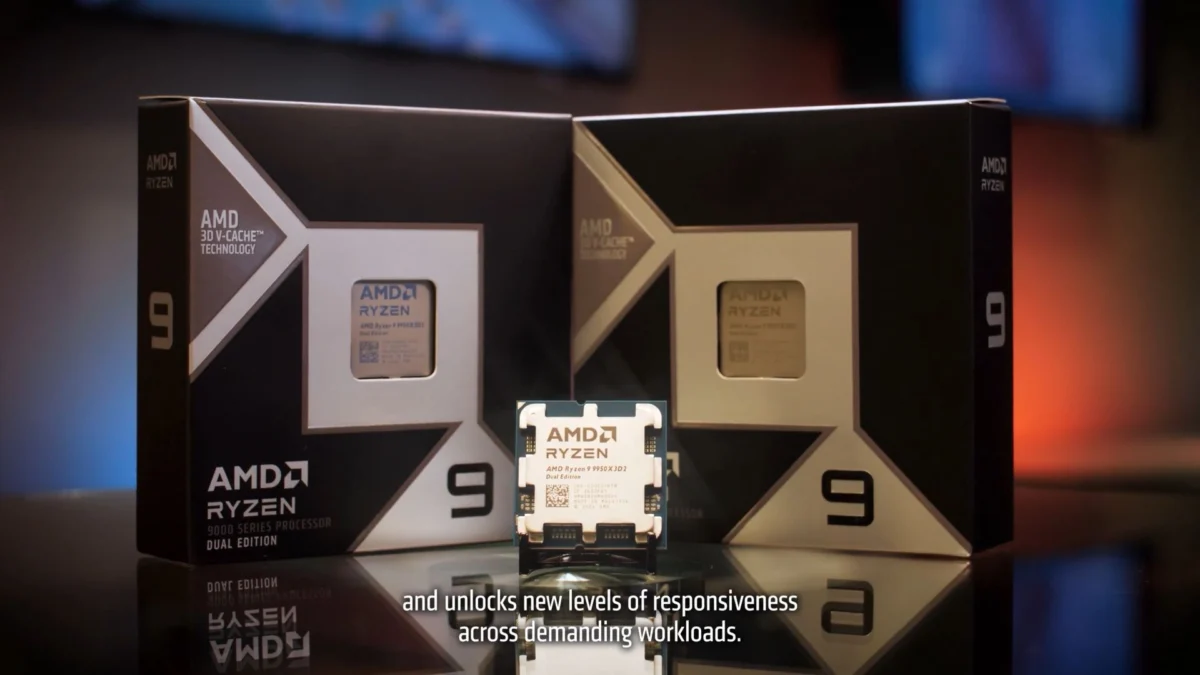
Advanced Micro Devices (AMD) has reportedly issued notifications to its primary hardware partners regarding an impending price adjustment for its semiconductor products, signaling a potential 10% increase across various segments of its portfolio. This development, first brought to light by industry trackers at ChannelGate and corroborated by prominent hardware insiders, points to a scheduled implementation in the fourth quarter of 2026. While the notification specifically highlights products such as AI accelerators, consumer graphics processors (GPUs), and motherboard chipsets, the overarching implication for the Ryzen CPU lineup remains a significant concern for the global technology market. The primary catalyst for this shift is the rising cost of wafer fabrication at Taiwan Semiconductor Manufacturing Company (TSMC), the foundry upon which AMD almost exclusively relies for its high-performance silicon.
The TSMC Catalyst: Rising Costs at the Foundry Level
To understand the necessity of AMD’s price adjustment, one must look at the current state of semiconductor fabrication. TSMC, which commands over 50% of the global foundry market share and an even higher percentage of advanced node production (5nm, 4nm, and 3nm), has faced mounting economic pressures. These pressures include skyrocketing electricity costs in Taiwan, global inflationary trends affecting raw materials, and the immense capital expenditure required to develop next-generation lithography.
Recent reports from the supply chain indicate that TSMC has been systematically renegotiating contracts with its largest clients, including Apple, Nvidia, and AMD. The cost of a single 3nm wafer is estimated to exceed $20,000, a significant jump from the $15,000 associated with 5nm wafers. As AMD shifts more of its architecture—likely including the future Zen 6 CPU cores and RDNA 5 graphics—to these advanced nodes, the "cost per die" increases proportionally. While AMD has historically attempted to absorb minor fluctuations in manufacturing costs to remain competitive against Intel, the 10% figure suggests that the company has reached a threshold where passing costs to the consumer and enterprise partners is unavoidable.
Chronology of Semiconductor Price Adjustments
The semiconductor industry has experienced a volatile pricing environment over the last five years. Following the global supply chain disruptions of 2020-2022, prices briefly stabilized in 2023 as inventories normalized. However, the 2024-2025 period has seen a resurgence in cost pressure, driven by the artificial intelligence boom.
- Late 2023: TSMC signals potential price hikes for 2024 to account for R&D in 2nm technology.
- Early 2024: Memory manufacturers (Samsung, SK Hynix, Micron) implement price increases for DDR5 and NAND flash, citing a shift in production focus toward High Bandwidth Memory (HBM).
- Mid-2024: Intel announces a price hike of up to 10% for its client processors, citing a strategic pivot toward higher-margin products and internal restructuring.
- September 2024: Reports emerge of AMD notifying partners of a 10% hike scheduled for Q4 2026, targeting AI, GPU, and chipset sectors.
The timeline suggests that AMD is providing its partners with an unusually long lead time. A Q4 2026 implementation date allows motherboard manufacturers (such as ASUS, MSI, and Gigabyte) and system integrators to adjust their long-term roadmaps and pricing strategies.
Product Scope: From AI Accelerators to Consumer Silicon
The leak specifically mentions AI accelerator chips, which include the Instinct MI300 and future MI400 series. These chips are currently in extremely high demand as data centers scramble to expand their generative AI capabilities. Given the high margins and low price sensitivity in the enterprise AI space, a 10% increase is unlikely to dampen demand.

However, the inclusion of consumer graphics processors and motherboard chipsets is more impactful for the general public. Motherboard chipsets (such as the X870 or future iterations) are essential components for every PC build. If the cost of the chipset rises, the base price of motherboards will follow suit. Similarly, the Radeon GPU division, which is already fighting for market share against Nvidia’s dominant RTX series, may find it difficult to maintain its "value-to-performance" advantage if manufacturing costs rise by double digits.
While Ryzen CPUs were not explicitly named in the initial report, industry analysts argue that they are unlikely to be exempt. AMD’s "Chiplet" design strategy means that Ryzen CPUs often share the same I/O dies or even the same CPU Complex Dies (CCDs) as their EPYC server counterparts. If the underlying wafers for these components become 10% more expensive, the cost of producing a Ryzen 7 or Ryzen 9 processor rises in tandem.
Comparative Analysis: AMD vs. Intel
AMD’s move mirrors a strategy recently adopted by its primary rival, Intel. In early October 2024, Intel confirmed it would be raising prices on its client processors by up to 10%. Intel’s justification was rooted in its "IDM 2.0" strategy, which requires massive capital to build out its own foundry services while simultaneously outsourcing certain "tiles" of its new processors (like Lunar Lake) to TSMC.
The fact that both major x86 CPU providers are moving toward a 10% price increase suggests a "new normal" for the industry. For years, Moore’s Law suggested that performance would increase while costs remained stagnant or decreased. In the modern era, the "density benefit" of smaller nodes is being offset by the extreme complexity of Extreme Ultraviolet (EUV) lithography and multi-die packaging. Consequently, the price-per-transistor is no longer falling at the rate it once did.
Economic and Technical Implications for Partners
For AMD’s partners—specifically the "Add-In Board" (AIB) partners like Sapphire, PowerColor, and XFX—a 10% increase in the cost of the GPU silicon is a major challenge. These companies operate on relatively thin margins. When AMD raises the price of the "BOM" (Bill of Materials), the AIB partners must either reduce their own margins or raise the MSRP of the final graphics card.
Furthermore, system integrators like Dell, HP, and Lenovo will be forced to re-evaluate their consumer laptop and desktop pricing. A 10% hike at the component level often translates to a higher percentage increase at the retail level once distribution, marketing, and retail margins are compounded.
From a technical standpoint, this price hike may push AMD to lean even harder into its chiplet architecture. By using older, cheaper nodes (like 6nm or 7nm) for less critical components (like I/O dies) and reserving the expensive 3nm or 2nm nodes for the core logic, AMD can mitigate some of the cost increases. However, as even the "legacy" nodes at TSMC see price adjustments due to electricity and labor, the efficacy of this strategy has its limits.

The Role of the AI Boom
It is impossible to discuss semiconductor pricing without addressing the influence of Artificial Intelligence. The demand for AI silicon has created a "crowding out" effect at TSMC. High-margin clients like Nvidia and OpenAI-linked ventures are willing to pay premiums to secure wafer starts. This forces other clients, including AMD’s consumer division, to pay higher rates to maintain their share of the production line.
Industry data suggests that AI-related silicon now accounts for a significant portion of TSMC’s revenue growth. For AMD, the Instinct MI300 series has become a billion-dollar business almost overnight. If the company must choose between allocating a wafer to a $10,000 AI chip or a $300 Ryzen CPU, the economic incentive favors the former. The 10% price hike may be a mechanism to ensure the consumer division remains profitable enough to justify its continued share of TSMC’s limited advanced node capacity.
Official Responses and Market Outlook
As of this report, AMD has not issued a formal public statement confirming the 10% figure, which is standard practice for internal partner notifications regarding future pricing. Historically, these adjustments are communicated through private "Price/Margin" updates to distributors. When asked for comment on previous pricing rumors, AMD representatives have typically pointed to the competitive nature of the market and their commitment to delivering value.
However, the source of the leak, @harukaze5719, has a consistent track record of identifying supply chain shifts before they are officially announced. The market reaction is expected to be one of cautious preparation. For consumers planning high-end PC builds or enterprise upgrades, the window for "lower" pricing may be closing as we approach 2026.
Conclusion: A More Expensive Computing Future
The reported 10% price hike by AMD is a symptom of a broader shift in the global economy and the physics of chip manufacturing. As the industry approaches the limits of silicon-based transistors, the cost of innovation is being passed down the supply chain. With both AMD and Intel signaling increases, and with components like memory and storage also trending upward, the era of "cheap" high-performance computing may be evolving into a more premium-tier market.
Stakeholders, from individual PC enthusiasts to large-scale data center operators, must now factor in a consistent inflationary trend in hardware costs. While AMD’s Ryzen, Radeon, and Instinct lines remain at the forefront of technological capability, the price of maintaining that leading edge is clearly on the rise. The Q4 2026 implementation date provides a clear horizon for the industry to adapt, but it also serves as a definitive signal that the cost of silicon is no longer immune to the pressures of the global economy.