Sisilia Frederika
NASA’s Perseverance rover has officially secured its place in the history books of space exploration by establishing a new record for the longest distance traveled by a robotic vehicle on the surface of another world. As of October 11, 2026, marking the 2006th Martian sol of its mission, the rover reached a total odometer reading of 45.22 kilometers (28.10 miles). This milestone narrowly edges out the previous record held by the Opportunity rover, which traversed 45.16 kilometers (28.06 miles) over the course of its nearly 15-year tenure on the Red Planet.
The achievement is particularly notable due to the efficiency with which Perseverance reached the mark. While Opportunity required almost a decade and a half to accumulate its mileage, Perseverance surpassed that total in just over five and a half years since its landing in Jezero Crater on February 18, 2021. This rapid pace underscores a significant leap in robotic mobility, autonomous navigation technology, and power management systems that have redefined the capabilities of planetary explorers.
A Technological Leap in Planetary Mobility
The disparity in travel time between Perseverance and its predecessors is largely attributed to the evolution of power sources and navigational software. Opportunity was a solar-powered vehicle, making it vulnerable to the seasonal fluctuations of Martian sunlight and the accumulation of dust on its solar panels. This dependency often necessitated long periods of inactivity or "hibernation" during the Martian winter or during global dust storms, one of which ultimately ended Opportunity’s mission in 2018.
In contrast, Perseverance is powered by a Multi-Mission Radioisotope Thermoelectric Generator (MMRTG). This "nuclear battery" converts the heat generated by the natural decay of plutonium-238 into a steady stream of electricity. This power source is independent of solar cycles and atmospheric conditions, allowing the rover to operate through the night and during heavy dust storms, ensuring a consistent energy supply for both its scientific instruments and its drive motors.
However, power is only one part of the equation. The rover’s record-breaking speed is also the result of AutoNav, a sophisticated autonomous navigation system. While the first-generation rovers, Spirit and Opportunity, used a primitive version of AutoNav for only about 5% of their total distance, Perseverance relies on it for approximately 90% of its travel.
AutoNav allows the rover to "think while driving." It utilizes high-resolution cameras to capture images of the upcoming terrain, which the onboard computer then processes into 3D hazard maps. By identifying rocks, slopes, and sand traps in real-time, the rover can plot its own course without waiting for specific turn-by-turn instructions from mission controllers at the Jet Propulsion Laboratory (JPL) in California. This autonomy enables Perseverance to travel up to 412 meters (1,351 feet) in a single Martian day, a feat that would have been impossible for previous generations of rovers.
Scientific Objectives and the Journey Through Jezero
Perseverance’s record was not set for the sake of the record itself, but as a byproduct of its ambitious scientific mission. The rover is currently navigating a region known as "Lac de Charmes," situated on the western periphery of Jezero Crater. This area is a primary focus for the mission’s extended phase, which officially commenced earlier this month.
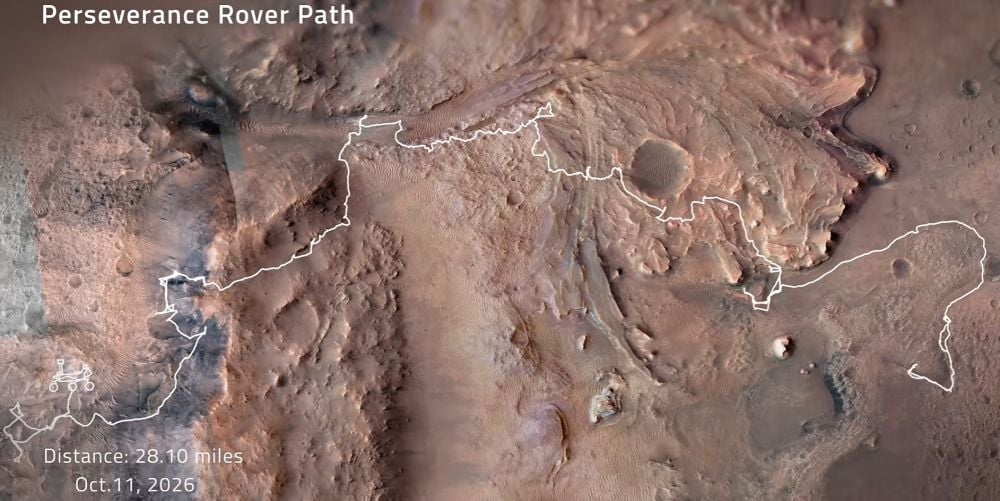
The rover is currently en route to a geological feature named "Idubi," a site characterized by ancient rock formations. These rocks are of immense interest to the international scientific community because they represent a window into the early history of the solar system. On Earth, plate tectonics and erosion have recycled or destroyed almost all rocks of this age. On Mars, these primordial structures remain largely preserved, offering clues about the conditions that existed when the planet was younger and potentially more hospitable to life.
Throughout its primary mission, Perseverance has already challenged existing scientific models. Jezero Crater was selected as the landing site because it was an ancient paleolake, where researchers expected to find a preponderance of sedimentary rocks—the type most likely to preserve organic matter and evidence of ancient microbial life. While sedimentary rocks were indeed found in the crater’s delta region, Perseverance also discovered significant deposits of igneous (volcanic) rocks.
One of the most intriguing findings was the presence of fluorite. On Earth, fluorite typically forms when rocks interact with heated water, indicating past hydrothermal activity. Scientists are optimistic that the trek toward Idubi will reveal more evidence of these ancient hydrothermal systems. Such environments are considered a "Holy Grail" for astrobiologists, as they provide the three essential ingredients for life: liquid water, a source of energy (heat), and a rich chemical environment.
Official Responses and Mission Oversight
The milestone has been met with acclaim within NASA and the wider aerospace industry. Steven Lee, the project manager for both the Curiosity and Perseverance missions at JPL, emphasized that the rover has far exceeded its initial performance benchmarks.
"The original mission called for no more than 12.4 miles of driving. We’ve blown well past that," Lee stated in a recent press release. He noted that the rover’s mobility systems remain fully operational and that favorable results from ground-life testing suggest the vehicle could continue to add to its record for many years. "It is an honor to be working on Perseverance at a moment when the technology has evolved to the point that drives like these are routine."
The sentiment was echoed by Mark Maimone, the deputy team chief for Perseverance’s robotic operations. Maimone highlighted the rover’s increasing "intelligence" as a driver, noting that software updates sent from Earth have continuously refined its abilities.
"The rover that broke this record did so by making its own decisions about the path," Maimone said. "Given the autonomy to just go, Perseverance is a better driver than the one that landed, and we’re not done. Our newest software teaches Perseverance to steer less and roll more, and to check its own position against orbital maps mid-drive."
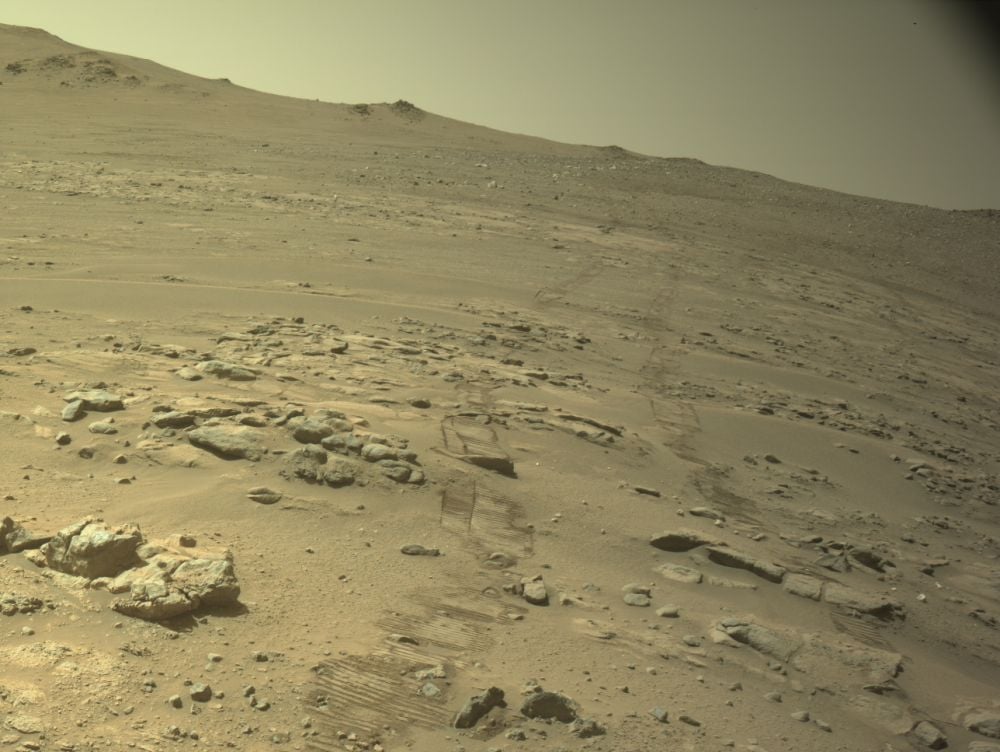
Maimone also identified the next technical hurdle for the engineering team: solar glare. Currently, the rover’s navigation cameras can be blinded by the sun’s glare during mid-afternoon drives if it is heading toward the sun. This requires the rover to park earlier than would otherwise be necessary. Future software iterations aim to "teach" the rover to see past these visual artifacts, which would further extend its daily operational window and increase its maximum travel distance.
Implications for Future Exploration and Sample Return
The success of Perseverance’s mobility platform has profound implications for the future of robotic and human exploration of Mars. The ability to cover vast distances quickly means that scientists can investigate a wider variety of geological sites within a single mission’s lifetime, greatly increasing the "science return" on the investment.
However, the record-breaking travel also brings a sense of urgency to the Mars Sample Return (MSR) mission. To date, Perseverance has successfully collected and cached 29 samples of Martian rock and regolith (soil). These samples are stored in titanium tubes and left at designated "drop zones" or held within the rover itself. The original plan involved a follow-up mission, a collaborative effort between NASA and the European Space Agency (ESA), to retrieve these samples and return them to Earth for laboratory analysis.
Currently, the MSR mission faces significant hurdles. It is considered one of the most complex and expensive endeavors in the history of robotic spaceflight. Recent budgetary reviews and technical assessments have raised questions regarding the mission’s timeline and funding commitment. While the science community remains steadfast in the belief that returning these samples is the only way to definitively prove the existence of ancient Martian life, the logistics of the return remain a subject of intense debate among policymakers.
Despite these uncertainties, the legacy of Perseverance’s navigation system is already influencing the design of future missions. The integration of AI and high-level autonomy demonstrated by AutoNav suggests a future where multiple rovers, potentially accompanied by Unmanned Aerial Vehicles (UAVs) like the now-retired Ingenuity helicopter, could coordinate to explore extremely challenging terrains. This could include deep caves, vertical crater walls, and high-altitude outcrops that are currently inaccessible.
Conclusion: A New Standard for Discovery
As Perseverance continues its journey toward the rim of Jezero Crater—an objective it is expected to reach by the end of 2028—it carries with it the most advanced suite of scientific instruments ever sent to another planet. Its record-breaking distance is more than a statistic; it is a testament to the reliability of modern aerospace engineering and the potential of autonomous systems.
The data gathered during its 45.22-kilometer trek has already rewritten the geological history of Jezero Crater and identified "potential biosignatures" that warrant further study. Whether or not these samples eventually make it to a laboratory on Earth, Perseverance has already succeeded in proving that the Red Planet is a far more geologically complex and historically active world than previously imagined. For now, the rover continues its steady march across the Martian dust, its wheels carving a path toward the next great discovery in the search for life beyond Earth.