George Chandra Eka
Meta Platforms has officially launched its third generation of Ray-Ban Meta smart glasses, revealed at the company’s annual Meta Connect 2026 conference. Positioned as the flagship offering in Meta’s expanding wearable ecosystem, the Ray-Ban Meta Gen 3 represents a refinement of its predecessor rather than a revolutionary overhaul. While incorporating subtle hardware enhancements like improved battery life and an augmented microphone array, a significant portion of the advanced AI capabilities and user experience upgrades will also be extended to the second-generation models through software updates. This strategic approach, alongside a new starting price of $449, marks Meta’s continued commitment to integrating artificial intelligence and augmented reality into everyday life, albeit through an incremental evolution in its consumer-facing hardware.
The unveiling at Meta Connect 2026 also saw the introduction of other specialized smart glasses, including the Ray-Ban Meta Audio, a camera-free variant designed for privacy-conscious users focusing solely on audio and AI interaction, and the more affordable Meta Glasses. Additionally, Meta highlighted the ongoing success of prescription-friendly options like the Ray-Ban Meta Optics, demonstrating a diversified product strategy aimed at capturing various segments of the nascent smart glasses market. The Gen 3 model, however, remains at the forefront, embodying Meta’s vision for a future where digital and physical realities seamlessly merge through "ambient computing."
A Glimpse into Meta’s Smart Glasses Evolution: From Stories to Gen 3
Meta’s journey into the smart glasses arena began with the launch of the original Ray-Ban Stories in September 2021. Developed in partnership with EssilorLuxottica, the Stories were an initial foray into "capture glasses," primarily focused on hands-free photo and video recording, integrated audio, and limited voice commands. While groundbreaking in their discreet design, they faced criticism regarding camera quality, audio performance, and the absence of a truly intelligent AI assistant. The Gen 1 model, priced at $299, served as a crucial learning platform for Meta, gathering invaluable user data and feedback on social acceptance and utility.
Building on this foundation, Meta introduced the Ray-Ban Meta Gen 2 in October 2023. This iteration brought significant improvements, including a higher-resolution 12MP ultrawide camera, enhanced audio quality with open-ear speakers, and a more powerful Snapdragon AR1 Gen 1 platform. Crucially, the Gen 2 models introduced early integration of Meta AI, allowing users to interact with a conversational AI assistant directly through their glasses. The Gen 2 also addressed some ergonomic concerns and offered a wider range of styles, signaling Meta’s understanding that design and comfort are paramount for wearable technology. The starting price for the Gen 2 was $379, reflecting the hardware upgrades.
Leading up to the Gen 3, Meta continued to refine its offerings with mid-cycle updates. The Ray-Ban Meta Optics, launched in early 2024, focused on expanding prescription lens compatibility, making the smart glasses accessible to a broader demographic. Later in 2024, the Meta Glasses arrived as a more budget-friendly option, distilling core functionalities into an even more accessible package. These interim releases demonstrate Meta’s agile development cycle and its commitment to iterative improvements across its smart glasses portfolio, paving the way for the Gen 3’s targeted enhancements. The Gen 3, therefore, arrives not as a singular leap but as the culmination of these successive refinements, consolidating many of the incremental improvements seen in its recent predecessors.
Modest Hardware Upgrades: Battery Life and Audio Input
The most significant hardware distinctions between the Ray-Ban Meta Gen 3 and its Gen 2 counterpart lie in two core areas: battery endurance and microphone performance. The Gen 3 boasts an extended battery life, offering up to 9 hours of continuous use on a single charge—a modest one-hour improvement over the Gen 2’s 8 hours. When paired with its redesigned charging case, the total endurance stretches to 50 hours, surpassing the Gen 2’s 48 hours by an additional two hours. While any battery life extension is welcome in wearable technology, the practical impact of these gains in day-to-day scenarios may be marginal for many users. For context, Meta’s newly introduced Ray-Ban Meta Audio, a camera-free variant, promises an even longer 12 hours of on-device battery life, suggesting that the camera module in the flagship models still imposes a power consumption penalty. Comprehensive real-world testing will be crucial to ascertain how these improvements translate into actual user experience, especially under varying usage patterns involving AI interactions, media playback, and active camera use.
Parallel to battery improvements, Meta has upgraded the Gen 3’s microphone array, expanding it from five microphones in the Gen 2 to a six-microphone configuration. This additional microphone, coupled with a redesigned layout, is touted to deliver superior background noise reduction during calls and enhance the accuracy of AI interactions. In a world increasingly reliant on voice commands and hands-free communication, improved audio input is a critical component for seamless interaction with AI agents and for clear communication in diverse environments. A key differentiator for the Gen 3’s audio capabilities, slated for a later 2026 software update, is the support for listening to and recording Dolby Atmos spatial audio. This feature promises a more immersive audio experience for both content consumption and creation, potentially setting the Gen 3 apart for audiophiles and content creators seeking richer soundscapes from their wearable devices.
Further enhancing user interaction, Meta has integrated the multi-functional "action button" from its Ray-Ban Meta Optics and Meta Glasses into the Gen 3. This customizable button offers greater versatility compared to the Gen 2’s dedicated capture button. Users can program the action button to summon Meta AI, initiate photo or video capture, or assign it as a shortcut for a variety of other Ray-Ban Meta features, offering a more personalized and efficient control interface. This seemingly small addition underscores Meta’s focus on streamlining user interaction with its AI and camera functionalities.
Design Refinements and New Aesthetic Choices
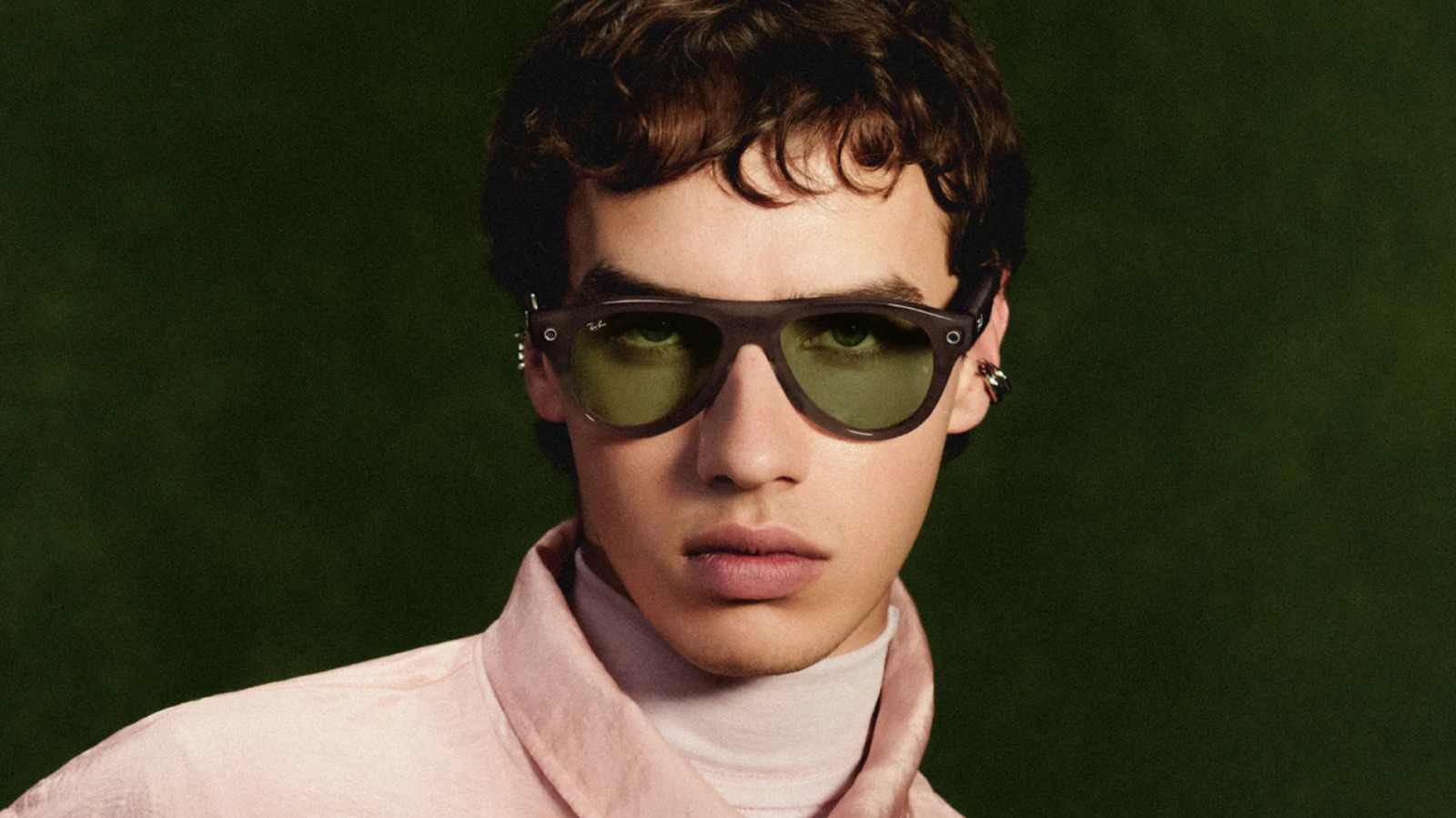
In the realm of smart glasses, aesthetics and comfort are as critical as technological prowess. Recognizing this, Meta has introduced new frame styles and made subtle dimensional adjustments to the Ray-Ban Meta Gen 3, emphasizing its role as a fashion accessory as much as a tech gadget. The Gen 3 lineup introduces two entirely new frame styles: the Ray-Ban Meta Aviator and the Ray-Ban Meta Zena. The Aviator style features lenses shaped like Ray-Ban’s iconic aviator glasses, presented with thicker frames available in a palette of translucent and tortoiseshell colors. This style caters to users seeking a bolder, more classic look. For those preferring a more understated yet fashionable aesthetic, the Ray-Ban Meta Zena offers a distinctive cat-eye shape, available in translucent, classic black, and tortoiseshell finishes.
The only frame shape carrying over directly from the Gen 2 is the Wayfarer, Ray-Ban’s universally recognized and most popular design. This ensures continuity for fans of the iconic Wayfarer while expanding choices for new users. While Meta has a history of introducing additional styles through mid-cycle refreshes, for now, the Gen 3 largely presents a fresh aesthetic lineup.
Beyond new styles, the Gen 3 also features minor dimensional tweaks. Comparing the standard-fit Wayfarer models, the Gen 3 is marginally smaller. The hinge-to-hinge measurement on the Gen 3 Wayfarer model is 129mm, a slight reduction from the Gen 2’s 131mm. Similarly, the temples on the Gen 3 are slightly shorter at 149mm, compared to 150mm on the Gen 2. These minute reductions suggest Meta’s continuous effort to achieve a more compact and perhaps more universally comfortable fit, even if the difference might be imperceptible without a side-by-side comparison. Conversely, the Gen 3 exhibits a marginal increase in weight, coming in at 51.5 grams compared to the Gen 2’s 51 grams. This slight weight gain, likely attributable to the additional microphone and potentially denser internal components, is negligible for user comfort but indicates the engineering challenges of packing more technology into a constrained form factor. These design adjustments, however minor, collectively contribute to Meta’s goal of making smart glasses feel less like a gadget and more like an integral part of personal style.
The Shared Intelligence: Software Features Bridging Generations
Perhaps the most significant factor influencing the value proposition of the Ray-Ban Meta Gen 3, particularly for existing Gen 2 users, is Meta’s commitment to delivering its most impactful software and AI enhancements across both generations. The core experience of using Ray-Ban Meta smart glasses is increasingly defined by its intelligent software and access to Meta AI, and the company has confirmed that the vast majority of new features announced alongside the Gen 3 will also be available on older Gen 2 models. This strategic decision aims to broaden the reach of Meta’s AI capabilities and maintain user engagement across its existing hardware base.
Among these shared features is the FDA-cleared hearing enhancement functionality. This innovative capability allows the smart glasses to act as a situational hearing aid, amplifying sounds from the environment to assist users in specific scenarios, such as conversations in noisy settings or listening to presentations. The FDA clearance underscores Meta’s ambition to integrate genuine utility and accessibility into its wearables, moving beyond mere entertainment or capture devices.
Another cornerstone of the updated experience is the Meta Muse AI agent. This proprietary artificial intelligence assistant is designed for seamless, hands-free interaction, allowing users to ask questions, receive real-time information, control glasses features, and manage media playback through natural language commands. Muse AI represents Meta’s vision for an omnipresent, context-aware digital companion, deeply integrated into the fabric of daily life through the glasses. Its availability on both Gen 2 and Gen 3 models ensures that a wider user base can tap into this advanced AI interaction.
Furthermore, the new dynamic photo capture feature, which intelligently captures multiple shots simultaneously and allows users to select the best framing post-capture, will also be rolled out to Gen 2 devices. This feature enhances the smart glasses’ utility as a hands-free camera, providing users with more control and better results for spontaneous moments.
Pricing, Market Strategy, and Justification for Upgrade
The Ray-Ban Meta Gen 3 arrives with a higher starting price of $449, representing a $70 premium over the Gen 2’s launch price of $379. This pricing strategy, coupled with the extensive software feature parity between generations, presents a complex value proposition, particularly for existing Gen 2 owners contemplating an upgrade.
For new users entering the Meta smart glasses ecosystem, the Gen 3 offers the latest hardware refinements, including slightly better battery life, an enhanced microphone array with future Dolby Atmos support, and a broader range of contemporary frame styles. These users will experience Meta’s cutting-edge AI and software features from day one, packaged in the most current design. In this context, the $449 price point positions the Gen 3 as a premium lifestyle tech accessory, competitive with other high-end audio wearables and smart devices.

However, for current Gen 2 owners, the decision to upgrade becomes less straightforward. Given that core advancements like the FDA-cleared hearing enhancement, the Meta Muse AI agent, and dynamic photo capture are being rolled out to their existing devices, the primary incentives for upgrading are limited to the marginal hardware improvements and the new aesthetic options. The additional hour of battery life, one extra microphone, and the prospect of Dolby Atmos (which requires a future software update) may not justify the $70 price increase for many, especially if their Gen 2 glasses are still functioning optimally. Industry analysts suggest that Meta’s strategy here might be to encourage broader adoption of its AI services by making them accessible across its hardware generations, rather than solely pushing new hardware sales to existing users. This approach cultivates a larger active user base for AI data collection and ecosystem development.
Market observers also point to the potential for second-hand Gen 2 units to become an even more attractive option for budget-conscious consumers. With the essential software experience largely identical, a pre-owned Gen 2 pair, potentially available at a significantly lower price, could offer a compelling entry point into Meta’s smart glasses ecosystem, provided the user does not require prescription lenses immediately or is not swayed by the new design aesthetics of the Gen 3.
Broader Implications and Meta’s Vision for Ambient Computing
The launch of the Ray-Ban Meta Gen 3 is more than just a product release; it’s a strategic maneuver within Meta’s overarching vision for ambient computing and the metaverse. While the Gen 3 itself is not an augmented reality (AR) headset in the vein of Meta’s Project Nazare or the more advanced prototypes, it serves as a critical stepping stone. These smart glasses are designed to habituate users to wearing always-on, connected computing devices on their faces, gathering invaluable data on user interaction, environmental context, and social acceptance.
Meta’s long-term goal is to make computing truly pervasive and intuitive, moving beyond screens to interfaces that seamlessly blend with our physical world. Smart glasses, in this context, are envisioned as the primary interface for this future, providing hands-free access to information, communication, and digital interactions. The incremental hardware improvements in Gen 3, coupled with the significant AI advancements, are all geared towards refining this user experience, making the glasses more useful, more comfortable, and ultimately, more indispensable.
The inclusion of an FDA-cleared feature like hearing enhancement also signals Meta’s intent to move beyond novelty and entertainment, towards practical, health-oriented applications that can genuinely improve daily life. This broadens the appeal of smart glasses and addresses potential criticisms regarding their utility.
In a competitive landscape that includes nascent AR glasses from tech giants and startups, Meta’s strategy with Ray-Ban Meta is distinct. Unlike high-cost, immersive AR headsets like Apple Vision Pro, Meta’s approach focuses on a more accessible, fashionable, and everyday wearable. The goal is mass adoption, building user habits and an ecosystem brick by brick, rather than waiting for a singular technological breakthrough in full AR displays.
However, challenges remain. Social acceptance of wearable cameras and microphones, even with privacy-focused features like indicator lights and camera-free options, continues to be a hurdle. Data privacy and security are ongoing concerns that Meta must continuously address to build trust with consumers. The future success of the Ray-Ban Meta line, and indeed Meta’s broader ambient computing ambitions, will depend not just on technological innovation, but also on fostering a comfortable, useful, and socially acceptable integration of these devices into our lives. The Ray-Ban Meta Gen 3, with its blend of subtle refinement and powerful shared AI, represents Meta’s latest, carefully calibrated step on this ambitious journey.