
 George Chandra Eka
As the artificial intelligence landscape continues its rapid evolution, the accessibility and pricing structures of advanced AI models like Grok, developed by Elon Musk’s xAI, are under constant scrutiny. Like most frontier AI tools, Grok operates on a freemium model, offering a limited, no-cost tier alongside more robust paid subscriptions designed for power users and businesses. This approach, common across the industry, dictates that while basic interaction with Grok remains free, unlocking its full potential—including advanced reasoning, comprehensive media generation, and higher usage thresholds—requires a financial commitment. The year 2026 is anticipated to see these distinctions solidify further, as companies like xAI refine their monetization strategies amidst fierce competition and escalating operational costs.
The Freemium Landscape of Grok AI: Understanding the Free Tier
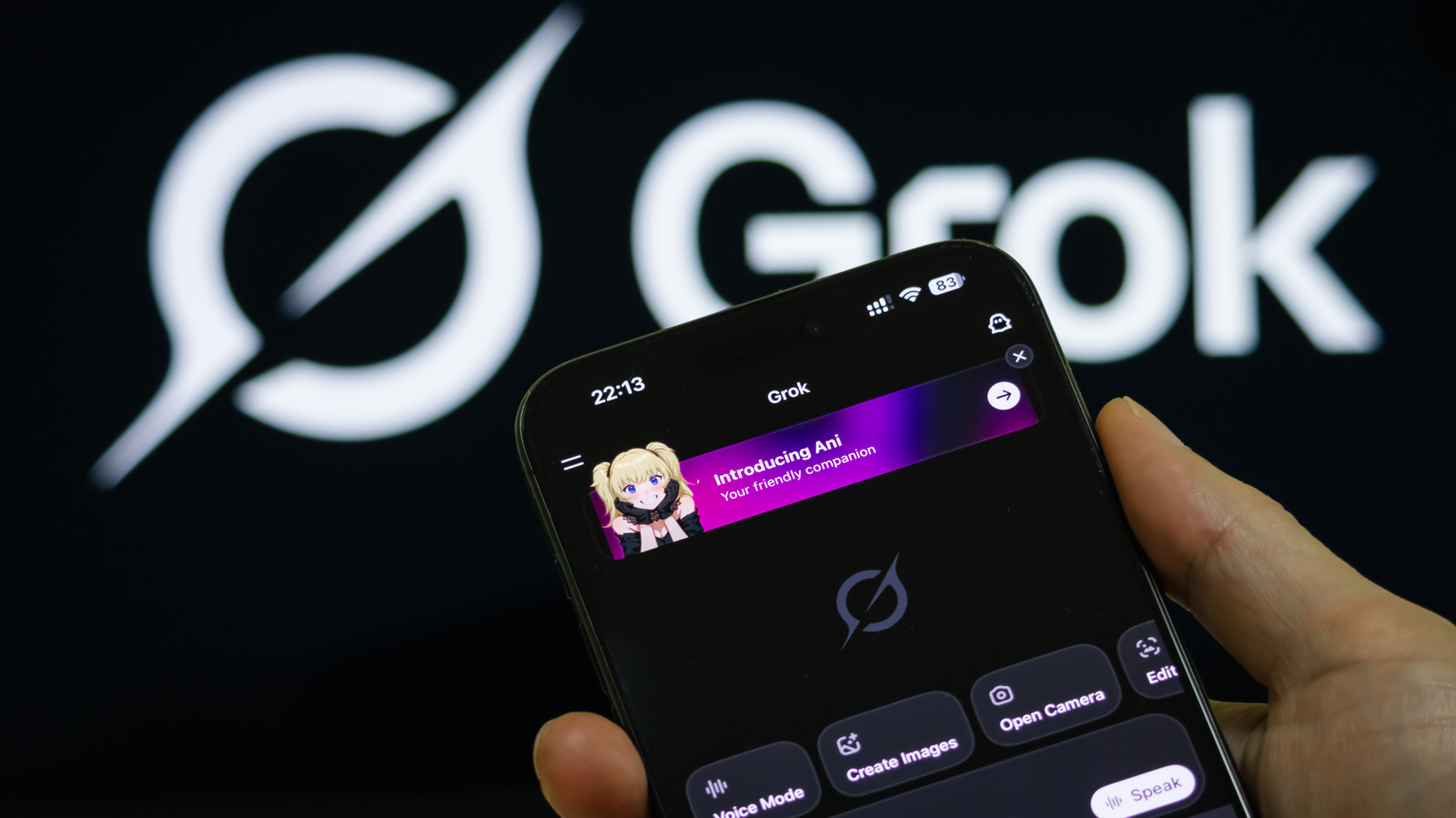
Grok’s free tier, accessible via its dedicated web and mobile applications, serves primarily as an introductory experience. For casual users or those looking to test the chatbot’s distinct personality and capabilities, this no-cost option provides sufficient functionality for occasional queries. Core features available without charge typically include basic conversational interactions, voice input processing, and limited access to Grok’s integrated web and X (formerly Twitter) search functionalities. This allows users to engage in simple chats, ask straightforward questions, and receive concise information drawing from its training data and real-time access to X.
However, the defining characteristic of Grok’s free tier, consistent with industry norms, is its usage cap. Frequent users will quickly encounter these limitations, which restrict the number of queries, the length of conversations, or the complexity of tasks that can be performed within a given timeframe. These quotas are not static; they are subject to change based on overall demand, xAI’s evolving service policies, and the computational resources available. Consequently, the expectation of "unlimited" interaction or access to the same sophisticated models available to premium subscribers is unwarranted for free users. Furthermore, many of Grok’s more advanced generative media tools, such as high-quality image and video creation, are explicitly reserved for paid plans. While some rudimentary generative "knick-knacks" might occasionally be made available to free users, the most impactful and resource-intensive creative functionalities are firmly behind a paywall. This strategic segmentation aims to provide a taste of Grok’s capabilities while incentivizing an upgrade for those requiring deeper, more consistent engagement.
Unpacking Grok’s Premium Offerings: SuperGrok and Beyond
For users whose needs extend beyond basic interaction, xAI offers a tiered subscription model, with SuperGrok emerging as the most popular consumer upgrade. This plan is meticulously designed for individuals demanding significantly higher usage caps, access to xAI’s most advanced reasoning models, the capacity for longer and more complex conversations, and priority access to new features as they are rolled out. xAI’s official plan page prominently markets SuperGrok as the "full power" version of Grok, emphasizing its enhanced models and elevated rate limits.
The benefits of a paid Grok AI subscription extend significantly:
- Advanced Reasoning Models: Subscribers gain access to more sophisticated large language models (LLMs) that offer improved contextual understanding, nuanced problem-solving, and more coherent, detailed responses. These models are crucial for complex research, detailed analysis, and creative writing tasks.
- Generative Media Capabilities: Full image and video generation tools become available, allowing users to create visual and multimedia content directly through Grok. This transforms the chatbot from a purely text-based assistant into a multi-modal creative partner.
- Coding Tools: Advanced coding assistance, including code generation, debugging, and optimization, is a significant draw for developers and programmers, making Grok a valuable utility in software development workflows.
- Priority Access: During peak usage periods, paid subscribers typically receive preferential treatment, ensuring faster response times and uninterrupted service when free users might experience delays or service interruptions.
- SuperGrok Heavy: For individuals with exceptionally demanding workloads or those requiring access to the most resource-intensive models for specialized tasks, the SuperGrok Heavy tier offers even greater capacity and computational power. This tier is tailored for professional researchers, data scientists, or content creators who frequently push the boundaries of AI capabilities.
Beyond individual consumer plans, xAI also provides specialized Business and Enterprise plans. These are distinct categories, catering to organizational needs such as centralized billing, robust security controls, and API-style deployment for integration into proprietary systems. These plans are not optimized for individual users but rather for companies seeking to leverage Grok’s AI capabilities at scale, ensuring compliance and seamless integration within corporate environments. A notable synergy exists between Grok’s premium tiers and X subscriptions: SuperGrok Heavy often includes X Premium, and X Premium users typically receive access to some of Grok’s more advanced features, including higher priority access, underscoring the deep integration between xAI’s offerings and the X platform.
The Genesis of Grok and xAI’s Vision
To fully appreciate Grok’s positioning, it’s essential to understand its origins. xAI was founded in July 2023 by Elon Musk, with a stated mission to "understand the true nature of the universe." Grok was introduced as xAI’s first product, designed to be a conversational AI with a unique personality – described as having a "rebellious streak" and a willingness to answer questions that other AI systems might refuse. A significant differentiator for Grok from its inception has been its real-time access to information on the X platform, providing it with an unparalleled ability to draw on current events and trending topics. This immediate data stream from X sets Grok apart from competitors that often rely on periodically updated datasets, giving it a potential edge in answering highly topical or niche queries.
Musk’s broader vision for xAI is intertwined with his other ventures, notably Tesla and SpaceX. The company aims to develop "AGI" (Artificial General Intelligence) that is beneficial to humanity, an ambition that requires substantial investment in research, development, and computational infrastructure. The freemium model for Grok, therefore, is not merely a revenue-generating strategy but also a mechanism to fund this ambitious long-term goal, while simultaneously gathering vast amounts of user interaction data that can be used to further refine and improve Grok’s models. This approach mirrors the development trajectory of many tech products, where initial broad access eventually gives way to tiered services as costs mount and capabilities diversify.
The Economics of AI: Why Freemium Dominates
The prevalence of the freemium model across the AI chatbot industry, including Grok, is rooted in the formidable economic realities of developing and deploying large language models. Building and maintaining advanced AI systems like Grok involves staggering capital expenditures (CAPEX) and operational expenditures (OPEX).
- Computational Intensity: Training and running LLMs require immense computational power, relying on vast arrays of specialized graphics processing units (GPUs) housed in massive data centers. These GPUs are expensive to acquire, operate, and cool.
- Data Acquisition and Curation: Gathering, cleaning, and curating the colossal datasets necessary to train these models is a complex and costly endeavor.
- Research and Development: Continuous innovation, including the development of new algorithms, architectural improvements, and safety features, demands significant investment in top-tier AI researchers and engineers.
- Energy Consumption: The energy required to power these data centers is substantial, contributing significantly to ongoing operational costs.
Given these expenditures, offering unlimited, high-quality AI interaction for free is economically unsustainable for most companies. The freemium model serves several critical functions: it lowers the barrier to entry, allowing a broad user base to experience the technology, thereby fostering adoption and brand awareness. Simultaneously, it creates a pipeline for converting engaged free users into paying subscribers, generating the necessary revenue to offset operational costs and fund future development. Free users also inadvertently contribute to the system’s improvement by generating data on model performance and user preferences, which can be used to refine future iterations. This "try before you buy" strategy is a well-established practice in the software industry, and its application to AI underscores the high value placed on advanced conversational capabilities.
Grok in the Competitive Arena: A Snapshot of the AI Market
Grok operates within an intensely competitive landscape, vying for market share against established giants and innovative startups. Its primary rivals include OpenAI’s ChatGPT, Google’s Gemini (formerly Bard), Anthropic’s Claude, and Microsoft’s Copilot. Each of these platforms offers its own set of free and paid tiers, with varying strengths and specializations.
- ChatGPT: Often considered the pioneer of the modern AI chatbot era, ChatGPT has a vast user base and a highly capable free tier, with its premium ChatGPT Plus offering advanced models and features.
- Gemini: Google’s offering benefits from its deep integration with Google’s search ecosystem and extensive data resources, providing a strong alternative for users embedded in Google’s services.
- Claude: Known for its focus on safety and constitutional AI, Claude caters to users and businesses prioritizing ethical AI interactions.
- Copilot: Integrated into Microsoft’s productivity suite, Copilot aims to enhance user workflows directly within applications like Word, Excel, and Outlook.
Grok’s unique selling proposition lies in its direct connection to X, which provides it with a distinct advantage in real-time information access and a potentially more opinionated or "spicier" conversational style that resonates with a specific user segment. This integration allows Grok to provide up-to-the-minute commentary and analysis on trending topics, a feature not as seamlessly replicated by its competitors. The race for AI dominance is not just about raw capability but also about feature differentiation, user experience, and strategic integrations. As 2026 approaches, the market is expected to see further consolidation and specialization, with AI providers constantly tweaking their offerings to attract and retain users in a rapidly evolving technological frontier.
The Persistent Challenge of AI Accuracy and Hallucinations
Regardless of the subscription tier, a critical caveat applies to all AI chatbots, including Grok: the challenge of accuracy and the phenomenon of "hallucinations" persist. AI models, by their nature, are probabilistic systems designed to generate plausible responses based on patterns in their training data. This means they can, at times, produce information that is factually incorrect, misleading, or entirely fabricated, even when responding to straightforward prompts. Grok is not immune to this, and its reliance on real-time data from X, while an advantage for topicality, also means it can inadvertently propagate misinformation or unverified claims that are trending on the platform.
This inherent limitation underscores the crucial importance of fact-checking any information generated by AI, irrespective of whether one is using a free or premium tier. Paying for an advanced model buys access to greater capacity, more sophisticated reasoning, and a broader range of tools, but it does not purchase 100 percent reliability or truth. Users must approach AI outputs with a critical mindset, cross-referencing information with trusted sources, especially for critical decisions, research, or news consumption. The ethical implications of AI hallucinations are a significant area of ongoing research and development across the industry, with companies continually striving to improve model robustness and reduce the incidence of erroneous outputs.
Evaluating Value: Is a Paid Grok Subscription Justified?
The decision to invest in a paid Grok subscription, such as SuperGrok, ultimately hinges on an individual’s usage patterns and specific requirements. For the casual user who occasionally seeks quick answers or wishes to experiment with Grok’s distinctive personality, the free tier will likely suffice. It provides a valuable, no-commitment entry point into the world of advanced AI.
However, for those whose daily routines or professional responsibilities increasingly integrate AI, a premium subscription offers tangible benefits. If one frequently engages in in-depth research, relies on AI for coding assistance, generates a significant volume of images or videos, or consistently encounters usage limits on the free tier, then the enhanced capabilities and higher thresholds of SuperGrok become a compelling value proposition. The investment buys not just capacity but also access to more advanced models that can handle complex reasoning tasks with greater nuance and efficiency.
As the AI landscape matures towards 2026, the differentiation between free and paid AI services will likely become even more pronounced. The "AI divide," where access to cutting-edge capabilities is contingent on financial means, is a growing concern. While free tiers ensure broad accessibility and democratize basic AI interaction, premium services will continue to be the gateway to the most powerful, resource-intensive, and innovative features. Therefore, prospective users are encouraged to start with Grok’s free tier, evaluate its utility in their daily lives, and then consider an upgrade if their needs demand the expanded capacity and advanced tools that only a paid subscription can provide. The ultimate worth of SuperGrok, or any premium AI service, is measured by its ability to augment productivity, creativity, and knowledge acquisition in a manner that justifies its cost.







