Sisilia Frederika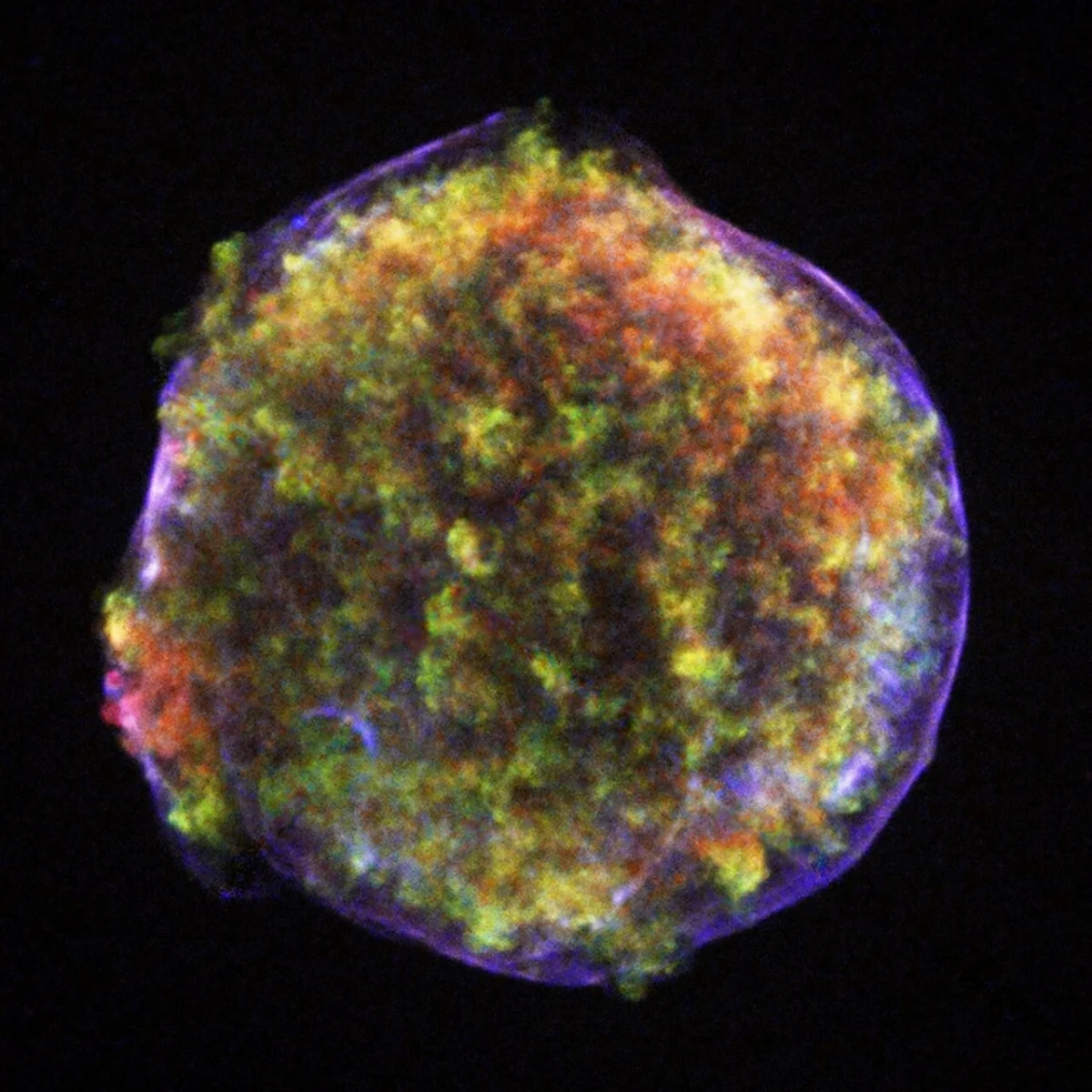
The history of 20th-century physics is defined by moments of radical insight that challenged the established order, but few were as contentious or as ultimately transformative as the discovery of the Chandrasekhar limit. This fundamental constant, calculated at approximately 1.4 times the mass of the Sun, represents the maximum mass a white dwarf star can reach before it can no longer support itself against gravitational collapse. While today it is a cornerstone of stellar evolution and cosmology, its introduction in the early 1930s by a young Indian physicist named Subrahmanyan Chandrasekhar sparked one of the most famous and bitter intellectual disputes in scientific history. The journey from a rejected mathematical curiosity to a Nobel Prize-winning pillar of physics spans five decades, bridging the gap between classical astronomy and the modern era of black holes and dark energy.
The Mathematical Foundation of Stellar Death
In 1930, during a long sea voyage from India to England to begin his graduate studies at Cambridge, the nineteen-year-old Subrahmanyan Chandrasekhar applied the principles of special relativity to the existing quantum mechanical model of white dwarf stars. At the time, the prevailing understanding, championed by British astronomer Sir Arthur Eddington, was that all stars would eventually cool down and settle into a stable, "dead" state known as a white dwarf. In these stars, gravity is balanced by electron degeneracy pressure—a quantum mechanical effect where the Pauli exclusion principle prevents electrons from occupying the same state, creating an outward pressure.
Chandrasekhar’s breakthrough was the realization that as a star becomes more massive and dense, its electrons are forced into higher energy states, eventually reaching relativistic speeds. By integrating Einstein’s special relativity into the equations of stellar structure, he discovered a catastrophic tipping point. He found that if a star’s mass exceeded a certain threshold—initially calculated as roughly 1.4 solar masses ($1.4 M_odot$)—the electron degeneracy pressure would be insufficient to halt the crush of gravity. The math suggested that such a star would continue to collapse indefinitely, shrinking to a point of infinite density.
The 1935 Confrontation at the Royal Astronomical Society
The scientific community’s reaction to this discovery was not one of acclaim, but of profound discomfort. The primary antagonist was Sir Arthur Eddington, then the most famous astronomer in the world and a man who had famously confirmed Einstein’s General Theory of Relativity during a 1919 solar eclipse. On January 11, 1935, at a meeting of the Royal Astronomical Society in London, Chandrasekhar presented his findings, expecting a rigorous but fair debate.
Instead, Eddington publicly ridiculed the young physicist’s work. Eddington argued that "nature would not allow such a thing," referring to the infinite collapse of a star as a "singular" absurdity. He mocked the mathematical derivation, calling it "stellar buffoonery" and insisting that there must be a law of nature, yet undiscovered, that would prevent a star from collapsing to a point. Because of Eddington’s immense stature, the astronomical community largely sided with him, effectively stalling the progress of black hole physics for decades. Chandrasekhar, humiliated and marginalized in the British academic circles, eventually moved to the United States to join the faculty at the University of Chicago, where he pivoted his research to other areas of astrophysics.
The Search for Escape Hatches: 1935–1960
For nearly thirty years following the 1935 clash, the field of astrophysics operated under a shadow of denial regarding the implications of the 1.4 limit. Scientists sought "escape hatches"—theoretical mechanisms that would allow massive stars to avoid the fate Chandrasekhar’s math predicted. One popular theory was that massive stars would always shed their outer layers through stellar winds or violent pulsations, losing enough mass to slip under the 1.4 limit before they died.
While it is true that many stars lose mass, theoretical models eventually showed that the most massive stars could not shed enough material fast enough to avoid the limit. Throughout the 1940s and 50s, the emergence of nuclear physics provided a clearer picture of how stars burn through their fuel. It became evident that once the iron core of a massive star reaches the Chandrasekhar limit, no amount of thermal or quantum pressure can stop the impending collapse. The "absurd" result Chandrasekhar had calculated on a boat in 1930 was becoming an inescapable reality of the cosmos.
The Observational Revolution and the Discovery of Black Holes
The 1960s marked a turning point, often referred to as the "Golden Age of General Relativity." Advancements in radio and X-ray astronomy began to reveal objects that defied classical explanation. In 1967, the discovery of pulsars—rapidly rotating neutron stars—proved that stars could indeed collapse into ultra-dense states far beyond that of a white dwarf. Neutron stars exist just one step above black holes, supported by neutron degeneracy pressure, but even they have their own mass limit (the Tolman-Oppenheimer-Volkoff limit).
The final vindication for the concept of catastrophic collapse came in 1971 with the identification of Cygnus X-1. Astronomers observed a massive blue supergiant star orbiting an invisible but incredibly heavy companion that emitted intense X-rays. Calculations showed the companion was far too massive to be a white dwarf or a neutron star. It was the first widely accepted black hole. The "singularities" Eddington had dismissed as impossible were being mapped in the night sky. Chandrasekhar’s work had provided the mathematical prerequisite for the existence of these gravitational abysses.
Type Ia Supernovae: The 1.4 Limit as a Cosmic Ruler
As the theory of black holes matured, the Chandrasekhar limit found another, perhaps even more significant, application in the study of the large-scale universe. This occurs in binary star systems where a white dwarf orbits a companion star. If the white dwarf is close enough, it can siphon hydrogen and helium from its neighbor, slowly increasing its own mass.
When the white dwarf’s mass inches toward the 1.4 limit, the internal pressure and temperature trigger a runaway thermonuclear explosion. Because this explosion always occurs at nearly the same mass threshold—the Chandrasekhar limit—the resulting Type Ia supernova always radiates with a predictable, standard peak luminosity. These "standard candles" allow astronomers to calculate distances across the universe with unprecedented accuracy.
In the late 1990s, observations of these specific supernovae led to the discovery that the expansion of the universe is not slowing down, as previously thought, but is actually accelerating. This revelation, which implies the existence of dark energy, earned the Nobel Prize in Physics in 2011. At the heart of this world-changing discovery was the 1.4 solar mass figure that had been dismissed as "buffoonery" eighty years prior.
The 1983 Nobel Prize and the Late Career of Chandrasekhar
In 1983, fifty-three years after his initial discovery, Subrahmanyan Chandrasekhar was awarded the Nobel Prize in Physics "for his theoretical studies of the physical processes of importance to the structure and evolution of the stars." He shared the prize with William A. Fowler.
By the time he received the award, Chandrasekhar had become a legendary figure in science, known for his rigorous, monkish devotion to his work. He was famous for spending roughly a decade mastering a specific field, writing the definitive textbook on the subject, and then moving on to an entirely different area. His 1983 publication, The Mathematical Theory of Black Holes, remains the "bible" of the subject, a dense and elegant treatise that reconciled his early work with the modern understanding of General Relativity.
Despite the prestige of the Nobel Prize, Chandrasekhar reportedly felt a sense of irony regarding the citation. The Nobel Committee focused heavily on his early work on white dwarfs—the work he had completed as a teenager—rather than the decades of sophisticated research he had performed on black holes and radiative transfer in his later years. Nevertheless, the award served as the ultimate public vindication for the man who had been told by the scientific establishment that his math was a mistake.
Analysis of Implications: Beauty as a Guide to Truth
The story of the Chandrasekhar limit is more than a footnote in astronomical history; it is a case study in the sociology of science and the power of mathematical consistency. Eddington’s rejection of Chandrasekhar was not based on a flaw in the math, but on a philosophical refusal to accept a universe that contained "singularities" or "end points." Eddington believed that physics must be "beautiful" in a way that preserved the stability of the natural world.
Chandrasekhar, conversely, found beauty in the internal logic of the equations themselves. He famously stated that a scientist’s pursuit is motivated by "achieving personal perspectives" while wandering in the "lonely byways of Science." His victory demonstrated that when a mathematical model is built on sound principles, its most uncomfortable conclusions often point toward the deepest truths of the universe.
Today, the number 1.4 is etched into the foundation of astrophysics. It defines the boundary between stars that fade away and stars that explode; it serves as the key to measuring the size of the observable universe; and it stands as a monument to a young scientist who saw the truth of the stars clearly, even when the rest of the world refused to look. Sir Arthur Eddington, despite his many contributions to science, never received a Nobel Prize. Subrahmanyan Chandrasekhar’s legacy, meanwhile, continues to expand alongside the universe his calculations helped define.