Sisilia Frederika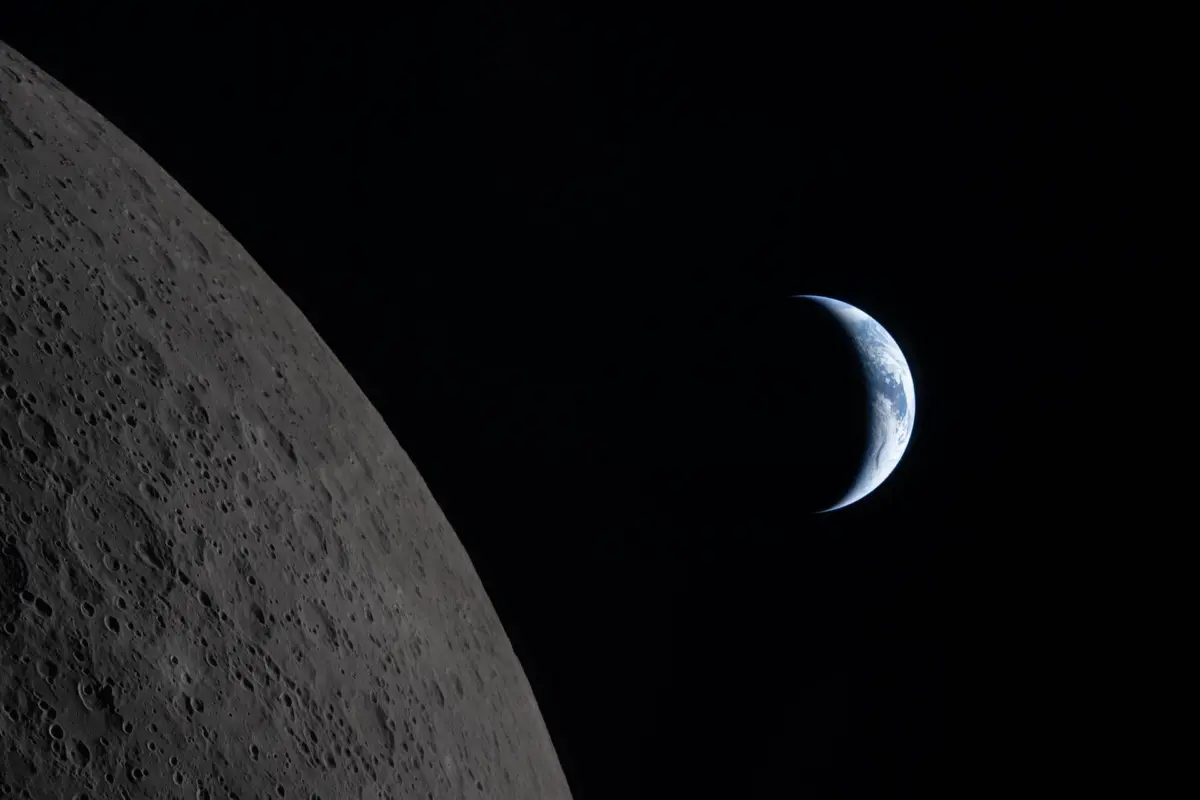
Mission Overview and Chronology
The Artemis II mission commenced on April 1, 2026, when the SLS rocket—the most powerful launch vehicle ever built by NASA—ignited at Kennedy Space Center. Generating 8.8 million pounds of thrust, the SLS propelled the Orion spacecraft, named Integrity, into a high Earth orbit. Approximately three and a half hours into the mission, the interim cryogenic propulsion stage (ICPS) performed the Trans-Lunar Injection (TLI) burn, setting the crew on a free-return trajectory toward the Moon.
The crew consisted of NASA astronauts Reid Wiseman (Commander), Victor Glover (Pilot), and Christina Koch (Mission Specialist), along with Canadian Space Agency (CSA) astronaut Jeremy Hansen (Mission Specialist). Their journey lasted 9 days, 1 hour, and 32 minutes, covering nearly 250,000 miles to reach the lunar vicinity before swinging back toward Earth. This flight path allowed for a unique perspective of the lunar far side, an area that remains one of the most enigmatic regions in the solar system.
On April 6, 2026, the crew reached their closest approach to the Moon. It was during this phase that the majority of the geological and solar observations were conducted. The mission concluded with a successful splashdown in the Pacific Ocean, marking the first time humans had returned from the vicinity of the Moon since the Apollo 17 mission in December 1972.
Holistic Earth Observations: The "Electric Blue" Perspective
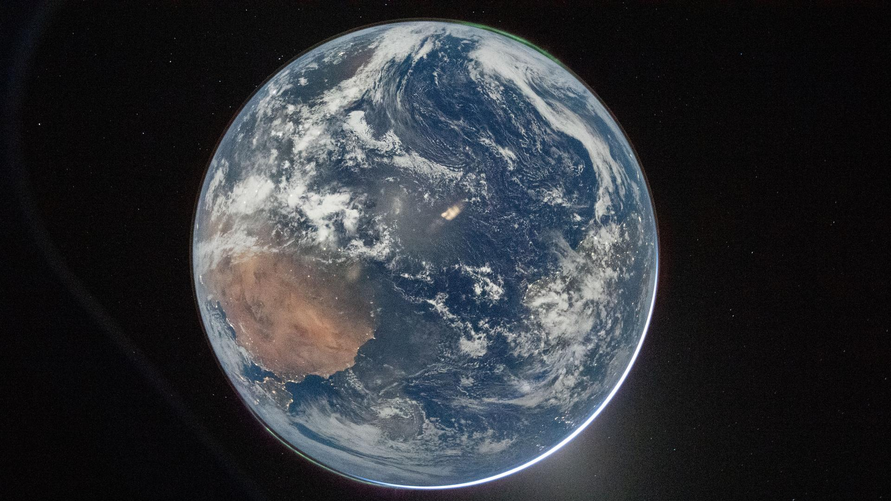
One of the most significant scientific contributions of the Artemis II mission occurred early in the flight. On Day 2, while the crew was still in the translunar coast phase, they captured high-resolution imagery of Earth that provided a holistic view rarely achieved by low-Earth orbit satellites. Unlike traditional weather satellites that observe the planet in narrow strips or "swaths," the Orion’s distance allowed for a single-frame capture of active weather systems, polar auroras, and atmospheric stratification.
Mission Specialist Christina Koch noted that the visual reality of Earth from deep space differed significantly from previous photographic records. She described the planet as appearing in a vibrant "electric blue," noting that the continents appeared as dark, bluish-green masses against the backdrop of the deep royal blue oceans. This observation was made particularly poignant by the fact that the Earth was being illuminated not by direct sunlight, but by "Earthshine"—light reflected from the Moon.
From a scientific standpoint, these images captured a Saharan dust plume in transit across the Atlantic and detailed zodiacal light, which is sunlight scattered by interplanetary dust particles. These observations help climatologists and atmospheric scientists understand the global transport of particles and the interaction between solar radiation and the Earth’s upper atmosphere.
Solar Science and the Fifty-Four Minute Eclipse
As Integrity passed behind the Moon, the lunar disk moved between the spacecraft and the Sun, creating a total solar eclipse. For the crew, this occultation lasted 54 minutes—significantly longer than any eclipse observable from the surface of the Earth. This extended duration allowed the astronauts to perform a detailed visual survey of the Sun’s corona, the outermost layer of the solar atmosphere.
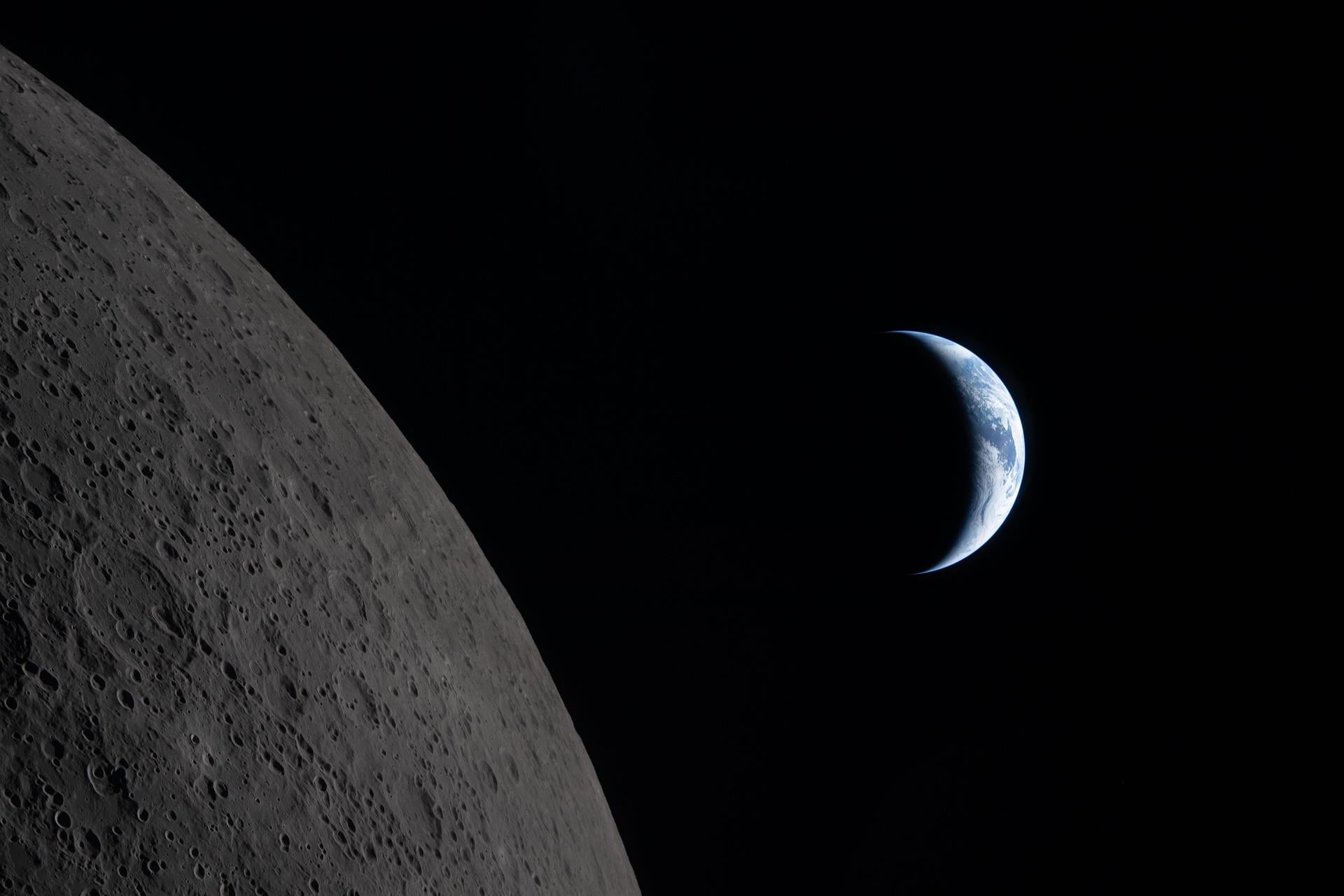
The corona is the source of the solar wind and coronal mass ejections (CMEs), which drive space weather and can disrupt satellite communications and power grids on Earth. Because the Moon perfectly blocked the Sun’s photosphere, the crew could see the evolving structure of the corona with the naked eye and handheld cameras. This data is being used by heliophysicists to compare visual observations with data from the Parker Solar Probe and the Solar Orbiter.
During this period of darkness, the crew also reported an unprecedented view of the galactic plane. Without the interference of Earth’s atmosphere or light pollution, the stars took on a three-dimensional quality. Astronaut Jeremy Hansen remarked on the perceived "depth" of the stars, noting that their varying levels of brightness created a sense of their actual positions within the Milky Way galaxy. This psychological and visual data is essential for future long-duration missions to Mars, where celestial navigation and crew mental health will be paramount.
Lunar Impact Monitoring and Safety Protocols
Because the Moon lacks a substantial atmosphere, it is constantly bombarded by meteoroids that would otherwise burn up in Earth’s mesosphere. These impacts are a primary concern for the establishment of permanent lunar bases. During the period of solar occultation, the Artemis II crew was tasked with monitoring the lunar far side for "flashes"—the visible light produced when a meteoroid strikes the surface at hyper-velocity.
The crew successfully recorded several flashes, which were later analyzed by the Lunar Science Team at the Johnson Space Center. Scientists estimate that the objects responsible for these flashes were no larger than 5 centimeters (approximately 2 inches) in diameter. However, the energy released upon impact was sufficient to be seen from the Orion spacecraft.
This data is critical for the Artemis program’s long-term objectives. By understanding the frequency and energy of these impacts, NASA engineers can better design radiation shielding and micrometeoroid protection for the Lunar Gateway and future surface habitats. The observations confirmed that even small particles pose a significant kinetic threat, reinforcing the need for robust structural integrity in lunar infrastructure.
Geological Mapping of the Lunar Far Side
The geological history of the Moon’s far side is markedly different from the near side. While the near side is dominated by large, dark basaltic plains known as "maria," the far side is rugged, mountainous, and heavily cratered. The Artemis II crew utilized handheld cameras to document the subtle color variations across the surface, which serve as indicators of mineralogical composition.
The report details how the crew observed hues of gray, black, brown, tan, and even blue and green. In lunar geology, these colors correspond to specific chemical signatures:
- Blue: Indicates titanium-rich volcanic rocks (ilmenite).
- Brown: Suggests iron-rich minerals.
- Green: Often points to the presence of volcanic glass or regolith that has been melted by previous impacts.
These visual surveys are being cross-referenced with data from the Lunar Reconnaissance Orbiter (LRO) to refine our maps of lunar resources. Identifying sites rich in titanium and iron is a prerequisite for "In-Situ Resource Utilization" (ISRU), where future explorers will mine the Moon for materials to build structures and produce oxygen.
The Terminator and Landing Site Reconnaissance
The crew paid particular attention to the "terminator," the moving line that divides the day and night sides of the Moon. Because the Sun is at a very low angle relative to the horizon at the terminator, it casts long shadows that emphasize the topography of the surface.
Pilot Victor Glover described the terminator as "fantastic" and "rugged," noting "islands of terrain" that remained illuminated while surrounded by shadow. This observation is of high strategic value for the Artemis III and IV missions, which are targeted at the lunar South Pole. The South Pole-Aitken Basin is a region of "permanent shadow" and "eternal light," where high peaks receive constant sunlight while deep craters remain in total darkness. Understanding the interplay of light and shadow in these regions is essential for solar power generation and for locating water ice trapped in the dark craters.
Strategic Implications and the Path to Artemis III
The release of the Artemis II Preliminary Lunar Science Report marks a transition from testing hardware to conducting operational science in deep space. The data gathered by Wiseman, Glover, Koch, and Hansen has provided a "field guide" for the next generation of explorers.
The implications of this report extend beyond pure science. It validates the "Human-in-the-Loop" philosophy, proving that human observers can identify subtle geological features and transient events (like meteor impacts) more effectively than automated systems in certain contexts.
Looking ahead, NASA is preparing for Artemis III, currently scheduled for 2027. This mission will see a crewed Orion spacecraft rendezvous with SpaceX’s Starship Human Landing System (HLS) in lunar orbit. Building on the observations of Artemis II, the Artemis III crew will attempt the first human landing on the lunar South Pole. Following that, Artemis IV in 2028 will focus on the continued assembly of the Lunar Gateway and the establishment of a sustainable human presence.
The Artemis II mission has successfully bridged the gap between the legacy of the Apollo era and the future of the Artemis generation. By combining rigorous engineering with intuitive scientific observation, the crew of Integrity has ensured that when the next boots hit the lunar dust, they will do so with a wealth of new knowledge about the world they are about to explore.