Sisilia Frederika
The universe is undergoing a profound transformation as its capacity to generate new stars steadily diminishes, a phenomenon that has long puzzled the global astronomical community. For decades, the prevailing hypothesis suggested a simple "fuel crisis": as galaxies aged, they were thought to be running out of the raw materials necessary for star birth. However, groundbreaking research led by Hong Guo of the Chinese Academy of Sciences (CAS) has challenged this assumption. By utilizing the world’s most sensitive radio telescope and a massive spectroscopic survey, an international team of researchers has discovered that while star formation has plummeted over the last 4.5 billion years, the reservoir of neutral atomic hydrogen—the primary building block of stars—has remained surprisingly stable. This revelation suggests that the slowdown in cosmic star formation is not caused by a lack of raw material, but rather by a breakdown in the efficiency of the "baryon cycle," the complex process by which gas is converted from one state to another within the galactic environment.
The Paradox of the Cosmic Fuel Supply
The study, which represents one of the most comprehensive investigations into the late-time evolution of the universe, focused on the relationship between neutral atomic hydrogen (HI) and the star formation rate (SFR). Historically, astronomers have understood that star formation is a multi-stage process. It begins with vast reservoirs of neutral hydrogen gas, which must cool and condense into dense, molecular hydrogen (H2) clouds. Within these cold, dark nurseries, gravity eventually overcomes internal pressure, causing the gas to collapse and ignite into new stars.
Logic would dictate that a significant decline in star birth would be preceded by a proportional depletion of the neutral hydrogen supply. However, the data provided by the Five-hundred-meter Aperture Spherical radio Telescope (FAST) tells a different story. The research team found that 4.5 billion years ago, the universe was producing stars at a rate approximately 2.5 times higher than it is today. During that same period, the density of neutral atomic hydrogen was only 1.4 times higher than current levels.
"What we find is that during the most recent 4.5 billion years, star formation continued to decline substantially, while the cosmic reservoir of neutral atomic hydrogen changed surprisingly little," stated Hong Guo. This discrepancy indicates that the "fuel tank" of the universe is still relatively full, but the "engine" responsible for processing that fuel into stars has become increasingly inefficient.
Technological Synergy: FAST and DESI
The precision of these findings was made possible through the integration of two of the world’s most advanced astronomical instruments: the Five-hundred-meter Aperture Spherical radio Telescope (FAST) located in Guizhou, China, and the Dark Energy Spectroscopic Instrument (DESI) in Arizona, USA.
FAST, currently the largest and most sensitive single-dish radio telescope on Earth, was used to detect the subtle 21-centimeter radio emissions produced by neutral hydrogen. This specific wavelength allows astronomers to map the distribution of gas that does not emit visible light, providing a "shadow map" of the universe’s raw materials. Because these signals are incredibly weak, FAST’s massive collecting area was essential for gathering data from billions of light-years away.
To complement the radio data, the team utilized the DESI project, which is designed to measure the effect of dark energy on the expansion of the universe. DESI provided a massive sample size of approximately 2.5 million galaxies, covering nearly one-third of the sky. By cross-referencing the gas measurements from FAST with the galaxy positions and star-formation data from DESI, the researchers were able to construct a high-precision timeline of cosmic evolution over the last 4.5 billion years.
The Baryon Cycle and the Efficiency Crisis
The core of the discovery lies in the "baryon cycle," a term used to describe the continuous exchange of matter between galaxies and the surrounding intergalactic medium. This cycle involves three primary stages:
- Accretion: Gravity pulls neutral gas from the cosmic web into the galactic halo.
- Phase Transition: Neutral hydrogen (HI) cools and transitions into molecular hydrogen (H2).
- Feedback: Massive stars and supermassive black holes release energy (supernovae and active galactic nuclei winds) that can expel gas back into space or heat it up, preventing further star formation.
The CAS-led study suggests that the decline in star formation is not due to a lack of HI, but rather a bottleneck in the transition from HI to H2. As the universe expands and the large-scale structure of the cosmic web evolves, the flow of gas into galaxies has weakened. This weakening of the "gas supply line" from the intergalactic environment appears to have a cascading effect on the internal physics of galaxies.
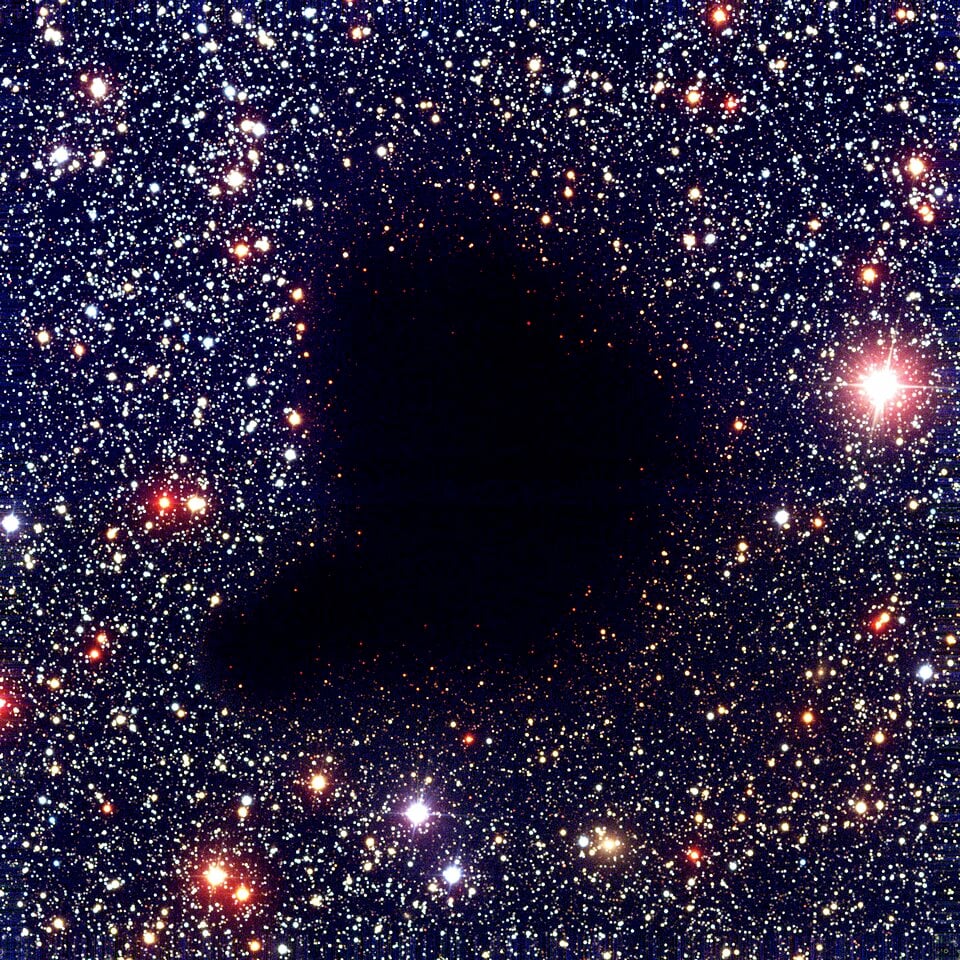
Without a robust and steady influx of fresh gas to maintain the pressure and cooling rates necessary for molecular cloud formation, the existing neutral hydrogen remains in its atomic state. Essentially, the "plumbing" of the universe is failing to deliver the gas to the "factories" (molecular clouds) where stars are made. The study implies that environmental factors—such as the heating of the intergalactic medium and the reduction in gas accretion—are the primary drivers of the modern cosmic drought.
A Timeline of Cosmic Decline
To put these findings into a broader context, astronomers look back to a period known as "Cosmic Noon." Approximately 10 billion years ago (at a redshift of roughly z~2), the universe reached its peak star-formation activity. During this era, galaxies were turbulent, gas-rich environments where stars were born at rates dozens of times higher than what is observed in the Milky Way today.
Following Cosmic Noon, the universe entered a long, slow decline. The research team focused on the "late-time phase" of this decline, specifically the window between 4.5 billion years ago and the present day. This period is critical because it represents the transition of the universe into its "middle age," where the influence of dark energy has begun to accelerate the expansion of space, further isolating galaxies and thinning the cosmic web.
By establishing that the HI reservoir has remained stable during this 4.5-billion-year window, the researchers have effectively decoupled the availability of atomic gas from the rate of star formation. This shift in understanding requires a significant update to theoretical models of galaxy evolution, which previously relied heavily on gas depletion as the primary cause for galactic "quenching" (the cessation of star birth).
Implications for Galaxy Evolution and Future Research
The implications of this study extend far beyond the measurement of hydrogen. It provides a new benchmark for understanding how galaxies like our own Milky Way will evolve in the distant future. If star formation is primarily governed by the efficiency of the baryon cycle rather than the sheer volume of gas, then the "death" of a galaxy is a much more complex process than simply running out of fuel. It is a process of thermal and structural changes that prevent gas from cooling.
Furthermore, the study highlights the limitations of current technology while setting the stage for the next generation of telescopes. While FAST is a revolutionary tool, its effective range for detecting neutral hydrogen currently caps at roughly 7.2 billion years into the past. To understand the conditions prior to this—and to bridge the gap between Cosmic Noon and the late-time phase—astronomers will need even more powerful arrays.
The upcoming Square Kilometre Array (SKA), an international project involving thousands of antennas across Africa and Australia, is expected to build upon the CAS findings. The SKA will be capable of detecting neutral hydrogen from even earlier epochs, allowing scientists to see exactly when and why the efficiency of the baryon cycle began to falter.
Summary of Scientific Impact
The collaboration between CAS, FAST, and DESI has fundamentally altered the narrative of cosmic history. The discovery that the universe’s neutral hydrogen density has only decreased by 40% while star formation has dropped by 150% over the last 4.5 billion years points to a universe that is struggling to process its remaining resources.
As the scientific community digests these results, the focus of galaxy evolution research is likely to shift from "gas accounting" to "gas dynamics." Understanding the intricate balance of temperature, pressure, and cosmic accretion that allows a galaxy to turn its hydrogen into stars remains one of the most vital frontiers in modern astrophysics. For now, the universe remains a vast reservoir of potential, holding onto its gas but losing the ability to light the fires of new suns.