Vera Intan Clara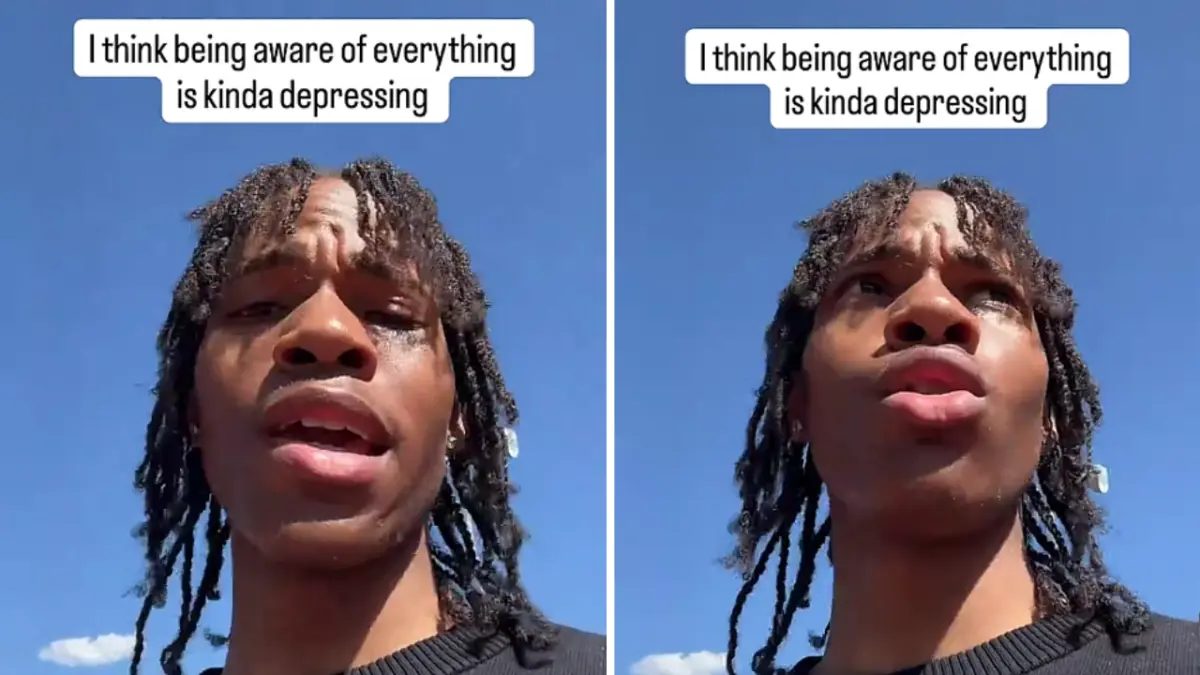
A video posted by TikTok content creator @iamjustdenzel has captivated a global audience, amassing over 3.2 million views and sparking more than 8,300 comments. In the now-viral clip, Denzel articulates a profound and often challenging personal experience: his belief that an exceptionally high level of awareness, far from being solely a gift, can at times become a significant source of depression. His assertion resonates with many who feel perpetually attuned to the intricacies of human behavior and environmental cues, describing a state where "nothing seems to get past him." This candid sharing has tapped into a nuanced discussion surrounding the psychological burden that can accompany acute observational skills and deep empathy.
The video begins with Denzel acknowledging a common societal perception: vigilance and discernment are typically lauded as valuable attributes. However, he immediately challenges this notion, suggesting that for him, these very qualities are increasingly feeling like a "curse." He meticulously details how this heightened awareness manifests in his daily interactions, granting him what he perceives as an uncanny ability to decipher the true intentions of others. He speaks of recognizing the "emotional masks" people wear, seeing through behaviors he deems "disingenuous," and detecting subtle deviations that escape the notice of most.
Denzel offers concrete examples to illustrate the breadth of his observations: a forced or "fake smile" that betrays underlying discomfort, a "shallow or insincere compliment" that lacks genuine warmth, and even imperceptible "shifts in a person’s cadence" when they are, in his estimation, dissembling or attempting to mislead. He characterizes this acute sensitivity not merely as an occasional insight but as his fundamental mode of navigating the complex tapestry of human relationships and situations. This constant vigilance, while offering a unique lens through which to view the world, appears to come at a considerable personal cost, prompting a wider conversation about the psychological implications of such intense perceptive abilities.
The Overwhelming Nature of Constant Perception: A Deeper Dive
Denzel elaborates on the overwhelming aspect of his perpetual awareness, suggesting it feels less like a chosen skill and more like an involuntary state. He describes an innate capacity to discern what he believes are others’ motives simply by observing their body language, often without conscious effort. This spontaneous processing of non-verbal cues, he explains, comes "naturally" to him. Yet, this very ease of perception contributes to its burdensome nature. His brain, he recounts, is "constantly picking up on subtle signals and microexpressions," a relentless barrage of information that can lead to mental exhaustion and emotional strain. The inability to filter or switch off this sensory and emotional intake forms the crux of his argument for awareness as a potential curse.
This phenomenon, while articulated through Denzel’s personal lens, aligns with established psychological concepts. Individuals categorized as Highly Sensitive Persons (HSPs), a trait identified by psychologist Elaine Aron in the 1990s, often report a similar deep processing of physical and emotional stimuli. HSPs are thought to have a more active behavioral inhibition system and process sensory input more deeply, leading to greater awareness of subtleties but also susceptibility to overstimulation. Studies on empathy and emotional intelligence also highlight variations in individuals’ capacities to perceive and interpret others’ emotions and intentions. While valuable for social connection and understanding, an exceptionally high degree of empathy, particularly "affective empathy" (feeling what others feel), can lead to empathic distress and burnout when one constantly absorbs the emotions of those around them without adequate boundaries or coping mechanisms. The brain’s prefrontal cortex, involved in social cognition and theory of mind, plays a crucial role in these processes, and variations in its activity could contribute to differing levels of social awareness.
The Chronology of a Viral Revelation
Denzel’s video was posted on TikTok, a platform that has become a significant conduit for discussions surrounding mental health and personal experiences. The exact date of the initial upload is not specified in the original report, but its rapid ascent to viral status underscores the immediate resonance of its content. Within a relatively short period, the video garnered millions of views, indicating a broad audience eager to engage with discussions about mental well-being and psychological traits. The comment section quickly became a forum for shared experiences, with thousands of users validating Denzel’s sentiments and offering their own insights into the challenges of heightened awareness. This swift organic spread highlights TikTok’s role in facilitating rapid community building around niche, yet deeply personal, topics. The video’s virality can be seen as a micro-chronology: from initial upload to exponential viewership, followed by an outpouring of user-generated content in the comments, each stage contributing to the amplification of Denzel’s original message and the subsequent communal discussion.
Community Validation and Shared Experiences
The overwhelming majority of reactions to Denzel’s video came from commenters who identified with his experience, describing it as "seeing too much." This shared sentiment highlights a demographic that often feels isolated in their acute perceptions, finding solace and validation in Denzel’s articulation of their internal world. The comments provided a mosaic of personal struggles and coping mechanisms:
One commenter poignantly wrote, "The clearer you see the world, the harder it is to ignore how broken it is." This statement encapsulates the existential weight often associated with a deeply perceptive nature, where the recognition of societal flaws, injustices, and interpersonal disingenuousness can lead to a pervasive sense of disillusionment and grief. It suggests that heightened awareness can strip away comforting illusions, leaving one exposed to the raw, unvarnished realities of human existence.
Another commenter revealed a unique coping strategy, stating, "That’s why I have to act whimsical and delusional to just survive human interactions." This response illustrates a protective mechanism where individuals might adopt a persona of lightheartedness or detachment to shield themselves from the emotional overload of constant social observation. Such behaviors, sometimes perceived as eccentricity, can be a deliberate attempt to create distance and manage the intensity of social interactions that would otherwise be overwhelming. This strategy underscores the profound impact of heightened awareness on an individual’s social functioning and self-presentation.
A separate commenter invoked a scriptural reference, "For in much wisdom is grief, And he who increases knowledge increases sorrow (Ecclesiastes 1:18)." This ancient proverb, transcending cultural and temporal boundaries, perfectly summarized the feelings of many, providing a historical and philosophical context to Denzel’s contemporary observation. It suggests that the burden of knowing and perceiving deeply is not a new phenomenon but a perennial aspect of the human condition, linking Denzel’s TikTok video to a long-standing discourse on the relationship between insight and suffering.
These diverse reactions underscore the multifaceted impact of heightened awareness, ranging from existential distress to adaptive social strategies, and from contemporary self-reflection to timeless philosophical wisdom.
Psychological Perspectives and Implications
While Denzel’s perspective is a personal account shared on social media, it touches upon well-researched areas in psychology. The concept of "hypervigilance," for instance, is often associated with trauma responses, where an individual remains in a constant state of alert, scanning for potential threats. While Denzel’s description doesn’t explicitly link to trauma, the relentless scanning of his environment for subtle cues shares functional similarities. Moreover, research into "cognitive load" suggests that processing an excessive amount of information can lead to mental fatigue, decision paralysis, and increased stress. For individuals like Denzel, whose brains are seemingly always "on," the cumulative cognitive load could contribute significantly to feelings of overwhelm and, eventually, symptoms akin to depression.
The "gift and curse" dichotomy Denzel highlights is also explored in studies on giftedness and intelligence. While high intelligence and perceptual abilities offer significant advantages, they can also lead to social isolation, a feeling of being misunderstood, and an acute awareness of societal imperfections, potentially contributing to existential depression or anxiety. The ability to "read between the lines" can be isolating if others do not share the same depth of perception, leading to frustration or a sense of alienation.
It is crucial to note that Denzel’s video is a personal narrative and not a clinical diagnosis. The Daily Dot was unable to independently verify his perspective on heightened awareness, emphasizing the distinction between lived experience and formal psychological assessment. However, the widespread resonance of his video suggests that many individuals grapple with similar feelings, highlighting a potential need for broader public education and discussion around these complex psychological traits. Mental health professionals would typically emphasize that while heightened awareness can be a trait, persistent feelings of sadness, anhedonia (loss of pleasure), or functional impairment warrant professional evaluation for conditions such as depression or anxiety disorders. Therapeutic approaches like Cognitive Behavioral Therapy (CBT) or Dialectical Behavior Therapy (DBT) could offer strategies for managing emotional regulation, setting boundaries, and reframing cognitive patterns for individuals who experience distress due to their perceptive abilities.
Broader Impact and Societal Implications
Denzel’s viral video serves as a powerful example of how social media platforms like TikTok have become vital spaces for destigmatizing discussions around mental health. By openly sharing his vulnerabilities, Denzel has inadvertently created a platform for thousands to find common ground, reducing feelings of isolation for those who experience similar internal struggles. This communal validation can be a crucial first step for individuals to acknowledge their experiences and potentially seek further support.
However, this phenomenon also carries implications for the broader discourse on mental health. While social media facilitates invaluable peer support, it also presents challenges, particularly regarding self-diagnosis. Personal anecdotes, while powerful, should not replace professional medical or psychological evaluation. The nuanced distinction between a personality trait (like high sensitivity or deep processing) and a clinical condition (like depression or anxiety) is critical. Encouraging open discussion is vital, but so is promoting responsible engagement with mental health topics, always advising individuals experiencing significant distress to consult qualified healthcare professionals.
The public reaction to Denzel’s video underscores a societal need for greater understanding and empathy towards individuals with different cognitive and emotional processing styles. It challenges the conventional wisdom that certain traits are universally beneficial, revealing the potential downsides when these traits are exceptionally pronounced or unmanaged. Ultimately, Denzel’s viral moment contributes to a richer, more complex understanding of human experience, prompting us to look beyond simplistic labels and delve into the intricate interplay between our inner worlds and the external realities we perceive. This ongoing dialogue is essential for fostering a more inclusive and supportive environment for mental well-being.