George Chandra Eka
A groundbreaking discovery has sent ripples through the retro gaming community: a collection of rare, fully functional Nintendo Famicombox consoles, originally designed for commercial use in public establishments, has been unearthed in the rooms of a Japanese love hotel. This extraordinary find, brought to light by renowned Famicom archivist "Orochi," not only confirms the enduring operational integrity of these elusive machines but also offers a tangible link to a unique chapter in Nintendo’s history and Japanese cultural leisure. The consoles, dating back to 1986, were reportedly installed in nearly every room of the discreet establishment, presenting a remarkable snapshot of vintage entertainment preserved remarkably intact.
The Genesis of the Famicombox: Nintendo’s Commercial Venture
To fully appreciate the significance of this discovery, one must delve into the history of the Nintendo Famicombox. Launched in Japan in 1986, the Famicombox was Nintendo’s foray into the commercial arcade and hotel entertainment market, building upon the immense success of its home console, the Famicom (Family Computer). Unlike its consumer counterpart, the Famicombox was not intended for sale to the general public. Instead, it was a robust, purpose-built 8-bit system designed for high-traffic environments, primarily hotels, inns, and other commercial spaces.
The console itself was a technological marvel for its time, designed with durability and ease of maintenance in mind. It featured a locking mechanism that allowed it to house up to 16 standard Famicom game cartridges internally, making it simple for proprietors to offer a diverse library of titles without fear of theft or damage to individual games. Users would typically access these games through a pay-to-play system, often involving coin insertion or a timed billing mechanism integrated into the hotel’s services. This commercial model was a strategic move by Nintendo to expand its reach beyond household living rooms, tapping into a lucrative market for leisure and entertainment outside the home.
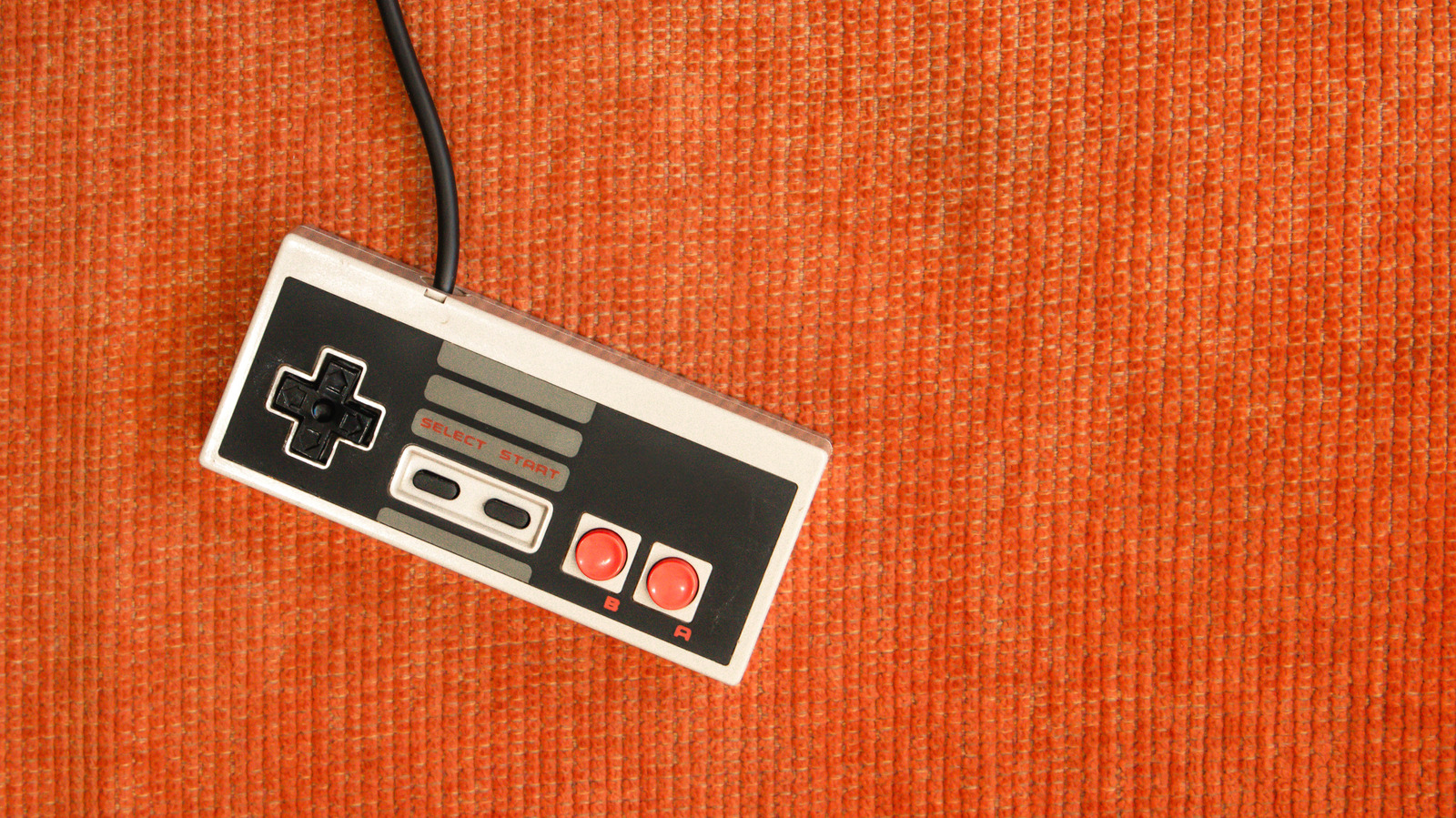
Key distinctions set the Famicombox apart from the standard Famicom. While the home Famicom utilized distinctive hardwired controllers with square buttons, the Famicombox units discovered employ controllers visually identical to the North American NES (Nintendo Entertainment System) controllers, featuring the familiar rectangular design. Furthermore, the Famicombox was designed to accept NES-style cartridges, which are physically larger and configured differently from their Japan-exclusive Famicom counterparts, adding another layer of intrigue to its unique commercial specification. This hybrid design, incorporating elements from both regional variants, suggests a pragmatic approach by Nintendo to streamline production or leverage existing component designs for its commercial hardware.
Orochi’s Undercover Investigation and Astonishing Find
The catalyst for this revelation was Orochi, a prominent Famicom archivist known for their dedication to preserving the history of Nintendo’s iconic 8-bit console. Driven by an undisclosed lead or perhaps a long-standing urban myth within the retro gaming community regarding the existence of such units in unexpected locations, Orochi embarked on an undercover investigation. Their target: a Japanese love hotel, an establishment not typically associated with historical video game preservation.
The results of Orochi’s meticulous search, documented and shared on social media platform X (formerly Twitter), were nothing short of sensational. To their astonishment, the Famicombox consoles were found installed in almost every room of the hotel, with only one exception. This widespread deployment within a single establishment is itself remarkable, hinting at a significant bulk order or a long-standing contract between the hotel and Nintendo decades ago. The sheer number of units found in one location makes this an unprecedented event in retro gaming archaeology.
Upon testing at least one of the units, Orochi confirmed that the majority of the installed games were perfectly playable, defying the ravages of time and decades of continuous use or dormancy. This operational integrity is a testament to Nintendo’s engineering prowess in the 1980s, designing hardware built to last in demanding commercial environments. The only reported exceptions were shooting games that required the Nintendo Zapper light gun accessory. The Zapper, a staple of classic NES/Famicom titles like Duck Hunt, relies on cathode ray tube (CRT) technology to detect light from the screen. Modern LCD televisions, ubiquitous in contemporary hotel rooms, operate on a fundamentally different display principle that renders the Zapper inoperable, thus preventing gameplay for those specific titles. This technical incompatibility highlights the evolution of display technology and its impact on retro gaming experiences.
The Enigmatic World of Japanese Love Hotels
The setting of this discovery—a Japanese love hotel—adds a fascinating cultural dimension to the story. Love hotels are a distinctive feature of Japanese society, offering short-term private accommodations for couples. Far from being clandestine or illicit, they are a widely accepted part of the country’s social fabric, providing discreet, often elaborately themed rooms for romantic encounters or simply a few hours of privacy away from crowded homes.
These establishments are renowned for their diverse amenities, which can range from karaoke machines and elaborate bath facilities to vending machines offering a variety of goods. The inclusion of a Famicombox within a love hotel’s offerings aligns perfectly with this tradition of providing unique in-room entertainment and enhancing the guest experience. In the 1980s and 90s, offering cutting-edge video game systems would have been a significant draw, a luxurious perk that distinguished one hotel from another. The consoles likely served as an additional entertainment option, allowing guests to relax and play classic titles between other activities, or perhaps even as the primary form of entertainment for some guests seeking a nostalgic escape. The fact that these units were seemingly forgotten or simply continued to function without attracting attention for decades speaks volumes about their robust design and the hotel’s long-standing operational practices.
Orochi, opting for discretion, did not publicly name the love hotel, citing a desire to "protect" the consoles. This decision is understandable given the potential for overwhelming public interest, which could jeopardize the historical artifacts or disturb the privacy of the establishment and its patrons. The anonymity ensures the preservation effort can proceed without undue interference, allowing for potential future study or careful decommissioning.
Rarity, Preservation, and the Collector’s Market
The Nintendo Famicombox is an exceedingly rare piece of video game hardware. Its commercial-only distribution meant that production numbers were significantly lower than those of the consumer Famicom. Most units were eventually decommissioned, discarded, or simply ceased to function over time. Finding even a single Famicombox in working order is a triumph for collectors and archivists; discovering multiple, fully functional units within a single location is unprecedented.
This discovery holds immense value for video game preservation. Fully operational units provide invaluable insights into the original hardware, its operational parameters, and the specific software configurations it ran. Researchers can study these consoles to understand their internal mechanisms, power requirements, and how they interacted with their intended commercial environments. This kind of hands-on access to working historical hardware is crucial for accurately documenting and preserving video game history for future generations.
The impact on the retro gaming collector’s market is also substantial. Prior to this find, Famicombox units, especially functional ones, were virtually unobtainable and commanded astronomical prices when they rarely appeared. The discovery of a cache, even if not immediately available for sale, could influence market perceptions and potentially lead to further discoveries as collectors intensify their searches. While Orochi’s intent is clearly preservation rather than immediate sale, the existence of these units fundamentally alters the understanding of Famicombox availability. Experts suggest that a fully functional Famicombox, particularly one with original cartridges, could easily fetch tens of thousands of dollars, if not more, on the open market, making this discovery a treasure trove in every sense of the word.
Technical Challenges and Future Implications
The issue with the Zapper light gun not functioning on modern LCD TVs highlights a broader challenge in retro gaming: the incompatibility of older hardware with contemporary display technologies. Light guns from the 8-bit and 16-bit eras relied on scanning beams from CRT screens to determine where the gun was aimed. When the player pulled the trigger, the screen would briefly flash black, then display a white square around the target. The gun’s sensor would detect this sudden change in light and its position relative to the white square, allowing the console to register a hit. LCDs and other modern flat-panel displays do not use scanning beams in the same way, rendering these peripherals obsolete without specialized adapters or emulation. This technological barrier often means that for a truly authentic retro experience, enthusiasts must still rely on older CRT televisions.
The discovery has also rekindled discussions around the "Nintendo love hotel urban myth," which has circulated within Japanese gaming circles for years. The myth suggested that rare or unique Nintendo consoles could be found in such establishments, often dismissed as fanciful tales. Orochi’s find provides concrete evidence, transforming myth into documented reality and validating the persistence of such whispers. This validation might inspire further exploration of similar forgotten spaces, potentially leading to other hidden gaming treasures.
Community Reaction and Broader Impact
The news of Orochi’s discovery has been met with immense excitement and widespread coverage across retro gaming news outlets and social media platforms globally. The community’s reaction underscores the deep passion and dedication of retro gaming enthusiasts and preservationists. Many have expressed admiration for Orochi’s detective work and the pristine condition of the consoles. This event serves as a powerful reminder that significant pieces of technological history can still be found in the most unexpected places, often hidden in plain sight.
The implications extend beyond mere nostalgia. This find contributes to a more complete understanding of Nintendo’s commercial strategies and the broader ecosystem of gaming in Japan during the 1980s. It illustrates how video games were integrated into various facets of daily life and leisure, beyond just home entertainment. It also reinforces the importance of dedicated archivists and collectors who undertake painstaking efforts to document and preserve these cultural artifacts. Without individuals like Orochi, such invaluable pieces of history might be lost forever.
In conclusion, the discovery of a trove of fully functional Nintendo Famicombox consoles in a Japanese love hotel is far more than just an interesting anecdote. It is a significant event for video game history, preservation, and the retro gaming community. It highlights the enduring quality of classic Nintendo hardware, sheds light on a rarely seen commercial facet of the company’s past, and provides tangible evidence for long-standing urban legends. As the world continues to digitize and physical media becomes rarer, such finds serve as crucial touchstones, connecting us to the tangible origins of our digital entertainment landscape and ensuring that these stories continue to be told.