
 Vera Intan Clara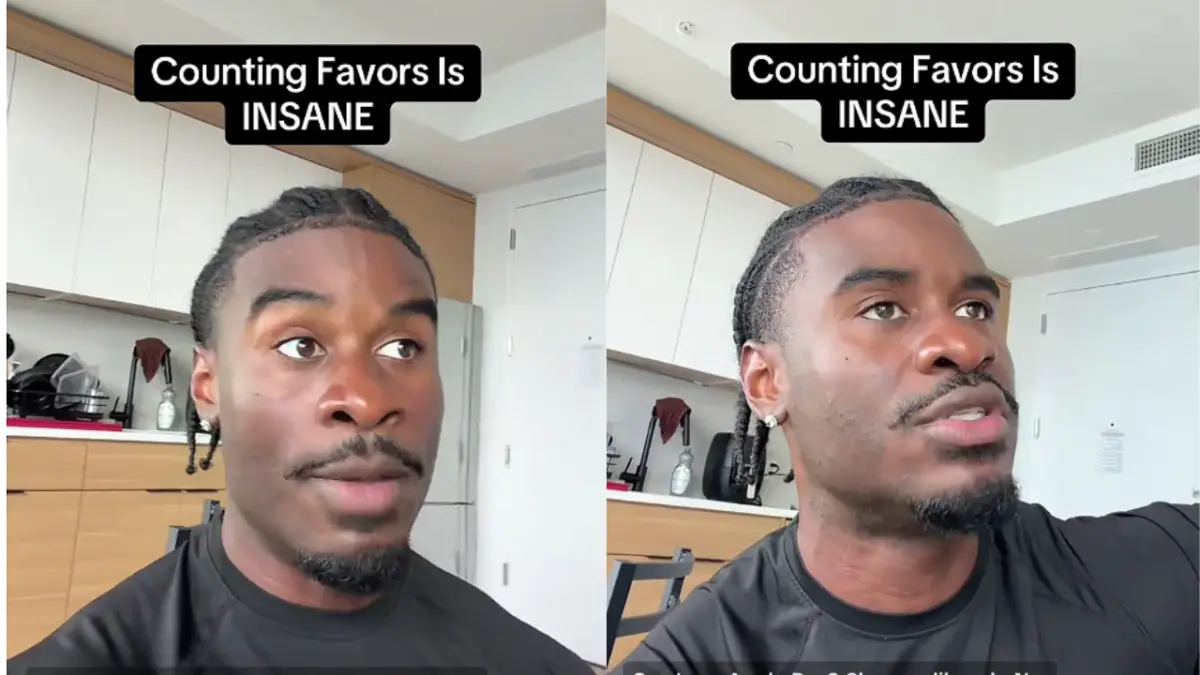
A recent video shared by TikTok creator @maxwellvision has ignited a widespread discussion across social media platforms, delving into the intricate and often ambiguous dynamics of financial transactions within friendships. The incident, which details a dispute over a $65 meal initially presented as a no-strings-attached favor, has resonated deeply with millions, garnering 1.7 million views and generating over 1,192 comments that reflect a broad spectrum of opinions on social reciprocity, clear communication, and the boundaries of camaraderie. The narrative, presented by Maxwell, serves as a poignant case study on the potential for misunderstandings to strain personal relationships, especially when money and unspoken expectations intersect.
The core of the controversy revolves around a seemingly innocuous act of kindness that escalated into a contentious confrontation. Maxwell recounted an experience where a friend, identified as Jack, offered to cover his meal bill after Maxwell realized he had forgotten his wallet. The gesture was accompanied by an explicit declaration from Jack that repayment was unnecessary. However, a mere two weeks later, the situation took an unexpected turn when Jack confronted Maxwell, demanding reimbursement for the $65 meal after observing Maxwell lending money to another friend. This shift in Jack’s stance, from a seemingly altruistic offer to an assertive demand for repayment, forms the crux of the online debate, prompting users to re-evaluate their own experiences and the unwritten rules governing financial exchanges among peers.
A Detailed Chronology of the Incident
The events unfolded with a seemingly typical social gathering, a birthday dinner for a mutual female friend, attended by Maxwell, Jack, and several other acquaintances. Such occasions often serve as social lubricants, fostering connection and shared experiences. However, the evening took an unexpected turn when the time came to settle the bill.
Maxwell described the scene where, after a convivial evening, the birthday girl’s best friend specified that she would cover her own meal, while the rest of the table would receive separate bills. This decision set the stage for individual financial responsibility, a common practice in group dining but one that can sometimes expose vulnerabilities. Maxwell, receiving a $65 bill that he deemed accurate for his orders, reached for his wallet only to discover it was missing.
A moment of panic ensued as Maxwell retraced his mental steps, concluding his wallet was either left in his Uber or, more hopefully, safely at home. A quick check of his phone confirmed the latter, with the AirTag attached to his wallet indicating its secure location. While relieved, this realization left him in an immediate predicament: he had no physical cash or cards to settle his debt.
Initially, Maxwell explored alternative payment methods, attempting to use Apple Pay, only to be informed by the waitress that the machine was out of service. Reluctant to impose on his friends, he then considered payment apps like Zelle or PayPal, which would allow for immediate reimbursement if a friend could cover his bill. He approached Jack with this proposition, offering to send the $65 instantly via Zelle.
It was at this juncture that Jack made the offer that would later become the subject of contention. According to Maxwell, Jack emphatically declined the offer of immediate repayment, stating, "Zelle me the money? You good . . . You don’t gotta Zelle me nothing. How much is it? $65.00 . . . Bro, you good." Maxwell interpreted this as a clear indication that Jack considered the payment a favor, a gesture of goodwill among friends, with no expectation of formal repayment. This interpretation, he explained, is consistent with the informal reciprocity often observed in close friendships, where favors are exchanged, and a balance is maintained over time rather than through immediate, transactional reimbursement. He believed that, in due course, he would reciprocate Jack’s generosity, perhaps by covering Jack’s tab at a future outing.
The dinner concluded without further incident, leaving Maxwell under the impression that the matter was resolved amicably, a testament to the strength of their friendship. However, this perception was shattered two weeks later.
The second act of this social drama unfolded at a gym. Maxwell joined Jack, Jay, and other friends for a basketball game. After the session, a friend named Eric expressed a desire for a Gatorade but found the vending machine only accepted cash. Maxwell, possessing approximately $4 in cash, readily offered it to Eric. This seemingly minor interaction, however, served as the catalyst for the ensuing confrontation.
Jack, having witnessed Maxwell’s exchange with Eric, directly challenged him. "For real, bro? That’s crazy . . . That’s wild," Jack reportedly stated, his tone conveying a sense of disbelief and irritation. Confused by Jack’s reaction, Maxwell inquired about the problem. Jack’s subsequent retort brought the latent tension to the surface: "Bro, you don’t think it’s weird that you’re giving other people money when you owe me money? I paid for your dinner, you said you would pay me back."
Maxwell, taken aback, immediately reminded Jack of his explicit refusal of repayment at the dinner, recalling his offer to Zelle the money instantly and Jack’s insistence that it was unnecessary. Jack’s response provided a crucial insight into his perspective: he claimed he had only said that "to be nice" but had fully expected Maxwell to reimburse him. He further implied that if Maxwell couldn’t pay him back, he would "understand," a statement Maxwell interpreted as a subtle suggestion that he was financially strapped.
In response to what he perceived as a clear breach of trust and a blatant "counting of favors," Maxwell promptly used his phone to Zelle Jack the $65. He articulated his reasoning in the video, emphasizing that he did not want the monetary debt to cast a shadow over their friendship, preferring to resolve the immediate financial transaction, even if it meant acknowledging a fundamental misunderstanding of their social contract.
Maxwell’s Perspective: The Ethics of Favors vs. Debts
From Maxwell’s vantage point, the distinction between a favor and a loan is paramount, especially within the context of friendship. He firmly believes that when someone offers to pay for something without being asked and explicitly states that repayment is not required, it transcends the realm of a transactional debt and enters the domain of a favor. This distinction is crucial to his understanding of social reciprocity among "homies." He articulated this perspective succinctly in his video: "If I never asked you to do it. . . You’re offering to buy me something, that’s already put in the back of my mind that you don’t wanna get paid back. You’re like, doing me a favor. But when you ask me to pay you back, it seems like you’re counting favors. Are we homies?"
Maxwell’s emphasis on the unsolicited nature of the offer and the explicit "no repayment" clause highlights a common expectation in informal social contracts: that such gestures are rooted in goodwill, intended to strengthen bonds rather than create financial obligations. His immediate offer to reimburse Jack via Zelle further underscores his willingness to fulfill a debt if it were understood as such. Jack’s refusal, however, fundamentally altered the perceived nature of the exchange for Maxwell, transforming it into an act of generosity that he would naturally reciprocate in kind, at a later time, rather than a direct loan.
Jack’s Implied Perspective: The Nuances of "Being Nice"
While Jack’s direct commentary is not available, his actions and statements, as recounted by Maxwell, offer insight into an alternative interpretation of the event. Jack’s explanation that he "only said that to be nice" but "expected Maxwell to reimburse him" suggests a potential disconnect between his expressed words and his internal expectations. This highlights a common social dilemma where individuals might use polite language or make seemingly generous offers without fully intending to forgo repayment, perhaps out of a desire to avoid awkwardness or to appear magnanimous in the moment.
This phenomenon, where social pleasantries mask underlying financial expectations, can lead to significant friction when those expectations are not met. Jack’s reaction at the gym, particularly his indignation upon seeing Maxwell lend money to another friend, indicates that the $65 payment was indeed "hanging over" his perception of their friendship, contrary to Maxwell’s initial understanding. His statement about "understanding" if Maxwell couldn’t pay further suggests a paternalistic tone, implying a judgment of Maxwell’s financial capacity, which Maxwell found insulting given his immediate offer to pay via Zelle. This discrepancy underscores a critical communication breakdown, where both parties operated under different, unstated assumptions about the nature of their financial interaction.
The Role of Digital Payments in Modern Friendships
The incident also subtly highlights the evolving landscape of financial interactions, particularly the pervasive influence of digital payment applications like Zelle, PayPal, and Venmo. These platforms have fundamentally altered how individuals manage and exchange money, especially within social circles. The ability to instantly transfer funds has blurred the lines between formal loans and informal favors.
In Maxwell’s case, his immediate offer to Zelle Jack the $65 demonstrates the ease with which such transactions can be settled. The expectation that one can pay back instantly through an app often influences the perception of whether a debt truly exists or if an offer is a genuine gift. When Jack declined the instant Zelle payment, it further solidified Maxwell’s belief that it was a favor. This episode underscores how digital convenience, while simplifying transactions, can also complicate social etiquette, creating new ambiguities around repayment expectations and the unspoken rules of financial reciprocity among friends.
Social Media Reaction and Broader Commentary
The viral nature of Maxwell’s video on TikTok transformed a personal anecdote into a public forum for discussing universal social dilemmas. The 1,192 comments reflect a broad consensus among users who largely sided with Maxwell, emphasizing the importance of clear communication and the sanctity of a "favor."
Many commenters echoed Maxwell’s sentiment that a favor, by its very definition, implies no expectation of repayment. One commenter articulated a common practice among friends: "Me and my buddies don’t pay each other back, we just take turns buying stuff for everyone." This highlights a culture of reciprocal generosity where a running tally is avoided in favor of a general equilibrium over time.
Another user directly criticized Jack’s behavior, stating, "He should’ve been straight forward with his intentions. Also, if you don’t rock with him like that, you could’ve sent him the money right away to avoid this." This comment underscores the premium placed on honesty and clarity in financial dealings, even informal ones. It suggests that if Jack genuinely expected repayment, he should have communicated that explicitly from the outset, rather than adopting a posture of "niceness" that belied his true intentions. The suggestion to "send the money right away" also implies that if the friendship wasn’t strong enough to warrant a genuine favor, a direct transaction would have been the more appropriate course of action.
These reactions collectively highlight a shared understanding among many social media users that ambiguity in financial agreements, particularly those cloaked in the language of friendship, can lead to resentment and damage relationships. The online discourse surrounding Maxwell’s video serves as a powerful reminder of the collective desire for transparency and integrity in interpersonal financial dealings.
Broader Societal Implications: The Psychology of Favors and Friendship
The incident transcends a simple dispute over $65; it delves into the complex psychology of human relationships, social reciprocity, and the unwritten rules that govern our interactions. Sociologists and psychologists often speak of the "norm of reciprocity," a fundamental principle of social psychology that suggests people are obligated to return favors or kindness. However, this norm operates differently depending on the context and the explicit understanding between parties.
In close friendships, the norm of reciprocity is often diffuse and long-term. Friends typically operate on a system of "social credit," where favors are given and received without an immediate expectation of an equivalent return. Instead, there’s an implicit understanding that the balance will eventually even out over the course of the relationship. This contrasts sharply with "market economies" of exchange, where transactions are immediate, specific, and governed by explicit contracts. When a friend treats a social exchange as a market transaction, it can feel like a violation of the friendship’s implicit contract, leading to feelings of betrayal or disappointment.
The concept of "counting favors" is particularly anathema to many friendships. It implies a transactional approach that undermines the selfless, supportive nature expected of close bonds. When one party begins to itemize past kindnesses, it can transform a relationship based on affection and mutual support into one based on ledger entries, fundamentally altering its character.
Furthermore, the incident highlights the role of communication in managing expectations. Many interpersonal conflicts stem from unspoken assumptions and differing interpretations of social cues. Had Jack explicitly stated his expectation of repayment, even while offering to cover the bill, the misunderstanding could have been entirely averted. His decision to "be nice" at the moment, only to later resent the lack of repayment, illustrates the potential pitfalls of indirect communication in financial matters, even among friends.
Navigating Financial Dynamics in Friendships: Lessons from the Viral Incident
Maxwell’s experience offers valuable lessons for navigating the often-tricky intersection of money and friendship. The primary takeaway is the critical importance of clear and unambiguous communication when it comes to financial transactions, regardless of the closeness of the relationship.
- Be Explicit: If you lend money, state clearly that you expect to be repaid and, if possible, when. If you offer a gift or a favor with no expectation of repayment, make that equally clear.
- Understand Intentions: If you are the recipient of an offer, and there’s any ambiguity, it’s always prudent to clarify. "Are you sure? I can Zelle you right now," as Maxwell did, is an excellent way to confirm the giver’s intent.
- Respect Boundaries: Recognize that not all friends have the same financial philosophy. What one person considers a casual favor, another might view as a strict loan.
- Consider the Friendship: Weigh the potential cost of a misunderstanding against the value of the friendship. Sometimes, letting go of a small debt might be less damaging than pressing for repayment and risking the relationship.
- Reciprocity, Not Exactness: In genuine friendships, reciprocity often works on a broader scale, not a dollar-for-dollar basis. Focus on being generally supportive and generous rather than keeping a precise tally.
The incident also serves as a reminder that social media platforms like TikTok have become modern-day town squares, where personal dilemmas are aired, debated, and often contribute to a collective understanding of societal norms and etiquette. While the events described by @maxwellvision are based solely on his account and the Daily Dot was unable to independently verify them, the virality and robust discussion surrounding the video underscore its resonance with a universal human experience. It speaks to the ongoing challenge of balancing generosity with self-interest, maintaining clear communication in an increasingly complex social landscape, and preserving the integrity of friendships in the face of financial ambiguities. The $65 meal, initially a small gesture, has thus evolved into a significant touchstone for a broader societal conversation about the unwritten rules that bind us together, or sometimes, pull us apart.








