
 Evan Lee Salim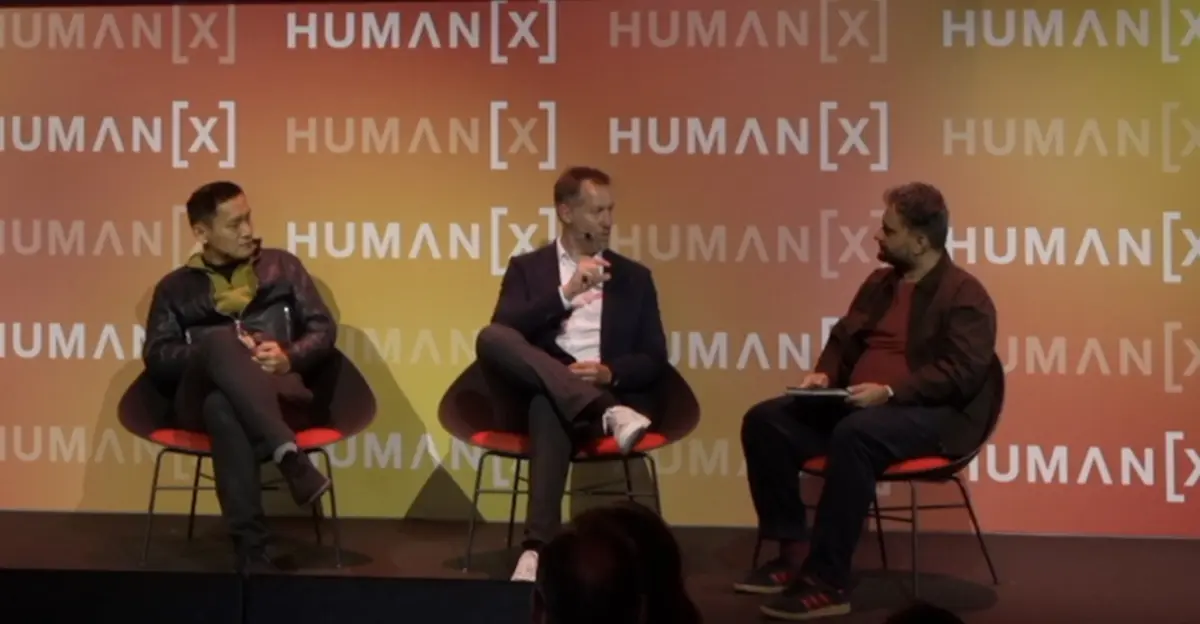
The theory that voice is poised to become the next ubiquitous interface has gained substantial traction, evidenced by a surge of investor confidence pouring billions of dollars into voice AI startups. These ventures span a wide spectrum, from foundational model developers and enterprise customer service providers to innovative meeting note-takers and advanced AI-powered dictation solutions. This significant financial backing underscores a pervasive belief in the transformative potential of conversational AI.
Despite a relentless stream of new model and tool releases, each promising unprecedented human-like speech and conversational fluidity, the reality often falls short of these ambitious claims. Shawn Wen, CTO of enterprise voice AI platform PolyAI, articulated this sentiment at the recent HumanX conference. He observed that even with the advent of sophisticated full-duplex models – systems capable of speaking while simultaneously listening and processing user input – voice AI has yet to experience its definitive "ChatGPT moment." This "moment," for large language models, signified a breakthrough in intuitive, highly capable interaction that captured public imagination and accelerated widespread adoption.
Wen elaborated on the current technical frontier, stating, "We have reached the milestone of developing full-duplex models. The next challenge is to make reasoning very fast, so that the models can fetch answers quickly and the conversation feels natural." This challenge highlights a critical bottleneck: while voice AI can now handle simultaneous input and output, the underlying cognitive process of understanding, retrieving relevant information, and formulating a coherent, contextually appropriate response needs significant acceleration to mimic genuine human conversation. Without this speed, interactions remain stilted, undermining the illusion of natural dialogue.
Furthermore, Wen emphasized the critical importance of AI agents in customer service transcending their current robotic limitations. He stressed the necessity for these agents to instill callers with sufficient confidence that their problems can be effectively resolved. This goes beyond mere functional capability; it delves into the psychological aspect of user experience, where trust and perceived competence are paramount. "I think the next stage will be slightly different because once the voice is good enough, like, and the customer is willing to engage with them for the first two or three turns, they start to build confidence, and over time, they will feel like I probably don’t have to talk to a human if the agent can solve my problem," Wen explained, outlining a future where initial positive interactions could gradually shift user expectations away from human intervention.
The Expanding Landscape of Voice AI Investment and Market Potential
The billions flowing into voice AI are a testament to the technology’s perceived market size and growth trajectory. According to various market research reports, the global conversational AI market, which includes voice AI, is projected to reach tens of billions of dollars by the mid-2020s, with a compound annual growth rate (CAGR) exceeding 20-30%. This growth is fueled by enterprises seeking to automate customer service, improve internal efficiencies, and enhance user interfaces. Key sectors attracting investment include:
- Customer Service Automation: Companies like PolyAI focus on building AI agents that can handle complex customer inquiries, reducing call center loads and improving resolution times.
- Meeting Productivity Tools: Solutions like Otter.ai aim to revolutionize enterprise meetings through automated transcription, summarization, and action item generation.
- Healthcare and Legal Dictation: Specialized voice AI models are being developed to accurately transcribe medical notes, legal proceedings, and other industry-specific content, significantly boosting professional productivity.
- Virtual Assistants and Smart Devices: Beyond traditional consumer applications, enterprise-focused virtual assistants are emerging to help employees navigate complex systems and access information.
- AI Model Development: Investment also targets companies creating the foundational large language and speech models that power these diverse applications, pushing the boundaries of what voice AI can achieve.
This investment spree follows a historical progression of voice technology, from early, rule-based interactive voice response (IVR) systems to the more sophisticated, AI-driven natural language processing (NLP) and natural language understanding (NLU) systems of today. The advent of large language models (LLMs) has supercharged this evolution, providing a more robust framework for understanding context and generating coherent responses, even if the real-time reasoning speed remains a hurdle for voice-based conversational flows.
Innovating Enterprise Collaboration: The Vision of Digital Twins
Beyond customer service, the application of voice AI extends deeply into enterprise productivity. Alex Gay, CMO for the prominent meeting notetaker Otter.ai, highlighted several crucial steps for enabling advanced automation within collaborative environments. He identified speaker identification, accurate intent capture, and the seamless integration of transcribed information with organizational knowledge as foundational elements. These capabilities are essential for transforming raw meeting data into actionable insights and structured information.
Otter.ai is also exploring the ambitious concept of "digital twins" – AI avatars designed to represent individuals in meetings. For such a technology to be effective and widely adopted, Gay stressed the paramount importance of the output voice conveying the same emotive expressions as a human participant. This goes beyond mere clarity or naturalness of speech; it requires the AI to capture and project nuances like emphasis, tone, and even subtle emotional cues that are critical for effective human communication and relationship building.
Gay articulated the core challenge: "If you think about the meetings that you’re in right now, the best conversations that you have are where you can have debate, and strategic discussions, and when you feel like there’s a relationship that underpins it. If you aren’t able to have that with an avatar, then it’s just a q and a chatbot." His statement underscores that for AI to truly integrate into high-level strategic discussions, it must offer more than just information retrieval; it must facilitate genuine, nuanced interaction that fosters trust and allows for complex human dynamics like debate and relationship formation. The implication is that digital twins must not only sound human but also feel human in their interaction patterns to be truly valuable in a collaborative setting.
The Foundational Challenge: Understanding, Accuracy, and Language Nuance
Despite the significant advancements in voice AI models, a persistent and critical challenge remains: the consistent and accurate understanding of user input. This often manifests in AI assistants misinterpreting queries or meeting note-takers producing incorrect transcripts or summaries. The underlying issue, as Shawn Wen of PolyAI pointed out, frequently lies with Automatic Speech Recognition (ASR) models. "ASR models often miss important keywords, and that creates an issue in capturing the whole context," he explained. A single missed word or misheard phrase can entirely alter the meaning of a sentence, leading to a cascade of errors in subsequent AI processing.
Alex Gay of Otter.ai concurred with this assessment, emphasizing the continuous efforts his company dedicates to improving transcription accuracy. He also highlighted language itself as a key area where voice models require substantial improvement. This encompasses challenges beyond simple word recognition, extending to understanding accents, dialects, idiomatic expressions, and the subtle nuances of human speech across different linguistic and cultural contexts.
Gay elaborated on the profound impact of ASR accuracy on downstream applications: "For Otter, you know, transcription was never the end point. It was just the layer that we could start to drive some of the productivity gains on the back of. But if your original transcription didn’t have the accuracy that you needed, all the follow-up actions that you have become flawed. And the minute that starts to take action, that is wrong. You lose trust in the platform. It is critical for us to continue to improve that ASR model because all of the downstream impacts are significant." This powerful statement underlines a fundamental principle in AI development: the reliability of any AI system is only as strong as its weakest link. If the initial data capture (transcription) is flawed, all subsequent analysis, summarization, and action-taking will be compromised, leading to a rapid erosion of user trust – a fatal blow for any technology seeking widespread adoption.
Industry data often shows that while ASR accuracy can be very high (e.g., 90-95%) in ideal conditions (clear audio, standard accents, specific domains), it drops significantly in real-world scenarios with background noise, multiple speakers, diverse accents, and spontaneous speech. Bridging this gap is crucial for voice AI to move beyond niche applications to truly ubiquitous, reliable tools.
Ethical Imperatives: Transparency and Trust in AI Interactions
With the proliferation of new voice AI tools, ethical considerations, particularly regarding transparency, have become paramount. A key principle emerging in the industry is that tools should explicitly declare to customers when they are being recorded or when they are interacting with an AI system. This isn’t merely a matter of compliance with privacy regulations; it’s fundamental to building user trust and ensuring ethical AI deployment.
Otter.ai, for instance, is proactive in fostering trust within meeting environments. Even for meetings where an AI bot is not explicitly present, the company is exploring methods like notifying all participants in the chat that the meeting is being recorded. This approach aims to instill confidence and clarity, ensuring that individuals are aware their words are being captured and processed. This preemptive transparency helps mitigate concerns about privacy and covert monitoring.
Similarly, PolyAI’s Shawn Wen affirmed the importance of clearly establishing that individuals are speaking with an AI during enterprise calls. This declaration is vital for managing customer expectations and ensuring that users understand the nature of their interaction. Without such transparency, users might feel deceived or frustrated if the AI’s capabilities don’t match their assumptions of speaking with a human.
The broader implications of this transparency extend to data privacy, consent, and the responsible use of voice data. As AI becomes more sophisticated, the potential for voice cloning and deepfakes raises significant ethical concerns about identity and authenticity. Therefore, clear guidelines and technological safeguards are becoming increasingly necessary to ensure that voice AI is used responsibly, with explicit user consent and robust privacy protections. The industry must proactively address these concerns to maintain public trust and avoid a backlash that could hinder innovation and adoption.
The Path Forward: Towards a Truly Conversational Future
The journey for voice AI to achieve its "ChatGPT moment" involves overcoming multifaceted challenges that span technical limitations, user experience design, and ethical considerations. The rapid advancements in full-duplex communication represent a significant technical leap, but the core hurdle remains the speed and sophistication of the AI’s reasoning capabilities. For conversations to feel truly natural and efficient, the AI must process information, understand context, and generate relevant responses at a speed that matches human interaction.
The emphasis from industry leaders like Shawn Wen and Alex Gay on aspects beyond mere technological capability – such as instilling user confidence, replicating emotional nuance, and ensuring foundational accuracy – highlights a maturing understanding of what truly constitutes effective conversational AI. It’s not just about what the AI can do, but how it makes users feel and how reliably it performs.
Looking ahead, the next phase of voice AI development will likely focus on:
- Hyper-Personalization: Tailoring AI interactions based on individual user preferences, history, and emotional state.
- Multimodality: Integrating voice AI with other modalities like visual cues, gestures, and text to create richer, more intuitive interfaces.
- Emotional Intelligence: Developing AI that can not only detect but also appropriately respond to human emotions, fostering deeper and more empathetic interactions.
- Domain-Specific Expertise: Creating highly specialized voice AI models trained on vast amounts of data within particular industries, enabling them to offer expert-level assistance.
- Ethical AI by Design: Embedding transparency, privacy, and fairness principles into the core architecture of voice AI systems from the outset.
The "ChatGPT moment" for voice AI will likely arrive when it transcends its current role as a helpful tool to become an indispensable, seamless, and genuinely intelligent conversational partner. This will require not just faster processors or larger models, but a holistic approach that prioritizes human-centered design, impeccable accuracy, and unwavering ethical responsibility. The billions invested and the tireless work of innovators like those at PolyAI and Otter.ai suggest that while the moment hasn’t arrived yet, the industry is relentlessly building the foundations for a truly conversational future.








