Galang Taruna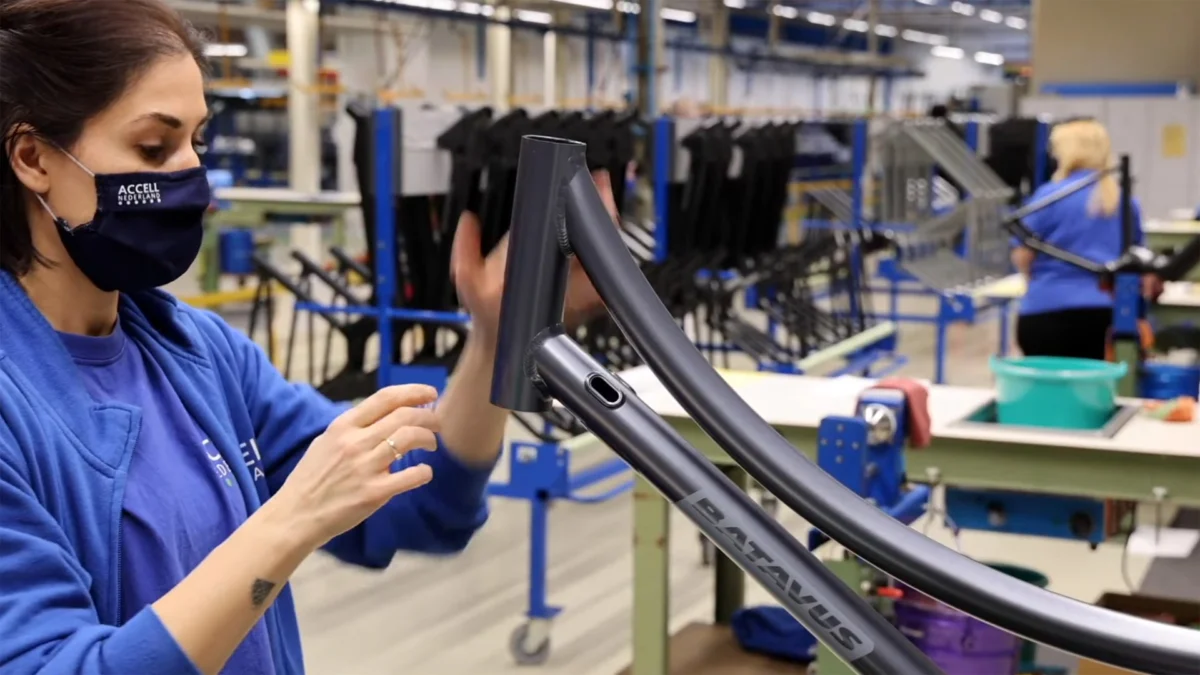
The electric mobility sector experienced a whirlwind week marked by significant corporate challenges, a high-profile user error that underscored public misconceptions, crucial developments in renewable energy storage, and a striking policy reversal concerning advanced autonomous driving technology. Five pivotal stories dominated headlines, reflecting the dynamic and often volatile landscape of electric vehicles, bicycles, and sustainable energy solutions. These events collectively highlight the rapid evolution, inherent complexities, and burgeoning mainstream impact of these interconnected industries.
The Collapse of Accell Group: A European Cycling Giant’s Downfall Sends Shockwaves
The European cycling industry was rocked by the declaration of bankruptcy for Accell Group, once the continent’s largest bicycle manufacturer. On August 11, 2026, the Amsterdam District Court formally initiated insolvency proceedings against the company, a move that extinguished a portfolio of historic and well-regarded brands including Batavus, Sparta, Koga, and the French marque Lapierre. The immediate human cost was significant, with 340 employees facing redundancy as the company’s operations ceased.
Background and Industry Context: Accell Group’s demise is a stark illustration of the severe market corrections impacting the cycling industry post-pandemic. Following an unprecedented boom in bicycle sales, particularly electric bikes, during the initial phases of the COVID-19 pandemic, many manufacturers, including Accell, significantly ramped up production and inventory. This strategic decision, made amidst supply chain disruptions and surging demand, proved unsustainable as consumer spending habits normalized, inflation bit into disposable incomes, and economic uncertainties mounted. The market quickly shifted from a seller’s paradise to one of oversupply, leaving companies with bloated inventories and declining sales. Accell, with its extensive network and production capabilities, was particularly vulnerable to this downturn. Analysts suggest that while the initial pandemic surge presented a unique opportunity, it also masked underlying vulnerabilities in some business models, leading to aggressive expansion that couldn’t be maintained in a more challenging economic climate. The company had reportedly struggled with profitability in the preceding quarters, exacerbated by increased operational costs and fierce competition.
The Auction Process: The immediate aftermath of the bankruptcy saw the Dutch platform Auctivo tasked with liquidating Accell’s assets. The first tangible step in this process was an auction of the entire stock from Accell’s "experience center" in Ede, Netherlands. This sale included not only the bicycles showcased in the showroom—ranging from high-end electric models to classic city bikes—but also the complete furnishings of the meeting rooms and offices. This widespread asset liquidation points to the comprehensive nature of the company’s financial distress, affecting every aspect of its former operations. The auction, open to the public, presented a grim final chapter for a company that had once symbolized European leadership in cycling innovation and manufacturing.
Broader Implications: The failure of a market leader like Accell Group has far-reaching consequences for the European cycling sector. It signals a period of consolidation and rationalization, where smaller, more agile players might emerge, or larger entities might acquire distressed assets. The loss of established brands, particularly Lapierre, a significant name in French cycling, represents a blow to national manufacturing heritage and expertise. Furthermore, the 340 job losses underscore the human element of corporate failures, impacting local economies and skilled workforces that had contributed to the industry for years. This event serves as a cautionary tale for other manufacturers in the electric mobility space, highlighting the imperative for adaptable business strategies and prudent inventory management in rapidly shifting market conditions.
CactUs Lock’s Entrepreneurial Woe: A "Cadaver Scent" Anti-Theft Device Faces Judicial Redress After TV Appearance Backfires
Innovation in electric mobility extends beyond vehicles to crucial accessories, yet even groundbreaking ideas can falter under the pressures of market perception and media exposure. This was the harsh reality for CactUs Lock, a French startup that developed an anti-theft bicycle device designed to emit a repulsive "cadaver smell" when tampered with. Conceived by Lyon-based chemical engineer Aïko Leroux, the product aimed to deter thieves through an unconventional, yet highly effective, sensory assault.
The Product and Initial Success: The CactUs Lock concept garnered considerable attention for its novelty and the ingenuity of its inventor. The idea was simple but audacious: if a thief attempted to cut the lock, a capsule would break, releasing a potent, putrid odor mimicking decaying flesh, making the bicycle instantly undesirable and traceable. This innovative approach resonated with consumers fed up with conventional, easily defeated locks. Within its first year, CactUs Lock had achieved over 1,000 sales, a commendable feat for a niche product from a nascent company, indicating a strong market appetite for effective bicycle security solutions.
The Television Gamble: Seeking to scale operations and attract investment, CactUs Lock participated in "Qui veut être mon associé?" (the French equivalent of "Shark Tank"). This appearance was intended to be a launchpad, generating massive public awareness and, ideally, securing crucial funding or a significant sales surge. In anticipation of a post-broadcast rush, the company had reportedly built up a substantial inventory. However, the outcome was disastrous. Instead of a surge in interest, the television segment generated virtually no traffic, and the company found itself in a precarious position.
Judicial Redress and Founder’s Reflection: On July 29, 2026, the Commercial Court of Romans opened judicial redress proceedings for CactUs Lock. Aïko Leroux, the founder, attributed this catastrophic turn directly to the television appearance. "The aftermath of ‘Qui veut être mon associé’ was tragic for us," she stated, adding, "They thought we were a scam." This powerful statement reveals a critical failure in public perception. It appears the unique, almost grotesque, nature of the "cadaver smell" deterrent, perhaps combined with the dramatic presentation on television, led viewers to question the product’s legitimacy rather than embrace its innovation. The perceived absurdity or even the ethics of using such a deterrent might have overshadowed its practical utility, leading to a loss of trust rather than an increase in sales.
Analysis and Implications: CactUs Lock’s predicament offers a stark lesson in the double-edged sword of media exposure for startups. While reality television can provide invaluable publicity, it also carries the risk of misinterpretation, particularly for unconventional products. For CactUs Lock, the failure to translate media attention into sales, compounded by a substantial pre-emptive inventory, created an unsustainable financial burden. This incident highlights the challenges faced by innovative small businesses in communicating their value proposition effectively to a broad audience and managing expectations around marketing efforts. It also underscores the importance of public relations strategies that anticipate potential negative reactions, especially when dealing with products that push boundaries. The founder’s quote suggests a breakdown in trust, a critical factor for any consumer-facing business, regardless of the ingenuity of its product.
Navigating the Electric Highway: François Lenglet’s Charging Misconception and Broader EV Adoption Challenges
The transition to electric vehicles (EVs) is often fraught with misconceptions, particularly regarding charging habits and battery longevity. This was vividly illustrated by the recent experience of prominent economic columnist François Lenglet, who recounted his challenging 700-kilometer journey to Mont Ventoux in an EV on RTL radio. His narrative, portraying the trip as a "calvary" due to a 55-minute queue at a saturated charging station, resonated with many, yet also exposed a common misunderstanding that often plagues new EV owners.
The Misadventure and Its Core Issue: Lenglet’s account highlighted genuine frustrations associated with current EV infrastructure, particularly during peak travel periods. Long wait times at charging stations are a legitimate concern that infrastructure providers and policymakers are striving to address. However, a significant part of his distress, and a common pitfall for new EV drivers, stemmed from an adherence to the widely propagated, but often misapplied, "80% rule" for battery charging. Lenglet, like many, believed that charging beyond 80% capacity would significantly degrade his vehicle’s battery and should be avoided at all costs.
Debunking the 80% Charging Myth: The conventional wisdom regarding the 80% rule requires crucial nuance. For lithium-ion batteries, specifically the Lithium Nickel Manganese Cobalt (NMC) and Lithium Nickel Cobalt Aluminum Oxide (NCA) chemistries commonly found in EVs, frequent charging to 100% can indeed accelerate degradation if the vehicle is then left parked at 100% State of Charge (SoC) for extended periods (several days). This is because high voltage states put stress on the battery cells. However, for long-distance travel, departing with a full 100% charge is not only permissible but often advisable. The primary concern is not reaching 100% for a road trip, but avoiding prolonged storage at 100%. Modern Battery Management Systems (BMS) are sophisticated enough to manage the charging process, slowing down significantly after 80% to protect the battery, and allowing for occasional full charges without undue harm. For daily commuting, setting a charge limit to 80-90% is a good practice for battery longevity, but this rule should be overridden for extended journeys to maximize range.
Broader Context and Implications: Lenglet’s experience underscores several critical aspects of the EV transition:
- Infrastructure Gaps: The reality of saturated charging networks, particularly in popular travel corridors or during holiday periods, remains a significant hurdle for EV adoption. While the number of charging points is growing, their reliability and density, especially fast chargers, need to keep pace with the exponential increase in EV sales.
- User Education: There is a pressing need for better public education on EV best practices, particularly concerning charging. Misinformation or oversimplified advice can lead to unnecessary range anxiety and frustrating experiences, ultimately deterring potential buyers. Dealerships, manufacturers, and media outlets have a crucial role to play in providing accurate and practical guidance.
- Public Perception: High-profile anecdotes, especially from influential figures like Lenglet, can heavily influence public perception. While his account accurately reflected some infrastructure challenges, the underlying misconception about charging strategy risks amplifying negative sentiment towards EVs, potentially slowing the transition.
The incident highlights that while technological advancements in EVs are rapid, the human element—understanding, adapting, and trusting the new technology—is equally critical for widespread success. Addressing both infrastructure limitations and knowledge gaps is paramount to ensuring a smooth and successful electric mobility future.
The Shifting Economics of Solar: IMTEST’s Battery Comparison Reveals Capacity Gaps Amidst Policy Changes
As the drive towards energy independence and sustainability accelerates, solar energy storage solutions are gaining unprecedented traction. However, a recent comprehensive test by the German magazine IMTEST has shed light on critical disparities between advertised and real-world performance of solar batteries, a revelation that comes at a pivotal moment given significant shifts in energy policy.
IMTEST’s Rigorous Comparison: IMTEST conducted an extensive comparison of 16 solar storage batteries, ranging in capacity from 1 kWh to 5 kWh. The findings highlighted a consistent and sometimes substantial gap between the manufacturers’ stated capacity and the actual usable energy delivered. For instance, the top-performing battery in the test, while robust, delivered 4,851 Wh from an advertised 5,024 Wh – a 3.4% discrepancy. More concerning was the Hoymiles HiBattery 4020X, which, despite offering the best value for money, exhibited a significant 14.7% deviation between its nominal and usable capacity. The Anker Solix Solarbank 4 Pro was notably among those that underperformed, underscoring the need for careful consumer due diligence. Brands like EcoFlow, Zendure, Marstek, and Bluetti were also part of the rigorous evaluation, providing a broad overview of the market.
The Economic Imperative for Storage: This detailed analysis of battery performance takes on heightened importance following a critical policy change by EDF, France’s dominant electricity provider. Since June 2026, EDF has drastically reduced the buyback rate for surplus solar energy, plummeting from 13 cents per kilowatthour to a mere 1.1 cent. This drastic reduction fundamentally alters the economic calculus for solar panel owners. Previously, selling excess energy back to the grid was a relatively lucrative proposition, offsetting installation costs and generating passive income. Now, with the buyback rate at a fraction of its former value, the incentive to export surplus energy has virtually evaporated.
Implications for Consumers and the Market: The shift in EDF’s policy makes storing self-generated solar energy far more financially attractive than selling it. Consumers are now strongly incentivized to invest in home battery storage systems to maximize their self-consumption, using stored energy during peak demand hours or when solar production is low. This not only enhances energy independence but also hedges against rising electricity prices.
Broader Impact:
- Consumer Behavior Shift: Expect a significant surge in demand for residential battery storage solutions. Consumers will prioritize systems that offer high usable capacity and reliability, as highlighted by the IMTEST test.
- Market Competition and Transparency: The findings from IMTEST put pressure on manufacturers to be more transparent about the real-world performance of their batteries. Discrepancies between advertised and actual capacity could become a key differentiating factor in a competitive market.
- Regulatory Scrutiny: The dramatic change in buyback rates by EDF, while potentially designed to manage grid stability or incentivize storage, could also prompt scrutiny regarding its impact on renewable energy investment.
- Technological Advancement: The increased demand for storage will likely spur further innovation in battery technology, leading to more efficient, cost-effective, and higher-capacity solutions.
In this evolving energy landscape, informed consumer choices, guided by independent testing and clear understanding of policy incentives, will be crucial for maximizing the benefits of solar power.
Tesla’s FSD in France: From Rejection to Reconsideration After "Tweet Diplomacy"
The highly anticipated rollout of Tesla’s Full Self-Driving (FSD) beta in France has been a saga of regulatory hurdles and diplomatic maneuvering, culminating in a striking policy reversal. The journey of FSD from initial rejection to reconsideration highlights the complex interplay between technological innovation, governmental oversight, and the unique influence of figures like Elon Musk.
Initial Rejection and Safety Concerns: On July 22, France’s Minister of Transport, Philippe Tabarot, delivered a clear and firm rejection of FSD homologation. His reasoning was explicit: "the safety counterparts are not yet sufficient." This stance reflected a cautious approach from French authorities, prioritizing public safety over the rapid deployment of advanced autonomous driving features. The minister’s statement underscored concerns prevalent among many regulators globally regarding the readiness and robustness of Level 2 autonomous systems, which, despite their sophisticated capabilities, still require full driver attention and responsibility. FSD, even in its latest iterations, remains classified as a Level 2 system, meaning the driver is ultimately responsible for monitoring the environment and intervening when necessary, a fact often overlooked or misunderstood by the public.
The "Constructive Exchange" and Policy U-Turn: Just weeks after his unequivocal rejection, Minister Tabarot made a dramatic shift in his position. In a post on X (formerly Twitter), he publicly thanked Elon Musk for a "constructive exchange" and, astonishingly, signaled his support for FSD homologation. This abrupt reversal, seemingly triggered by a direct dialogue with Tesla’s CEO, quickly became dubbed "tweet diplomacy." The details of the "constructive exchange" were not immediately disclosed, but the outcome was undeniable: a softening of France’s regulatory stance.
International Context and Regulatory Challenges: France’s initial caution was not an outlier. While countries like the Netherlands had already approved FSD in the spring, regulatory bodies across Europe and globally grapple with standardizing the approval process for autonomous driving technologies. The challenge lies in balancing the potential benefits of these systems—such as improved safety through reduced human error and enhanced traffic flow—with ensuring that the technology is genuinely safe and that drivers fully understand its limitations and their continuing responsibilities. The "Level 2" classification is particularly complex, as it sits at an ambiguous point where advanced assistance can feel like full autonomy, but legal responsibility remains with the human driver.
Analysis of "Tweet Diplomacy" and Its Implications:
- Influence of Tech Titans: The FSD reversal vividly demonstrates the significant influence that powerful tech leaders, particularly Elon Musk, can exert on national policy through direct engagement. This "tweet diplomacy" bypasses traditional bureaucratic channels, raising questions about transparency and due process in regulatory decisions.
- Economic vs. Safety Priorities: The shift suggests a potential recalibration of priorities, where the economic benefits of fostering innovation and attracting investment (from companies like Tesla) might be weighed against initial safety concerns. Governments are often keen to position their countries as leaders in technological adoption, and a refusal to homologate FSD could be seen as hindering progress.
- Regulatory Harmonization: The disparate approaches to FSD homologation across Europe highlight the ongoing need for greater harmonization of regulations for autonomous driving technologies. A unified framework would provide clarity for manufacturers and consumers alike, facilitating safer and more consistent deployment.
- Public Trust and Education: The rapid change in stance could potentially erode public trust in regulatory bodies if the reasoning behind such shifts is not clearly and transparently communicated. Furthermore, the deployment of FSD requires robust public education campaigns to ensure drivers fully grasp the capabilities and limitations of Level 2 autonomy and their enduring responsibilities.
The FSD saga in France underscores the ongoing tension between rapid technological advancement and cautious regulatory oversight, further complicated by the unique dynamics of modern corporate diplomacy.
A Dynamic Landscape for Electric Mobility and Sustainable Technologies
The past week has been a microcosm of the broader trends shaping the electric mobility and sustainable energy sectors. From the stark realities of corporate failure in the cycling industry to the nuanced challenges of EV adoption and the shifting economics of solar power, the landscape is one of continuous change and often unpredictable developments. The political machinations surrounding Tesla’s FSD further illustrate the profound impact that technology leaders and their innovations can have on national policy and public discourse. These events collectively emphasize the critical need for robust infrastructure, clear regulatory frameworks, ongoing consumer education, and adaptable business strategies as the world continues its accelerating transition towards a more electrified and sustainable future. The narrative is not just about technological progress, but about the human, economic, and political dimensions that define its integration into society.