Sonny Valindra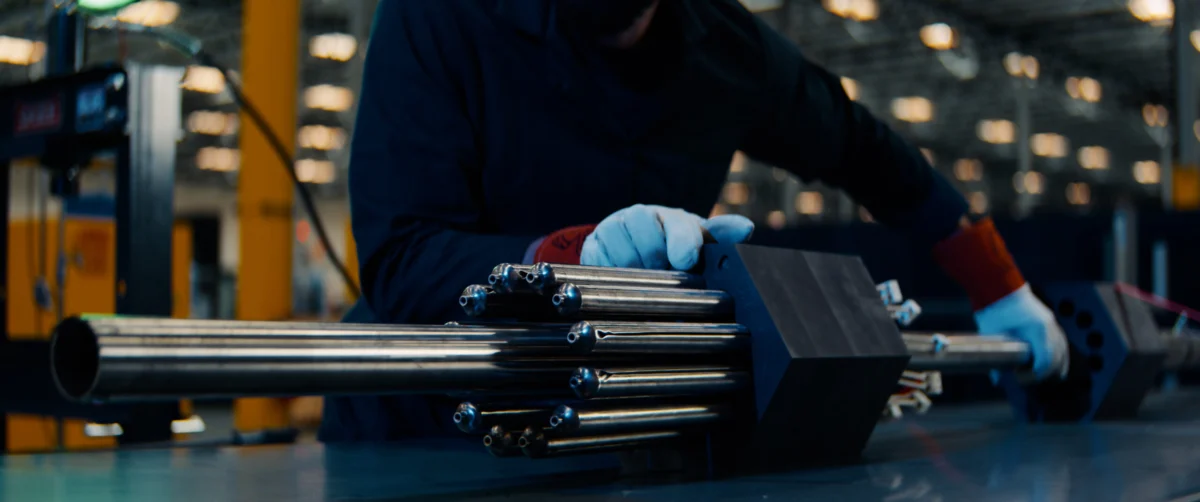
Antares Nuclear, a burgeoning player in the advanced nuclear energy sector, announced on Monday the successful closure of a substantial $470 million funding round, earmarked for the development and deployment of small modular reactors (SMRs) specifically designed for United States military installations. This significant capital infusion, comprising $370 million in equity and $100 million in debt, underscores a powerful surge of investor confidence in the future of nuclear power, particularly within the context of escalating global energy demands and the burgeoning needs of the artificial intelligence sector.
The Series C funding round was spearheaded by prominent investment firms Paradigm and Caffeinated Capital, with crucial participation from Industrious Ventures, Point72 Ventures, and Shine Capital. This diverse group of investors signals a broad recognition of the strategic importance and economic potential of advanced nuclear technologies. The investment arrives at a critical juncture for the energy landscape, where traditional power sources are increasingly scrutinized for their environmental impact and capacity limitations, while the demand for reliable, high-density power solutions continues to grow exponentially.
The Antares SMR: A Scalable and Safe Nuclear Solution
At the heart of Antares Nuclear’s ambitious plan is its proprietary small modular reactor design. The company has been diligently developing an SMR capable of generating between 100 kilowatts and 1 megawatt of electrical output. This capacity is significant, with 1 megawatt being sufficient to power approximately 750 average American homes, offering a substantial and consistent energy supply.
A key technological differentiator for Antares, and indeed for many leading advanced nuclear startups, is its utilization of TRISO fuel. This robust fuel form consists of uranium particles meticulously encapsulated within multiple layers of carbon and ceramic shells. TRISO fuel has long been recognized within the nuclear community for its inherent safety features, offering a compelling alternative to traditional uranium fuel assemblies. The billiard ball-sized spheres of TRISO fuel are engineered to withstand extreme temperatures, a crucial characteristic for advanced reactor designs. These fuel particles can be cooled by inert gases such as helium or by molten salts, and their multi-layered coating is designed to prevent the fuel from melting even under typical high-temperature reactor operating conditions, significantly enhancing safety margins.
A Milestone Achieved at Idaho National Laboratory
The technological advancements and safety protocols of Antares’ SMR have been put to the test in real-world conditions. On June 4th, the company’s demonstration reactor, designated as the Mark-0, achieved criticality at the esteemed Idaho National Laboratory. This pivotal moment signifies that the reactor successfully sustained a controlled nuclear chain reaction, a fundamental step in proving the operational viability of the technology. The achievement of criticality is a testament to the meticulous design, engineering, and rigorous testing undertaken by the Antares team and their partners at the national laboratory. The Department of Energy has been actively supporting such advancements, recognizing the strategic imperative of developing next-generation nuclear power capabilities.
Strategic Positioning for Military Deployment
The substantial funding and technological milestones place Antares Nuclear in a strong position to pursue its primary objective: powering U.S. military bases. The company is one of three finalists selected for the Pentagon’s "Advanced Nuclear Power for Installations" program. This initiative, spearheaded by the Department of the Air Force, aims to explore and implement SMRs to provide secure, resilient, and carbon-free energy for critical military infrastructure. The program plans to conduct pilot tests of SMRs at Air Force bases located in Colorado and Montana, evaluating their performance, safety, and integration capabilities.
Antares has set an aggressive timeline, with the company aiming to bring its first electricity-producing reactor online by next year. Following this initial operational deployment, the company anticipates beginning broader deployments at U.S. military installations as early as 2028. This strategic focus on military contracts is particularly astute, as government entities, especially defense departments, often prioritize energy security, reliability, and advanced technological solutions, sometimes with a greater tolerance for upfront costs compared to the commercial market.
The Broader Resurgence of Nuclear Investment
Antares’ impressive funding round is not an isolated event but rather a significant indicator of a broader trend: the revitalized interest and investment in nuclear power, particularly fission technologies. This resurgence is largely driven by several converging factors. The insatiable demand for electricity generated by the proliferation of artificial intelligence and the construction of massive data centers is a primary catalyst. These facilities require enormous amounts of stable and consistent power, a role that nuclear energy is uniquely positioned to fulfill. Furthermore, the global push towards decarbonization and electrification of various sectors of the economy is creating a sustained demand for clean, reliable energy sources.
In April, X-energy, another prominent advanced nuclear startup, successfully raised $1 billion through an Initial Public Offering (IPO), further validating the market’s enthusiasm for nuclear technologies. This follows a string of significant funding rounds for other SMR developers. Radiant Energy secured $300 million for its compact 1 MW reactor, Standard Nuclear raised $140 million, and Last Energy garnered $100 million for its steel-encased micro-reactor. These figures, all raised since December, paint a picture of a booming sector attracting substantial capital.
Antares itself has a recent history of successful fundraising. In December, the company closed a $96 million Series B round, also demonstrating significant investor backing for its land, sea, and space-based nuclear power ambitions. Cumulatively, with the latest $470 million infusion, Antares has now raised approximately $604 million, according to an analysis of PitchBook data, positioning it as a well-capitalized entity in the competitive advanced nuclear landscape.
Navigating the Challenges of Commercialization
Despite the palpable investor excitement and the promising technological advancements, the path to widespread commercialization for advanced nuclear startups remains fraught with significant challenges. A primary hurdle is the underdeveloped state of the nuclear supply chain within the United States. Establishing robust and scalable manufacturing capabilities for SMR components, from specialized fuels to reactor vessels, requires substantial investment and time.
Many SMR startups champion the concept of mass manufacturing as a key strategy to drive down costs. The theory posits that by producing reactors in a factory setting, similar to how other industrial products are manufactured, significant economies of scale can be achieved, leading to substantially lower per-unit costs. However, realizing these benefits typically takes at least a decade, and to date, no SMR startup has successfully navigated this scaling process to achieve cost competitiveness.
The Economic Realities of SMR Deployment
The economic outlook for the first wave of SMRs entering service in the early 2030s suggests they may not be immediately cost-competitive with many conventional new power plants. Lazard, a financial advisory firm renowned for its comprehensive analysis of energy costs, projects that new SMRs will likely have a Levelized Cost of Energy (LCOE) of approximately $214 per megawatt-hour. At this price point, SMRs would be more expensive than all but the most costly new natural gas turbine power plants.
While Antares Nuclear has not publicly disclosed its specific pricing strategy for its SMRs, the current market realities and cost projections make the company’s strategic decision to prioritize contracts with the U.S. military understandable. The defense sector, often characterized by its mission-critical requirements and a higher tolerance for technological investment, represents a more accessible entry point for nascent nuclear technologies than the highly price-sensitive commercial power market. This approach allows Antares to gain operational experience, refine its technology, and build a track record of reliable performance, which can then be leveraged for broader commercial applications in the future. The successful deployment of SMRs on military bases could serve as a powerful demonstration of their viability and reliability, paving the way for wider adoption across civilian infrastructure as costs decrease and supply chains mature.