Vera Intan Clara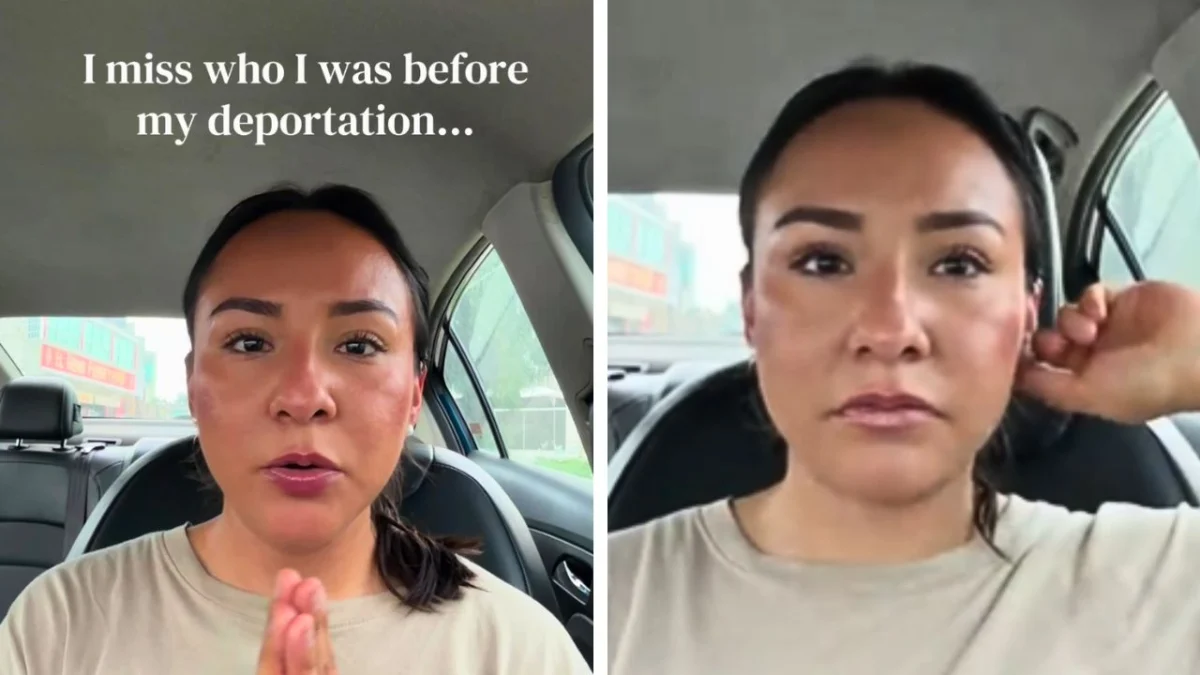
In a poignant TikTok post shared on June 19, Giovanna Hernandez offered a raw and deeply personal account of her experience with deportation, revealing that its consequences extend far beyond the physical act of leaving the United States. Her narrative, which quickly resonated with a broad online audience, articulated a profound sense of loss, not merely of a physical home or community, but of the very person she once was. Hernandez described the harrowing emotional fallout stemming from what she characterized as forced separation, prolonged immigration detention, severe culture shock, and debilitating social isolation. Her testimony underscores the complex and often invisible psychological toll exacted by such an upheaval, highlighting a human cost frequently overlooked in broader discussions of immigration policy.
The Intangible Losses: A Shattered Identity
Hernandez’s account meticulously details the concrete losses she has endured: the absence of her family and friends, the familiarity of her former home, her personal room, and even the companionship of her dog. These tangible elements represent the bedrock of a life abruptly severed. However, her struggle goes deeper, touching upon a fundamental shift in her self-perception. "I’ll look at pictures from before," she confessed in her video, "and I just know that I’m…a completely different person…I don’t recognize [myself]." This sentiment encapsulates the core of her pain: the erosion of identity, a feeling common among individuals subjected to the sudden, comprehensive disruption that deportation entails.
The experience of deportation, by its very nature, often results in the instantaneous loss of one’s home, established community, daily routine, and intricate web of relationships. This multifaceted deprivation can mirror the emotional landscape of grief, a mourning for a life that was, while simultaneously demanding an immediate and often overwhelming adjustment to an entirely new and unfamiliar reality. Hernandez’s journey back to a place she had not seen in 17 years — a place that was once home but now feels foreign — exemplifies this dual challenge. Initially, she grappled with the daunting prospect of building a new life from scratch, entirely by herself. Over time, however, she has begun to forge new routines and acclimate to living with family members she last knew as a child, a testament to her nascent resilience amidst profound adversity.
The Unseen Wounds: Psychological Impact Beyond Borders
The psychological ramifications of deportation are not confined to the moment a person is physically removed from a country. Experts in mental health and migration studies consistently highlight that the process itself is inherently traumatic. It frequently involves prolonged periods of detention, often in challenging conditions, which can lead to significant psychological distress, including anxiety, depression, and post-traumatic stress disorder (PTSD). The pervasive uncertainty surrounding legal proceedings, the constant threat of family separation, and the abrupt, often violent, disruption of daily routines contribute to a cumulative trauma that can have lasting effects on an individual’s mental well-being.
Studies by organizations like the American Psychological Association and various human rights groups have documented the severe mental health consequences for individuals facing or undergoing deportation. Children, in particular, suffer immensely from family separation, often exhibiting symptoms of trauma, attachment disorders, and academic difficulties. For adults, the experience can trigger existential crises, identity confusion, and a pervasive sense of helplessness. Even for those who return to their country of birth or a place where they previously lived, the sense of displacement can be profound. The environment may have changed drastically, or the individual themselves may have been fundamentally altered by their time abroad and the deportation process, rendering the familiar unfamiliar and making genuine reintegration exceptionally difficult. This phenomenon is often described as "ambiguous loss," where the person is physically present but the life, identity, and connections they once had are irrevocably gone.
A Systemic Overview: The Mechanics of U.S. Deportation
To understand the context of experiences like Hernandez’s, it is crucial to briefly outline the U.S. immigration enforcement framework. Deportation, or "removal" as it is formally known, is the legal process by which the U.S. government orders a non-citizen to leave the country. This authority is primarily exercised by U.S. Immigration and Customs Enforcement (ICE), specifically its Enforcement and Removal Operations (ERO) division.
Deportation grounds are numerous and codified under the Immigration and Nationality Act (INA). They include entering the U.S. without inspection, overstaying a visa, certain criminal convictions (even minor ones or those committed decades ago), and violations of immigration status. Key legislative changes, such as the Illegal Immigration Reform and Immigrant Responsibility Act (IIRIRA) of 1996, significantly expanded the categories of deportable offenses and limited avenues for relief, leading to a substantial increase in deportations, particularly of long-term residents with minor criminal records or those with deep ties to U.S. communities.
The typical chronology of a deportation case often begins with an arrest, sometimes for a minor offense that triggers an immigration hold. This is followed by a period of detention, which can last months or even years, during which individuals navigate complex immigration court proceedings. Unlike criminal courts, immigration courts do not guarantee legal representation, leaving many vulnerable individuals to defend themselves against experienced government attorneys. If an order of removal is issued and all appeals are exhausted, the individual is physically transported out of the country. This process is often swift and allows little time for emotional or practical preparation, exacerbating the trauma of separation and displacement.
Statistical Realities: The Scale of Deportation
The human stories like Giovanna Hernandez’s are part of a much larger statistical landscape. According to official data from ICE, the United States has deported millions of individuals over the past two decades. For instance, during the Obama administration (2009-2016), over 2.5 million people were deported, earning it the moniker "deporter-in-chief." While deportation numbers fluctuated under subsequent administrations, the machinery of removal has remained robust. In fiscal year 2023 alone, ICE reported 142,580 administrative arrests and 142,862 removals. Many of these individuals had lived in the U.S. for extended periods, contributing to communities, raising families, and establishing lives, only to be uprooted.
A significant proportion of deportees are individuals who have lived in the U.S. for decades, having arrived as children or young adults. These "long-term residents" often have limited or no connection to their country of origin, having integrated fully into American society. The statistic that Hernandez had not been to her current place of residence in 17 years is not an anomaly; it reflects a common reality where individuals are sent to countries that are culturally, linguistically, and socially alien to them, despite being their place of birth. This creates an urgent need for complex reintegration processes that are rarely adequately supported by either the sending or receiving nations.
The Echo Chamber of Shared Grief: Digital Solidarity
Hernandez’s TikTok post became a powerful platform for others to voice similar experiences, creating an impromptu digital support group. The comments section of her video quickly filled with messages of empathy and solidarity, with many users directly referencing their own experiences as ones of profound grief. One commenter shared their story of having lived in the United States for 22 years before being returned to Mexico, articulating a poignant sentiment of "mourning for our old life." Another recounted 21 years spent in the U.S. before deportation, struggling intensely with the separation from their children and husband. These shared narratives underscore the universality of the emotional pain associated with forced migration and displacement, irrespective of the specific circumstances.
The collective response on TikTok not only validated Hernandez’s feelings but also highlighted a widespread, often unacknowledged, phenomenon of psychological distress among deportees and their families. While some commenters echoed the sentiments of loss and identity confusion, others offered messages of encouragement, urging Hernandez to grant herself the necessary time to heal and eventually feel at home again, recognizing that such a process is protracted and deeply personal. This online community serves as a vital, albeit informal, resource for individuals grappling with these complex emotions, providing a space where their grief is recognized and their experiences are understood.
Cultivating Resilience: A Path Forward Amidst Pain
Despite the immense pain and challenges, Hernandez’s narrative is also one of burgeoning resilience. She acknowledged that the experience has unearthed strengths she was previously unaware she possessed. She has grown more resilient, more patient, and has embarked on the arduous journey of learning how to rebuild her life from the ground up. However, she emphasized that this newfound strength does not necessitate ignoring the inherent pain of her situation. She openly shared that she still experiences days of frustration, even when the exact cause remains elusive. This honest portrayal of her emotional landscape resonates deeply, as it reflects the non-linear nature of healing and adaptation after trauma. She reported feeling significantly better than in the initial months following her deportation, indicating a gradual, if sometimes uneven, progression towards stability.
In her video, Hernandez also spoke about establishing daily routines and "grounding practices" as crucial mechanisms to help her continue moving forward. These practices, often recommended by mental health professionals for individuals experiencing trauma or significant life changes, can provide a sense of structure, predictability, and control in an otherwise chaotic environment. They are vital tools for fostering mental well-being and rebuilding a sense of normalcy in the face of extraordinary adversity.
Broader Implications and Advocacy
Giovanna Hernandez’s story, while deeply personal, carries significant broader implications for policy discussions and public understanding of immigration. It serves as a stark reminder that immigration enforcement policies have profound human consequences that ripple through individuals, families, and communities. The call for more humane immigration policies often stems from an understanding of these impacts, advocating for alternatives to detention, greater access to legal counsel, and consideration of family ties and long-term residency in deportation decisions.
Immigration advocacy groups frequently highlight the need for comprehensive immigration reform that addresses not only border security but also the integration and well-being of immigrants and the human cost of removal. They argue that policies should consider the psychological and social costs of family separation and forced removal, especially for individuals who have spent the majority of their lives in the United States. Furthermore, there is a growing recognition of the need for support services, both in the U.S. for families left behind and in countries of origin for deportees, to facilitate psychological healing and social reintegration.
The discourse around deportation must move beyond mere statistics and legal frameworks to encompass the profound human stories at its core. Hernandez’s candid sharing on TikTok has contributed meaningfully to this shift, allowing a wider audience to glimpse the hidden scars and ongoing struggles of those navigating life after deportation. Her journey of loss, adaptation, and the discovery of inner strength illuminates the enduring spirit of individuals grappling with one of the most challenging experiences imaginable, calling for empathy, understanding, and a reevaluation of systems that often prioritize enforcement over human dignity.
The Daily Dot was unable to independently verify the details of Hernandez’s immigration experience. The details above reflect the account shared by @gioooh_ on TikTok.