admin
admin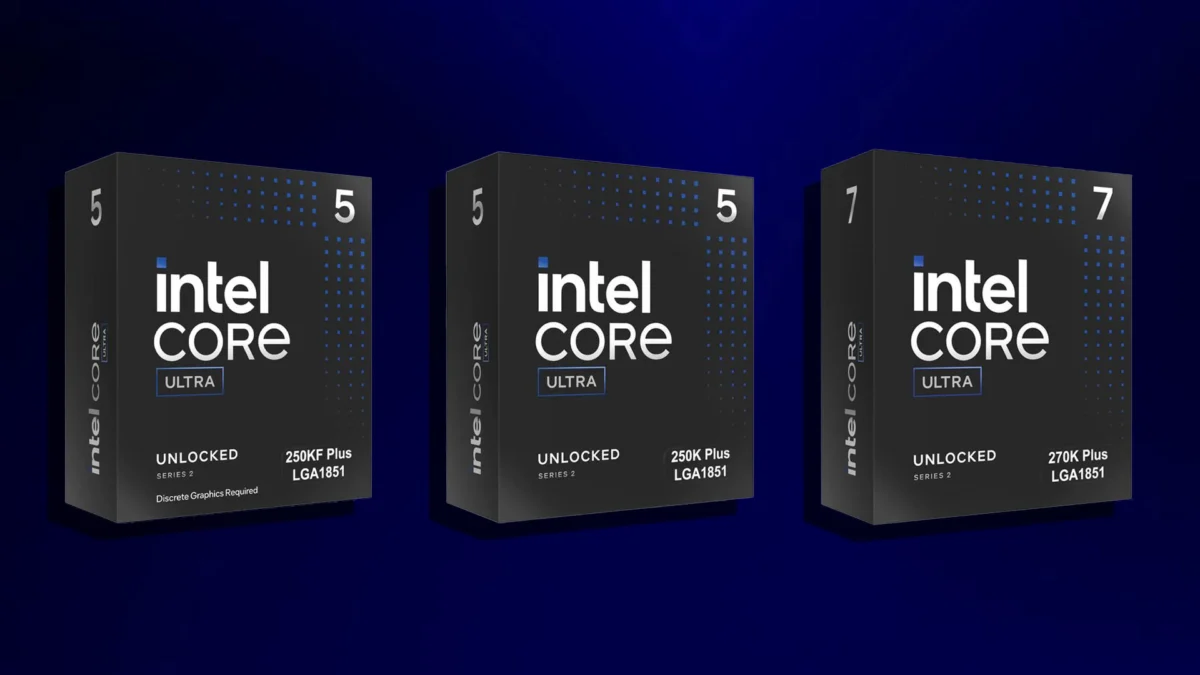
Intel has initiated an aggressive market strategy for its latest Core Ultra 200S "Arrow Lake" desktop processor lineup, partnering with major retailers like Newegg to offer significant value-added incentives that challenge AMD’s current dominance in the desktop CPU sector. While AMD has maintained a strong hold on the enthusiast market with its Ryzen 9000 and 7000 series, Intel’s latest promotional campaign positions the Core Ultra series as a high-value alternative for builders looking to transition to the new LGA 1851 platform. The current promotion on Newegg features three distinct Core Ultra processor options, starting at a competitive $199.99, each accompanied by a complimentary 240mm All-In-One (AIO) liquid CPU cooler. For high-end consumers, the retailer is also offering a comprehensive bundle that includes a Z890 motherboard, resulting in total combined savings of approximately $160 when accounting for the hardware value and direct discounts.
The Core Ultra Promotional Landscape
The centerpiece of this retail initiative is the inclusion of a Cooler Master Elite Liquid 240 AI CPU cooler with every qualifying purchase. Valued at $79.99, this liquid cooling solution features a dual-fan configuration and ARGB lighting, designed specifically to manage the thermal output of Intel’s latest architecture. By bundling a high-performance cooler at no additional cost, Intel and Newegg are effectively lowering the total cost of entry for the LGA 1851 platform, which requires not only a new processor but also a new motherboard and, in many cases, upgraded DDR5 memory.
The entry point for this deal is the Intel Core Ultra 5 250KF, priced at $199.99. This processor represents the "KF" variant, which omits integrated graphics, making it an ideal choice for gamers who intend to use a discrete GPU. Despite its positioning as an entry-level enthusiast chip, the 250KF features 18 cores—comprising six high-performance "Lion Cove" cores and 12 efficiency "Skymont" cores. The performance cores can boost up to 5.30 GHz, while the efficiency cores reach 4.60 GHz. The chip is further supported by 30MB of L3 cache and 30MB of L2 cache, providing a balanced architecture for both gaming and background task management.
For users requiring integrated graphics for troubleshooting or productivity tasks without a dedicated card, the Intel Core Ultra 5 250K is available for $219.99. Aside from the inclusion of the Intel Graphics engine, the specifications remain identical to the 250KF. Both options include the $79.99 Cooler Master AIO, bringing the effective price of the processors down to roughly $120 to $140 when the cooling hardware is factored out.
High-End Performance and Motherboard Integration
Scaling up the product stack, the Intel Core Ultra 7 270K is positioned for users demanding superior multi-threaded performance and higher clock speeds. Retailing for $330, the 270K features a 24-core configuration, consisting of eight performance cores and 16 efficiency cores. The performance cores on this model can reach a maximum turbo frequency of 5.50 GHz, while the efficiency cores top out at 4.70 GHz. The cache subsystem is also significantly expanded, offering 36MB of L3 cache and 40MB of L2 cache, which is critical for complex workloads such as video rendering, 3D modeling, and high-refresh-rate gaming.
The most substantial offer in this promotion involves a "Shell Shocker" bundle featuring the Core Ultra 7 270K and the GIGABYTE Z890 AORUS ELITE WIFI7 ICE motherboard. This bundle is priced at $499.99. When considering that the motherboard alone is a premium Z890 component featuring WiFi 7 support and advanced power delivery for the LGA 1851 socket, the $499.99 price point represents a direct $80 savings over purchasing the components separately. When the $79.99 Cooler Master AIO is added to the equation, the total value added exceeds $159. This specific bundle deal is time-sensitive, with Newegg indicating an expiration date of September 30, signaling a push to clear inventory or drive adoption ahead of the next fiscal quarter.
Background and Context: The Arrow Lake Architecture
The Core Ultra 200S series, codenamed Arrow Lake, marks a significant architectural shift for Intel. Moving away from the long-standing "Core i" branding, the "Core Ultra" designation reflects a move toward a disaggregated tile-based design, similar to the approach taken in the mobile Meteor Lake chips. Arrow Lake is manufactured using a combination of internal and external foundry nodes, specifically utilizing TSMC’s N3B process for the compute tile.
One of the primary goals of the Arrow Lake architecture is improved power efficiency. After several generations of increasing power consumption in the 13th and 14th Gen "Raptor Lake" series, Intel has focused on delivering comparable or better performance with significantly lower power draw. This shift makes the inclusion of a 240mm AIO cooler particularly effective, as the lower thermal density of Arrow Lake allows for more consistent boost clocks under sustained loads when paired with competent cooling solutions.
The transition to the LGA 1851 socket is another critical context for these deals. Unlike the previous LGA 1700 socket, which supported three generations of processors (12th, 13th, and 14th Gen), LGA 1851 is a fresh start. This transition typically creates a barrier to entry for consumers, as it necessitates a motherboard upgrade. By offering motherboard bundles and free cooling hardware, Intel is mitigating the "platform tax" that often hinders the adoption of new CPU generations.

Chronology of Recent Market Developments
The release of these deals follows a turbulent period for the desktop CPU market. In early 2024, Intel faced scrutiny regarding stability issues in its 13th and 14th Gen high-end processors. While microcode updates have since addressed these concerns, the brand has been under pressure to regain consumer confidence. The launch of the Core Ultra 200S series in late 2024 was seen as a "reset" for the company.
In August 2024, AMD launched its Ryzen 9000 "Zen 5" processors. While these chips offered improved efficiency, they were met with mixed reviews regarding their gaming performance gains over the previous Ryzen 7000 series. This opened a window of opportunity for Intel. By late September 2024, as retail availability of Arrow Lake stabilized, Newegg and other major retailers began implementing aggressive bundling strategies to capture the "back-to-school" and early holiday shopping demographics.
The September 30 deadline for the GIGABYTE bundle suggests that Intel is looking to bolster its Q3 financial reports with strong volume sales of its new platform. Historically, Intel has used such bundles to ensure that its newest chipsets (in this case, the Z890) gain a foothold in the installed base, ensuring future compatibility and brand loyalty.
Analysis of Implications for the PC Building Market
The aggressive pricing of the Core Ultra 5 250KF at $199.99, especially with a free liquid cooler, creates a new value floor for the mid-range gaming market. For many years, the $200–$300 range has been the most contested segment of the market. By effectively pricing a modern 18-core processor at nearly $120 (after subtracting the cooler value), Intel is putting immense pressure on AMD’s Ryzen 5 7600 and 9600X offerings.
Furthermore, the focus on the Z890 chipset in these bundles highlights the industry-wide move toward PCIe 5.0 and WiFi 7. The GIGABYTE Z890 AORUS ELITE WIFI7 ICE included in the bundle is a high-spec board that supports the latest NVMe SSDs and high-speed wireless networking. For consumers, this means that the $499 bundle isn’t just about the CPU; it’s about future-proofing the entire system architecture.
Industry analysts suggest that these promotions may also be a preemptive strike against AMD’s upcoming "X3D" variants of the Zen 5 architecture. AMD’s 3D V-Cache technology has traditionally given them a significant lead in gaming benchmarks. By locking consumers into the LGA 1851 platform now through high-value bundles, Intel reduces the pool of potential switchers when AMD eventually releases its gaming-focused flagships.
Technical Specifications Comparison
To understand the value of these offers, a closer look at the technical specifications is required. The Core Ultra 7 270K, with its 24-core layout, is designed to compete directly with the Ryzen 9 7900X and 9900X.
| Feature | Core Ultra 5 250K/KF | Core Ultra 7 270K |
|---|---|---|
| Total Cores | 18 (6P + 12E) | 24 (8P + 16E) |
| Max Turbo Boost | 5.30 GHz | 5.50 GHz |
| L3 Cache | 30 MB | 36 MB |
| L2 Cache | 30 MB | 40 MB |
| Socket | LGA 1851 | LGA 1851 |
| Included Cooler | Cooler Master 240mm AIO | Cooler Master 240mm AIO |
| Promotional Price | $199.99 – $219.99 | $330.00 |
The inclusion of the NPU (Neural Processing Unit) in the Arrow Lake architecture also marks the first time Intel has brought dedicated AI hardware to the desktop. While consumer-facing AI applications are still in their infancy, the presence of an NPU allows for more efficient handling of background AI tasks, such as noise cancellation in communication apps or AI-driven video effects, without taxing the primary CPU or GPU cores.
Conclusion and Market Outlook
The current Newegg promotion represents one of the most aggressive launch-window deals seen in the desktop CPU market in recent years. By combining price cuts with high-value hardware like AIO coolers and premium motherboards, Intel is addressing the primary criticisms of new platform launches: high entry costs and the need for expensive cooling.
As the September 30 deadline approaches, the success of this campaign will likely be measured by the adoption rate of the LGA 1851 platform. For builders who have been waiting on the sidelines during the transition from DDR4 to DDR5 or those looking to move away from older 10th or 11th Gen Intel systems, these bundles offer a logically sound and financially attractive path to modern computing. The broader impact will likely be a more competitive Q4, with AMD potentially forced to respond with its own price adjustments or bundling strategies to maintain its market share in the enthusiast segment.