Sisilia Frederika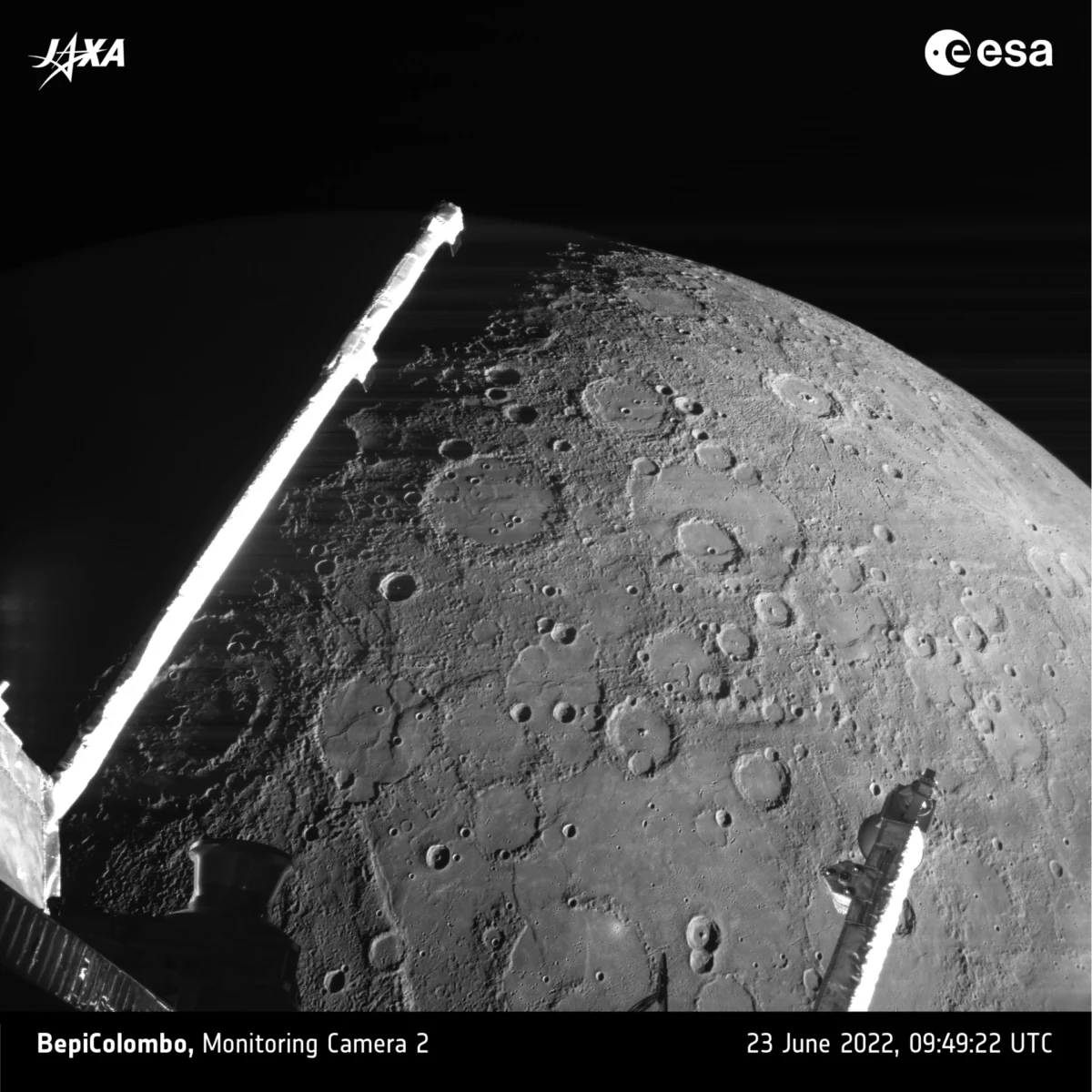
New scientific evidence suggests that Mercury, the smallest and innermost planet in our solar system, is undergoing a process of global contraction at a rate significantly more aggressive than previous models indicated. According to a comprehensive study led by researchers at the German Aerospace Center’s (DLR) Institute of Space Research, the planet has shrunk between 10% and 30% more than earlier estimates suggested. The findings, published in the journal Geophysical Research Letters, indicate that Mercury’s diameter may have decreased by as much as 23 kilometers (14.5 miles) since its formation approximately 4.5 billion years ago, a revelation that necessitates a re-evaluation of the planet’s geodynamic history and internal composition.
For decades, the consensus within the planetary science community was that Mercury’s diameter had contracted by roughly 4 to 16 kilometers (2.5 to 10 miles). However, by utilizing advanced mapping techniques and accounting for surface features previously obscured by billions of years of impact debris, the DLR team, led by planetary scientist Gaku Nishiyama, has presented a more volatile picture of the planet’s evolution. This discovery not only clarifies the thermal history of Mercury but also provides critical insights into the behavior of rocky planets orbiting in close proximity to their host stars.
The Mechanism of Global Contraction
Mercury is often described as a "one-plate" planet. Unlike Earth, which possesses a complex system of shifting tectonic plates that recycle the crust, Mercury’s outer shell consists of a single, continuous lithosphere. Because of this rigid structure, the planet lacks the subduction zones and mid-ocean ridges found on Earth. Instead, as the planet’s massive metallic core cools and contracts, the outer crust is forced to respond to the shrinking interior volume.
This process is analogous to a grape drying into a raisin; as the interior loses volume, the skin wrinkles and folds. On Mercury, these "wrinkles" manifest as massive tectonic features known as lobate scarps and wrinkle ridges. Lobate scarps are essentially giant cliffs, some hundreds of kilometers long and over a kilometer high, formed by thrust faults where one section of the crust is pushed up and over another. These shortening structures serve as the primary geological record of the planet’s contraction.
The DLR study posits that the previous underestimation of Mercury’s shrinkage stemmed from a "visibility bias." For billions of years, Mercury has been subjected to intense bombardment by asteroids and comets. This constant "impact gardening" has created a surface riddled with craters, depressions, and thick layers of ejecta (debris). This rough terrain effectively masked many of the smaller or more subtle shortening structures, leading scientists to believe the planet had contracted less than it actually had.
Methodology: Seeing Through the Debris
To overcome the limitations of previous geological surveys, Gaku Nishiyama and his colleagues pioneered a new approach that combined existing geological maps with high-resolution data regarding surface roughness. By analyzing the "roughness" of the terrain, the team was able to identify a statistical correlation: areas with high surface roughness—typically those saturated with impact craters—showed fewer visible tectonic wrinkles.
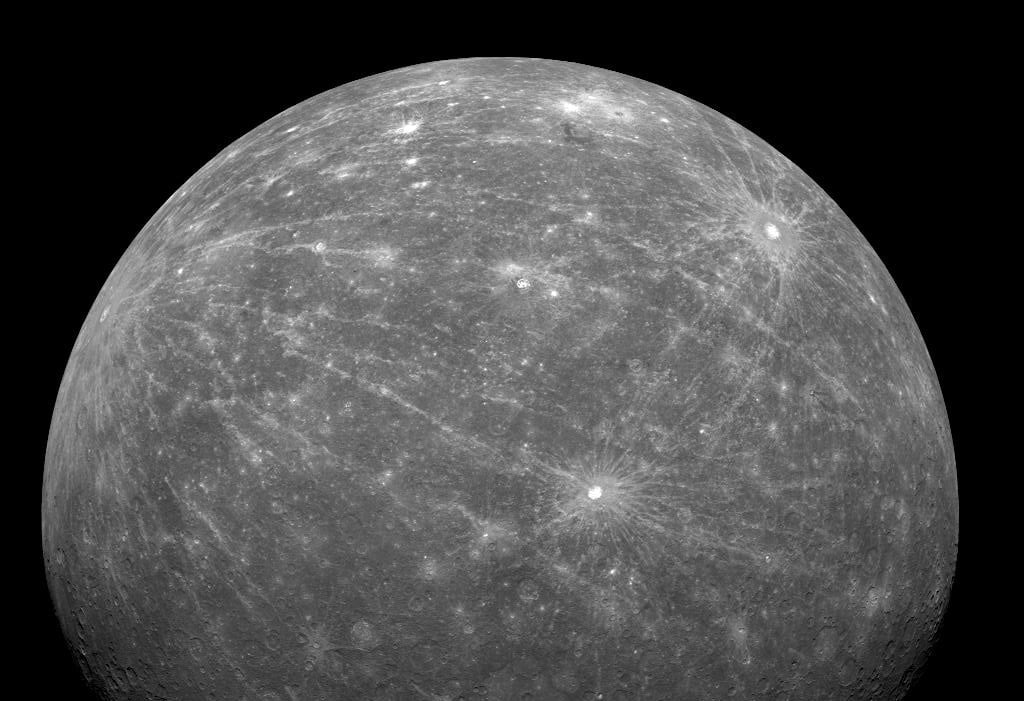
The researchers concluded that these wrinkles were not absent from these regions but were simply buried or degraded by the debris of impact events. By extrapolating the frequency and scale of contraction features found in smoother, younger volcanic plains to the more rugged regions of the planet, the team calculated a revised "global contraction budget."
The results showed that when the hidden features are accounted for, the total contraction is 10% to 30% higher than the 2014 estimates derived from NASA’s MESSENGER mission. This suggests that Mercury’s diameter has likely shrunk by 7.5 km to 23 km (4.75 to 14.5 mi) over its lifetime.
A Chronology of Exploration: From Mariner 10 to BepiColombo
Our understanding of Mercury’s shrinking nature has evolved through three primary phases of robotic exploration. Each mission has provided a new layer of data that has challenged existing paradigms.
- Mariner 10 (1974–1975): NASA’s Mariner 10 was the first spacecraft to visit Mercury, performing three flybys. It mapped approximately 45% of the surface and provided the first visual evidence of lobate scarps. These early images led scientists to first propose the theory of global contraction, though the limited coverage made it impossible to calculate a precise rate.
- MESSENGER (2011–2015): The MErcury Surface, Space ENvironment, GEochemistry, and Ranging (MESSENGER) mission was a turning point. It became the first spacecraft to orbit Mercury, providing 100% surface coverage. MESSENGER data allowed scientists to identify thousands of tectonic features and produced the estimate of 4 to 16 km of shrinkage. It also revealed that Mercury is still tectonically active today, as smaller, "pristine" scarps were found that likely formed within the last 50 million years.
- BepiColombo (Current): A joint mission between the European Space Agency (ESA) and the Japan Aerospace Exploration Agency (JAXA), BepiColombo is currently en route to Mercury. It has already performed several flybys and is scheduled to enter a permanent orbit in November 2026. This mission carries two orbiters equipped with high-resolution cameras and sensors that will be able to detect features much smaller than the 5-kilometer threshold of MESSENGER.
Implications for Internal Structure and Geochemistry
The revised shrinkage figures have profound implications for what lies beneath Mercury’s surface. Mercury is an anomaly among the rocky planets because its metallic core is disproportionately large, accounting for roughly 85% of the planet’s radius. For comparison, Earth’s core accounts for only about 50% of its radius.
A higher rate of contraction suggests several possibilities regarding the planet’s interior:
- Core Size and Density: A larger amount of shrinkage implies that the metallic core might be even larger than previously suspected, or that it is cooling and solidifying at a more rapid pace.
- Chemical Composition: The rate of cooling is influenced by the "light elements" mixed into the iron-nickel core, such as sulfur or silicon. More shrinkage could mean there are fewer of these light elements to insulate the core, allowing heat to escape more efficiently.
- Primordial Temperature: It is also possible that Mercury began its life at a much higher starting temperature than other terrestrial planets, leading to a more dramatic thermal collapse over the eons.
"More shrinking means Mercury could have a larger metal core, less light elements like silicon mixed into the metal core, or a higher starting temperature," Gaku Nishiyama noted in a statement following the release of the study. He added that while a 30% increase is surprising, the "corrected amount of contraction actually makes sense" when aligned with physical models of planetary cooling.
Analysis of Broader Planetary Evolution
The findings from the DLR team contribute to a growing field of "comparative planetology." By understanding why Mercury shrank so much more than Mars or the Moon, scientists can better predict the life cycles of exoplanets found in other star systems.

Mercury serves as a laboratory for studying "hot" rocky planets. Its proximity to the Sun means it is subjected to intense solar radiation and tidal forces. If the planet is shrinking faster than expected, it suggests that the thermal evolution of planets close to their stars is more dynamic than simple cooling models predict. This data is vital for astronomers using the James Webb Space Telescope to characterize the interiors of "Super-Mercuries" orbiting distant M-dwarf stars.
Furthermore, the study highlights the importance of "geological noise." The fact that impact debris could hide 30% of a planet’s tectonic history serves as a cautionary tale for planetary scientists. It suggests that on other cratered bodies, such as the Moon or the icy moons of Jupiter and Saturn, the visible geological record may only be a fraction of the true tectonic story.
Looking Ahead: The 2026 Milestone
The scientific community is now looking toward November 21, 2026, the date BepiColombo is set to begin its primary science mission in Mercury’s orbit. The DLR team’s findings have set a new baseline of expectations for this mission. BepiColombo’s instrumentation is designed to provide imaging resolution significantly superior to that of MESSENGER, which was limited to identifying features larger than 5 kilometers.
Nishiyama and his colleagues hope that BepiColombo will reveal a "hidden population" of even smaller contraction features. If these smaller scarps are found in the rough terrains as predicted, it would confirm the DLR team’s statistical models and provide a definitive map of Mercury’s shrinking crust.
As the BepiColombo mission nears its destination, the DLR study stands as a reminder that even the most well-mapped worlds in our solar system still hold secrets. The revelation that Mercury is shrinking faster than we thought suggests that the smallest planet is still one of the most geologically complex and mysterious objects in the Sun’s neighborhood. The coming years of data collection will likely rewrite the textbooks once again, offering a clearer window into the violent, cooling, and contracting history of the inner solar system.