Sonny Valindra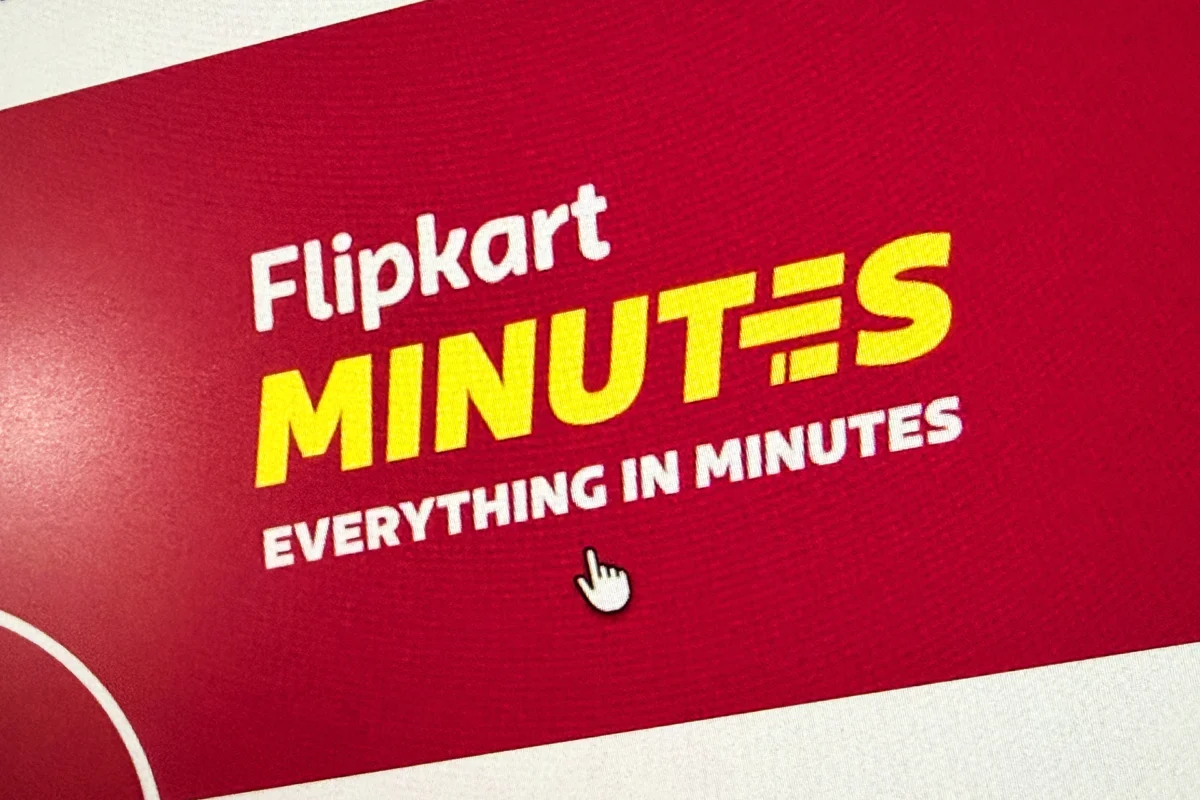
The burgeoning quick commerce market in India is experiencing an unprecedented surge in demand, with some key players witnessing their order volumes more than double. This accelerated growth, driven by e-commerce giants Flipkart and Amazon, is intensifying competition in an already crowded landscape, placing significant pressure on profitability for all involved. Flipkart, a titan in India’s e-commerce sector, has significantly ramped up its presence in the quick commerce arena, a segment where local rivals like Blinkit, Swiggy, and Zepto had established an earlier foothold. The company has reportedly crossed the milestone of over 800 dark stores—specialized fulfillment centers for online orders—this week, with projections indicating a doubling of this network by the end of 2026, according to insights from UBS.
This aggressive expansion by Flipkart coincides with a more intense phase of competition gripping India’s quick commerce sector. The strain of this escalating rivalry is palpable, evidenced by recent strategic realignments within the industry. Notably, Swiggy, a prominent player, saw the departure of a co-founder this week, a development that underscores the industry-wide reevaluation of strategies in response to mounting competition and escalating operational costs.
Flipkart officially entered the quick commerce fray in August 2024 with the launch of Flipkart Minutes. This service promised delivery of a diverse range of products in as little as 10 minutes, a benchmark that has rapidly become a standard in the sector. Since its inception, the quick commerce landscape has witnessed exponential growth. According to a recent report by Bernstein, India now boasts over 6,000 operational dark stores. This proliferation has led to considerable overlap among service providers in major urban centers, thereby intensifying the competitive dynamics.
Strategic Expansion Beyond Metros: A Differentiated Approach
While Flipkart’s current network of dark stores, exceeding 800, is still smaller than that of market leader Blinkit, which operates over 2,200 dark stores, Flipkart is charting a distinct growth trajectory. The company is strategically focusing on expanding its reach beyond the major metropolitan areas to capture untapped market potential. This approach contrasts with Blinkit’s stated strategy of scaling to 3,000 dark stores by 2027, with a primary focus on its top 10 most populous cities.
Satish Meena, founder of Datum Intelligence, a consumer insights firm based in Gurugram, noted the influence of Flipkart’s parent company, Walmart, on its strategic decisions. "Flipkart has this Walmart DNA," Meena stated. "Walmart’s DNA is always about expanding the total addressable opportunity to dominate by expanding the market." This philosophy appears to be guiding Flipkart’s ambitious expansion into smaller towns and Tier 2 and Tier 3 cities.
Early indicators suggest Flipkart’s strategy is gaining traction. A source familiar with the matter revealed to TechCrunch that 25-30% of Flipkart’s quick commerce orders are now originating from smaller towns. Furthermore, orders per dark store have demonstrated a robust month-on-month growth of approximately 25%. This suggests a growing acceptance and demand for rapid delivery services in regions previously underserved by such offerings.
However, the overarching demand for quick commerce remains predominantly concentrated in India’s larger cities. Bernstein’s analysis indicates that the higher population density in these urban centers facilitates faster delivery times and optimizes the utilization of dark stores. While expansion into smaller towns is gaining momentum, it is the metropolitan areas that currently provide the foundation for the sector’s growth.
The Profitability Conundrum: Metro Markets as Profit Centers
This concentration of demand in major cities directly underpins the profitability dynamics of the quick commerce sector. Bernstein’s report highlights that the top eight cities in India are home to over 3,800 dark stores operated by the five largest players. Within this significant infrastructure, approximately 3,600 dark stores are deemed to have the potential for profitability.
Karan Taurani, Executive Vice President at Elara Capital, a London-headquartered investment bank and brokerage firm, elaborated on this economic reality. "Metro markets obviously are better in return ratios, better in profitability because of higher throughput," Taurani explained. "This business is all about higher throughput, and for now, that is coming largely from metro markets." The high volume of orders in densely populated urban areas allows for greater efficiency in delivery routes and a more consistent stream of revenue, crucial factors for achieving profitability in a low-margin business.
Despite the current reliance on metro markets for profitability, some analysts foresee a long-term opportunity in non-metro regions. Satish Meena of Datum Intelligence suggests that smaller towns could provide a significant surge in growth if companies diversify their offerings beyond groceries and introduce a wider array of products delivered at faster speeds. "Non-metros (small towns) can give a surge if companies expand beyond groceries and offer a wider range of items at faster speeds," Meena posited. "Flipkart is betting on that."
The scalability of quick commerce beyond major cities, however, is a more complex undertaking and is expected to require considerable time. Aditya Soman, a senior research analyst at CLSA, a Hong Kong-based brokerage, estimates that quick commerce is currently viable in around 125 cities across India. He further notes that dark stores typically require six to twelve months to reach maturity and achieve profitability. Consequently, many of the newer dark stores established in smaller towns are still in their initial ramp-up phase, contributing to the current focus on established urban markets.
Amazon’s Strategic Entry and Aggressive Tactics
Adding another layer of complexity to the competitive landscape, Amazon, the global e-commerce behemoth, made its foray into India’s quick commerce market in late 2024, shortly after Flipkart’s debut. The company is actively expanding its operational footprint, having rolled out approximately 450-500 dark stores to date, with around 330-370 currently operational, according to UBS. Amazon’s entry signals a broader industry trend where major global players are recognizing the immense potential of rapid delivery services in the Indian market.
The competition is not solely defined by network expansion. Flipkart, in particular, is employing aggressive pricing strategies to capture market share. The company is reportedly offering some of the most substantial discounts in the segment, averaging around 23-24% across various product categories, based on a sample basket analysis conducted by Jefferies last month. This focus on aggressive pricing, coupled with the convenience of rapid delivery, is designed to attract and retain customers in a market where both price and speed are critical drivers of consumer choice.
Mounting Pressure on Incumbents and Market Consolidation Fears
The intense competition and aggressive discounting tactics employed by Flipkart and Amazon are exerting considerable pressure on established players. Brokerage firm JM Financial recently issued a warning regarding Swiggy’s quick commerce business, characterizing it as being caught in a "growth-versus-profitability deadlock." The report further suggested that Swiggy’s quick commerce operations risk eroding shareholder value, and a takeover by a larger, better-capitalized entity might represent the most advantageous outcome for investors.
The financial performance of publicly traded entities in the quick commerce space reflects these industry-wide challenges. Shares of Eternal, the parent company of Blinkit, have seen a decline of approximately 15% year-to-date. Similarly, Swiggy has experienced a dip of over 29% in its stock value. In contrast, Zepto, another significant player, is actively preparing for its initial public offering (IPO) on Indian stock exchanges later this year, signaling a different path for growth and capital infusion.
The entry and aggressive expansion of major players like Flipkart and Amazon are fundamentally reshaping the competitive dynamics of the quick commerce sector. Ankur Bisen, a senior partner at retail consultancy Technopak Advisors, observed a significant shift in the industry’s maturity. "Quick commerce is no longer in a startup phase – it has become a big players’ game," Bisen commented. This transition signifies an industry that is maturing, with established giants now dictating the pace and strategy.
Bisen further posited that the inherent economics of the quick commerce business, coupled with limited differentiation among service providers, could ultimately drive market consolidation. In a discount-heavy market where companies are vying for the same customer base, mergers and acquisitions may become a more common strategy for survival and growth.
Companies like Amazon, Flipkart, and Swiggy, when approached for comment, did not provide statements. Eternal declined to comment on market developments, while Zepto stated that it could not offer any remarks due to a silent period following its IPO filing, a standard practice for companies preparing for public offerings. The ongoing race for market dominance in India’s quick commerce sector, characterized by rapid expansion and intense price competition, continues to unfold, with significant implications for both consumers and the future structure of India’s online retail landscape.