Chandra Wibowo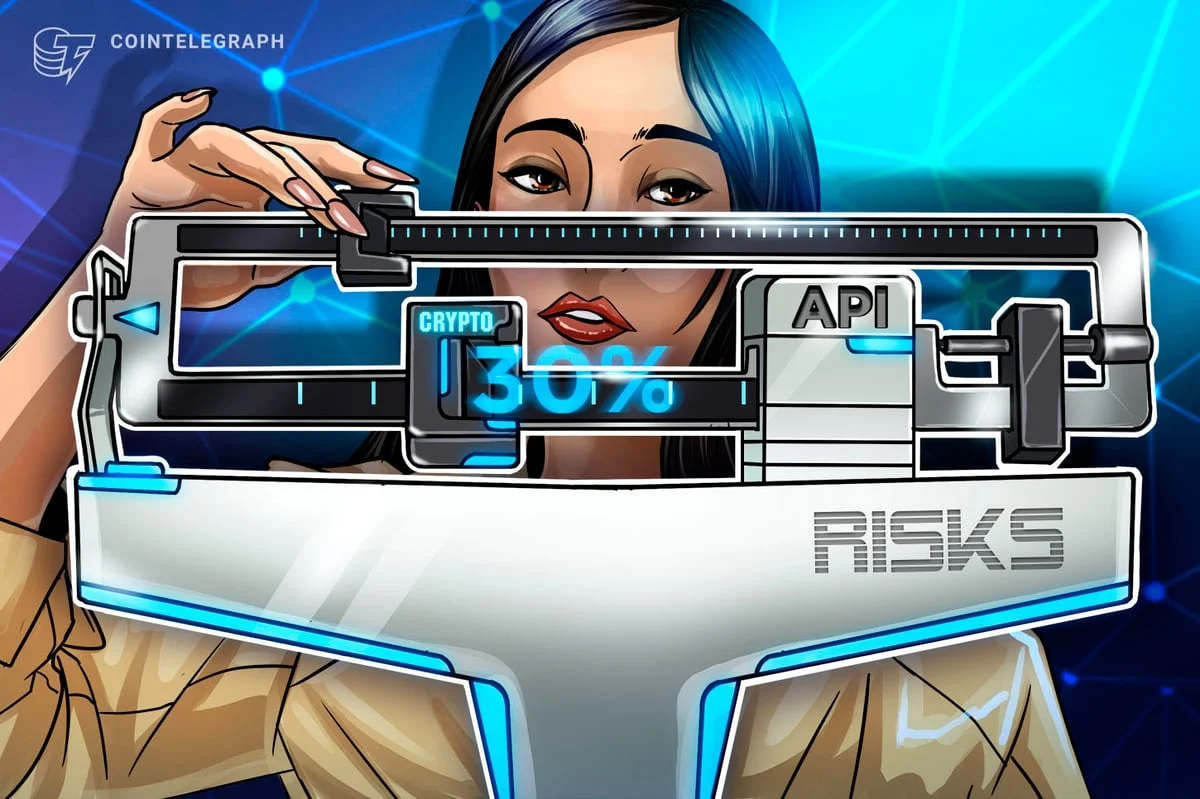
Seoul, South Korea – South Korea’s Financial Supervisory Service (FSS) has issued a stern warning regarding the increasing use of Application Programming Interfaces (APIs) in cryptocurrency trading, with automated tools now accounting for approximately 30% of the total buy-and-sell turnover. The regulator expressed significant concern that this surge in API-based trading is being exploited by some market participants to artificially inflate trading volumes and manipulate prices, potentially undermining market integrity and investor confidence.
The FSS’s alert, disseminated on Monday, highlights specific manipulative tactics observed in the market. According to reports from prominent South Korean news outlets, including Yonhap News Agency and Maeil Business Newspaper, the regulator detailed instances of traders employing strategies such as the repeated execution of small, insignificant trades to create a false impression of robust market activity. Further exacerbating these concerns are reports of spoofing – placing non-genuine orders to trick other traders – and coordinated activities across multiple accounts designed to artificially influence price movements. This proactive stance by the FSS underscores a broader regulatory push within South Korea to rein in cryptocurrency market abuse, even as the legal and operational frameworks governing digital assets continue to evolve.
Unpacking the Tactics: A Regulator’s View on Algorithmic Deception
The Financial Supervisory Service has meticulously outlined the methods being used to distort cryptocurrency prices, providing concrete examples to illustrate the sophistication of these manipulative schemes. One prevalent technique involves the continuous placement of numerous small buy and sell orders at market price. This strategy is designed to generate a high volume of transactions, creating an illusion of active trading and liquidity, thereby attracting unsuspecting retail investors. In parallel, traders are reportedly using higher-priced limit orders to artificially push asset values upwards, setting a false benchmark that other market participants might then follow.
In a particularly illustrative case detailed by the FSS, a trader allegedly leveraged API-driven orders, initiating transactions as small as 5,000 Korean Won (approximately $3 USD) and escalating to 10,000 Korean Won (approximately $6 USD). This orchestrated flurry of activity was strategically designed to simulate genuine trading interest before the manipulator sold their holdings into the rising prices, capitalizing on the influx of retail investors drawn in by the manufactured momentum. Another reported scenario involved a trader setting a specific target price and then systematically submitting buy orders at progressively higher prices, effectively coercing the market towards their predetermined valuation.
These disclosures serve as a critical alert to investors, many of whom may be unaware of the subtle yet potent methods employed to manipulate digital asset markets. The FSS has explicitly warned the public against the indiscriminate use of high-frequency trading code that is often shared freely online. Such code, while promising efficiency, can be easily repurposed for manipulative purposes if not understood thoroughly. The regulator strongly advised investors to exercise extreme caution and refrain from chasing digital assets that exhibit sudden, unexplained spikes in price and trading volume, as these often signal artificial inflation rather than genuine market demand.
A Timeline of Increased Scrutiny and Regulatory Action
The FSS’s warning about API-driven manipulation is not an isolated incident but rather a component of a more comprehensive and intensified regulatory approach in South Korea. This heightened oversight has been building over recent months, driven by a series of operational disruptions and alleged fraud incidents that have shaken confidence in the domestic crypto exchange landscape.
In early April, South Korean regulators took decisive action by mandating that cryptocurrency exchanges reconcile their internal ledgers with actual asset holdings on an unprecedented five-minute interval. This directive, issued on April 7th, followed inspections that revealed concerning delays in balance checks and deficiencies in trade-halting systems, underscoring a critical need for real-time oversight and robust risk management protocols.
Further tightening the regulatory net, on April 8th, the Financial Services Commission (FSC) announced measures to bolster safeguards against cryptocurrency-related scams. The FSC identified inconsistent exemptions for withdrawal delays as a significant vulnerability, allowing malicious actors to rapidly transfer illicit funds. This loophole had contributed to a substantial portion of voice phishing losses, indicating a systemic weakness that needed immediate rectification.
However, the path of enforcement has not been without its challenges. Legal ambiguities and gaps within the existing regulatory framework have intermittently hampered authorities. A notable instance occurred on April 9th, when a South Korean court overturned a partial suspension order against Dunamu, the operator of the Upbit cryptocurrency exchange. The court’s decision cited a lack of clear rules, thereby highlighting the ongoing need for a more defined and comprehensive legal foundation for cryptocurrency regulation in the country.
This period of increased regulatory action and pronouncements suggests a strategic pivot by South Korean authorities, aiming to establish greater control and accountability within the digital asset sector. The FSS’s latest warning about API manipulation is a direct continuation of this effort, targeting a sophisticated form of market abuse that has become increasingly prevalent with the rise of automated trading technologies.
The Growing Pervasiveness of API Trading and its Implications
The statistic that API-based trading now constitutes approximately 30% of crypto buy-and-sell turnover is a significant indicator of the market’s evolving nature. APIs, or Application Programming Interfaces, are software intermediaries that allow different applications to communicate with each other. In the context of cryptocurrency trading, APIs enable traders to connect their custom trading software, algorithms, or bots directly to cryptocurrency exchanges. This allows for automated execution of trades based on pre-defined strategies, real-time data analysis, and rapid response to market fluctuations.
The advantages of API trading are manifold for legitimate traders. It offers enhanced efficiency, allowing for the execution of complex trading strategies at speeds far exceeding manual capabilities. It also provides access to real-time market data, enabling more informed decision-making and the potential for greater profitability through algorithmic arbitrage, high-frequency trading, and other advanced techniques. For institutional investors and sophisticated retail traders, APIs have become indispensable tools for navigating the volatile cryptocurrency markets.
However, the very efficiency and automation that make APIs attractive also present opportunities for misuse. The FSS’s warning points to the dark side of this technological advancement. When used maliciously, APIs can facilitate the rapid and repetitive execution of trades that serve no genuine economic purpose other than to distort market signals. The examples provided by the FSS – including spoofing and creating artificial volume – are classic market manipulation tactics that are amplified in speed and scale by automated trading systems.
The implications of such manipulation are far-reaching. For retail investors, who often lack the sophisticated tools and knowledge to detect these activities, it can lead to significant financial losses. They may be lured into buying assets at inflated prices, only to see the value plummet once the manipulative schemes cease. This erodes trust in the cryptocurrency market as a whole, potentially deterring legitimate investment and hindering the broader adoption of digital assets.
From a systemic perspective, widespread market manipulation can undermine price discovery mechanisms. The true supply and demand dynamics of an asset become obscured, making it difficult for investors and businesses to make informed decisions about its value and utility. This can also have ripple effects on the broader financial ecosystem, particularly as traditional financial institutions begin to engage more deeply with cryptocurrencies.
Broader Context: South Korea’s Crypto Regulatory Landscape
South Korea has emerged as a significant player in the global cryptocurrency market, boasting a vibrant ecosystem of exchanges and a substantial retail investor base. Consequently, regulators have been under increasing pressure to establish a clear and effective framework for managing the risks associated with digital assets.
The country has made notable strides in this direction. In March 2023, South Korea enacted comprehensive legislation known as the Digital Asset Framework Act. This landmark legislation aims to provide a more robust legal foundation for the regulation of digital assets, covering aspects such as issuance, trading, and investor protection. It establishes clear definitions for various types of digital assets and outlines the responsibilities of market participants.
The recent actions by the FSS and FSC are indicative of the ongoing implementation and refinement of these regulatory efforts. The focus on API trading and market manipulation reflects an understanding that technological advancements require continuous adaptation of regulatory strategies. The FSS’s commitment to launching targeted investigations into suspicious API usage signifies a proactive approach to enforcement, aiming to deter future misconduct.
Looking Ahead: The Balancing Act Between Innovation and Integrity
The FSS’s warning serves as a critical reminder of the inherent challenges in regulating rapidly evolving financial markets. While API trading represents a significant technological advancement that can enhance market efficiency, it also necessitates vigilance against potential abuses. South Korea’s regulatory bodies appear to be engaged in a delicate balancing act, seeking to foster innovation within the digital asset space while simultaneously safeguarding market integrity and protecting investors.
The success of these efforts will depend on several factors. Continued investment in advanced surveillance technologies will be crucial for detecting and prosecuting manipulative activities. Furthermore, ongoing dialogue and collaboration between regulators, exchanges, and the broader crypto community are essential for developing effective strategies and adapting to new trends. Clearer guidelines and robust enforcement mechanisms will be vital in deterring bad actors and fostering a more trustworthy and stable cryptocurrency market in South Korea and beyond. The FSS’s decisive action signals a firm resolve to hold market participants accountable and ensure that the burgeoning digital asset economy operates on a level playing field.