admin
admin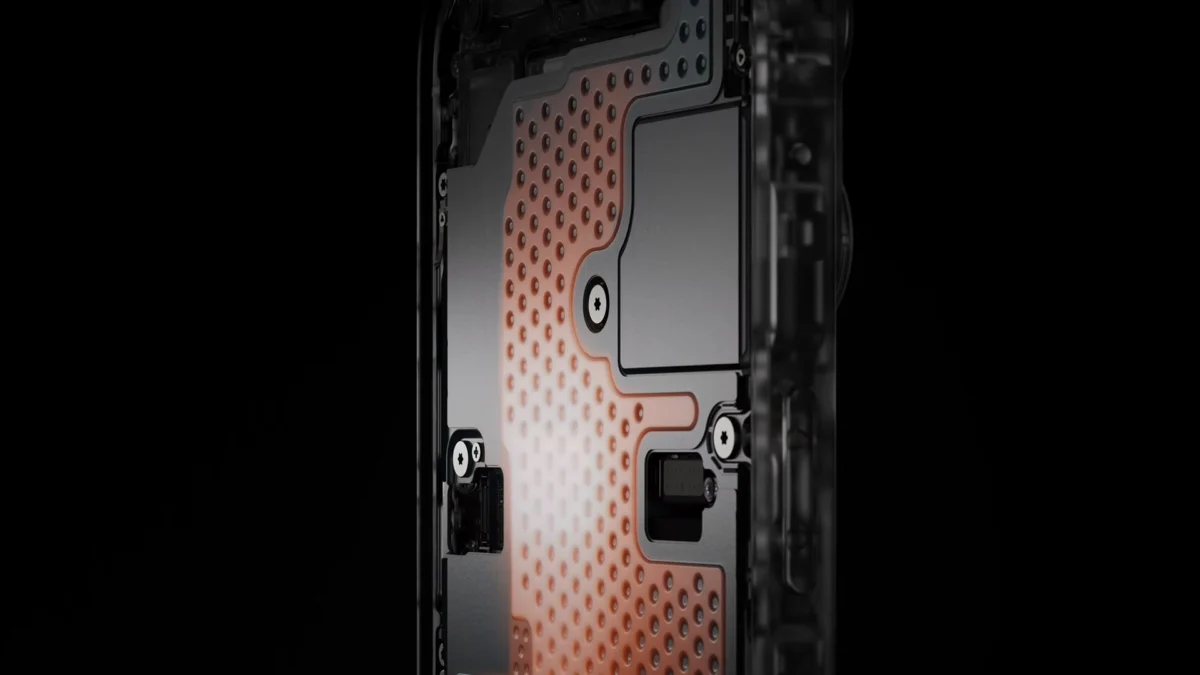
The introduction of the vapor chamber to the iPhone lineup represents a pivotal shift in Apple’s hardware engineering philosophy, moving from traditional graphite-based heat dissipation to a more robust liquid-cooling solution. While Apple has historically relied on the extreme efficiency of its silicon to manage temperatures, the increasing demands of AAA gaming, on-device generative artificial intelligence, and high-bitrate video recording have necessitated a more aggressive thermal management strategy. The iPhone 18 Pro Max, equipped with the cutting-edge A20 Pro chip, has emerged as the standard-bearer for this new era. Recent independent testing indicates that Apple’s implementation of vapor chamber technology not only matches the thermal performance of dedicated Android gaming handsets but, in many cases, exceeds them by maintaining lower external temperatures while sustaining high power limits.
The Evolution of Thermal Management in the iPhone Ecosystem
For nearly a decade, Apple’s thermal strategy remained relatively static. The company utilized a combination of internal heat spreaders and graphite sheets to move heat away from the logic board toward the device’s chassis. This approach was sufficient during the era of the A-series chips produced on 7nm and 5nm nodes. However, as transistor density increased with the move to 3nm and now the 2nm process utilized for the A20 Pro, the "heat flux"—the amount of heat generated per square millimeter of silicon—has risen dramatically.
The iPhone 15 Pro series faced early criticism for thermal throttling and high surface temperatures, which Apple addressed through software optimizations and improved internal structures in the iPhone 16 and 17 iterations. The iPhone 17 Pro Max served as the first real test bed for vapor chamber components, but the iPhone 18 Pro Max represents the technology’s full maturation. A vapor chamber operates on a phase-change principle: a small amount of liquid inside a vacuum-sealed flat chamber evaporates when heated by the SoC, travels to cooler areas of the chamber, condenses back into liquid, and returns to the heat source via a capillary wick structure. This cycle allows for much faster and more uniform heat distribution than solid materials.
Technical Analysis of the A20 Pro and the 2nm Frontier
At the heart of the iPhone 18 Pro Max is the A20 Pro, Apple’s first System-on-Chip (SoC) built on a 2nm fabrication process. This leap in lithography allows for higher clock speeds and more complex neural engines, but it also creates a concentrated heat source. The A20 Pro features a redesigned GPU architecture capable of hardware-accelerated ray tracing at higher frame rates than its predecessors.

To prevent the device from dimming the screen or dropping frames during intensive tasks, the vapor chamber must move heat away from the A20 Pro at a rate that keeps the junction temperature below critical thresholds. The integration of this cooling system allows the A20 Pro to operate at a sustained power limit of 5.9W. In the world of mobile semiconductors, "sustained power" is the holy grail; while many chips can "burst" to high wattages for a few seconds, only those with superior cooling can maintain those levels for 30 minutes or more of continuous gameplay.
Comparative Performance: iPhone 18 Pro Max vs. Android Flagships
In a comprehensive thermal stress test conducted by the prominent technology analyst Geekerwan, the iPhone 18 Pro Max was pitted against the leading Android flagships of the current cycle. The competition included the OnePlus 15 and the iQOO 15 Ultra, both of which are powered by Qualcomm’s Snapdragon 8 Elite Gen 5. The test also included the previous-generation iPhone 17 Pro Max to measure year-over-year improvements.
The results highlighted a significant disparity in how different manufacturers balance power consumption and heat. The iPhone 18 Pro Max reached a power limit of 5.9W while maintaining a surface temperature of just 44.3°C. In contrast, the iPhone 17 Pro Max, which lacked the advanced vapor chamber of its successor, could only sustain 5.4W while running hotter at 45.2°C. This demonstrates that the iPhone 18 Pro Max is not only 9% more powerful in sustained workloads but also nearly an entire degree Celsius cooler.
When compared to the Android camp, the efficiency of the Apple ecosystem became even more apparent. The OnePlus 15, which utilizes a significantly larger physical footprint for its cooling system, managed a slightly higher power limit of 6.1W. However, this came at the cost of user comfort, as the device’s surface temperature soared to 47.2°C. At these temperatures, many users find the device uncomfortable to hold without a protective case.
The Active Cooling Factor: iQOO 15 Ultra Comparison
The iQOO 15 Ultra provided the most interesting data point in the study. As a device marketed specifically toward the gaming community, it often includes or supports external active cooling. When tested with its internal fan disabled, the iQOO 15 Ultra matched the iPhone 18 Pro Max’s power limit of 5.9W but, like the OnePlus, ran much hotter at 47.2°C.

It was only when the iQOO 15 Ultra’s dedicated cooling fan was engaged at maximum speed that the Android flagship was able to surpass the iPhone in raw power throughput. With active cooling, the iQOO 15 Ultra reached a power limit of 7.3W, while finally bringing its temperature down to 46.2°C. However, even with a mechanical fan spinning at high RPMs, the iQOO device remained nearly 2 degrees warmer than the passively cooled iPhone 18 Pro Max. This suggests that Apple’s combination of the 2nm A20 Pro and a highly optimized vapor chamber is currently the most efficient mobile computing package on the market.
Sustained Gaming and Professional Workflows
The implications of these thermal gains extend beyond benchmark scores. For mobile gamers playing titles like Genshin Impact, Resident Evil Village, or Death Stranding, thermal management is the difference between a fluid 60 FPS experience and a stuttering, throttled mess. When a phone reaches its thermal ceiling, the operating system forces the CPU and GPU to downclock, leading to "frame drops." By keeping the temperature at 44.3°C, the iPhone 18 Pro Max ensures that the A20 Pro can stay in its high-performance state for the duration of a gaming session.
Furthermore, professional users who utilize iPhones for ProRes video recording or 3D object scanning will benefit from the increased thermal headroom. Video encoding is an extremely heat-intensive process. Previous models occasionally displayed "iPhone needs to cool down" warnings during extended 4K 120FPS recording sessions in warm environments. The new vapor chamber significantly pushes back these limits, allowing for longer continuous shooting times in the field.
Chronology of Apple’s Thermal Engineering Milestones
To understand the significance of the iPhone 18 Pro Max, one must look at the timeline of Apple’s thermal evolution:
- 2023 (iPhone 15 Pro Series): Introduction of the titanium frame. Titanium has lower thermal conductivity than stainless steel, leading to initial heat dissipation challenges. Apple relied on software patches to manage the A17 Pro’s heat.
- 2024 (iPhone 16 Pro Series): Apple introduced a sub-structure made of 100% recycled aluminum bonded to the titanium frame, improving the "heat sink" effect of the internal chassis.
- 2025 (iPhone 17 Pro Max): Limited introduction of vapor chamber technology. The cooling was improved, but the 3nm A19 Pro chip still pushed the limits of the hardware.
- 2026 (iPhone 18 Pro Max): Full-scale implementation of a high-capacity vapor chamber paired with the 2nm A20 Pro. This version marks the first time an iPhone has objectively beaten specialized "gaming" phones in thermal-to-power ratios.
Industry Implications and Future Outlook
The success of the iPhone 18 Pro Max’s cooling system is likely to trigger a response from Qualcomm and its partners. While the Snapdragon 8 Elite Gen 5 is a powerful processor, the testing suggests that Android manufacturers are currently "overclocking" their way to performance parity with Apple, resulting in higher heat output. The upcoming Snapdragon 8 Elite Gen 6 Pro will likely need to focus heavily on efficiency and architectural refinements rather than just raw clock speed increases.

Furthermore, Apple’s ability to achieve these results without active cooling (fans) or oversized "gaming" aesthetics reinforces the company’s position in the premium market. It proves that a device can be thin, aesthetically pleasing, and a performance powerhouse simultaneously.
Industry analysts suggest that this thermal breakthrough may be the precursor to Apple’s long-rumored "Ultra" iPhone or a more powerful foldable device, both of which would require the advanced heat dissipation technologies perfected in the iPhone 18 Pro Max. As mobile chips continue to approach the complexity of desktop processors, the "thermal war" will be just as important as the "transistor war" in determining which manufacturer holds the performance crown. For now, the iPhone 18 Pro Max sits firmly at the top, offering a rare combination of high power, low heat, and sustained reliability.