Sisilia Frederika
The long-held scientific consensus that the universe is an infinite, flat expanse may be facing its most significant challenge yet as astrophysicists delve into the complex field of cosmic topology. If certain theories regarding the global shape and connectivity of the cosmos prove accurate, the fundamental nature of space-time travel could be far more circular than previously imagined. The concept suggests that a starship traveling in a straight line for hundreds of thousands of light-years might not vanish into an endless void but could, theoretically, return to its point of origin. This phenomenon, rooted in the study of cosmic topology, suggests a "closed loop" universe where the largest scales of existence are interconnected in ways that defy traditional Euclidean intuition.
Cosmic topology distinguishes itself from cosmic geometry by focusing on the global connectivity of the universe rather than its local curvature. While general relativity allows for space to be curved by mass and energy, topology asks a different question: how is the manifold of the universe sewn together? According to Andrew Jaffe, a professor of cosmology and astrophysics at Imperial College London, these topological properties could manifest as unshrinkable closed loops. In such a universe, there exists a physical, straight-line path that brings a traveler back to their starting coordinates. However, Jaffe notes a critical distinction: while one might return to the same spatial location, they would not necessarily return to the same point in time. A return to both the same space and time would result in a "closed timeline curve," essentially functioning as a physical time machine—a concept that remains one of the most provocative possibilities in theoretical physics.
The Shift from Infinite Flatness to Topological Complexity
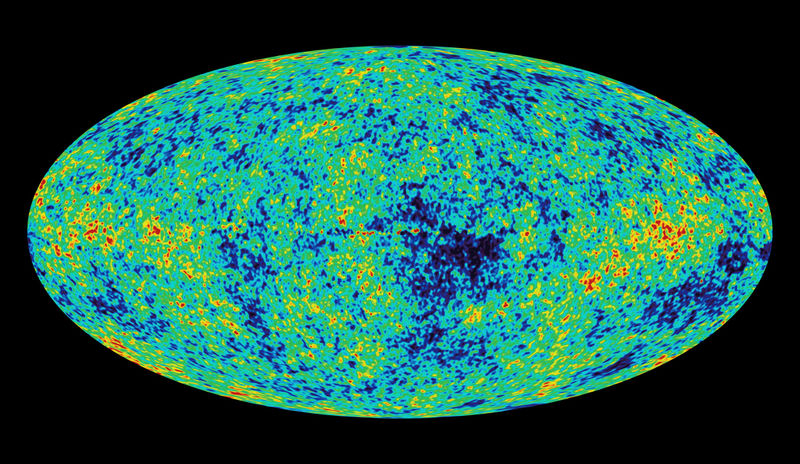
For decades, the standard cosmological model has operated under the axiom that the universe is "flat" and infinite. This conclusion is largely drawn from observations of the Cosmic Microwave Background (CMB), which shows that the density of the universe is very close to the "critical density" required for flatness. In a flat, infinite universe, two parallel light beams will never meet, and space extends forever in all directions. However, global topology could invalidate this assumption. A universe can be locally flat—meaning its geometry obeys the rules of a flat plane on a small scale—while being globally finite and connected, much like how a flat sheet of paper can be rolled into a cylinder or joined into a torus (a donut shape).
The modern investigation into these shapes began in earnest during the late 1990s. Scientists realized that if the universe were finite and connected, light from the early universe could have had enough time to wrap around the cosmos. This would create a "hall of mirrors" effect, where the same celestial objects or patterns in the CMB appear in multiple locations across the sky. The quest to identify these signatures has become a primary goal for researchers like Jaffe and his colleagues within the COMPACT collaboration (Collaboration for Observations, Models and Predictions of Anomalies and Cosmic Topology).
A Chronology of Cosmic Mapping
The search for the shape of the universe has evolved alongside our ability to peer into the deep past of the cosmos. The timeline of this discovery process highlights the increasing precision of astronomical instruments:
- 1964: Arno Penzias and Robert Wilson discover the Cosmic Microwave Background radiation, the "afterglow" of the Big Bang, providing the first snapshot of the early universe.
- Late 1990s: Theoretical breakthroughs allow cosmologists to begin modeling how specific topologies would leave fingerprints on the CMB.
- 2001–2010: The Wilkinson Microwave Anisotropy Probe (WMAP) provides the first high-resolution maps of the CMB. While the data suggests a flat geometry, it also reveals "anomalies" at large scales—missing fluctuations that some theorists argue could be explained by a finite, topological universe.
- 2009–2013: The Planck Satellite mission offers even higher sensitivity. The Planck data confirms the universe’s flatness to within a 0.4% margin of error but leaves the question of global topology open, as it fails to find definitive "matching circles" in the sky.
- 2020s: The formation of the COMPACT collaboration marks a renewed international effort to apply advanced mathematical theories and supercomputing to search for subtle topological signals that previous missions may have missed.
The Mechanics of Detection: Circles in the Sky
To detect cosmic topology, astrophysicists look for "identifications"—instances where two seemingly distinct regions of the sky are actually the same point in space viewed from different directions. The most prominent method involves searching for "circles in the sky." If the universe is a closed loop, the sphere of the CMB should intersect with itself. This intersection would produce pairs of circles on the sky with identical temperature patterns.
"In the simplest case, this gives us repeated patterns," Jaffe explains. "For the CMB, it might mean that there is a circle on one side of the sky that has exactly the same pattern as a circle far away from it."
Jaffe often employs the analogy of a three-dimensional torus to explain this. Imagine a donut; if you draw a circle around the tube of the donut, that path represents a closed loop. If our universe follows a similar 3-torus topology, light travels along these paths, potentially allowing us to see the same galaxy cluster from two opposite directions. However, the data has been elusive. The fact that we haven’t seen these "twin" patterns yet suggests that if the universe is a closed loop, the "size" of the loop must be larger than the observable universe. If the loop is larger than the roughly 46 billion light-years that constitute the radius of the observable cosmos, the light simply hasn’t had time to complete the circuit yet.
Beyond the CMB: 3D Mapping and the Cosmic Web
While the CMB represents the oldest light in the universe—dating back to approximately 380,000 years after the Big Bang—it is essentially a two-dimensional surface from our perspective. To gain a definitive answer, researchers are looking toward three-dimensional maps of the matter distribution in the modern universe. This involves cataloging the positions and velocities of millions of galaxies and the vast filaments of gas known as the "cosmic web."
A 3D map would provide significantly more "topological information" than the CMB alone. By observing the distribution of galaxy clusters, astronomers hope to find repeating structural motifs. However, the scale of the universe presents a daunting challenge. If the topology is large, the "mirrored" galaxy clusters would be located halfway across the cosmos, separated by distances so vast that current telescopes cannot see both "twins" simultaneously.
The 2026 paper published in Nature Astronomy emphasizes that we may be at a technological crossroads. Future campaigns to map large-scale structures, such as those planned for the Vera C. Rubin Observatory and the Euclid space telescope, may finally provide the data density required to confirm or rule out specific topological models.
Implications for Physics and Our Place in the Cosmos
The discovery of a finite, connected topology would fundamentally alter our understanding of the Big Bang and the fate of the universe. Current "Inflationary" theory suggests that the universe underwent a period of exponential expansion, which would naturally "flatten" any initial curvature and push any topological boundaries far beyond our horizon. If we find evidence of topology, it would force a rethink of the mechanics of inflation.
Furthermore, a topological universe removes the conceptual "edge" of the cosmos. In an infinite universe, the volume of space is limitless. In a closed-loop universe, the volume is finite, but there is no boundary. This has profound implications for the "Copernican Principle," which suggests that humans do not occupy a privileged position in the universe. In a finite, topological cosmos, every point could theoretically be seen as the "center" of a loop, depending on the observer’s perspective.
The work of the COMPACT collaboration is currently focused on refining the mathematical models that describe these possibilities. "Our work with COMPACT has started to put these results into the full mathematical theory and details of the possible topologies that could describe our Universe," says Jaffe. The group is moving beyond simple "donut" shapes to investigate more exotic manifolds, such as the Klein bottle or the Poincaré dodecahedral space, which would leave even more complex signatures in the cosmic data.
The Bottom Line: A Question of Scale
Ultimately, the quest to define the topology of the universe is a race against the limits of observation. If the universe is much larger than the distance to the CMB sphere—the "surface of last scattering"—it may be physically impossible to ever detect its shape. We would be like ants living on a vast balloon, unable to see far enough to realize the surface eventually curves back on itself.
However, the scientific community remains optimistic. As Jaffe suggests, we may be fortunate enough that the evidence is already sitting in existing data, waiting for more sophisticated algorithms to uncover it. Whether the universe is an infinite void or a complex, interconnected loop remains one of the final frontiers of cosmology. If it is a loop, the dream of traveling the stars may one day involve a journey that, while spanning billions of light-years, eventually leads us back home.