Metty Iskandar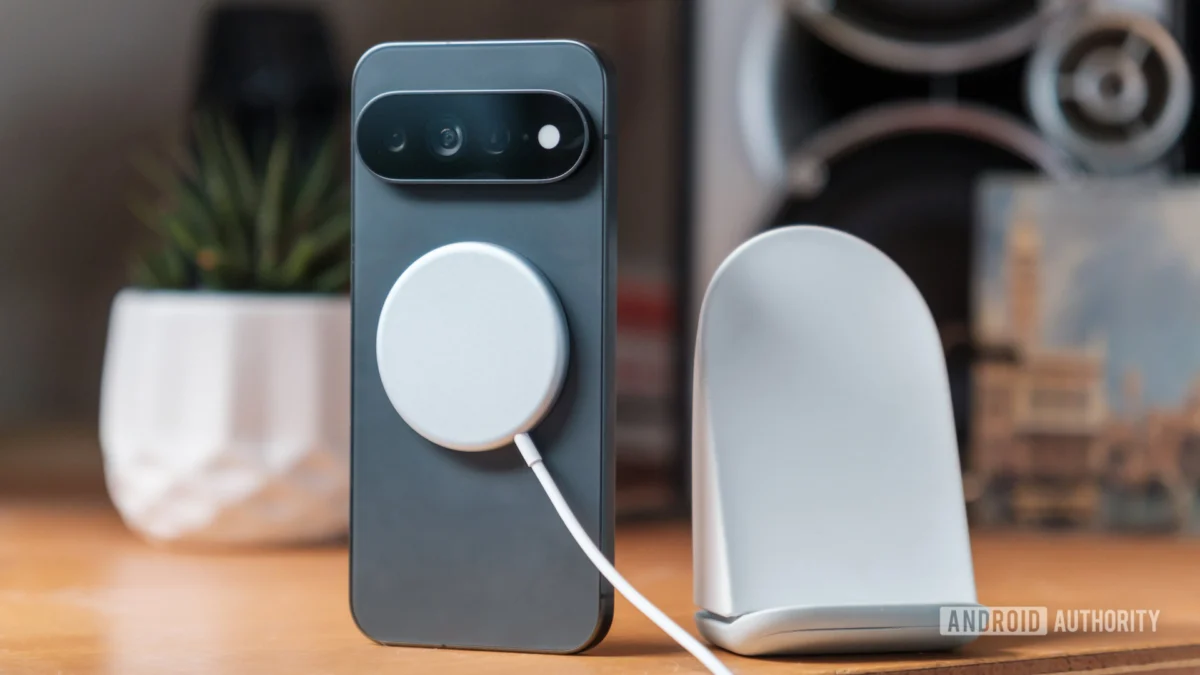
The charging experience for Google’s Pixel smartphones, particularly concerning wireless solutions, continues to be a source of frustration for users and reviewers alike. Despite advancements in wired charging technology, the company’s proprietary wireless charging accessories, notably the PixelSnap charger, are failing to meet expectations, exhibiting slow charging speeds and a tendency to overheat. This persistent issue raises questions about Google’s commitment to providing a seamless and efficient charging ecosystem for its flagship devices.
A History of Charging Challenges
Google’s journey with wireless charging for its Pixel line has been marked by a gradual shift away from the highly regarded Pixel Stand (2nd gen). The original Pixel Stand, with its integrated fan, offered a more robust and faster wireless charging experience, maintaining higher power output for extended periods. However, the company’s subsequent pivot towards MagSafe-like magnetic alignment, exemplified by the PixelSnap charger, has, according to multiple reports, resulted in a significant downgrade in charging performance. This move, while potentially aiming for accessory compatibility, has come at the expense of crucial charging speeds.
The PixelSnap charger, priced at $39.99, was introduced as a successor to the Pixel Stand, aiming to leverage magnetic alignment for convenience. However, early reviews and ongoing testing have consistently highlighted its shortcomings. When compared to the older Pixel Stand, the PixelSnap has been found to be considerably slower, even when paired with the latest Pixel models. For instance, the Pixel 10 Pro XL, when charged with PixelSnap, took over half an hour longer to reach full charge compared to the same device using the Pixel Stand (2nd gen).
25W Wireless Charging: A Promise Unfulfilled
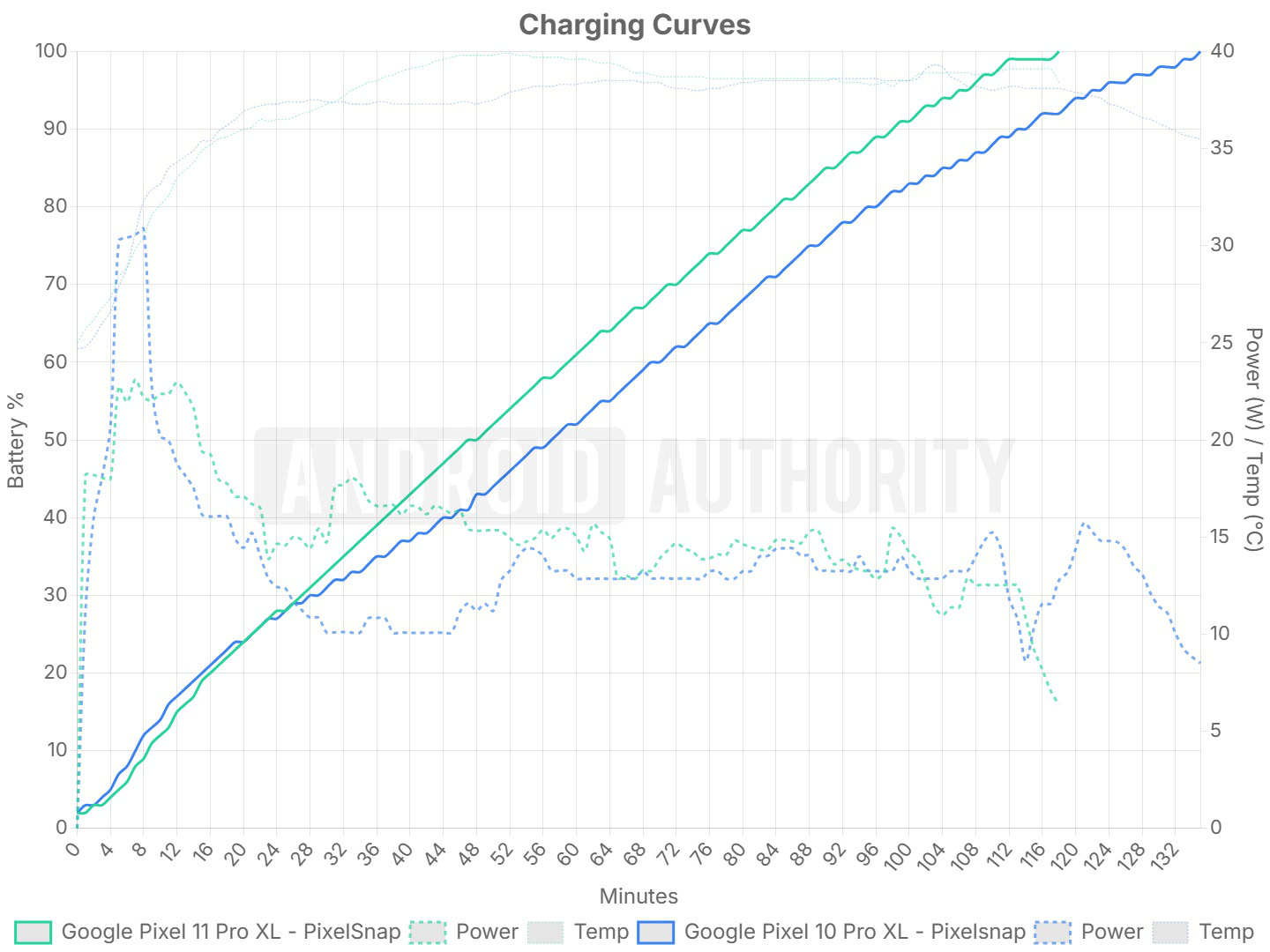
Google has been actively promoting its 25W wireless charging capabilities across its latest Pixel series, including the Pixel 11 Pro XL. However, independent testing reveals that this advertised speed is rarely, if ever, achieved in practice with the PixelSnap charger. Initial power draw from the PixelSnap on the Pixel 11 Pro XL typically hovers around 23W, a figure that falls short of the 25W claim and is notably less than the 31W recorded on the previous generation Pixel 10 Pro XL.
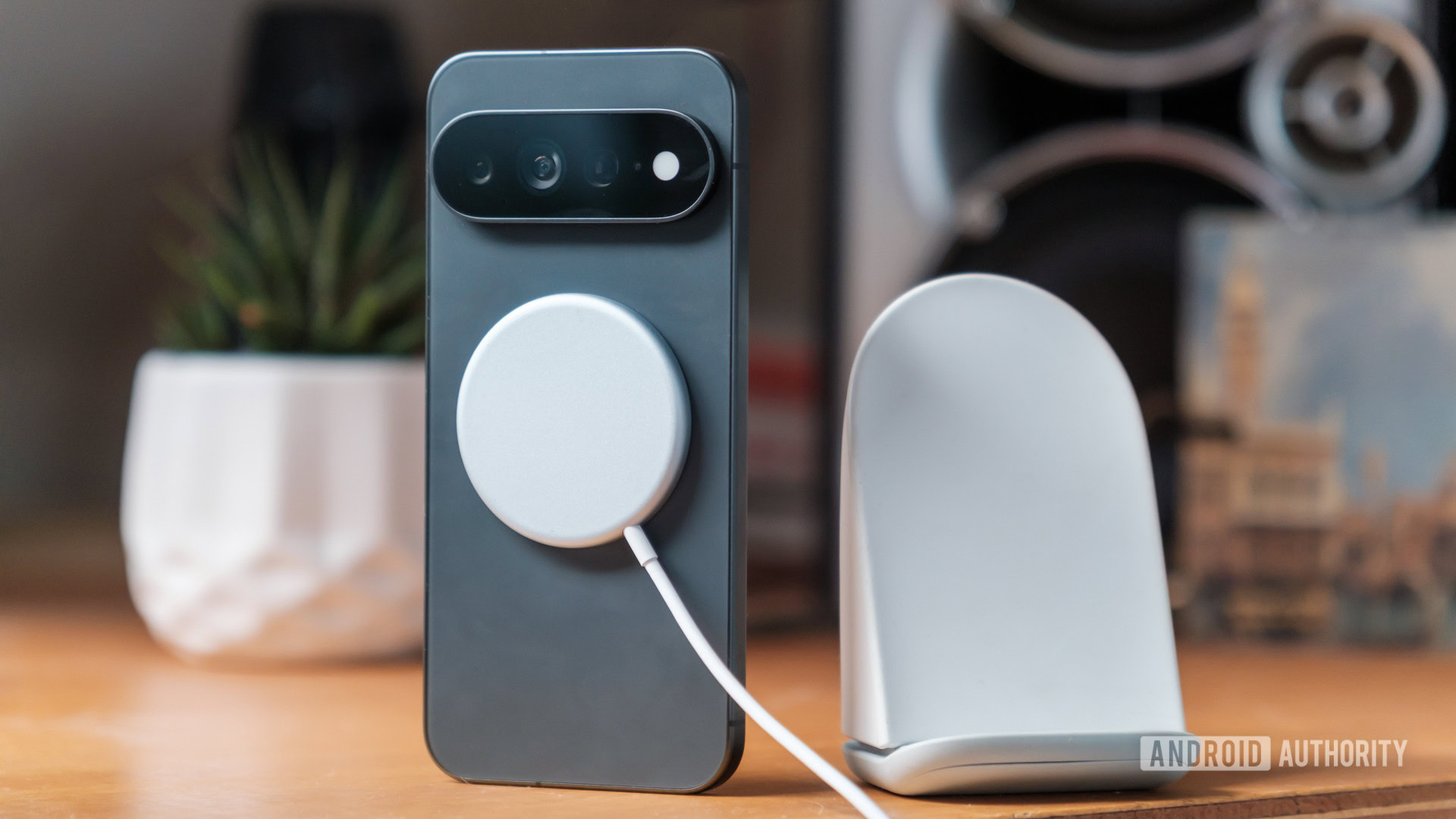
A significant issue observed is the charger’s inconsistent power delivery. Instead of immediately providing maximum power, the PixelSnap spends several minutes fluctuating between voltage levels (e.g., 9V and 16V). This behavior, potentially an attempt by the device to gauge optimal charging conditions based on temperature and battery status, delays the initiation of peak charging. It takes approximately six minutes for the charger and phone to synchronize at their highest charging rate. This delay significantly impacts the time required for even a quick top-up, a crucial aspect for users on the go.
Furthermore, the sustained peak power output from the PixelSnap is also disappointing. Despite the 25W marketing, the charger struggles to maintain this level for any significant duration. Reports indicate that the PixelSnap charger effectively operates closer to a 15W charger in real-world usage, with the Pixel 11 Pro XL spending a minimal amount of time near the advertised 25W.
Improved Sustained Power, But Still Lagging
While the peak power is rarely reached, there is a glimmer of improvement in sustained power delivery compared to the previous generation. The Pixel 11 Pro XL, when using the PixelSnap, manages to maintain a higher power output for a longer period than its predecessor. Last year, the Pixel 10 Pro XL dipped to 10W within the first 30 minutes of charging. In contrast, the Pixel 11 Pro XL maintains closer to 15W for nearly an hour.
This enhanced sustained power has resulted in slightly faster overall charging times. The Pixel 11 Pro XL takes approximately 119 minutes to reach a full charge using the PixelSnap, an improvement over the 145 minutes required by the Pixel 10 Pro XL. Similarly, achieving 50% battery capacity takes 47 minutes on the Pixel 11 Pro XL, compared to 61 minutes on the Pixel 10 Pro XL. These are meaningful improvements, yet they still fall far short of competitive charging speeds offered by other manufacturers.
Thermal Concerns and the Trade-off with Heat
A significant drawback of the PixelSnap charger is its impact on device temperature. Wireless charging, by its nature, generates heat, but the PixelSnap exacerbates this issue. The Pixel 11 Pro XL becomes noticeably warm to the touch during wireless charging sessions. Internal temperatures are monitored and capped at around 40°C (without the "Extreme Charging" mode activated), which then triggers power throttling to prevent overheating.
The average temperature recorded during testing was approximately 37.4°C, which is about half a degree warmer than the previous year’s results. This indicates that the marginal increase in charging speed comes at the cost of increased thermal load on the device. The core issue remains: charging with the PixelSnap is demonstrably slower and generates more heat than using a modest wired charger.
The Pixel Stand Legacy: A Lost Advantage?
The comparison with the older Pixel Stand (2nd gen) further highlights the shortcomings of the PixelSnap. The Pixel Stand, despite being a two-generation-old accessory, offered superior wireless charging performance for its time. It could fully charge the Pixel 9 Pro XL in approximately 101 minutes and reach 50% in just 33 minutes. This was largely due to its higher 30W charging power and, crucially, its integrated fan. This fan actively cooled the device, allowing it to sustain higher power levels for longer periods without encountering thermal throttling.
Unfortunately, the Pixel Stand appears to have compatibility issues with the newer Pixel 10 and 11 series. Due to potential misalignment of charging coils or increased distance, the power output is severely limited to around 7.5W when using the older Pixel Stand with these newer phones. This results in excessively long charging times, estimated to be well over four hours for a full charge, rendering it practically useless for anything other than overnight charging.
Wired Charging: Not Without Its Own Quirks
While the focus has been on wireless charging, Google’s wired charging solutions also present complexities. The advertised 45W wired charging for the Pixel 11 Pro XL is not as straightforward as it sounds. The actual peak power output is closer to 41W, and this speed is only achievable with a charger that supports the USB PD PPS (Programmable Power Supply) protocol, specifically delivering 18V and 2.27A. This reliance on specific charger specifications can be a hurdle for users who may not have compatible chargers readily available.
Google’s new "Extreme Charging" mode, intended to provide a quick 5-minute boost, also comes with thermal implications. Activating this mode results in a temperature increase of roughly 3°C, pushing the peak temperature to a concerning 42.9°C in testing. While offering a short burst of power, the associated heat generation makes it a less-than-ideal solution for users prioritizing device longevity and thermal management.
Implications for the Pixel Ecosystem
The persistent issues with Pixel charging, both wired and wireless, raise concerns about Google’s overall strategy for its hardware ecosystem. The company’s reliance on proprietary accessories that often underperform relative to their marketing claims or competitor offerings can lead to user dissatisfaction. While the convenience of magnetic alignment offered by the PixelSnap is a recognized benefit, it seems to have come at the unacceptable cost of significantly slower charging speeds and increased heat.
The comparison with the older Pixel Stand highlights a regression in wireless charging performance for newer devices when using Google’s current wireless charging hardware. The lack of a truly high-performance, wirelessly charged Pixel device that balances speed, convenience, and thermal management leaves a gap in the product experience.
Looking Ahead: A Call for Improvement
Users are left hoping for a significant overhaul in Google’s charging accessory strategy. The ideal solution would combine the convenience of magnetic alignment with the robust performance of faster and cooler charging. A hypothetical new Pixel Stand model, incorporating magnets for secure alignment and an active cooling system, could bridge this gap. Such a device would offer the best of both worlds: effortless placement and efficient, rapid charging without compromising device health.
However, the current pricing of Google’s accessories, such as the $65 price tag for the PixelSnap and stand combination, feels unjustified given the performance limitations. The ongoing charging challenges with the Pixel line suggest that Google has yet to fully master the art of delivering a truly premium and efficient charging experience, leaving consumers to ponder whether a better solution will arrive in future iterations. The company’s focus on a seamless user experience across its hardware portfolio should extend to the fundamental aspect of keeping devices powered up quickly and reliably.