Sonny Valindra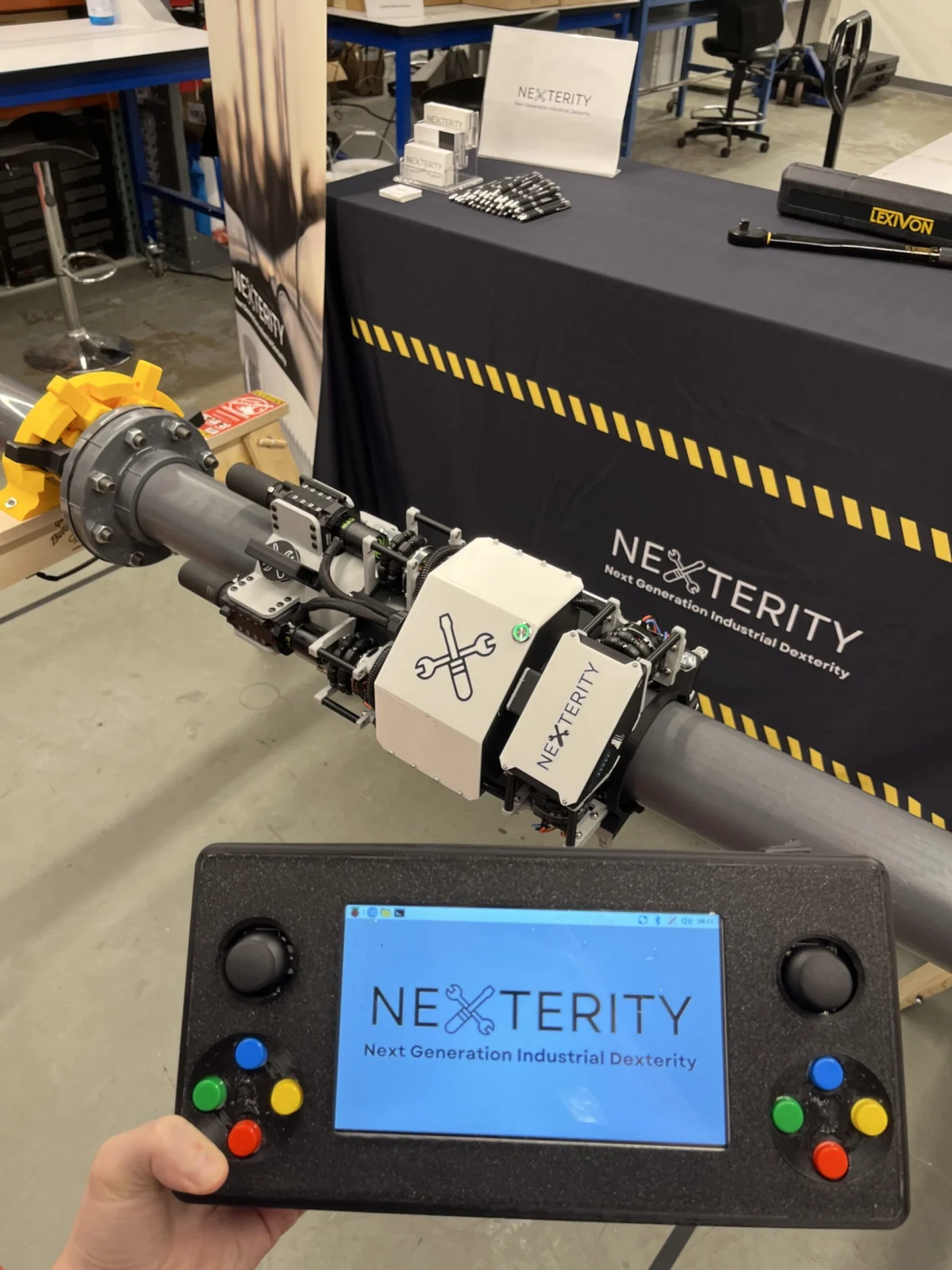
Lindsey Elliott, a former engineer with ExxonMobil, has dedicated her career to enhancing the safety and efficiency of industrial infrastructure, particularly within the oil, gas, and petrochemical sectors. Her innovative approach has culminated in the development of Nexterity, a startup poised to disrupt the critical, yet often overlooked, task of maintaining bolted flange joints through the introduction of a remote-controlled robotic system. This groundbreaking technology, showcased as one of the Startup Battlefield 200 participants at TechCrunch Disrupt, promises to address long-standing challenges of worker safety, productivity, and labor shortages that plague the pipefitting industry.
The Unsung Heroes of Industrial Connections: Bolted Flange Joints
At the heart of industrial operations, from the vast networks of oil and gas pipelines to intricate systems in food processing and water treatment plants, lie bolted flange joints. These critical connection points are responsible for ensuring the integrity and safety of the fluid and gas transport systems. However, the manual process of loosening and tightening the numerous bolts that secure these joints is physically demanding and inherently hazardous. Historically, pipefitters have endured strenuous conditions, often working extended hours in challenging environments, leading to a high incidence of work-related injuries.
"Those people get really tired when they’re asked to work 12 hours a day for three months in a row," Elliott stated in a recent interview, highlighting the human toll of this arduous work. Her extensive conversations with pipefitters across the United States and Canada have consistently revealed a pervasive issue: North American pipefitting productivity is notoriously low. This inefficiency is not solely a matter of worker fatigue; it also stems from the time-consuming nature of manual bolting and the persistent labor shortages that affect many trade industries.
Nexterity’s Robotic Solution: Enhancing Safety and Productivity
In response to these pressing challenges, Elliott founded Nexterity, a company focused on developing technological solutions to augment manual labor in industrial settings. The flagship product, a remote-controlled robot, is designed to take over the physically demanding aspects of bolted flange joint maintenance. This innovative system is engineered to significantly improve worker safety by removing them from hazardous proximity to heavy equipment and repetitive strain tasks. Furthermore, by automating a time-consuming process, it aims to boost overall productivity, a key factor in addressing the industry’s efficiency concerns.
The Nexterity robot operates on a simple yet effective principle. It consists of two primary components that securely fit around a pipe. Powered by rechargeable batteries, the robot can traverse the pipe surface once attached. Its core functionality lies in its ability to efficiently loosen and tighten multiple bolts simultaneously, a significant departure from the manual, one-bolt-at-a-time approach. This capability is crucial for accelerating maintenance and repair operations, reducing downtime, and minimizing the exposure of workers to strenuous physical exertion.
Design and Deployment: Portability and Scalability
A key design consideration for Nexterity’s robot was portability and ease of deployment, recognizing the diverse and often remote locations of industrial sites. The robot is engineered in various configurations to accommodate different standard pipe sizes, a crucial aspect for widespread adoption. Notably, each configuration is compact enough to fit within a standard Pelican case, allowing a single worker to transport it to a job site. This inherent flexibility is central to Nexterity’s business model, which positions the robot as a rental construction equipment, offering clients a cost-effective and adaptable solution without the burden of outright ownership.
The development of this specific robotic design was not an arbitrary endeavor. Elliott’s approach was deeply rooted in extensive dialogue with industry professionals. Her interactions at the annual Bolting Symposium, affectionately described as a gathering of "torque dorks," and with members of the Pressure Vessels & Piping Division of the American Society of Mechanical Engineers, provided invaluable insights into the practical realities of bolted flange joint maintenance.
"What I learned from the people, the torque dorks per se," Elliott explained, "is that 80% of our pipes are between two to eight inches in diameter, or what they call NPS2 to NPS8. And so when you have that much repeatability, you have a fantastic candidate for automation." This data-driven understanding of common pipe sizes informed the robot’s design, ensuring it addresses the vast majority of applications encountered in the field. The high degree of standardization in this segment of the industry makes it an ideal candidate for automated solutions, paving the way for significant efficiency gains.
The Broader Market and Economic Implications
Elliott’s vision extends far beyond the immediate benefits of her robotic system. She believes the market for such solutions is significantly larger and more diverse than many might initially assume. "I think it would shock a lot of people just how big this market is," she asserted. The applications of bolted flange joints are not confined to the oil and gas sector. They are integral to a wide array of essential industries, including:
- Water and Wastewater Management: Ensuring the integrity of potable water distribution and sewage systems.
- Water Treatment Facilities: Maintaining the complex networks of pipes within treatment plants.
- Food and Beverage Industry: Critical for hygiene and operational efficiency in processing plants.
- Mining Operations: Handling various fluids and slurries in demanding environments.
- Nuclear Power Generation: Requiring the highest standards of safety and reliability in piping systems.
- Green and Sustainable Manufacturing: Supporting the infrastructure for emerging industries and eco-friendly production processes.
The commonality of piping infrastructure across these sectors suggests a substantial and recurring demand for efficient and safe maintenance solutions. The adoption of Nexterity’s robot could lead to a paradigm shift in how these essential industries operate, fostering a more secure and productive workforce.
Addressing the "Torque Dork" Dilemma: A Vision for the Future
The phrase "more dork, less torque" encapsulates the essence of Nexterity’s mission. It signifies a move away from the brute force and physical strain traditionally associated with bolting, towards a more intelligent and automated approach. This shift has profound implications for the future of skilled trades. By automating the most physically demanding and injury-prone tasks, companies can attract and retain a more diverse workforce, including individuals who may be less inclined towards manual labor but possess valuable technical and operational skills.
The robot’s design, focused on portability and ease of use, also democratizes access to advanced maintenance technology. Instead of requiring specialized, large-scale equipment, a single technician can deploy the Nexterity robot. This is particularly advantageous for smaller companies or those operating in geographically dispersed locations where logistics can be a significant challenge.
Industry Context and the Drive for Innovation
The development of Nexterity’s technology emerges against a backdrop of increasing pressure on industrial sectors to enhance safety, improve efficiency, and reduce operational costs. Regulatory bodies worldwide are continually raising safety standards, and companies are actively seeking innovative solutions to meet these demands. The persistent labor shortages in skilled trades, exacerbated by an aging workforce and a declining interest in manual labor among younger generations, further underscore the need for automation.
The annual Bolting Symposium, where Elliott found inspiration, serves as a crucial platform for industry professionals to discuss best practices, emerging technologies, and the challenges faced in maintaining bolted connections. Events like these foster a collaborative environment where engineers, technicians, and manufacturers can share knowledge and drive progress. Elliott’s engagement with the Pressure Vessels & Piping Division of the American Society of Mechanical Engineers (ASME) further contextualizes her work within the established engineering community, lending credibility to her innovative approach. ASME standards are foundational to the design, construction, and operation of pressure vessels and piping systems, and any innovation that aligns with or enhances these standards is likely to be well-received.
Future Outlook and Potential Impact
The widespread adoption of Nexterity’s remote-controlled bolting robot could have a transformative effect on the industrial landscape. It has the potential to:
- Dramatically Reduce Workplace Injuries: By minimizing manual exertion and hazardous exposures.
- Increase Operational Efficiency: Through faster and more consistent bolting operations, leading to reduced downtime.
- Alleviate Labor Shortages: By making skilled trades more accessible and less physically demanding, attracting a broader talent pool.
- Lower Maintenance Costs: Through improved productivity and potentially extended equipment lifespan due to more consistent and precise bolting.
- Enhance Data Collection and Analysis: Future iterations of such robots could incorporate sensors to monitor bolt tension and torque, providing valuable data for predictive maintenance and performance optimization.
While the immediate focus is on the core functionality of bolting, the long-term implications of this type of robotic deployment are significant. It represents a step towards a more technologically integrated and human-centric approach to industrial maintenance, where automation augments human capabilities rather than simply replacing them. Nexterity’s innovation, born from a deep understanding of industry challenges and a commitment to practical solutions, stands as a compelling example of how technology can address fundamental issues in blue-collar professions, creating a safer, more efficient, and more sustainable future for critical infrastructure maintenance. The company’s participation in TechCrunch Disrupt’s Startup Battlefield 200 provides a significant platform to further showcase its technology and connect with investors and industry partners who can help accelerate its impact.