Vera Intan Clara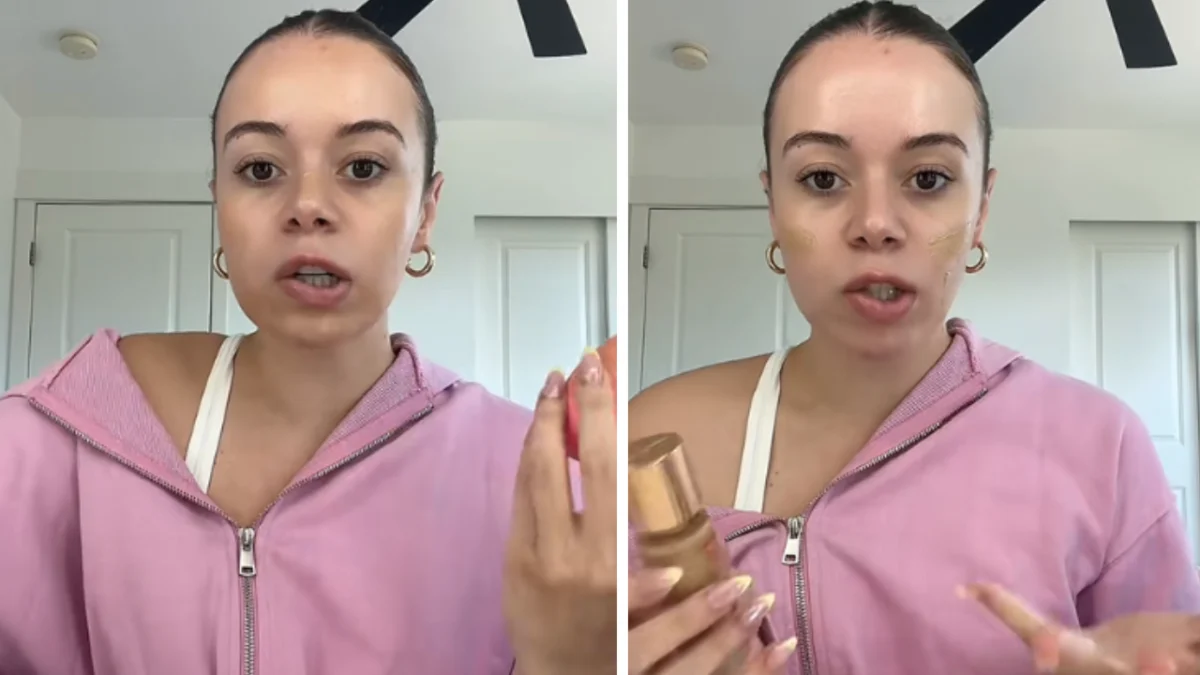
Sarai Jones, widely recognized by her TikTok handle @krazysarai, recently became the subject of widespread online discussion after recounting an exceptionally unusual first date that abruptly transitioned from a social outing to an urgent medical emergency. The incident, which Jones documented in a viral TikTok video garnering tens of thousands of likes and comments, detailed her experience of discovering blood in her urine just moments before a planned evening with a man she had known since middle school. What began as a nervous pre-date ritual quickly evolved into a testament to her date’s character, prompting a significant public conversation about empathy, responsibility, and the evolving lexicon of modern dating.
A Date’s Unexpected Turn: A Chronological Account
The evening, intended to be a relaxed reconnection with an acquaintance from her past, took an unanticipated detour for Sarai Jones. According to Jones’s account, shared with her considerable TikTok following, she was already experiencing a degree of nervousness ahead of the date. To temper her pre-date jitters, she opted for a calming drink. It was during her preparations, specifically during a routine bathroom visit, that she first encountered an alarming symptom. Her urine, she noted, appeared unusually pink. Initially, Jones speculated that the discoloration might be attributable to a pink mixer she had consumed as part of her drink, a seemingly innocuous explanation for an otherwise concerning observation.
However, as the clock ticked closer to her date’s arrival, a second bathroom visit dispelled any lingering doubts about the origin of the unusual color. This time, the discoloration was unmistakable: her urine had turned a distinct, vivid red, leaving no room for misinterpretation. It became immediately apparent to Jones that she was experiencing bleeding, a symptom that necessitated immediate attention. Despite a profound sense of embarrassment and the natural desire to maintain a facade of normalcy for a nascent romantic encounter, Jones recognized the gravity of the situation. She understood that she could not proceed with the date as planned without addressing this pressing health concern.
With her date texting to confirm his imminent arrival, Jones made the difficult but crucial decision to disclose her condition. The reaction from her date, whose identity was not fully disclosed in her public account, proved to be a pivotal moment. Instead of continuing with their pre-arranged plans for the evening, he demonstrated an immediate and commendable shift in priorities. He promptly rerouted their evening, taking Jones directly to an urgent care facility, effectively transforming their nascent romantic outing into a critical healthcare visit.
Upon checking in at the urgent care center, Jones informed the attending nurse that her date had brought her in. The nurse’s response, as relayed by Jones, was swift and definitive, immediately labeling the date’s willingness to provide such support as a "green flag." This term, a popular expression in contemporary dating parlance, signifies a positive trait or behavior in a potential partner, indicating compatibility and desirable qualities. The nurse explicitly advised Jones that she should continue seeing him, a sentiment with which Jones wholeheartedly agreed in that moment.
Following medical examination, Jones received a diagnosis: she had contracted a urinary tract infection (UTI) and would require a course of antibiotics. The care and consideration from her date did not end there. With the urgent care visit concluded, the next challenge was obtaining the necessary medication. Given the late hour, many pharmacies had already closed. Her date, demonstrating continued dedication, drove her to a pharmacy located farther away, as it was the only one still operating. Despite the highly unconventional and medically focused trajectory of their evening, Jones reflected positively on the experience, affirming that she still enjoyed the time spent with him. The date, though not in the manner either might have envisioned, had undeniably forged a unique and memorable bond, albeit under stressful circumstances.
The Medical Context: Understanding Hematuria and UTIs
Sarai Jones’s experience of urinating blood, medically termed hematuria, is a symptom that can be alarming and necessitates prompt medical evaluation. Hematuria can manifest as gross hematuria, where blood is visibly present in the urine, or microscopic hematuria, where blood cells are detectable only under a microscope. Jones’s account clearly describes gross hematuria, evolving from pink to distinctly red urine, indicating a more significant presence of blood.
The most common cause of hematuria, particularly in women, is a urinary tract infection (UTI). UTIs are bacterial infections that can affect any part of the urinary system, including the kidneys, ureters, bladder, and urethra. Women are significantly more prone to UTIs than men, with approximately 50-60% of women experiencing at least one UTI in their lifetime. This heightened susceptibility is primarily due to women having a shorter urethra, which reduces the distance bacteria must travel to reach the bladder. Common symptoms of a UTI include a strong, persistent urge to urinate; a burning sensation during urination; passing frequent, small amounts of urine; cloudy urine; strong-smelling urine; pelvic pain in women; and, as experienced by Jones, hematuria.
While UTIs are generally not life-threatening, if left untreated, they can lead to more severe complications, such as kidney infections (pyelonephritis), which can cause permanent kidney damage or even lead to sepsis, a life-threatening response to infection. Diagnosis typically involves a urine test (urinalysis) to detect bacteria and white blood cells, and sometimes a urine culture to identify the specific type of bacteria and determine the most effective antibiotic. Treatment almost invariably involves a course of antibiotics, which usually resolves the infection within a few days. The prompt medical attention Jones received was crucial for a timely diagnosis and effective treatment, preventing potential escalation of the infection. While stress itself doesn’t directly cause UTIs, heightened anxiety or stress can sometimes weaken the immune system, potentially making individuals more vulnerable to infections or exacerbating existing symptoms. Jones’s initial nervousness about the date, though not a direct cause, adds a layer of contextual understanding to her state.
The Rise of "Green Flags": Navigating Modern Dating Metrics
The term "green flag," central to the online discussion surrounding Sarai Jones’s experience, has become an integral part of the contemporary dating lexicon, particularly prevalent on social media platforms like TikTok. In the context of relationships, a "green flag" denotes a positive indicator or a desirable trait in a partner that suggests compatibility, emotional maturity, respect, and a healthy dynamic. It stands in direct contrast to "red flags," which are warning signs that signal potential problems or unhealthy behaviors.
The proliferation of these terms on platforms like TikTok reflects a broader cultural shift in how individuals discuss and evaluate potential partners. Users frequently share anecdotes, tips, and personal experiences, dissecting interactions to identify these flags. A "green flag" often highlights actions that demonstrate empathy, reliability, good communication, emotional intelligence, and genuine care—qualities that are increasingly prioritized in modern relationships. In Jones’s case, her date’s immediate and selfless action of prioritizing her health over their planned social outing was universally perceived as a quintessential "green flag." This act of stepping up in a moment of crisis, foregoing personal plans to ensure another’s well-being, resonated deeply with the online community as a powerful display of character and compassion. The nurse’s professional validation further underscored this sentiment, lending a layer of authority to the widely held public opinion. This incident underscores a growing emphasis in dating on tangible acts of care and support, moving beyond superficial attractions to a deeper appreciation for partners who demonstrate reliability and empathy when it truly matters.
Online Reactions and the Dynamics of Digital Storytelling
Sarai Jones’s TikTok video quickly went viral, attracting 36,400 likes and 264 comments, demonstrating the powerful engagement that personal stories, especially those with an unexpected twist, can generate on social media. The overwhelming majority of initial comments lauded Jones’s date, unanimously declaring his actions a "green flag" and him a "keeper." Users praised his supportive demeanor and willingness to prioritize her well-being.
Examples of these reactions included:
- "Ok so he’s a keeper omg," one user enthusiastically wrote, capturing the sentiment of many.
- Another commenter added, "No, that’s literally a huge green flag, people show their truest selves when someone is in need!!" This comment highlighted a commonly held belief that true character is revealed during adversity.
- A healthcare professional chimed in, stating, "As a nurse who specializes in women’s health you truly have no idea how much of a green flag this is." This added a layer of expert validation, emphasizing the rarity and importance of such supportive behavior from a clinical perspective.
- The narrative also prompted other users to share similar positive experiences. One commenter recounted, "Omg this happened to me too I got a UTI on a date too and he also took me to the doctor it was late at night like 10pm type shi* next day showed up with cranberry juice and movies to watch and took care of me and he is now my husband." This anecdote further solidified the perception of such actions as indicators of a potentially long-lasting, healthy relationship.
However, the nature of digital storytelling, particularly on platforms like TikTok where content can resurface or be viewed out of its original context, introduced a layer of complexity to the narrative. A later comment pointed out that the viral video might be older and that the relationship, despite the initial "green flags," did not ultimately lead to a happy ending. This user referenced a "cheating video," implying that subsequent events had undermined the initial positive perception of the date. This revelation serves as a powerful reminder of the transient and often incomplete nature of social media narratives. While the date’s actions during the medical emergency were undeniably commendable and exemplary of a "green flag," the ultimate trajectory of the relationship underscores that initial impressions, even deeply positive ones, do not always predict long-term outcomes. This dynamic highlights how online communities engage in real-time evaluation and re-evaluation of personal stories, often with limited information and a reliance on fragmented narratives.
Healthcare Accessibility and the Role of Urgent Care
Sarai Jones’s reliance on an urgent care facility for her unexpected medical emergency highlights the critical role these centers play within the broader healthcare landscape. Urgent care centers bridge the gap between primary care physicians and emergency rooms, offering immediate medical attention for conditions that are not life-threatening but require prompt treatment. This includes a wide range of ailments such as minor injuries, infections (like UTIs), colds, flu, and allergic reactions.
For conditions like a UTI with visible blood in urine, urgent care is often the most appropriate and efficient choice. Unlike emergency rooms, which are designed to handle severe and life-threatening conditions, urgent care centers typically have shorter wait times and lower co-pays. They provide a convenient option when a primary care physician’s office is closed or unable to offer an immediate appointment. The accessibility of urgent care facilities, often with extended hours and walk-in options, proved crucial in Jones’s situation, allowing her to receive a diagnosis and prescription in a timely manner, even late in the evening. This incident subtly underscores the importance of public awareness regarding appropriate healthcare avenues for different medical needs, preventing unnecessary burdens on emergency services while ensuring individuals receive the care they require without undue delay.
Beyond the ‘Green Flag’: Nuances of Relationship Development
While Sarai Jones’s initial TikTok video celebrated a profound "green flag" moment, the subsequent revelation of the relationship’s eventual failure adds a crucial layer of nuance to the discussion of relationship development and the interpretation of early signals. An act of kindness and support in a crisis, while undeniably positive and indicative of a compassionate individual, does not singularly guarantee the longevity or ultimate success of a romantic partnership. Relationships are complex tapestries woven from numerous threads: shared values, effective communication, mutual respect, emotional compatibility, trust, and fidelity, among many others.
The "green flag" shown by Jones’s date was a testament to his immediate character and willingness to act responsibly in an emergency. This act certainly laid a strong foundation of positive regard and demonstrated a crucial aspect of care. However, a relationship’s enduring strength is tested over time through various challenges and requires consistent effort and alignment on multiple fronts. The subsequent "cheating video" mentioned by a commenter, if accurate, points to a breakdown in fundamental aspects of trust and commitment that are essential for any lasting relationship. This highlights that while early "green flags" are valuable indicators of potential, they are not predictive of all future behaviors or the complete picture of a person’s character in a long-term context. It serves as a reminder that individuals are multifaceted, and relationship dynamics can evolve in unforeseen ways, often revealing complexities that extend far beyond initial commendable actions.
Implications for Health Awareness and Social Media Narratives
Sarai Jones’s viral story carries significant implications for both public health awareness and the evolving landscape of social media narratives. By openly sharing her experience with hematuria and a UTI, Jones inadvertently contributed to public health education. Her story highlighted the importance of not dismissing unusual bodily symptoms, even if embarrassing, and seeking prompt medical attention. The visibility of her post likely encouraged others to be more attuned to their own health and to overcome any reluctance to address potentially serious symptoms. It underscored that symptoms like blood in urine, while often indicative of a common and treatable condition like a UTI, should always be evaluated by a healthcare professional to rule out more serious underlying issues.
Furthermore, Jones’s narrative exemplifies the power and pitfalls of social media as a platform for personal storytelling. TikTok allows individuals to share intimate details of their lives, fostering a sense of community and shared experience. These stories can quickly become viral, shaping public opinion and influencing discourse on topics ranging from dating norms to health practices. However, the inherent brevity and often fragmented nature of social media content mean that narratives are frequently presented in snapshots, often lacking the full context or the complete timeline of events. The initial celebration of the "green flag" date, followed by the later revelation of the relationship’s ultimate failure, illustrates this perfectly. It reminds viewers that online narratives are often incomplete, subject to evolving information, and can present a curated or partial truth. While social media offers a powerful tool for sharing experiences and raising awareness, it also necessitates a critical perspective from its audience, acknowledging that what is presented is often a segment of a larger, more complex reality.
The Daily Dot was unable to independently verify the events described in the video, which are based solely on @krazysarai’s account of the date and her experience seeking medical care.