admin
admin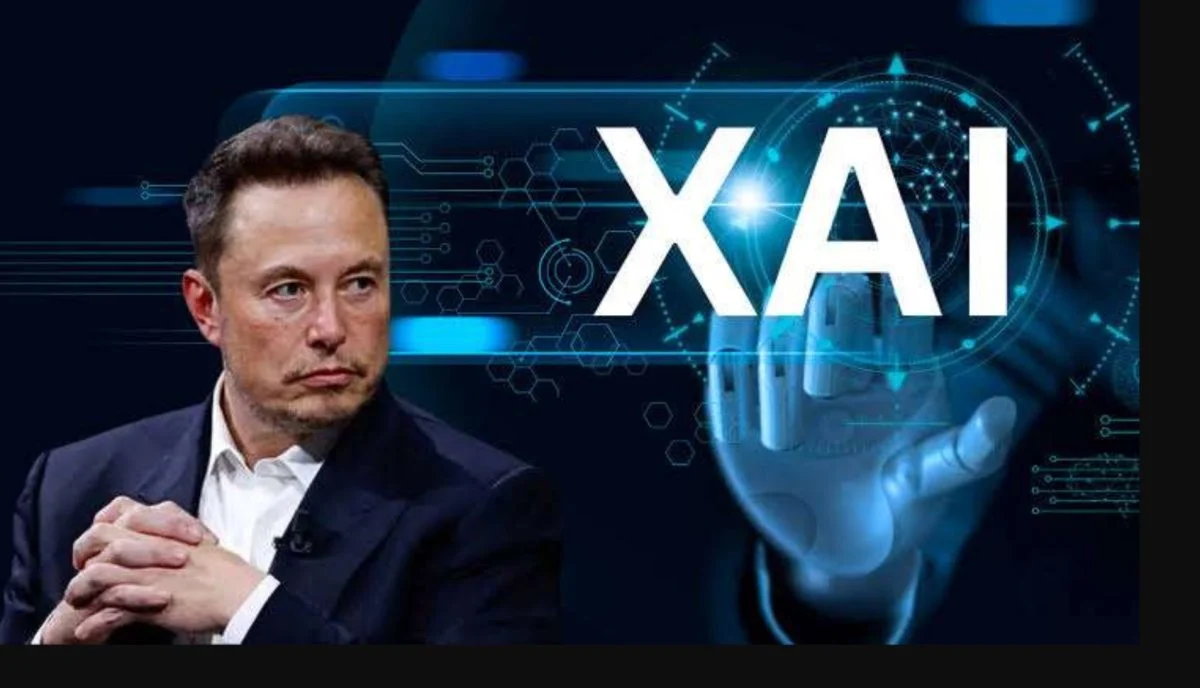
Elon Musk, the CEO of Tesla and SpaceX and founder of the artificial intelligence startup xAI, has provided a comprehensive update on the trajectory of his generative AI platform, Grok. In a detailed interview with China Media Group (CMG), Musk acknowledged the current competitive gap between his firm’s AI models and those of established leaders like Anthropic and OpenAI. However, he expressed significant optimism regarding the growth of xAI’s agentic capabilities and provided a provocative timeline for the development of the Chinese semiconductor industry, suggesting that the nation could overcome current manufacturing and lithography limitations within the next three years.
The interview serves as a strategic roadmap for xAI, a company founded in July 2023 with the stated goal of understanding the true nature of the universe. While the broader AI industry has focused heavily on linguistic fluency and software coding, Musk is positioning Grok as a specialized tool for "real-world engineering," leveraging the vast datasets generated by his other industrial ventures.
The Competitive Landscape: Grok vs. Anthropic and OpenAI
Musk’s recent commentary marks a moment of relative humility regarding the current state of Grok’s Large Language Models (LLMs). He admitted that xAI’s current offerings are not yet at the "frontier" level established by competitors. Specifically, Musk referenced Anthropic’s recently released Opus 5.5 and OpenAI’s Astra as benchmarks that Grok has yet to match.
According to Musk, the disparity is largely a function of time and institutional experience. Anthropic, founded by former OpenAI executives, has been operating for approximately six years, whereas xAI has only been in existence for three years in its current developmental cycle. Musk noted that Grok 4.7, the latest publicly discussed variant, serves as a "solid workhorse" but lacks the extreme high-performance capabilities required for the most complex software engineering tasks.
To bridge this gap, xAI is currently developing Grok 4.8. This upcoming iteration is reported to rely on a staggering 2.5 trillion parameters. In the realm of neural networks, parameters are the variables the model learns from training data, and a higher count generally correlates with a model’s ability to handle nuance and complexity, provided the training data is of high quality. For comparison, while the exact parameter counts of GPT-4 and Claude 3 remain proprietary, industry estimates place them in the 1.5 trillion to 1.8 trillion range. Musk’s target of 2.5 trillion parameters suggests an aggressive attempt to leapfrog current industry standards in raw scale by 2025.
The Rise of Agentic AI: Grok Bot’s Exponential Growth
A central pillar of Musk’s AI strategy is the transition from passive chatbots to "agentic" AI. In the CMG interview, Musk highlighted the success of "Grok Bot," an agent-based offering designed to function as a personal digital assistant. Unlike traditional LLMs that simply provide text responses, agentic AI is designed to execute tasks, navigate software interfaces, and solve problems autonomously.
Musk revealed that Grok Bot is currently experiencing a growth rate of approximately 100% per month. This exponential adoption suggests a strong market appetite for AI tools that move beyond conversation and into the realm of utility. The "agent" model is increasingly seen by Silicon Valley as the next frontier of the AI race, with companies like Microsoft, Google, and Rabbit Inc. all vying to create the definitive "AI OS" that can manage a user’s digital life.

The integration of Grok into the X (formerly Twitter) platform has provided xAI with a ready-made user base and a real-time data stream, which Musk believes provides a unique advantage in training models to understand current events and human discourse without the typical lag associated with static training sets.
Real-World Engineering: A Distinctive Moat
Perhaps the most significant strategic takeaway from Musk’s remarks is the intended differentiation of Grok from its peers. Musk argued that while Anthropic and OpenAI have succeeded in making AI "excellent at software engineering," there is a vacuum in the market for AI that excels at "real-world engineering."
Musk intends to fill this gap by utilizing data from Tesla and SpaceX. Tesla’s Full Self-Driving (FSD) program and its humanoid robot project, Optimus, generate massive amounts of video and sensor data related to physical navigation, structural mechanics, and real-world problem-solving. Similarly, SpaceX’s telemetry from rocket launches and Starlink satellite operations provides a repository of engineering data that is unavailable to pure-software firms.
By training Grok on these datasets, Musk aims to create a model that understands physics, material science, and manufacturing constraints. This "physics-first" approach to AI training is intended to make Grok an indispensable tool for hardware engineers, architects, and industrial designers—a niche that could prove more lucrative and defensible than the crowded field of general-purpose coding assistants.
Chronology of xAI and the Infrastructure Race
The rapid evolution of Grok is supported by a massive investment in computing infrastructure. To understand the context of Musk’s "next year" catch-up timeline, it is necessary to look at the firm’s recent milestones:
- July 2023: Musk officially announces the formation of xAI.
- November 2023: Grok-1 is released to X Premium+ subscribers, emphasizing a "rebellious streak" and real-time knowledge.
- March 2024: xAI open-sources the weights of Grok-1, a 314-billion parameter model, making it the largest open-source model at the time.
- May 2024: xAI closes a $6 billion Series B funding round, valuing the company at $24 billion. Investors include Andreessen Horowitz and Sequoia Capital.
- September 2024: Musk announces the activation of "Colossus," a massive supercomputer cluster in Memphis, Tennessee, powered by 100,000 NVIDIA H100 GPUs.
The Colossus cluster is the engine behind the training of the 2.5-trillion parameter Grok 4.8 model. The sheer scale of this compute power—which Musk claims will double to 200,000 GPUs (including H200s) in the near future—is what informs his belief that xAI can close a three-year developmental gap in a matter of months.
China’s Semiconductor Ambitions: The Three-Year Prediction
Beyond the internal affairs of xAI, Musk offered a bold assessment of China’s ability to bypass Western technology sanctions. Since 2022, the United States has implemented rigorous export controls on high-end semiconductors and the equipment needed to make them, specifically targeting China’s ability to develop advanced AI.
Musk told CMG that China is likely to address its compute limitations "faster than most people expect." He estimated that within two to three years, China would overcome constraints related to lithography and chip manufacturing. This timeline is significantly more aggressive than most Western analysts predict.

China’s leading foundry, SMIC (Semiconductor Manufacturing International Corporation), has already demonstrated the ability to produce 7nm chips despite being denied access to ASML’s Extreme Ultraviolet (EUV) lithography machines. However, moving to 5nm and 3nm processes—the current standard for top-tier AI chips—is widely considered impossible without EUV technology. Musk’s comments suggest he believes China will either develop indigenous EUV-equivalent technology or find innovative multi-patterning workarounds with older Deep Ultraviolet (DUV) systems.
Industry Counterpoints: The Complexity of Lithography
Musk’s optimistic timeline for Chinese semiconductor independence stands in stark contrast to the views of industry veterans. Frank Rohmund, the CEO of the semiconductor division at Zeiss—the German optics giant that provides the essential mirrors and lenses for ASML’s lithography machines—recently suggested that China remains approximately 15 years behind Western EUV technology.
The production of EUV machines is often cited as the most complex manufacturing feat in human history. A single machine contains over 100,000 components, requires a vacuum environment, and utilizes high-power CO2 lasers to create plasma from tin droplets, producing light at a wavelength of 13.5 nanometers. Zeiss and ASML hold a virtual monopoly on this process, protected by thousands of patents and decades of specialized metallurgical and optical research.
Critics of Musk’s prediction argue that while China can pour unlimited capital into the sector, the "physics" of lithography cannot be solved by software alone; it requires a deep supply chain of high-precision components that do not currently exist within China’s borders. However, Musk’s perspective may be influenced by his observations of Chinese industrial speed in the automotive sector, where Tesla’s Gigafactory Shanghai was constructed and brought to production in less than a year.
Broader Implications for Global AI and Trade
The interview highlights the deepening intersection of artificial intelligence, industrial engineering, and geopolitics. If Musk is correct and Grok achieves parity with Anthropic and OpenAI by 2025, the AI market will shift from a duopoly into a more fragmented landscape where specialized "real-world" models compete against general-purpose LLMs.
Furthermore, if China achieves semiconductor self-sufficiency within Musk’s three-year window, the current US-led sanctions regime could lose its primary lever of influence over the global AI balance of power. This would likely lead to a surge in domestic Chinese AI models that are currently hampered by a lack of high-end NVIDIA hardware.
For xAI, the path forward is clear: utilize the massive compute power of the Colossus cluster to train a model that bridges the gap between digital reasoning and physical application. As Grok Bot continues its 100% monthly growth, the platform’s ability to transition from a social media novelty to a critical engineering tool will determine whether Musk can fulfill his promise of catching up to the industry’s "frontier" by next year.